The Night Seeds and the Missing Letter
Uma história gratuita em inglês de nível B1 para estudantes, para ler online em 7 idiomas, com opção de ouvir no app gratuito Storyteller.
A seed librarian and a painter race to fix a cellar sign before a choir wakes the magic night seeds.
Essa foi a prévia! Ouça a história completa no app gratuito Storyteller. Baixar o app
O áudio não está disponível no momento.
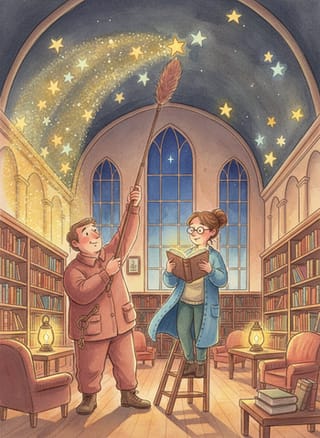
In the village hall of Little Fenwick, there is a library that lends seeds. Gus is its librarian. He wears a green apron full of pockets. His glasses never stay on his nose. Every spring, the whole village comes to borrow beans, poppies and pumpkins. Every autumn they bring the new seeds back.
No salão comunitário de Little Fenwick, existe uma biblioteca que empresta sementes. Gus é o bibliotecário. Ele usa um avental verde cheio de bolsos. Os óculos nunca ficam no nariz. Toda primavera, a vila inteira vem pegar emprestados feijões, papoulas e abóboras. Todo outono, eles trazem de volta as sementes novas.
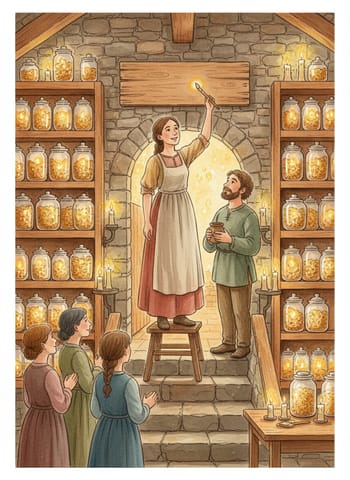
Most of the seeds sleep in the shallow drawers upstairs. They are ordinary and quiet. But the best seeds live in the cellar, in a cabinet of black wood. Gus calls them the night seeds. They are older than the village, and they have one strange habit. They wake up when anyone sings.
A maioria das sementes dorme nas gavetas rasas do andar de cima. São comuns e quietas. Mas as melhores sementes ficam no porão, num armário de madeira preta. Gus as chama de sementes da noite. São mais antigas que a vila e têm um hábito estranho. Elas acordam quando alguém canta.
A sign hangs on the cellar door to warn visitors. It says, in tall painted letters: NO SINGING. Or it did, once. Today, the first letter has flaked away, and the sign says only: O SINGING.
Uma placa pendurada na porta do porão avisa os visitantes. Diz, em letras altas pintadas: SEM CANTORIA. Ou dizia, antigamente. Hoje a primeira letra descascou e a placa diz apenas: EM CANTORIA.
Gus sees it at seven in the morning and drops his key. "Lars!" he shouts up the stairs. "Come and look at this, please."
Gus vê a placa às sete da manhã e deixa a chave cair. "Lars!", grita ele escada acima. "Venha ver isto, por favor."
Lars is the village painter. He paints fences, boats and shop windows, and he painted the sign twenty years ago. He arrives with a brush behind his ear and a mug of cold coffee. He stares at the door for a long time.
Lars é o pintor da vila. Ele pinta cercas, barcos e vitrines, e pintou aquela placa há vinte anos. Chega com um pincel atrás da orelha e uma caneca de café frio. Fica um bom tempo olhando para a porta.
"That is not good," he says at last.
"Isso não é bom", diz por fim.
"It is a disaster." Gus waves his hands. "The Seed Fair begins tonight. The Fenwick Choir comes at five to sing the opening song. They will read that sign, and they will think we are inviting them to sing in the cellar."
"É um desastre." Gus agita as mãos. "A Feira de Sementes começa hoje à noite. O Coral de Fenwick vem às cinco cantar a música de abertura. Eles vão ler essa placa e achar que estamos convidando todo mundo a cantar no porão."
"O singing," Lars reads. "It does sound like a welcome. Like a little cheer."
"Em cantoria", lê Lars. "Realmente soa como uma boas-vindas. Como um pequeno incentivo."
"Exactly. And if they sing, the night seeds wake. I have seen it once. The whole cellar turned into a jungle in ten minutes." Gus takes off his glasses and cleans them on his apron. "We have until five o'clock. We need to put the missing letter back."
"Exatamente. E se eles cantarem, as sementes da noite acordam. Já vi isso uma vez. O porão inteiro virou uma selva em dez minutos." Gus tira os óculos e os limpa no avental. "Temos até as cinco horas. Precisamos pôr a letra que falta de volta."
Lars looks into his paint box. "I have blue, yellow, and a lot of white. I have no black. The old sign used black."
Lars olha dentro da caixa de tintas. "Tenho azul, amarelo e muito branco. Não tenho preto. A placa velha usava preto."
"Then we make black." Gus opens a cupboard and starts to pull out jars. "Soot from the stove, a little oil, a spoon of ink. Mix it. I will cut a stencil from card so the N looks the same as the others."
"Então fazemos preto." Gus abre um armário e começa a tirar potes. "Fuligem do fogão, um pouco de óleo, uma colher de tinta de escrever. Misture. Eu vou recortar um molde de papelão para que o S fique igual aos outros."
They work through the whole morning. The mixing is messy, and the stencil is crooked at first. By two o'clock, they have a deep black paint and a neat paper letter. Gus holds the stencil against the door. Lars lifts the brush.
Eles trabalham a manhã inteira. A mistura é uma bagunça, e o molde sai torto no começo. Às duas horas, têm uma tinta preta bem escura e uma letra de papel bem-feita. Gus segura o molde contra a porta. Lars levanta o pincel.
That is the moment when the front door of the hall bangs open.
É nesse momento que a porta da frente do salão se escancara.
"Hello, hello!" calls a cheerful voice. "We are early!" Thirty people in blue scarves are walking into the hall. They carry music books and a large brass bell. At the front is the choir leader, a round woman with a happy voice.
"Olá, olá!", chama uma voz alegre. "Chegamos cedo!" Trinta pessoas de lenços azuis entram no salão. Carregam livros de música e um grande sino de latão. À frente está a regente do coral, uma mulher roliça de voz feliz.
"Not now," Gus says. "Please, not yet. Wait outside for a moment."
"Agora não", diz Gus. "Por favor, ainda não. Esperem lá fora um instante."
But the choir leader has already seen the sign. She reads the letters, and her eyes light up. "O singing!" she says. "How lovely. We were just going to warm up. Come along, everyone, one, two, three."
Mas a regente já viu a placa. Ela lê as letras, e os olhos se iluminam. "Em cantoria!", diz. "Que lindo. Estávamos mesmo indo aquecer a voz. Vamos lá, pessoal, um, dois, três."
Thirty voices rise together in a bright, loud chord. The sound rolls through the hall like a wave. It goes through the floorboards and down the stairs. Gus and Lars look at each other. Under their feet, something starts to rustle.
Trinta vozes se erguem juntas num acorde claro e forte. O som rola pelo salão como uma onda. Atravessa o assoalho e desce as escadas. Gus e Lars se entreolham. Debaixo dos pés deles, algo começa a farfalhar.
The cellar door bursts open with a crack. Green shoots pour out of the dark and climb the walls. They curl around the shelves, the lamps and the tables. Leaves unfold like hands. Pumpkin vines race along the floor, and bean stalks reach the ceiling beams in a few seconds. In a minute, the hall looks like a forest.
A porta do porão se abre com um estalo. Brotos verdes jorram da escuridão e sobem pelas paredes. Enroscam-se nas prateleiras, nos lampiões e nas mesas. Folhas se abrem como mãos. Ramas de abóbora disparam pelo chão, e pés de feijão alcançam as vigas do teto em poucos segundos. Em um minuto, o salão parece uma floresta.
The choir stops singing, and there is a stunned silence. Then the vines stop growing. They hang in the air and tremble, as if they are waiting for the next note.
O coral para de cantar, e há um silêncio atônito. Então as ramas param de crescer. Ficam penduradas no ar, tremendo, como se esperassem a próxima nota.
"Do not sing again," Lars whispers.
"Não cantem de novo", sussurra Lars.
"We have to," says Gus. He has an idea, and it frightens him. "Listen. When the choir sang up, the plants grew up. When the song stopped, they paused. So the seeds follow the music. What happens if the music goes down?"
"Temos que cantar", diz Gus. Ele teve uma ideia, e ela o assusta. "Escute. Quando o coral cantou agudo, as plantas cresceram para cima. Quando a música parou, elas pararam. Então as sementes seguem a música. O que acontece se a música descer?"
"They go back to sleep?" Lars asks.
"Elas voltam a dormir?", pergunta Lars.
"I hope so." Gus turns to the choir leader and speaks quickly. "Please, can you sing something slow? A lullaby. Soft, and every line lower than the one before."
"Espero que sim." Gus se vira para a regente e fala depressa. "Por favor, vocês podem cantar algo lento? Uma canção de ninar. Suave, e cada verso mais grave que o anterior."
The choir leader nods. She raises her hands. Thirty voices begin a gentle song about the end of the day. Each phrase drops a little lower than the last. The vines start to sway.
A regente assente. Levanta as mãos. Trinta vozes começam uma canção suave sobre o fim do dia. Cada frase desce um pouco mais que a anterior. As ramas começam a balançar.
Slowly, the leaves fold back. The long stems shorten and curl. The great beans fall silent. On every branch a small round pod swells and closes, like a green lantern going dark. Gus walks through the hall with his big basket and catches them as they fall.
Devagar, as folhas se dobram de volta. Os caules compridos encolhem e se enrolam. Os grandes pés de feijão silenciam. Em cada galho, uma pequena vagem redonda incha e se fecha, como uma lanterna verde que se apaga. Gus caminha pelo salão com seu cesto grande e as apanha quando caem.
By the time the song ends, the forest is gone. The tables are bare, and the floor is clean. Only the pods remain, hundreds of them, resting in baskets and on shelves. Each one is warm and smooth, and each one holds a hundred new seeds.
Quando a canção termina, a floresta sumiu. As mesas estão vazias, e o chão está limpo. Só restaram as vagens, centenas delas, descansando em cestos e prateleiras. Cada uma é morna e lisa, e cada uma guarda cem sementes novas.
The village arrives for the fair at five. They find a tidy hall, a happy choir and a long table covered in fresh pods. Gus gives one to every visitor. "They are the best seeds we have ever had," he says, and it is perfectly true. "Plant them, and sing to them softly."
A vila chega para a feira às cinco. Encontra um salão arrumado, um coral feliz e uma mesa comprida coberta de vagens frescas. Gus dá uma a cada visitante. "São as melhores sementes que já tivemos", diz ele, e é a pura verdade. "Plantem e cantem baixinho para elas."
At the end of the evening, Lars finally paints the sign. He uses the black paint and the crooked stencil. The first letter is back in its place, and the door says NO SINGING again. Then he takes a smaller brush and adds a line underneath, in careful letters: Except lullabies.
No fim da noite, Lars finalmente pinta a placa. Usa a tinta preta e o molde torto. A primeira letra está de volta ao lugar, e a porta diz SEM CANTORIA de novo. Depois ele pega um pincel menor e acrescenta uma linha embaixo, com letras cuidadosas: Exceto canções de ninar.
Gus laughs and puts the key in his pocket. He stands in the empty hall for a moment, in the quiet. Then, from a basket on the table, a single pod opens by itself.
Gus ri e guarda a chave no bolso. Fica um instante no salão vazio, no silêncio. Então, de um cesto sobre a mesa, uma única vagem se abre sozinha.
Pop.
Pop.