The Night Seeds and the Missing Letter
Una historia gratuita en inglés de nivel B1 para estudiantes, para leer en línea en 7 idiomas, con opción de escucharla en la app gratuita Storyteller.
A seed librarian and a painter race to fix a cellar sign before a choir wakes the magic night seeds.
¡Ese fue el avance! Escucha la historia completa en la app gratuita Storyteller. Descargar la app
El audio no está disponible en este momento.
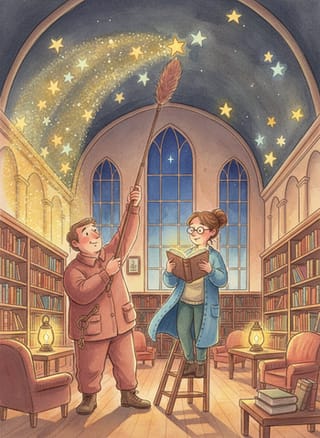
In the village hall of Little Fenwick, there is a library that lends seeds. Gus is its librarian. He wears a green apron full of pockets. His glasses never stay on his nose. Every spring, the whole village comes to borrow beans, poppies and pumpkins. Every autumn they bring the new seeds back.
En el salón comunal de Little Fenwick hay una biblioteca que presta semillas. Gus es su bibliotecario. Lleva un delantal verde lleno de bolsillos. Los anteojos nunca se le quedan en la nariz. Cada primavera, todo el pueblo viene a pedir prestados frijoles, amapolas y calabazas. Cada otoño devuelven las semillas nuevas.
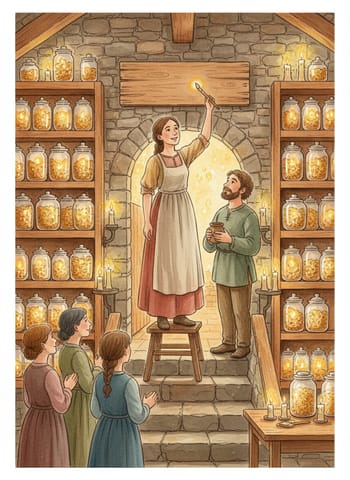
Most of the seeds sleep in the shallow drawers upstairs. They are ordinary and quiet. But the best seeds live in the cellar, in a cabinet of black wood. Gus calls them the night seeds. They are older than the village, and they have one strange habit. They wake up when anyone sings.
La mayoría de las semillas duermen en los cajones poco profundos del piso de arriba. Son comunes y tranquilas. Pero las mejores semillas viven en el sótano, en un armario de madera negra. Gus las llama las semillas de la noche. Son más antiguas que el pueblo, y tienen una extraña costumbre. Despiertan cuando alguien canta.
A sign hangs on the cellar door to warn visitors. It says, in tall painted letters: NO SINGING. Or it did, once. Today, the first letter has flaked away, and the sign says only: O SINGING.
Un letrero cuelga en la puerta del sótano para advertir a los visitantes. Dice, en altas letras pintadas: NO CANTAR. O al menos lo decía. Hoy, la primera letra se ha descascarado, y el letrero dice solo: O CANTAR.
Gus sees it at seven in the morning and drops his key. "Lars!" he shouts up the stairs. "Come and look at this, please."
Gus lo ve a las siete de la mañana y se le cae la llave. «¡Lars!», grita escaleras arriba. «Ven a ver esto, por favor».
Lars is the village painter. He paints fences, boats and shop windows, and he painted the sign twenty years ago. He arrives with a brush behind his ear and a mug of cold coffee. He stares at the door for a long time.
Lars es el pintor del pueblo. Pinta cercas, botes y vitrinas de tiendas, y pintó el letrero hace veinte años. Llega con un pincel detrás de la oreja y una taza de café frío. Mira la puerta durante mucho rato.
"That is not good," he says at last.
«Esto no es bueno», dice al fin.
"It is a disaster." Gus waves his hands. "The Seed Fair begins tonight. The Fenwick Choir comes at five to sing the opening song. They will read that sign, and they will think we are inviting them to sing in the cellar."
«Es un desastre». Gus agita las manos. «La Feria de Semillas empieza esta noche. El Coro de Fenwick llega a las cinco a cantar la canción de apertura. Leerán ese letrero y pensarán que los invitamos a cantar en el sótano».
"O singing," Lars reads. "It does sound like a welcome. Like a little cheer."
«O cantar», lee Lars. «Sí que suena a bienvenida. Como un pequeño vítor».
"Exactly. And if they sing, the night seeds wake. I have seen it once. The whole cellar turned into a jungle in ten minutes." Gus takes off his glasses and cleans them on his apron. "We have until five o'clock. We need to put the missing letter back."
«Exacto. Y si cantan, las semillas de la noche despiertan. Lo he visto una vez. Todo el sótano se convirtió en una selva en diez minutos». Gus se quita los anteojos y los limpia en el delantal. «Tenemos hasta las cinco. Hay que devolver la letra que falta».
Lars looks into his paint box. "I have blue, yellow, and a lot of white. I have no black. The old sign used black."
Lars mira en su caja de pinturas. «Tengo azul, amarillo y mucho blanco. No tengo negro. El letrero viejo usaba negro».
"Then we make black." Gus opens a cupboard and starts to pull out jars. "Soot from the stove, a little oil, a spoon of ink. Mix it. I will cut a stencil from card so the N looks the same as the others."
«Entonces hacemos negro». Gus abre un armario y empieza a sacar frascos. «Hollín de la estufa, un poco de aceite, una cucharada de tinta. Mézclalo. Yo recortaré una plantilla en cartulina para que la N se vea igual que las otras».
They work through the whole morning. The mixing is messy, and the stencil is crooked at first. By two o'clock, they have a deep black paint and a neat paper letter. Gus holds the stencil against the door. Lars lifts the brush.
Trabajan toda la mañana. La mezcla es sucia, y la plantilla al principio sale torcida. A las dos, tienen una pintura negra profunda y una letra de papel prolija. Gus sostiene la plantilla contra la puerta. Lars levanta el pincel.
That is the moment when the front door of the hall bangs open.
Es entonces cuando la puerta principal del salón se abre de golpe.
"Hello, hello!" calls a cheerful voice. "We are early!" Thirty people in blue scarves are walking into the hall. They carry music books and a large brass bell. At the front is the choir leader, a round woman with a happy voice.
«¡Hola, hola!», llama una voz alegre. «¡Llegamos temprano!». Treinta personas con bufandas azules entran al salón. Llevan libros de música y una gran campana de bronce. Al frente va la directora del coro, una mujer redonda de voz feliz.
"Not now," Gus says. "Please, not yet. Wait outside for a moment."
«Ahora no», dice Gus. «Por favor, todavía no. Esperen afuera un momento».
But the choir leader has already seen the sign. She reads the letters, and her eyes light up. "O singing!" she says. "How lovely. We were just going to warm up. Come along, everyone, one, two, three."
Pero la directora del coro ya ha visto el letrero. Lee las letras, y los ojos se le iluminan. «¡O cantar!», dice. «Qué lindo. Justo íbamos a calentar la voz. Vamos, todos, uno, dos, tres».
Thirty voices rise together in a bright, loud chord. The sound rolls through the hall like a wave. It goes through the floorboards and down the stairs. Gus and Lars look at each other. Under their feet, something starts to rustle.
Treinta voces se elevan juntas en un acorde brillante y fuerte. El sonido rueda por el salón como una ola. Atraviesa los tablones del piso y baja por las escaleras. Gus y Lars se miran. Bajo sus pies, algo empieza a susurrar.
The cellar door bursts open with a crack. Green shoots pour out of the dark and climb the walls. They curl around the shelves, the lamps and the tables. Leaves unfold like hands. Pumpkin vines race along the floor, and bean stalks reach the ceiling beams in a few seconds. In a minute, the hall looks like a forest.
La puerta del sótano se abre de golpe con un crujido. Brotes verdes salen de la oscuridad y trepan por las paredes. Se enroscan en los estantes, las lámparas y las mesas. Las hojas se despliegan como manos. Las enredaderas de calabaza corren por el suelo, y los tallos de frijol llegan a las vigas del techo en unos segundos. En un minuto, el salón parece un bosque.
The choir stops singing, and there is a stunned silence. Then the vines stop growing. They hang in the air and tremble, as if they are waiting for the next note.
El coro deja de cantar, y hay un silencio atónito. Entonces las enredaderas dejan de crecer. Cuelgan en el aire y tiemblan, como si esperaran la siguiente nota.
"Do not sing again," Lars whispers.
«No vuelvan a cantar», susurra Lars.
"We have to," says Gus. He has an idea, and it frightens him. "Listen. When the choir sang up, the plants grew up. When the song stopped, they paused. So the seeds follow the music. What happens if the music goes down?"
«Tenemos que hacerlo», dice Gus. Tiene una idea, y lo asusta. «Escucha. Cuando el coro cantó hacia arriba, las plantas crecieron hacia arriba. Cuando la canción paró, se detuvieron. Así que las semillas siguen la música. ¿Qué pasa si la música baja?»
"They go back to sleep?" Lars asks.
«¿Vuelven a dormirse?», pregunta Lars.
"I hope so." Gus turns to the choir leader and speaks quickly. "Please, can you sing something slow? A lullaby. Soft, and every line lower than the one before."
«Eso espero». Gus se vuelve hacia la directora del coro y habla rápido. «Por favor, ¿pueden cantar algo lento? Una canción de cuna. Suave, y cada verso más grave que el anterior».
The choir leader nods. She raises her hands. Thirty voices begin a gentle song about the end of the day. Each phrase drops a little lower than the last. The vines start to sway.
La directora del coro asiente. Levanta las manos. Treinta voces empiezan una canción suave sobre el final del día. Cada frase baja un poco más que la anterior. Las enredaderas empiezan a mecerse.
Slowly, the leaves fold back. The long stems shorten and curl. The great beans fall silent. On every branch a small round pod swells and closes, like a green lantern going dark. Gus walks through the hall with his big basket and catches them as they fall.
Poco a poco, las hojas se pliegan. Los largos tallos se acortan y se enroscan. Los grandes frijoles se quedan en silencio. En cada rama, una pequeña vaina redonda se hincha y se cierra, como un farol verde que se apaga. Gus camina por el salón con su gran canasta y las atrapa a medida que caen.
By the time the song ends, the forest is gone. The tables are bare, and the floor is clean. Only the pods remain, hundreds of them, resting in baskets and on shelves. Each one is warm and smooth, and each one holds a hundred new seeds.
Cuando termina la canción, el bosque ha desaparecido. Las mesas están vacías y el suelo está limpio. Solo quedan las vainas, cientos de ellas, descansando en canastas y estantes. Cada una está tibia y lisa, y cada una contiene cien semillas nuevas.
The village arrives for the fair at five. They find a tidy hall, a happy choir and a long table covered in fresh pods. Gus gives one to every visitor. "They are the best seeds we have ever had," he says, and it is perfectly true. "Plant them, and sing to them softly."
El pueblo llega a la feria a las cinco. Encuentra un salón ordenado, un coro feliz y una larga mesa cubierta de vainas frescas. Gus le da una a cada visitante. «Son las mejores semillas que hemos tenido jamás», dice, y es perfectamente cierto. «Plántenlas y cántenles en voz baja».
At the end of the evening, Lars finally paints the sign. He uses the black paint and the crooked stencil. The first letter is back in its place, and the door says NO SINGING again. Then he takes a smaller brush and adds a line underneath, in careful letters: Except lullabies.
Al final de la tarde, Lars por fin pinta el letrero. Usa la pintura negra y la plantilla torcida. La primera letra está de vuelta en su lugar, y la puerta dice NO CANTAR otra vez. Luego toma un pincel más pequeño y añade una línea debajo, con letras cuidadosas: Salvo canciones de cuna.
Gus laughs and puts the key in his pocket. He stands in the empty hall for a moment, in the quiet. Then, from a basket on the table, a single pod opens by itself.
Gus se ríe y se guarda la llave en el bolsillo. Se queda un momento en el salón vacío, en el silencio. Entonces, desde una canasta sobre la mesa, una sola vaina se abre sola.
Pop.
Pop.