The Night Seeds and the Missing Letter
Cerita bahasa Inggris gratis level B1 untuk pelajar, bisa dibaca online dalam 7 bahasa, dengan pilihan untuk mendengarkannya di aplikasi Storyteller gratis.
A seed librarian and a painter race to fix a cellar sign before a choir wakes the magic night seeds.
Itu cuplikannya! Dengarkan cerita lengkapnya di aplikasi Storyteller gratis. Unduh aplikasi
Audio belum tersedia saat ini.
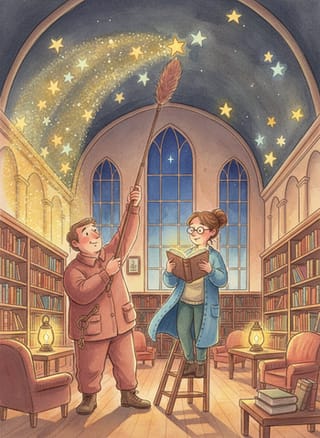
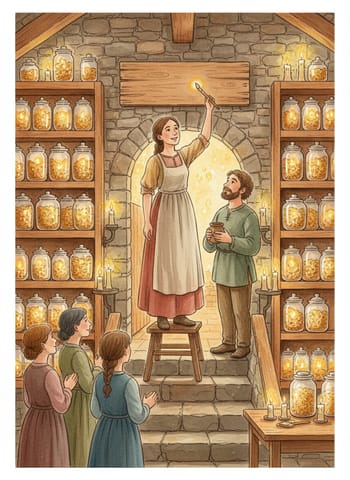
In the village hall of Little Fenwick, there is a library that lends seeds. Gus is its librarian. He wears a green apron full of pockets. His glasses never stay on his nose. Every spring, the whole village comes to borrow beans, poppies and pumpkins. Every autumn they bring the new seeds back.
Di balai desa Little Fenwick, ada sebuah perpustakaan yang meminjamkan benih. Pustakawannya bernama Gus. Ia memakai celemek hijau penuh kantong. Kacamatanya tak pernah bertahan di hidungnya. Setiap musim semi, seluruh desa datang meminjam kacang, bunga poppy, dan labu. Setiap musim gugur mereka mengembalikan benih yang baru.
Most of the seeds sleep in the shallow drawers upstairs. They are ordinary and quiet. But the best seeds live in the cellar, in a cabinet of black wood. Gus calls them the night seeds. They are older than the village, and they have one strange habit. They wake up when anyone sings.
Sebagian besar benih tidur di laci-laci dangkal di lantai atas. Benih-benih itu biasa saja dan tenang. Tetapi benih yang terbaik tinggal di ruang bawah tanah, di dalam lemari kayu hitam. Gus menyebutnya benih malam. Usia mereka lebih tua daripada desa itu, dan mereka punya satu kebiasaan aneh. Mereka terbangun setiap kali ada yang bernyanyi.
A sign hangs on the cellar door to warn visitors. It says, in tall painted letters: NO SINGING. Or it did, once. Today, the first letter has flaked away, and the sign says only: O SINGING.
Sebuah papan tergantung di pintu ruang bawah tanah untuk memperingatkan pengunjung. Tulisannya, dengan huruf-huruf tinggi yang dicat: NO SINGING. Atau dulu begitu. Hari ini, huruf pertamanya telah mengelupas, dan papan itu hanya bertuliskan: O SINGING.
Gus sees it at seven in the morning and drops his key. "Lars!" he shouts up the stairs. "Come and look at this, please."
Gus melihatnya pukul tujuh pagi dan menjatuhkan kuncinya. "Lars!" teriaknya ke atas tangga. "Tolong datang dan lihat ini."
Lars is the village painter. He paints fences, boats and shop windows, and he painted the sign twenty years ago. He arrives with a brush behind his ear and a mug of cold coffee. He stares at the door for a long time.
Lars adalah pelukis desa. Ia mengecat pagar, perahu, dan jendela toko, dan ia mengecat papan itu dua puluh tahun lalu. Ia datang dengan kuas terselip di belakang telinga dan secangkir kopi dingin. Ia menatap pintu itu lama sekali.
"That is not good," he says at last.
"Ini tidak bagus," katanya akhirnya.
"It is a disaster." Gus waves his hands. "The Seed Fair begins tonight. The Fenwick Choir comes at five to sing the opening song. They will read that sign, and they will think we are inviting them to sing in the cellar."
"Ini bencana." Gus melambaikan tangan. "Pesta Benih dimulai malam ini. Paduan Suara Fenwick datang pukul lima untuk menyanyikan lagu pembukaan. Mereka akan membaca papan itu, dan mereka akan mengira kita mengajak mereka bernyanyi di ruang bawah tanah."
"O singing," Lars reads. "It does sound like a welcome. Like a little cheer."
"O singing," Lars membaca. "Memang terdengar seperti sambutan. Seperti sorak kecil."
"Exactly. And if they sing, the night seeds wake. I have seen it once. The whole cellar turned into a jungle in ten minutes." Gus takes off his glasses and cleans them on his apron. "We have until five o'clock. We need to put the missing letter back."
"Tepat. Dan kalau mereka bernyanyi, benih malam akan bangun. Aku pernah melihatnya sekali. Seluruh ruang bawah tanah berubah jadi hutan dalam sepuluh menit." Gus melepas kacamatanya dan membersihkannya dengan celemek. "Kita punya waktu sampai pukul lima. Kita harus mengembalikan huruf yang hilang itu."
Lars looks into his paint box. "I have blue, yellow, and a lot of white. I have no black. The old sign used black."
Lars melihat ke dalam kotak catnya. "Aku punya biru, kuning, dan banyak putih. Aku tidak punya hitam. Papan yang lama memakai hitam."
"Then we make black." Gus opens a cupboard and starts to pull out jars. "Soot from the stove, a little oil, a spoon of ink. Mix it. I will cut a stencil from card so the N looks the same as the others."
"Kalau begitu kita buat hitam." Gus membuka lemari dan mulai mengeluarkan toples-toples. "Jelaga dari tungku, sedikit minyak, satu sendok tinta. Campur semuanya. Aku akan memotong stensil dari karton supaya huruf N-nya sama dengan yang lain."
They work through the whole morning. The mixing is messy, and the stencil is crooked at first. By two o'clock, they have a deep black paint and a neat paper letter. Gus holds the stencil against the door. Lars lifts the brush.
Mereka bekerja sepanjang pagi. Mencampurnya berantakan, dan stensilnya awalnya miring. Pukul dua, mereka sudah punya cat hitam pekat dan huruf kertas yang rapi. Gus menahan stensil itu di pintu. Lars mengangkat kuasnya.
That is the moment when the front door of the hall bangs open.
Saat itulah pintu depan balai terbanting terbuka.
"Hello, hello!" calls a cheerful voice. "We are early!" Thirty people in blue scarves are walking into the hall. They carry music books and a large brass bell. At the front is the choir leader, a round woman with a happy voice.
"Halo, halo!" seru suara riang. "Kami datang lebih awal!" Tiga puluh orang berselendang biru berjalan masuk ke balai. Mereka membawa buku musik dan sebuah lonceng kuningan besar. Di depan ada pemimpin paduan suara, seorang perempuan gemuk bersuara ceria.
"Not now," Gus says. "Please, not yet. Wait outside for a moment."
"Jangan sekarang," kata Gus. "Tolong, belum. Tunggu di luar sebentar."
But the choir leader has already seen the sign. She reads the letters, and her eyes light up. "O singing!" she says. "How lovely. We were just going to warm up. Come along, everyone, one, two, three."
Tetapi pemimpin paduan suara itu sudah melihat papannya. Ia membaca huruf-hurufnya, dan matanya berbinar. "O singing!" katanya. "Indah sekali. Kami memang mau pemanasan. Ayo, semuanya, satu, dua, tiga."
Thirty voices rise together in a bright, loud chord. The sound rolls through the hall like a wave. It goes through the floorboards and down the stairs. Gus and Lars look at each other. Under their feet, something starts to rustle.
Tiga puluh suara naik bersama dalam satu akord yang cerah dan keras. Bunyinya bergulung di dalam balai seperti ombak. Menembus papan lantai dan turun ke tangga. Gus dan Lars saling berpandangan. Di bawah kaki mereka, sesuatu mulai bergemeresik.
The cellar door bursts open with a crack. Green shoots pour out of the dark and climb the walls. They curl around the shelves, the lamps and the tables. Leaves unfold like hands. Pumpkin vines race along the floor, and bean stalks reach the ceiling beams in a few seconds. In a minute, the hall looks like a forest.
Pintu ruang bawah tanah terbuka dengan bunyi berderak. Tunas-tunas hijau menyembur keluar dari kegelapan dan memanjat dinding. Mereka melilit rak, lampu, dan meja. Daun-daun membuka seperti tangan. Sulur labu berlomba di sepanjang lantai, dan batang kacang mencapai balok langit-langit dalam beberapa detik. Dalam semenit, balai itu tampak seperti hutan.
The choir stops singing, and there is a stunned silence. Then the vines stop growing. They hang in the air and tremble, as if they are waiting for the next note.
Paduan suara berhenti bernyanyi, dan hening yang tertegun menyelimuti. Lalu sulur-sulur itu berhenti tumbuh. Mereka menggantung di udara dan gemetar, seakan menunggu nada berikutnya.
"Do not sing again," Lars whispers.
"Jangan menyanyi lagi," bisik Lars.
"We have to," says Gus. He has an idea, and it frightens him. "Listen. When the choir sang up, the plants grew up. When the song stopped, they paused. So the seeds follow the music. What happens if the music goes down?"
"Kita harus," kata Gus. Ia punya sebuah gagasan, dan itu menakutkannya. "Dengar. Saat paduan suara menyanyi naik, tanaman tumbuh naik. Saat lagu berhenti, mereka berhenti. Jadi benih-benih itu mengikuti musik. Apa yang terjadi kalau musiknya turun?"
"They go back to sleep?" Lars asks.
"Mereka kembali tidur?" tanya Lars.
"I hope so." Gus turns to the choir leader and speaks quickly. "Please, can you sing something slow? A lullaby. Soft, and every line lower than the one before."
"Semoga begitu." Gus berbalik kepada pemimpin paduan suara dan berbicara cepat. "Tolong, bisakah Anda menyanyikan lagu yang pelan? Lagu pengantar tidur. Lembut, dan setiap barisnya lebih rendah daripada yang sebelumnya."
The choir leader nods. She raises her hands. Thirty voices begin a gentle song about the end of the day. Each phrase drops a little lower than the last. The vines start to sway.
Pemimpin paduan suara mengangguk. Ia mengangkat tangannya. Tiga puluh suara memulai lagu lembut tentang berakhirnya hari. Setiap frasa turun sedikit lebih rendah daripada yang terakhir. Sulur-sulur mulai bergoyang.
Slowly, the leaves fold back. The long stems shorten and curl. The great beans fall silent. On every branch a small round pod swells and closes, like a green lantern going dark. Gus walks through the hall with his big basket and catches them as they fall.
Perlahan, daun-daun melipat kembali. Batang-batang panjang memendek dan menggulung. Kacang-kacang besar itu menjadi sunyi. Di setiap dahan, sebuah polong kecil bulat membengkak dan menutup, seperti lampion hijau yang padam. Gus berjalan di sepanjang balai dengan keranjang besarnya dan menangkap polong-polong itu saat jatuh.
By the time the song ends, the forest is gone. The tables are bare, and the floor is clean. Only the pods remain, hundreds of them, resting in baskets and on shelves. Each one is warm and smooth, and each one holds a hundred new seeds.
Ketika lagu berakhir, hutan itu sudah lenyap. Meja-meja kosong, dan lantai bersih. Hanya polong-polong yang tersisa, ratusan jumlahnya, beristirahat di keranjang dan di rak. Masing-masing hangat dan halus, dan masing-masing berisi seratus benih baru.
The village arrives for the fair at five. They find a tidy hall, a happy choir and a long table covered in fresh pods. Gus gives one to every visitor. "They are the best seeds we have ever had," he says, and it is perfectly true. "Plant them, and sing to them softly."
Warga desa tiba untuk pesta pada pukul lima. Mereka menemukan balai yang rapi, paduan suara yang gembira, dan meja panjang yang penuh polong segar. Gus memberikan satu kepada setiap pengunjung. "Ini benih terbaik yang pernah kami punya," katanya, dan itu benar-benar kenyataan. "Tanamlah, dan bernyanyilah untuknya dengan lembut."
At the end of the evening, Lars finally paints the sign. He uses the black paint and the crooked stencil. The first letter is back in its place, and the door says NO SINGING again. Then he takes a smaller brush and adds a line underneath, in careful letters: Except lullabies.
Di akhir malam, Lars akhirnya mengecat papan itu. Ia memakai cat hitam dan stensil yang miring itu. Huruf pertama kembali ke tempatnya, dan pintu itu bertuliskan NO SINGING lagi. Lalu ia mengambil kuas yang lebih kecil dan menambahkan satu baris di bawahnya, dengan huruf-huruf yang hati-hati: Kecuali lagu pengantar tidur.
Gus laughs and puts the key in his pocket. He stands in the empty hall for a moment, in the quiet. Then, from a basket on the table, a single pod opens by itself.
Gus tertawa dan memasukkan kunci ke sakunya. Ia berdiri sejenak di balai yang kosong, dalam keheningan. Lalu, dari sebuah keranjang di atas meja, satu polong terbuka sendiri.
Pop.
Pop.