The Wallet on the Green Bench
भाषा सीखने वालों के लिए स्तर B1 की एक मुफ़्त अंग्रेज़ी कहानी, जिसे 7 भाषाओं में ऑनलाइन पढ़ा जा सकता है और मुफ़्त Storyteller ऐप में सुना भी जा सकता है।
Two library van workers find a wallet with no name in it and try two very different ways to find its owner.
झलक पूरी हुई! पूरी कहानी मुफ़्त Storyteller ऐप में सुनें। ऐप पाएँ
अभी ऑडियो उपलब्ध नहीं है।
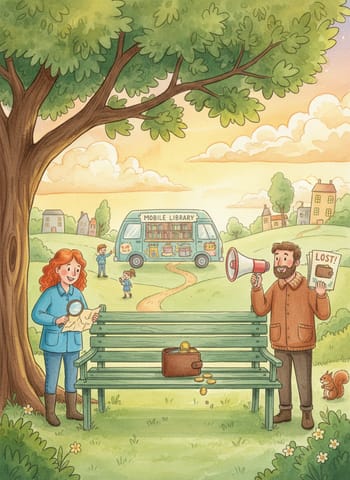
Pilar parked the library van beside the village green and switched off the engine. The morning was bright and quiet. Nobody was waiting yet. She liked this stop best, because the benches faced the old fountain and the grass smelled sweet.
पिलार ने लाइब्रेरी की वैन गाँव के हरे मैदान के पास खड़ी की और इंजन बंद कर दिया। सुबह चमकीली और शांत थी। अभी कोई इंतज़ार नहीं कर रहा था। उसे यही पड़ाव सबसे ज़्यादा पसंद था, क्योंकि बेंचें पुराने फ़व्वारे की ओर मुँह किए थीं और घास से मीठी महक आती थी।
Uzma climbed out of the passenger side with a box of returned books. She had worked on the van for three months, and she still counted every book twice.
उज़्मा लौटाई हुई किताबों का एक डिब्बा लेकर सवारी वाली तरफ़ से उतरी। उसे वैन पर काम करते तीन महीने हो गए थे, और वह अब भी हर किताब को दो बार गिनती थी।
"Pilar, come and look," Uzma called from the far corner of the green. "There's a wallet on the bench."
"पिलार, आकर देखो," उज़्मा ने मैदान के दूर वाले कोने से पुकारा। "बेंच पर एक बटुआ पड़ा है।"
Pilar walked over. The wallet was brown and worn at the edges. It lay flat on the wood, as if someone had put it down on purpose.
पिलार चलकर वहाँ गई। बटुआ भूरा था और किनारों से घिसा हुआ था। वह लकड़ी पर सपाट पड़ा था, मानो किसी ने जान-बूझकर रखा हो।
"Don't open it yet," Pilar said. "Let's see if anyone comes back for it."
"अभी खोलना मत," पिलार ने कहा। "देखते हैं कोई इसे लेने लौटता है या नहीं।"
They waited ten minutes. Nobody stopped.
उन्होंने दस मिनट इंतज़ार किया। कोई नहीं रुका।
"Fine," Uzma said. "Now can we open it?"
"ठीक है," उज़्मा ने कहा। "अब खोल सकते हैं?"
Pilar nodded. Inside, they found a few coins, a shop receipt and a key on a green ribbon. There was also a small photograph of a boy holding a fish. There was no bank card and no name. There was no phone number either.
पिलार ने सिर हिलाया। अंदर उन्हें कुछ सिक्के, दुकान की एक रसीद और हरे फ़ीते में बँधी एक चाबी मिली। एक छोटी तस्वीर भी थी जिसमें एक लड़का मछली पकड़े हुए था। कोई बैंक कार्ड नहीं था और कोई नाम नहीं था। फ़ोन नंबर भी नहीं था।
"Whoever he is, he's careful," Uzma said. "Or very unlucky."
"वह जो भी हो, सावधान आदमी है," उज़्मा ने कहा। "या बहुत बदक़िस्मत।"
"Or he doesn't want to be found," Pilar said. "But I think he is just forgetful. Most people are."
"या वह चाहता ही नहीं कि उसे ढूँढा जाए," पिलार ने कहा। "पर मुझे लगता है वह बस भुलक्कड़ है। ज़्यादातर लोग होते हैं।"
She put the wallet in her jacket pocket. The first readers had arrived by then, and she had to open the side door of the van. For an hour, Pilar and Uzma stamped cards and answered questions. The wallet stayed heavy against Pilar's side.
उसने बटुआ अपनी जैकेट की जेब में रख लिया। तब तक पहले पाठक आ चुके थे, और उसे वैन का बगल वाला दरवाज़ा खोलना पड़ा। एक घंटे तक पिलार और उज़्मा कार्डों पर मुहर लगाते और सवालों के जवाब देते रहे। बटुआ पिलार की कमर के पास भारी बना रहा।
At eleven o'clock, Uzma looked up from the desk. "We can't just wait for him," she said. "Let's do something."
ग्यारह बजे उज़्मा ने मेज़ से सिर उठाया। "हम बस उसका इंतज़ार नहीं कर सकते," उसने कहा। "चलो कुछ करें।"
"Such as what?"
"जैसे क्या?"
"Ask around. The village shop is right there. The owner knows everybody."
"आसपास पूछें। गाँव की दुकान वहीं तो है। मालकिन सबको जानती है।"
So they put a sign on the van door that said BACK IN TEN MINUTES. Then they walked across the green. The owner looked at the wallet for a long time and turned it over twice.
तो उन्होंने वैन के दरवाज़े पर एक तख़्ती लगा दी जिस पर लिखा था दस मिनट में वापस आते हैं। फिर वे मैदान के पार चल दिए। मालकिन ने बटुए को बहुत देर तक देखा और उसे दो बार पलटा।
"I've never seen it," she said. "A lot of men in this village have brown wallets."
"मैंने इसे कभी नहीं देखा," उसने कहा। "इस गाँव के बहुत-से आदमियों के पास भूरे बटुए हैं।"
"Do you recognise the photograph?" Pilar asked.
"क्या आप तस्वीर पहचानती हैं?" पिलार ने पूछा।
"A boy with a fish. That could be anyone's son, or anyone's brother." The owner gave it back. "The police station is in the next town. That's your best chance."
"मछली वाला एक लड़का। वह किसी का भी बेटा हो सकता है, या किसी का भी भाई।" मालकिन ने उसे लौटा दिया। "पुलिस थाना अगले क़स्बे में है। आपके पास वही सबसे अच्छा मौक़ा है।"
They tried the barber next. Then they asked the man who sold newspapers and a woman who was watering flowers. Nobody knew anything. Everybody had an opinion, though. One person said the wallet belonged to a farmer. Another said it belonged to a tourist who had already left.
इसके बाद उन्होंने नाई से कोशिश की। फिर उन्होंने अख़बार बेचने वाले आदमी से और फूलों को पानी देती एक औरत से पूछा। किसी को कुछ नहीं पता था। फिर भी हर किसी की अपनी राय थी। एक ने कहा कि बटुआ किसी किसान का है। दूसरे ने कहा कि वह किसी सैलानी का है जो पहले ही जा चुका है।
By noon, they were back at the van with nothing to show for their walk. Uzma sat on the step and rubbed her feet.
दोपहर तक वे वैन पर लौट आए, अपनी सैर से हाथ में कुछ भी लिए बिना। उज़्मा सीढ़ी पर बैठकर अपने पैर सहलाने लगी।
"That was a failure," she said.
"यह तो नाकामी थी," उसने कहा।
"It was a first attempt," Pilar said. "There is a difference."
"यह पहली कोशिश थी," पिलार ने कहा। "दोनों में फ़र्क़ होता है।"
"Is there?"
"क्या सच में?"
"Yes. A failure stops. An attempt tells you what to try next."
"हाँ। नाकामी रुक जाती है। कोशिश बताती है कि आगे क्या आज़माना है।"
Uzma laughed. "You should put that on a poster."
उज़्मा हँसी। "तुम्हें इसे पोस्टर पर लगा देना चाहिए।"
The afternoon was slow. Pilar offered to drive the wallet to the police station, but Uzma shook her head. "Then the owner has to find the police station first," she said. "Think about it. He would never look there. He would look where he lost it."
दोपहर के बाद का समय धीमा था। पिलार ने बटुआ पुलिस थाने तक गाड़ी से पहुँचाने की पेशकश की, पर उज़्मा ने सिर हिला दिया। "तब मालिक को सबसे पहले थाना ढूँढना पड़ेगा," उसने कहा। "सोचो तो। वह वहाँ कभी नहीं देखेगा। वह वहीं देखेगा जहाँ उसने खोया था।"
Pilar took the wallet out again and spread its contents on the desk. She looked at the coins, the receipt, the key, and the photograph. Then she noticed something she had missed before. A thin strip of paper had slipped behind the photograph. She pulled it out carefully.
पिलार ने बटुआ फिर निकाला और उसका सारा सामान मेज़ पर फैला दिया। उसने सिक्कों, रसीद, चाबी और तस्वीर को देखा। फिर उसकी नज़र कुछ ऐसी चीज़ पर पड़ी जो पहले छूट गई थी। काग़ज़ की एक पतली पट्टी तस्वीर के पीछे खिसकी हुई थी। उसने उसे सावधानी से बाहर खींचा।
It was a due-date slip, the kind the van printed for every borrowed book. The ink had faded, but the stamp was clear. It showed a small van with open doors, the old symbol of the library.
वह वापसी-तारीख़ की पर्ची थी, जैसी वैन हर उधार ली गई किताब के लिए छापती थी। स्याही फीकी पड़ चुकी थी, पर मुहर साफ़ थी। उसमें खुले दरवाज़ों वाली एक छोटी वैन बनी थी, जो लाइब्रेरी का पुराना चिह्न था।
"Uzma," Pilar said. "Look at this."
"उज़्मा," पिलार ने कहा। "इसे देखो।"
Uzma leaned over her shoulder. "A slip from our van. What's the book?"
उज़्मा उसके कंधे के ऊपर से झुकी। "हमारी वैन की पर्ची। किताब कौन-सी है?"
"Small Boats and How to Mend Them." Pilar read the faded line again. "He borrowed it two years ago. Before you started."
"छोटी नावें और उन्हें मरम्मत करने का तरीक़ा।" पिलार ने फीकी पंक्ति फिर पढ़ी। "उसने इसे दो साल पहले उधार लिया था। तुम्हारे आने से पहले।"
"Can we find him in the records?"
"क्या हम रिकॉर्ड में उसे ढूँढ सकते हैं?"
"No. We delete every name when a book comes back. That is the rule, and it is a good rule." Pilar smiled slowly. "But he must have loved that book. People keep slips for books they love."
"नहीं। किताब लौटते ही हम हर नाम मिटा देते हैं। यही नियम है, और यह अच्छा नियम है।" पिलार धीरे से मुस्कुराई। "पर उसे वह किताब ज़रूर पसंद रही होगी। लोग पर्चियाँ उन्हीं किताबों की रखते हैं जिन्हें वे चाहते हैं।"
"So he might come back for another one."
"तो वह दूसरी किताब के लिए लौट सकता है।"
"Exactly. Nobody will come looking for a lost wallet. But a man who loves boats will always come looking for a book about boats."
"बिल्कुल। खोए बटुए को ढूँढने कोई नहीं आएगा। पर नावों को चाहने वाला आदमी नावों की किताब ढूँढने हमेशा आएगा।"
Uzma stood up. "Then we stop chasing him, and we let him chase us."
उज़्मा उठ खड़ी हुई। "तो हम उसका पीछा करना छोड़ देते हैं, और उसे अपना पीछा करने देते हैं।"
They worked quickly. Pilar found the last copy of Small Boats and How to Mend Them on the bottom shelf. Uzma set it on a stand beside the door. Next to it, she placed a hand-written card. It said: A WALLET WAS FOUND ON THE GREEN BENCH. IF YOU CAN DESCRIBE WHAT IS INSIDE, ASK THE DRIVER.
उन्होंने जल्दी से काम किया। पिलार को छोटी नावें और उन्हें मरम्मत करने का तरीक़ा की आख़िरी प्रति सबसे नीचे की अलमारी में मिली। उज़्मा ने उसे दरवाज़े के पास एक स्टैंड पर रखा। उसके बग़ल में उसने हाथ से लिखा एक कार्ड रखा। उसमें लिखा था: हरी बेंच पर एक बटुआ मिला है। अगर आप बता सकते हैं कि उसमें क्या है, तो ड्राइवर से पूछें।
They kept the stand there for the rest of the afternoon. Several people stopped to look at it. Nobody claimed anything.
उन्होंने स्टैंड को दोपहर के बाक़ी समय वहीं रखा। कई लोग उसे देखने रुके। किसी ने कुछ दावा नहीं किया।
At four o'clock, Pilar started the engine for the second stop. It was a farm road at the edge of the valley. Uzma held the book stand steady on her knees. The road was rough, and the van shook like a loose drawer.
चार बजे पिलार ने दूसरे पड़ाव के लिए इंजन चालू किया। वह घाटी के किनारे की एक खेत वाली सड़क थी। उज़्मा ने किताबों का स्टैंड अपने घुटनों पर स्थिर पकड़ रखा था। सड़क ऊबड़-खाबड़ थी, और वैन किसी ढीले दराज़ की तरह हिल रही थी।
Only one reader was waiting at the farm road. He wore a blue work shirt and stood at the gate with his hands in his pockets. His fingers were dark with oil. He came up the steps slowly and stopped when he saw the stand.
खेत वाली सड़क पर सिर्फ़ एक पाठक इंतज़ार कर रहा था। उसने नीली काम की कमीज़ पहनी थी और हाथ जेबों में डाले फाटक पर खड़ा था। उसकी उँगलियाँ तेल से काली थीं। वह धीरे-धीरे सीढ़ियाँ चढ़कर आया और स्टैंड को देखकर रुक गया।
"Is that Small Boats?" he asked. "I've been looking for that for two years."
"क्या वह छोटी नावें है?" उसने पूछा। "मैं इसे दो साल से ढूँढ रहा हूँ।"
"We kept it for you," Uzma said, before she could stop herself.
"हमने इसे आपके लिए रख छोड़ा था," उज़्मा ने कहा, इससे पहले कि वह ख़ुद को रोक पाती।
Pilar gave her a look, then turned to the man. "Did you lose anything today? Anything small and brown?"
पिलार ने उसे एक नज़र देखा, फिर आदमी की ओर मुड़ी। "क्या आपने आज कुछ खोया है? कुछ छोटा और भूरा?"
The man put a hand to his back pocket and froze. "My wallet," he said. "I thought I left it at home. I've been turning the house over since lunch."
आदमी ने अपनी पिछली जेब पर हाथ रखा और जम गया। "मेरा बटुआ," उसने कहा। "मैंने सोचा कि मैं उसे घर पर छोड़ आया। मैं दोपहर के खाने से घर उलट-पलट रहा हूँ।"
"What is in it?" Pilar asked.
"उसमें क्या है?" पिलार ने पूछा।
"Not much. Some coins. A receipt for wire. And a photo of me when I was seven, with the biggest fish I ever caught." He grinned. "That was a lie, by the way. It was a small fish, and my father held it closer to the camera."
"ज़्यादा कुछ नहीं। कुछ सिक्के। तार की एक रसीद। और सात साल की उम्र की मेरी एक तस्वीर, उस सबसे बड़ी मछली के साथ जो मैंने कभी पकड़ी।" वह मुस्कुराया। "वैसे यह झूठ था। वह छोटी मछली थी, और मेरे पिता ने उसे कैमरे के पास करके पकड़ा था।"
Pilar handed over the wallet. The man checked every part of it, one thing at a time. He seemed afraid the items had changed. Then he held the photograph up to the light and laughed.
पिलार ने बटुआ उसे थमा दिया। आदमी ने उसकी हर चीज़ एक-एक करके जाँची। उसे डर लगता था कि सामान बदल गया होगा। फिर उसने तस्वीर को रोशनी की ओर उठाया और हँस पड़ा।
"I sat on that bench to read the first chapter of this book," he said. "I must have put the wallet down to turn the page. How did you find me?"
"मैं इस किताब का पहला अध्याय पढ़ने उस बेंच पर बैठा था," उसने कहा। "पन्ना पलटने के लिए मैंने बटुआ रख दिया होगा। आपने मुझे कैसे ढूँढा?"
"We didn't," Uzma said. "You found us."
"हमने नहीं ढूँढा," उज़्मा ने कहा। "आपने हमें ढूँढा।"
He borrowed the book at once. Pilar stamped the card, and Uzma printed a new slip, which he folded carefully into the wallet. At the door, he stopped and took the key on the green ribbon out of the wallet.
उसने किताब तुरंत उधार ले ली। पिलार ने कार्ड पर मुहर लगाई, और उज़्मा ने नई पर्ची छापी, जिसे उसने सावधानी से बटुए में तह करके रख लिया। दरवाज़े पर वह रुका और बटुए से हरे फ़ीते वाली चाबी निकाली।
"Please keep this for me," he said.
"कृपया इसे मेरे लिए रख लीजिए," उसने कहा।
"Why?" Pilar asked.
"क्यों?" पिलार ने पूछा।
"Because I have another one at home, and this is the last one I should carry around." He pressed it into her hand. "I'll tell you what it opens when I bring the boat."
"क्योंकि मेरे पास घर पर एक और है, और यह आख़िरी है जिसे मुझे साथ लिए घूमना चाहिए।" उसने उसे उसकी हथेली में थमा दिया। "जब मैं नाव लेकर आऊँगा, तब बताऊँगा कि यह किसे खोलती है।"
He went down the steps and walked toward the gate, whistling. Pilar watched him go, with the key warm in her palm.
वह सीढ़ियों से उतरा और सीटी बजाता हुआ फाटक की ओर चल दिया। पिलार उसे जाते देखती रही, चाबी उसकी हथेली में गर्म थी।
"What boat?" Uzma whispered.
"कौन-सी नाव?" उज़्मा ने फुसफुसाकर पूछा।
"I have no idea."
"मुझे कोई अंदाज़ा नहीं।"
Pilar hung the key on the hook above the driver's seat. It swung there while they drove home, tapping the glass. Neither of them said another word about it.
पिलार ने चाबी ड्राइवर की सीट के ऊपर वाले हुक पर टाँग दी। घर लौटते समय वह वहीं झूलती रही, शीशे से टकराती हुई। दोनों में से किसी ने उसके बारे में फिर एक शब्द नहीं कहा।