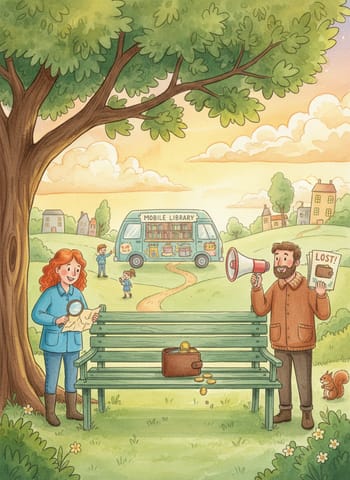
Pilar parked the library van beside the village green and switched off the engine. The morning was bright and quiet. Nobody was waiting yet. She liked this stop best, because the benches faced the old fountain and the grass smelled sweet.
皮拉尔把图书馆流动车停在村里的草坪旁,关掉了发动机。早晨明亮而安静。还没有人在等。她最喜欢这一站,因为长椅正对着那座老喷泉,草地闻起来甜丝丝的。
Uzma climbed out of the passenger side with a box of returned books. She had worked on the van for three months, and she still counted every book twice.
乌兹玛从副驾驶那一侧爬下车,抱着一箱还回来的书。她在流动车上工作了三个月,每本书还是要数两遍。
"Pilar, come and look," Uzma called from the far corner of the green. "There's a wallet on the bench."
“皮拉尔,快来看,”乌兹玛在草坪远处的角落里喊道,“长椅上有个钱包。”
Pilar walked over. The wallet was brown and worn at the edges. It lay flat on the wood, as if someone had put it down on purpose.
皮拉尔走了过去。钱包是棕色的,边角已经磨旧。它平平地躺在木头上,好像有人是特意把它放在那儿的。
"Don't open it yet," Pilar said. "Let's see if anyone comes back for it."
“先别打开,”皮拉尔说,“看看有没有人回来取。”
They waited ten minutes. Nobody stopped.
她们等了十分钟。没有人停下来。
"Fine," Uzma said. "Now can we open it?"
“好吧,”乌兹玛说,“现在可以打开了吗?”
Pilar nodded. Inside, they found a few coins, a shop receipt and a key on a green ribbon. There was also a small photograph of a boy holding a fish. There was no bank card and no name. There was no phone number either.
皮拉尔点点头。里面有几枚硬币、一张商店收据,还有一把系着绿丝带的钥匙。还有一张小照片,照片上是一个男孩,举着一条鱼。没有银行卡,也没有名字。也没有电话号码。
"Whoever he is, he's careful," Uzma said. "Or very unlucky."
“不管他是谁,都很细心,”乌兹玛说,“或者是非常倒霉。”
"Or he doesn't want to be found," Pilar said. "But I think he is just forgetful. Most people are."
“或者他不想被找到,”皮拉尔说,“但我觉得他只是健忘。大多数人都这样。”
She put the wallet in her jacket pocket. The first readers had arrived by then, and she had to open the side door of the van. For an hour, Pilar and Uzma stamped cards and answered questions. The wallet stayed heavy against Pilar's side.
她把钱包放进夹克口袋里。第一批读者这时已经到了,她得去打开车的侧门。一个小时里,皮拉尔和乌兹玛盖借书卡的章,回答各种问题。钱包沉甸甸地贴着皮拉尔的腰侧。
At eleven o'clock, Uzma looked up from the desk. "We can't just wait for him," she said. "Let's do something."
十一点钟,乌兹玛从桌后抬起头。“我们不能光等着他,”她说,“得做点什么。”
"Such as what?"
“比如什么?”
"Ask around. The village shop is right there. The owner knows everybody."
“四处问问。村里的商店就在那边。老板认识所有人。”
So they put a sign on the van door that said BACK IN TEN MINUTES. Then they walked across the green. The owner looked at the wallet for a long time and turned it over twice.
于是她们在车门上挂了一块牌子,上面写着:十分钟后回来。然后她们穿过草坪走了过去。老板看了钱包很久,翻过来看了两遍。
"I've never seen it," she said. "A lot of men in this village have brown wallets."
“我从没见过,”她说,“这个村里有很多男人都有棕色钱包。”
"Do you recognise the photograph?" Pilar asked.
“你认得这张照片吗?”皮拉尔问。
"A boy with a fish. That could be anyone's son, or anyone's brother." The owner gave it back. "The police station is in the next town. That's your best chance."
“一个拿着鱼的男孩。那可能是任何人的儿子,也可能是任何人的弟弟。”老板把钱包还给她。“派出所在隔壁镇上。那是你们最好的办法。”
They tried the barber next. Then they asked the man who sold newspapers and a woman who was watering flowers. Nobody knew anything. Everybody had an opinion, though. One person said the wallet belonged to a farmer. Another said it belonged to a tourist who had already left.
接着她们去问了理发师。然后又问了卖报纸的男人和一位正在浇花的女士。没有人知道什么。不过每个人都有自己的看法。有人说钱包是一位农夫的。另一个人说是一位已经离开的游客的。
By noon, they were back at the van with nothing to show for their walk. Uzma sat on the step and rubbed her feet.
到中午,她们回到流动车旁,走了一圈却一无所获。乌兹玛坐在台阶上揉着脚。
"That was a failure," she said.
“这算是失败了,”她说。
"It was a first attempt," Pilar said. "There is a difference."
“这是第一次尝试,”皮拉尔说,“两者是有区别的。”
"Is there?"
“有吗?”
"Yes. A failure stops. An attempt tells you what to try next."
“有。失败就是停下。尝试会告诉你接下来该试什么。”
Uzma laughed. "You should put that on a poster."
乌兹玛笑了。“你该把这句话印成海报。”
The afternoon was slow. Pilar offered to drive the wallet to the police station, but Uzma shook her head. "Then the owner has to find the police station first," she said. "Think about it. He would never look there. He would look where he lost it."
下午过得很慢。皮拉尔提出开车把钱包送去派出所,乌兹玛却摇了摇头。“那样失主得先找到派出所才行,”她说,“你想想看。他绝不会去那里找。他会到丢东西的地方去找。”
Pilar took the wallet out again and spread its contents on the desk. She looked at the coins, the receipt, the key, and the photograph. Then she noticed something she had missed before. A thin strip of paper had slipped behind the photograph. She pulled it out carefully.
皮拉尔又把钱包拿出来,把里面的东西摊在桌上。她看着硬币、收据、钥匙和照片。然后她注意到一个之前漏掉的东西。照片后面滑进去一张细细的纸条。她小心地把它抽了出来。
It was a due-date slip, the kind the van printed for every borrowed book. The ink had faded, but the stamp was clear. It showed a small van with open doors, the old symbol of the library.
那是一张还书日期条,流动车给每本借出去的书都会打印一张。墨迹已经褪色,但印章还很清楚。上面是一辆敞着车门的小货车,那是图书馆的老标志。
"Uzma," Pilar said. "Look at this."
“乌兹玛,”皮拉尔说,“你看这个。”
Uzma leaned over her shoulder. "A slip from our van. What's the book?"
乌兹玛凑到她肩后。“是我们车上的纸条。是什么书?”
"Small Boats and How to Mend Them." Pilar read the faded line again. "He borrowed it two years ago. Before you started."
“《小船及其修补方法》。”皮拉尔又读了一遍那行褪色的字。“他两年前借的。那时你还没来。”
"Can we find him in the records?"
“能在记录里找到他吗?”
"No. We delete every name when a book comes back. That is the rule, and it is a good rule." Pilar smiled slowly. "But he must have loved that book. People keep slips for books they love."
“不能。书一还回来,我们就删掉所有名字。这是规矩,而且是条好规矩。”皮拉尔慢慢地笑了。“可他一定很喜欢那本书。人们会留着自己喜爱的书的借书条。”
"So he might come back for another one."
“所以他可能会回来借另一本。”
"Exactly. Nobody will come looking for a lost wallet. But a man who loves boats will always come looking for a book about boats."
“没错。没有人会为了一个丢失的钱包四处寻找。但一个爱船的人,永远会来找一本关于船的书。”
Uzma stood up. "Then we stop chasing him, and we let him chase us."
乌兹玛站了起来。“那我们就别追着他跑了,让他来追我们。”
They worked quickly. Pilar found the last copy of Small Boats and How to Mend Them on the bottom shelf. Uzma set it on a stand beside the door. Next to it, she placed a hand-written card. It said: A WALLET WAS FOUND ON THE GREEN BENCH. IF YOU CAN DESCRIBE WHAT IS INSIDE, ASK THE DRIVER.
她们动作很快。皮拉尔在最下层书架上找到了《小船及其修补方法》的最后一本。乌兹玛把它摆在门边的一个支架上。旁边,她放了一张手写的卡片。上面写着:绿色长椅上发现一个钱包。如能说出里面有什么,请找司机。
They kept the stand there for the rest of the afternoon. Several people stopped to look at it. Nobody claimed anything.
她们把支架在那儿放了整个下午。有几个人停下来看了看。没有人认领任何东西。
At four o'clock, Pilar started the engine for the second stop. It was a farm road at the edge of the valley. Uzma held the book stand steady on her knees. The road was rough, and the van shook like a loose drawer.
四点钟,皮拉尔发动引擎,前往第二站。那是山谷边缘的一条农场小路。乌兹玛把书架稳稳地扶在膝盖上。路很颠,车子晃得像一只松动的抽屉。
Only one reader was waiting at the farm road. He wore a blue work shirt and stood at the gate with his hands in his pockets. His fingers were dark with oil. He came up the steps slowly and stopped when he saw the stand.
农场小路上只有一位读者在等。他穿着蓝色工作衬衫,双手插在口袋里站在门口。他的手指被油染得发黑。他慢慢走上台阶,看到那个支架时停住了。
"Is that Small Boats?" he asked. "I've been looking for that for two years."
“那是《小船》吗?”他问,“我找那本书找了两年了。”
"We kept it for you," Uzma said, before she could stop herself.
“我们给你留着呢,”乌兹玛脱口而出。
Pilar gave her a look, then turned to the man. "Did you lose anything today? Anything small and brown?"
皮拉尔瞪了她一眼,然后转向那个男人。“你今天丢了什么东西吗?小小的,棕色的?”
The man put a hand to his back pocket and froze. "My wallet," he said. "I thought I left it at home. I've been turning the house over since lunch."
男人伸手摸向后口袋,僵住了。“我的钱包,”他说,“我以为落在家里了。从中午起我就把屋子翻了个底朝天。”
"What is in it?" Pilar asked.
“里面有什么?”皮拉尔问。
"Not much. Some coins. A receipt for wire. And a photo of me when I was seven, with the biggest fish I ever caught." He grinned. "That was a lie, by the way. It was a small fish, and my father held it closer to the camera."
“不多。几枚硬币。一张买铁丝的收据。还有一张我七岁时的照片,拿着我钓过的最大的一条鱼。”他咧嘴笑了。“顺便说一句,那是谎话。其实是条小鱼,我爸爸把它举得更靠近镜头而已。”
Pilar handed over the wallet. The man checked every part of it, one thing at a time. He seemed afraid the items had changed. Then he held the photograph up to the light and laughed.
皮拉尔把钱包递了过去。男人一样一样地检查每一个部分,好像怕东西会变了样。然后他把照片举到光下,笑了起来。
"I sat on that bench to read the first chapter of this book," he said. "I must have put the wallet down to turn the page. How did you find me?"
“我就是坐在那张长椅上读这本书的第一章的,”他说,“翻页的时候我准是把钱包放下了。你们是怎么找到我的?”
"We didn't," Uzma said. "You found us."
“我们没找,”乌兹玛说,“是你找到了我们。”
He borrowed the book at once. Pilar stamped the card, and Uzma printed a new slip, which he folded carefully into the wallet. At the door, he stopped and took the key on the green ribbon out of the wallet.
他立刻把书借了。皮拉尔盖了章,乌兹玛打印出一张新的借书条,他小心地把它折好放进钱包里。到了门口,他停住了,从钱包里取出系着绿丝带的钥匙。
"Please keep this for me," he said.
“请替我保管这个,”他说。
"Why?" Pilar asked.
“为什么?”皮拉尔问。
"Because I have another one at home, and this is the last one I should carry around." He pressed it into her hand. "I'll tell you what it opens when I bring the boat."
“因为我家里还有一把,这把是我最不该随身带的。”他把钥匙塞进她手里。“等我把船带来,我再告诉你它能打开什么。”
He went down the steps and walked toward the gate, whistling. Pilar watched him go, with the key warm in her palm.
他走下台阶,吹着口哨朝大门走去。皮拉尔目送他离开,钥匙在她掌心里暖暖的。
"What boat?" Uzma whispered.
“什么船?”乌兹玛小声问。
"I have no idea."
“我一点头绪也没有。”
Pilar hung the key on the hook above the driver's seat. It swung there while they drove home, tapping the glass. Neither of them said another word about it.
皮拉尔把钥匙挂在驾驶座上方的挂钩上。回家的路上,它在那里晃荡,轻轻敲着玻璃。两个人谁也没有再提起它。