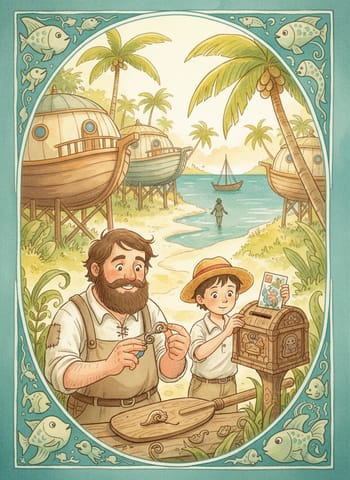
The boat hut on Lake Verne had only one rule that Emre cared about. Every boat had to be back before six o'clock. After that, he locked the door, counted the money and cycled home along the shore.
维尔纳湖边的船屋只有一条规矩是埃姆雷真正在乎的。每条船都必须在六点之前回来。过了六点,他就锁上门,数好钱,沿着湖岸骑车回家。
It was twenty past five when the boy walked in. He was about Emre's age, thin and tall, with a backpack on one shoulder. In his hand, he held a postcard against his chest as if it might fly away.
那个男孩走进来时,已经五点二十了。他和埃姆雷年纪相仿,又瘦又高,一边肩膀上挎着背包。他手里拿着一张明信片,紧紧贴在胸前,好像怕它飞走似的。
"Are you still renting boats?" he asked.
“你们还在租船吗?”他问。
"For forty more minutes," Emre said. "Then I lock up. Where do you want to go?"
“还有四十分钟,”埃姆雷说,“之后我就锁门了。你想去哪儿?”
"To the island." The boy pointed through the window at the small green shape in the middle of the lake. "My name is Osei. I only need ten minutes there."
“去那个岛。”男孩透过窗户指向湖中央那个绿色的小小身影。“我叫奥塞。我只需要在那里待十分钟。”
Emre looked at the clock above the door. Then he looked at the water. The surface was smooth and gold, and the lake was almost empty. It was the best hour of the day, and he had never once taken it for himself.
埃姆雷看了看门上方的钟。又看了看湖水。湖面平滑,泛着金光,湖上几乎没有什么人。这是一天中最好的时光,而他从来没有一次把这段时间留给自己。
"The trip takes twenty minutes each way," he said. "If you row well."
“单程要二十分钟,”他说,“如果你划得好的话。”
"I row very well," Osei said.
“我划得很好,”奥塞说。
That turned out to be false. Emre understood it ten seconds later. Osei tried to sit in the first boat and nearly fell into the water. He caught the boy by the sleeve and pulled him back onto the dock.
结果这话是假的。埃姆雷十秒钟后就明白了。奥塞想坐进第一条船,差点掉进水里。埃姆雷抓住他的袖子,把他拉回了码头。
"Maybe I row a little," Osei admitted.
“也许我只会划一点点,”奥塞承认道。
"Then I will come with you," Emre said. "The rule says beginners must have a guide, and I would like my boats to return."
“那我跟你一起去,”埃姆雷说,“规定说新手必须有人带,而且我希望我的船能回来。”
They chose the only boat left on the rack. It was a blue wooden rowboat with the number six painted on the side. Emre slid it into the water, and Osei climbed in carefully. When Emre fitted the first oar into its holder, the oar slipped out and splashed into the lake.
他们挑了架子上剩下的唯一一条船。那是一条蓝色的木划艇,船身上漆着数字六。埃姆雷把船滑进水里,奥塞小心翼翼地爬了上去。埃姆雷把第一支桨装进桨架时,桨滑了出来,扑通一声掉进了湖里。
"That is strange," Emre said.
“真奇怪,”埃姆雷说。
He pulled the oar back in and checked the metal holder. A small pin was missing from the top, the one that keeps the oar in place. Without it, every stroke would throw the oar out sideways.
他把桨拉回来,检查金属桨架。顶部少了一根小销子,就是固定船桨用的那根。没有它,每划一下桨都会向侧面甩出去。
"Is it broken?" Osei asked.
“是坏了吗?”奥塞问。
"It is missing. Someone probably lost it last week." Emre sighed. He glanced at the clock inside the hut. It was now twenty-five past five. "I have more pins in the shed, but the shed key is in my other jacket at home."
“是不见了。可能是上周有人弄丢的。”埃姆雷叹了口气。他瞥了一眼小屋里的钟。现在是五点二十五分了。“棚子里还有备用的销子,可是棚子的钥匙在我家里另一件外套里。”
"Then we cannot go."
“那我们就去不成了。”
"I did not say that."
“我可没这么说。”
Emre stood on the dock with his hands on his hips. He thought about the toolbox in the hut. He remembered a drawer full of old bolts, nails and zip ties. Then he ran inside and came back with a handful of long plastic ties.
埃姆雷双手叉腰站在码头上。他想到了小屋里的工具箱。他记起有个抽屉里装满了旧螺栓、钉子和扎带。然后他跑进屋里,抓了一把长长的塑料扎带回来。
"What are those for?" Osei asked.
“那是干什么用的?”奥塞问。
"For a lesson in boat repair," Emre said. "Hold the oar."
“上一堂修船课,”埃姆雷说,“扶着桨。”
He pushed a tie through the hole where the pin had been and pulled it round the oar. He added a second tie, and then a third. Soon the oar sat firmly in its holder. He tested it with a hard pull. The oar did not move.
他把一根扎带穿过原来插销子的孔,绕过船桨拉紧。他又加了第二根,接着是第三根。很快,桨就牢牢地固定在了桨架里。他用力拉了一下试试。桨纹丝不动。
"It is not beautiful," he said, "but it is safe. Let's go."
“不好看,”他说,“但很安全。我们走吧。”
They left the dock at half past five. Emre rowed, and Osei sat in the back with the postcard on his knees. Behind them, the town got smaller. Ahead, the island grew.
他们五点半离开了码头。埃姆雷划桨,奥塞坐在船尾,明信片放在膝盖上。身后,小镇越变越小。前方,小岛越来越大。
"You never told me why you must go there," Emre said.
“你还没告诉我,你为什么一定要去那里,”埃姆雷说。
"There is a box," Osei said. "A wooden box on a post, on the north side. People leave things inside it. Letters, drawings, little stones."
“那里有个盒子,”奥塞说,“一个木盒子,放在北边的一根柱子上。人们会把东西放在里面。信、图画、小石头。”
"I know the box. Tourists leave it full of rubbish."
“我知道那个盒子。游客总把它塞满垃圾。”
"I want to leave this." Osei held up the postcard. On the front, there was a picture of a mountain. "But I have a problem. Look at the back."
“我想把这个放进去。”奥塞举起明信片。正面是一幅山的图画。“可我有个难题。你看背面。”
Emre leaned in while the boat drifted. The card was filled with neat handwriting. At the top, where the address should have been, there was only a blank space.
船在水上漂着,埃姆雷凑过去看。卡片上写满了工整的字迹。在最上面,本该写地址的地方,只有一片空白。
"You forgot to write the address," Emre said.
“你忘了写地址,”埃姆雷说。
"No. There is none." Osei smiled for the first time. "It is a card for nobody. For whoever opens the box."
“不是。根本没有地址。”奥塞第一次笑了。“这是一张写给没有人的卡片。写给打开盒子的任何人。”
"That is a strange thing to do."
“这事做得真奇怪。”
"I moved to this town three weeks ago," Osei said. "I do not know anybody here. My parents are busy, and my old friends are very far away. So I started to write cards to strangers. I leave one in each place I like."
“我三个星期前搬到这个镇上,”奥塞说,“我在这里一个人都不认识。我爸妈很忙,我以前的朋友都在很远的地方。所以我开始给陌生人写卡片。每到一个我喜欢的地方,就留下一张。”
Emre said nothing for a while. He just rowed.
埃姆雷好一阵没有说话。他只是划着船。
"How many have you left?" he asked.
“你已经留了多少张?”他问。
"Four. A park bench, a library, a fence and a bridge. I never know if anyone reads them." Osei looked at the island. "That is why I chose the box. People open it on purpose."
“四张。一张在公园长椅上,一张在图书馆,一张在围栏上,一张在桥上。我从来不知道有没有人读。”奥塞望着小岛。“所以我选了这个盒子。人们是特意去打开它的。”
They reached the island at ten to six. Emre jumped out and pulled the boat onto the sand. The place was quiet, with tall reeds and one narrow path. At the end of the path stood a post with a small wooden box on top.
他们六点差十分到了岛上。埃姆雷跳下船,把船拖上沙滩。这里很安静,长着高高的芦苇,只有一条窄窄的小路。小路尽头立着一根柱子,顶上放着一个小木盒。
Osei walked up to it and tried to open the lid. It did not move.
奥塞走上前,想掀开盖子。盖子纹丝不动。
"It is stuck," he said.
“卡住了,”他说。
"The wood gets swollen in summer," Emre said. "Let me try."
“木头在夏天会膨胀,”埃姆雷说,“我来试试。”
He pulled, and he pushed, and he knocked on the sides with his fist. Nothing happened. The time was going, and he could feel it in his chest. At last he took a key from his pocket. He slid it into the crack under the lid and pressed down.
他拉,他推,还用拳头敲打盒子的侧面。什么也没发生。时间一分一秒地过去,他能在胸口感觉到。最后他从口袋里掏出一把钥匙。他把钥匙插进盖子下的缝里,往下一压。
The lid opened with a loud crack.
盖子啪的一声打开了。
Inside, the box was full of folded paper, shells and a single faded ribbon. Osei looked at the contents for a long time. Then he laid his postcard on top, with the words facing up.
盒子里装满了折起的纸、贝壳,还有一条褪了色的丝带。奥塞盯着里面的东西看了很久。然后他把明信片放在最上面,字朝上。
"Will you read it first?" he asked.
“你愿意先读一读吗?”他问。
"It is not addressed to me," Emre said.
“这不是写给我的,”埃姆雷说。
"It is not addressed to anyone."
“它不是写给任何人的。”
Emre took the card and read it quickly, standing in the low gold light. It was short. It said that the writer was new here. It said the lake was the first thing he had loved in this town. It said that if the reader was also a stranger, they were not alone.
埃姆雷拿起卡片,站在低低的金色光线里很快读了一遍。内容很短。上面说写信的人刚来这里。说这座湖是他在这个小镇上爱上的第一样东西。说如果读信的人也是个陌生人,那他并不孤单。
He read it twice. When he looked up, Osei was watching the water.
他读了两遍。抬起头时,奥塞正望着湖水。
"I wrote it this morning," Osei said. "When I first saw the lake."
“我今天早上写的,”奥塞说,“就在我第一次看见这座湖的时候。”
"You did not know who would read it."
“你不知道谁会来读。”
"No," Osei said. "That is why I left the address empty."
“不知道,”奥塞说,“所以我才把地址空着。”
Emre looked at the box again. He was glad that he was the first reader.
埃姆雷又看了看那个盒子。他很高兴自己是第一个读者。
Emre put the card back in the box, and he closed the lid carefully. They walked down to the boat without speaking. The sun was almost on the water by then, and the lake was the colour of copper.
埃姆雷把卡片放回盒子里,小心地合上了盖子。他们一言不发地走回船边。这时太阳几乎要贴到水面上了,湖水泛着铜一样的颜色。
On the way back, Emre rowed harder than he had ever rowed before. The plastic ties held. They reached the dock at four minutes past six. A cyclist on the shore waved, as if they had returned from a long journey.
回程的路上,埃姆雷划得比以往任何时候都用力。塑料扎带牢牢撑住了。他们六点过四分到了码头。岸上一位骑车的人朝他们挥手,仿佛他们刚结束了一场漫长的旅行。
Emre tied the boat to its post and locked the hut. Osei waited next to him with his backpack in both hands.
埃姆雷把船系在桩子上,锁好了船屋。奥塞双手抱着背包,在他旁边等着。
"I broke your rule," Emre said. "I was late by four minutes."
“我破了你的规矩,”埃姆雷说,“我晚了四分钟。”
"I am sorry."
“对不起。”
"Don't be. I never take the best hour for myself." Emre looked at the lake, then at the boy. "Do you have another card in that bag?"
“别这么说。我从来没有把最好的时光留给自己。”埃姆雷望了望湖,又看了看男孩。“你包里还有别的卡片吗?”
"I have six," Osei said.
“我还有六张,”奥塞说。
Emre held out his hand. "Can I borrow a pen? I want to know what you write when you are not a stranger any more."
埃姆雷伸出手。“能借我一支笔吗?我想知道,等你不再是陌生人的时候,你会写些什么。”
Osei took out a pen. "I do not know yet," he said. "What would you write?"
奥塞拿出一支笔。“我还不知道,”他说,“你会写什么?”