A Visitor in the Only Goal
भाषा सीखने वालों के लिए स्तर A2 की एक मुफ़्त अंग्रेज़ी कहानी, जिसे 7 भाषाओं में ऑनलाइन पढ़ा जा सकता है और मुफ़्त Storyteller ऐप में सुना भी जा सकता है।
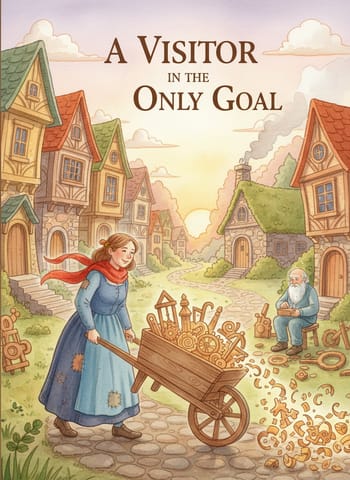
Gudrun pushes a mystery wheelbarrow from house to house until she finds the quiet man who made the wood inside it.
झलक पूरी हुई! पूरी कहानी मुफ़्त Storyteller ऐप में सुनें। ऐप पाएँ
अभी ऑडियो उपलब्ध नहीं है।
The village pitch has one goal. The other goal is gone. Nobody remembers when it went. The pitch is a long strip of grass behind the school. It leans a little to the left. Every game here is played at the same end.
गाँव के मैदान में सिर्फ़ एक गोल है। दूसरा गोल ग़ायब है। किसी को याद नहीं कि वह कब गया। मैदान स्कूल के पीछे घास की एक लंबी पट्टी है। वह थोड़ा बाईं ओर झुका हुआ है। यहाँ हर खेल एक ही छोर पर खेला जाता है।
Gudrun keeps the pitch. Nobody pays her, and nobody asked her to. She cuts the grass on Saturdays. She marks the lines with white powder. On Sunday mornings she walks the grass alone and picks up stones.
गुडरुन मैदान की देखभाल करती है। उसे कोई पैसे नहीं देता, और किसी ने उससे कहा भी नहीं था। वह शनिवार को घास काटती है। वह सफ़ेद चूने से रेखाएँ खींचती है। रविवार की सुबह वह अकेली घास पर टहलती है और पत्थर चुनती है।
On Thursday, she comes early to fix a hole in the grass. It is just after six. The air is cool and the grass is wet. She stops at the edge of the pitch.
गुरुवार को वह घास का एक गड्ढा भरने के लिए जल्दी आती है। अभी छह बजे के बाद का ही वक़्त है। हवा ठंडी है और घास गीली है। वह मैदान के किनारे रुक जाती है।
A wheelbarrow stands inside the goal.
गोल के अंदर एक ठेला खड़ा है।
It is green, with a bent handle. The wheel looks new. A rope holds a sheet over the load. Nobody is near it. There are no footprints in the wet grass, except her own. A thin line of wheel marks runs back to the lane.
वह हरा है, उसका हैंडल मुड़ा हुआ है। पहिया नया लगता है। एक रस्सी ने सामान पर एक चादर बाँध रखी है। आसपास कोई नहीं है। गीली घास पर उसके अपने पैरों के निशानों के सिवा कोई निशान नहीं है। पहिये के निशानों की एक पतली रेखा गली तक वापस जाती है।
Gudrun walks around the wheelbarrow twice. Then she lifts the sheet. Under it lie three long pieces of pale wood. They are smooth and straight. Someone worked on them for hours.
गुडरुन ठेले के दो चक्कर लगाती है। फिर वह चादर उठाती है। उसके नीचे हल्के रंग की लकड़ी के तीन लंबे टुकड़े पड़े हैं। वे चिकने और सीधे हैं। किसी ने उन पर घंटों मेहनत की है।
"Somebody forgot you," she says to the wheelbarrow.
"कोई तुम्हें भूल गया," वह ठेले से कहती है।
She cannot leave it there. The children come at four to play. They will climb on it, or push it down the hill. The wood looks too good for that. So Gudrun takes the handles. The load is heavier than it looks. She leans forward and pushes it up the lane.
वह उसे वहाँ छोड़ नहीं सकती। बच्चे चार बजे खेलने आते हैं। वे उस पर चढ़ जाएँगे, या उसे ढलान से नीचे धकेल देंगे। लकड़ी इसके लिए बहुत अच्छी लगती है। इसलिए गुडरुन हैंडल पकड़ लेती है। बोझ दिखने से ज़्यादा भारी है। वह आगे झुककर उसे गली में ऊपर धकेलती है।
The first house on the lane belongs to a farmer. He stands at his gate with a bucket of seed. A few hens walk around his boots.
गली का पहला घर एक किसान का है। वह अपने फाटक पर बीजों की बाल्टी लिए खड़ा है। कुछ मुर्गियाँ उसके जूतों के चारों ओर घूम रही हैं।
"Is this yours?" Gudrun asks.
"क्या यह आपका है?" गुडरुन पूछती है।
The farmer puts down the bucket. He looks at the wheelbarrow for a long time. He taps the wheel with one finger.
किसान बाल्टी नीचे रख देता है। वह देर तक ठेले को देखता रहता है। वह एक उँगली से पहिये को थपथपाता है।
"No," he says. "Mine has a flat wheel and a hole in the floor. This one is too nice for a farm."
"नहीं," वह कहता है। "मेरे ठेले का पहिया पंक्चर है और उसकी तली में छेद है। यह खेत के लिए कुछ ज़्यादा ही बढ़िया है।"
He lifts the sheet and whistles at the wood. "That is not a farm job. That is a careful job. Ask the mason."
वह चादर उठाता है और लकड़ी देखकर सीटी बजाता है। "यह खेत का काम नहीं है। यह बारीक काम है। राजमिस्त्री से पूछो।"
"Where is he?"
"वह कहाँ है?"
"Down by the church. I will walk with you. I want to see his face."
"गिरजे के पास। मैं तुम्हारे साथ चलता हूँ। मुझे उसका चेहरा देखना है।"
So the farmer leaves his bucket. He takes one handle, and Gudrun takes the other. They go down the lane together. The wheel makes a soft sound on the stones. A dog follows them for a while and then gives up.
तो किसान अपनी बाल्टी वहीं छोड़ देता है। वह एक हैंडल पकड़ लेता है, और गुडरुन दूसरा। वे साथ-साथ गली से नीचे जाते हैं। पहिया पत्थरों पर हल्की आवाज़ करता है। एक कुत्ता कुछ देर उनके पीछे चलता है, फिर हार मान लेता है।
The mason works in a yard behind the church. He cuts a stone step when they arrive. Dust covers his arms. He stops and takes off his gloves.
राजमिस्त्री गिरजे के पीछे के अहाते में काम करता है। उनके पहुँचने पर वह पत्थर की एक सीढ़ी काट रहा है। उसकी बाँहों पर धूल जमी है। वह रुककर अपने दस्ताने उतार देता है।
"A new wheelbarrow," he says. "Very nice."
"एक नया ठेला," वह कहता है। "बहुत बढ़िया।"
He walks around it as Gudrun did. "But it is not mine. I only use iron ones. Wood and green paint are not my kind of work."
वह उसके चारों ओर वैसे ही घूमता है जैसे गुडरुन घूमी थी। "पर यह मेरा नहीं है। मैं सिर्फ़ लोहे के ठेले इस्तेमाल करता हूँ। लकड़ी और हरा रंग मेरे तरह का काम नहीं है।"
He touches one of the long pieces. "Somebody cut this at home, with a hand saw. Look at the ends. They are square, but not too square."
वह एक लंबे टुकड़े को छूता है। "किसी ने इसे घर पर हाथ के आरे से काटा है। सिरों को देखो। वे चौकोर हैं, पर बहुत ज़्यादा चौकोर नहीं।"
"What does that mean?" Gudrun says.
"इसका क्या मतलब है?" गुडरुन कहती है।
"It means somebody was patient," the mason says. "And somebody who is patient with wood is usually patient with children. Try the school. They have a man who fixes everything."
"इसका मतलब है कि किसी ने धीरज रखा," राजमिस्त्री कहता है। "और जो लकड़ी के साथ धीरज रखता है, वह आम तौर पर बच्चों के साथ भी धीरज रखता है। स्कूल में कोशिश करो। उनके पास एक आदमी है जो सब कुछ ठीक कर देता है।"
Gudrun knows who he means. She stops walking.
गुडरुन जानती है कि उसका मतलब किससे है। वह चलते-चलते रुक जाती है।
"Come," says the farmer. "It is not far."
"चलो," किसान कहता है। "ज़्यादा दूर नहीं है।"
The three of them go back toward the school. The sun is higher now. The school windows shine. A bell rings for the early class. At the side door, a man fixes the door. He wears a blue coat. His name is Alois. He keeps the school and its garden. He is also Gudrun's neighbor. Every day he says hello to her, very loudly, and nothing more.
तीनों स्कूल की ओर लौट जाते हैं। सूरज अब ऊपर चढ़ आया है। स्कूल की खिड़कियाँ चमक रही हैं। सुबह की कक्षा के लिए घंटी बजती है। बग़ल के दरवाज़े पर एक आदमी दरवाज़ा ठीक कर रहा है। उसने नीला कोट पहना है। उसका नाम आलोइस है। वह स्कूल और उसके बगीचे की देखभाल करता है। वह गुडरुन का पड़ोसी भी है। हर दिन वह उसे बहुत ज़ोर से नमस्ते कहता है, और बस इतना ही।
Alois sees the wheelbarrow and goes very still. A small tool hangs from his hand.
आलोइस ठेले को देखता है और बिल्कुल स्थिर हो जाता है। उसके हाथ से एक छोटा औज़ार लटक रहा है।
"Is it yours?" asks the farmer.
"क्या यह तुम्हारा है?" किसान पूछता है।
"It is mine," Alois says slowly.
"मेरा है," आलोइस धीरे से कहता है।
"Then why is it standing in the only goal?" Gudrun asks.
"तो यह इकलौते गोल में क्यों खड़ा है?" गुडरुन पूछती है।
Alois looks at his boots. He tries to speak twice and stops. At last he laughs, a little shy.
आलोइस अपने जूतों को देखता है। वह दो बार बोलने की कोशिश करता है और रुक जाता है। आख़िर में वह थोड़ा शरमाकर हँस पड़ता है।
"Nobody comes to that goal at night," he says. "I thought it was the safest place in the village."
"उस गोल के पास रात को कोई नहीं आता," वह कहता है। "मुझे लगा कि यह गाँव की सबसे सुरक्षित जगह है।"
The farmer laughs so hard that he must sit on the step. Even the mason smiles.
किसान इतनी ज़ोर से हँसता है कि उसे सीढ़ी पर बैठना पड़ता है। राजमिस्त्री भी मुस्कुरा देता है।
"You made these?" Gudrun asks. She lifts the sheet once more.
"ये तुमने बनाए हैं?" गुडरुन पूछती है। वह एक बार फिर चादर उठाती है।
"I did. From the old tree behind the school. It fell in the spring." Alois rubs the back of his neck. "I cut it, and dried it, and made it smooth for months. Every evening, after work. I wanted to bring it on Saturday, before you came. I wanted to finish it first."
"हाँ। स्कूल के पीछे के पुराने पेड़ से। वह वसंत में गिर गया था।" आलोइस गर्दन के पीछे हाथ फेरता है। "मैंने उसे काटा, सुखाया, और महीनों तक चिकना किया। हर शाम, काम के बाद। मैं इसे शनिवार को लाना चाहता था, तुम्हारे आने से पहले। मैं पहले इसे पूरा कर लेना चाहता था।"
"Done?"
"क्या पूरा करना?"
"A second goal," he says. "Everybody always shoots at the same end. The game only goes one way. I thought it needed two."
"एक दूसरा गोल," वह कहता है। "सब हमेशा एक ही छोर पर शॉट मारते हैं। खेल बस एक ही तरफ़ जाता है। मुझे लगा कि दो होने चाहिए।"
Gudrun says nothing. She looks at the wood. Then she looks at the hands that shaped it. They are rough and cracked. They are the hands of a person who works and says little.
गुडरुन कुछ नहीं कहती। वह लकड़ी को देखती है। फिर वह उन हाथों को देखती है जिन्होंने उसे गढ़ा है। वे खुरदरे और फटे हुए हैं। वे उस इंसान के हाथ हैं जो काम करता है और कम बोलता है।
"I tried to tell you," Alois says. "Many times. Every time, I only said hello."
"मैंने तुम्हें बताने की कोशिश की," आलोइस कहता है। "कई बार। हर बार मैं बस नमस्ते ही कह पाया।"
"You said hello very loudly," Gudrun says.
"तुमने बहुत ज़ोर से नमस्ते कहा," गुडरुन कहती है।
"Yes. I am sorry about that."
"हाँ। उसके लिए माफ़ी चाहता हूँ।"
The farmer clears his throat. "We have somewhere else to be," he says. Then he walks back toward his hens. The mason follows him, looking at the sky.
किसान गला साफ़ करता है। "हमें कहीं और जाना है," वह कहता है। फिर वह अपनी मुर्गियों की ओर लौट जाता है। राजमिस्त्री आसमान की ओर देखता हुआ उसके पीछे चल देता है।
Alois and Gudrun stand by the side door. A child's voice comes from the classroom. Somebody counts out loud.
आलोइस और गुडरुन बग़ल के दरवाज़े के पास खड़े रहते हैं। कक्षा से एक बच्चे की आवाज़ आती है। कोई ज़ोर से गिनती कर रहा है।
"We need a rope and a spade," Gudrun says at last.
"हमें एक रस्सी और एक फावड़ा चाहिए," गुडरुन आख़िरकार कहती है।
"I have both."
"मेरे पास दोनों हैं।"
"And a measuring line."
"और एक नापने की डोरी।"
"I have that too."
"वह भी है।"
"Then bring them," she says. "I know where the other end of the pitch is."
"तो ले आओ," वह कहती है। "मुझे पता है कि मैदान का दूसरा छोर कहाँ है।"
They push the wheelbarrow together, one on each handle. It is easier now that there are two of them. They go back down the lane. They pass the church and reach the grass.
वे ठेले को साथ मिलकर धकेलते हैं, हर हैंडल पर एक-एक। अब दो होने से यह आसान है। वे गली से नीचे लौटते हैं। वे गिरजे के पास से गुज़रकर घास तक पहुँचते हैं।
All morning they work at the far end. Gudrun marks the ground with white powder. Alois digs two deep holes. They set the pale posts in the holes. They tie the crossbar with careful knots. By noon the second goal stands against the sky. It is straight, though the pitch leans to the left.
सारी सुबह वे दूर वाले छोर पर काम करते हैं। गुडरुन ज़मीन पर सफ़ेद चूने से निशान लगाती है। आलोइस दो गहरे गड्ढे खोदता है। वे हल्के रंग के खंभे गड्ढों में खड़े कर देते हैं। वे बड़े ध्यान से गाँठें बाँधकर आड़ी पट्टी कसते हैं। दोपहर तक दूसरा गोल आसमान के सामने खड़ा हो जाता है। वह सीधा है, भले ही मैदान बाईं ओर झुका हुआ हो।
In the evening, the two of them sit on the grass. The sun is low, and the whole pitch turns gold. The old goal stands at one end. The new one stands at the other. On the halfway line, the green wheelbarrow rests with its wheel still.
शाम को दोनों घास पर बैठते हैं। सूरज नीचे है, और पूरा मैदान सुनहरा हो जाता है। पुराना गोल एक छोर पर खड़ा है। नया दूसरे छोर पर। बीच की रेखा पर हरा ठेला पहिया रोके आराम कर रहा है।