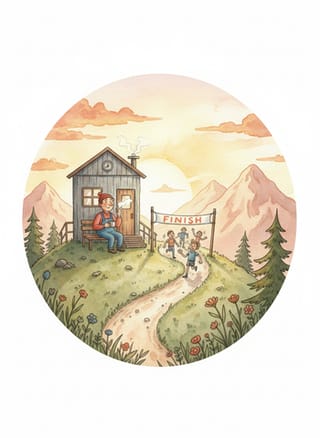
The village pitch has one goal. The other goal is gone. Nobody remembers when it went. The pitch is a long strip of grass behind the school. It leans a little to the left. Every game here is played at the same end.
村里的球场只有一个球门。另一个球门不见了,没人记得它是什么时候没的。球场是学校后面一长条草地,微微向左倾斜。这里的每场比赛,都在同一端踢。
Gudrun keeps the pitch. Nobody pays her, and nobody asked her to. She cuts the grass on Saturdays. She marks the lines with white powder. On Sunday mornings she walks the grass alone and picks up stones.
古德伦照看着这块球场。没人给她工钱,也没人请她这么做。星期六她修剪草坪,用白粉画线。星期天早上,她独自走在草地上,捡起石子。
On Thursday, she comes early to fix a hole in the grass. It is just after six. The air is cool and the grass is wet. She stops at the edge of the pitch.
星期四,她早早赶来,要补一个草皮上的坑。刚过六点,空气清凉,草地湿漉漉的。她在球场边停住了脚步。
A wheelbarrow stands inside the goal.
球门里停着一辆手推车。
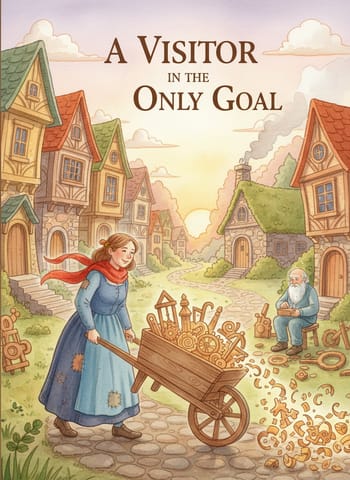
It is green, with a bent handle. The wheel looks new. A rope holds a sheet over the load. Nobody is near it. There are no footprints in the wet grass, except her own. A thin line of wheel marks runs back to the lane.
它是绿色的,把手弯了,轮子看上去很新。一根绳子压着一块盖住货物的布单。附近一个人也没有。湿漉漉的草地上,除了她自己的脚印,没有别的脚印,只有一道细细的车轮印子,一直通向小巷。
Gudrun walks around the wheelbarrow twice. Then she lifts the sheet. Under it lie three long pieces of pale wood. They are smooth and straight. Someone worked on them for hours.
古德伦绕着手推车走了两圈。然后她掀开布单。下面放着三根长长的浅色木头,光滑而笔直。有人在上面花了好几个钟头。
"Somebody forgot you," she says to the wheelbarrow.
“有人把你忘在这儿了。”她对手推车说。
She cannot leave it there. The children come at four to play. They will climb on it, or push it down the hill. The wood looks too good for that. So Gudrun takes the handles. The load is heavier than it looks. She leans forward and pushes it up the lane.
她不能把它留在那儿。孩子们四点钟就会来踢球。他们会爬上去,或者把它推下山坡。这些木头太好了,不能这样糟蹋。于是古德伦握住把手。车上的东西比看上去重。她身体前倾,把它推上了小巷。
The first house on the lane belongs to a farmer. He stands at his gate with a bucket of seed. A few hens walk around his boots.
巷子里第一户人家是个农夫的。他提着一桶种子站在门口,几只母鸡绕着他的靴子走来走去。
"Is this yours?" Gudrun asks.
“这是你的吗?”古德伦问。
The farmer puts down the bucket. He looks at the wheelbarrow for a long time. He taps the wheel with one finger.
农夫放下桶。他盯着手推车看了很久,用一根手指敲了敲轮子。
"No," he says. "Mine has a flat wheel and a hole in the floor. This one is too nice for a farm."
“不是,”他说,“我的轮子是瘪的,车底还有个洞。这辆太好了,不像农家用的。”
He lifts the sheet and whistles at the wood. "That is not a farm job. That is a careful job. Ask the mason."
他掀起布单,对着那些木头吹了声口哨。“这不是农活,这是细活。去问问石匠。”
"Where is he?"
“他在哪儿?”
"Down by the church. I will walk with you. I want to see his face."
“在教堂那边。我陪你去。我想看看他的脸。”
So the farmer leaves his bucket. He takes one handle, and Gudrun takes the other. They go down the lane together. The wheel makes a soft sound on the stones. A dog follows them for a while and then gives up.
于是农夫丢下他的桶,握住一只把手,古德伦握住另一只。他们一起沿着小巷走下去。轮子在石子路上发出轻轻的声响。一条狗跟了他们一阵,然后放弃了。
The mason works in a yard behind the church. He cuts a stone step when they arrive. Dust covers his arms. He stops and takes off his gloves.
石匠在教堂后面的院子里干活。他们到的时候,他正在凿一级石阶。灰尘落满了他的手臂。他停下手,摘下手套。
"A new wheelbarrow," he says. "Very nice."
“一辆新手推车,”他说,“很漂亮。”
He walks around it as Gudrun did. "But it is not mine. I only use iron ones. Wood and green paint are not my kind of work."
他像古德伦一样绕着它走了一圈。“可它不是我的。我只用铁的。木头和绿漆不是我干的活。”
He touches one of the long pieces. "Somebody cut this at home, with a hand saw. Look at the ends. They are square, but not too square."
他摸了摸其中一根长木头。“有人在家里用手锯锯出来的。看看这两头,是方的,但又不太方。”
"What does that mean?" Gudrun says.
“这是什么意思?”古德伦说。
"It means somebody was patient," the mason says. "And somebody who is patient with wood is usually patient with children. Try the school. They have a man who fixes everything."
“意思是那个人很有耐心,”石匠说,“而对木头有耐心的人,通常对孩子也有耐心。去学校试试吧。他们那儿有个什么都会修的人。”
Gudrun knows who he means. She stops walking.
古德伦知道他指的是谁。她停住了脚步。
"Come," says the farmer. "It is not far."
“来吧,”农夫说,“不远。”
The three of them go back toward the school. The sun is higher now. The school windows shine. A bell rings for the early class. At the side door, a man fixes the door. He wears a blue coat. His name is Alois. He keeps the school and its garden. He is also Gudrun's neighbor. Every day he says hello to her, very loudly, and nothing more.
三个人往学校走回去。太阳已经升高了,学校的窗户闪闪发亮。早课的铃声响了。侧门边,有个男人正在修门。他穿着一件蓝色外套,名叫阿洛伊斯。他负责看管学校和校园的花园,也是古德伦的邻居。每天他都会很大声地跟她打招呼,除此之外什么也不说。
Alois sees the wheelbarrow and goes very still. A small tool hangs from his hand.
阿洛伊斯看见手推车,一下子僵住了。他手里垂着一件小工具。
"Is it yours?" asks the farmer.
“是你的吗?”农夫问。
"It is mine," Alois says slowly.
“是我的。”阿洛伊斯慢慢地说。
"Then why is it standing in the only goal?" Gudrun asks.
“那它为什么停在唯一的球门里?”古德伦问。
Alois looks at his boots. He tries to speak twice and stops. At last he laughs, a little shy.
阿洛伊斯低头看着自己的靴子。他两次想开口,又都停住了。最后他笑了,有点害羞。
"Nobody comes to that goal at night," he says. "I thought it was the safest place in the village."
“晚上没人去那个球门,”他说,“我觉得那是村里最安全的地方。”
The farmer laughs so hard that he must sit on the step. Even the mason smiles.
农夫笑得太厉害,只好坐到台阶上。连石匠也笑了。
"You made these?" Gudrun asks. She lifts the sheet once more.
“这些是你做的?”古德伦问。她再次掀开布单。
"I did. From the old tree behind the school. It fell in the spring." Alois rubs the back of his neck. "I cut it, and dried it, and made it smooth for months. Every evening, after work. I wanted to bring it on Saturday, before you came. I wanted to finish it first."
“是我。用学校后面那棵老树。它春天倒了。”阿洛伊斯揉了揉后颈。“我把它锯开,晒干,一连几个月打磨光滑。每天晚上下班后做。我想在星期六、你来之前把它带过去。我想先做完。”
"Done?"
“做完什么?”
"A second goal," he says. "Everybody always shoots at the same end. The game only goes one way. I thought it needed two."
“第二个球门,”他说,“大家总是朝同一端射门。比赛只有一个方向。我觉得它需要两个。”
Gudrun says nothing. She looks at the wood. Then she looks at the hands that shaped it. They are rough and cracked. They are the hands of a person who works and says little.
古德伦没有说话。她看着那些木头,又看着打磨出它们的那双手。那双手粗糙,皲裂。那是一个只做事、不多话的人的手。
"I tried to tell you," Alois says. "Many times. Every time, I only said hello."
“我试过告诉你,”阿洛伊斯说,“好多次。每一次,我都只说了一句你好。”
"You said hello very loudly," Gudrun says.
“你的‘你好’说得很大声。”古德伦说。
"Yes. I am sorry about that."
“是的。这一点我很抱歉。”
The farmer clears his throat. "We have somewhere else to be," he says. Then he walks back toward his hens. The mason follows him, looking at the sky.
农夫清了清嗓子。“我们还有别的事要做,”他说。然后他朝他的母鸡走回去。石匠跟在他后面,望着天空。
Alois and Gudrun stand by the side door. A child's voice comes from the classroom. Somebody counts out loud.
阿洛伊斯和古德伦站在侧门边。教室里传来一个孩子的声音,有人在大声数数。
"We need a rope and a spade," Gudrun says at last.
“我们需要一根绳子和一把铁锹。”古德伦终于说。
"I have both."
“两样我都有。”
"And a measuring line."
“还有一根量绳。”
"I have that too."
“那个我也有。”
"Then bring them," she says. "I know where the other end of the pitch is."
“那就拿来吧,”她说,“我知道球场另一头在哪儿。”
They push the wheelbarrow together, one on each handle. It is easier now that there are two of them. They go back down the lane. They pass the church and reach the grass.
他们一起推着手推车,一人握一只把手。有了两个人,轻松多了。他们沿着小巷走回去,经过教堂,来到草地上。
All morning they work at the far end. Gudrun marks the ground with white powder. Alois digs two deep holes. They set the pale posts in the holes. They tie the crossbar with careful knots. By noon the second goal stands against the sky. It is straight, though the pitch leans to the left.
整个上午,他们都在球场远端干活。古德伦用白粉在地上画线。阿洛伊斯挖了两个深坑。他们把浅色的门柱立在坑里,用仔细打好的结绑上横梁。到中午时,第二个球门已经矗立在天空下。它是笔直的,尽管球场向左倾斜。
In the evening, the two of them sit on the grass. The sun is low, and the whole pitch turns gold. The old goal stands at one end. The new one stands at the other. On the halfway line, the green wheelbarrow rests with its wheel still.
傍晚,两个人坐在草地上。太阳很低,整个球场都变成了金色。旧球门立在一端,新球门立在另一端。在中线上,那辆绿色的手推车静静地歇着,车轮一动不动。