The Tin That Hummed
Uma história gratuita em inglês de nível A2 para estudantes, para ler online em 7 idiomas, com opção de ouvir no app gratuito Storyteller.
A glassblower waits twenty years for a visitor to ask about the tin of buttons that hums on her shelf.
Essa foi a prévia! Ouça a história completa no app gratuito Storyteller. Baixar o app
O áudio não está disponível no momento.
Zuri opens the workshop doors at ten. The furnace is already hot. A line of visitors waits on the pavement.
Zuri abre as portas da oficina às dez. O forno já está quente. Uma fila de visitantes espera na calçada.
The workshop is her whole life. It has one big furnace and two long benches. A rope keeps visitors back. Every day, people come to watch her make glass.
A oficina é a vida inteira dela. Tem um grande forno e duas longas bancadas. Uma corda mantém os visitantes afastados. Todo dia, as pessoas vêm ver Zuri fazer vidro.
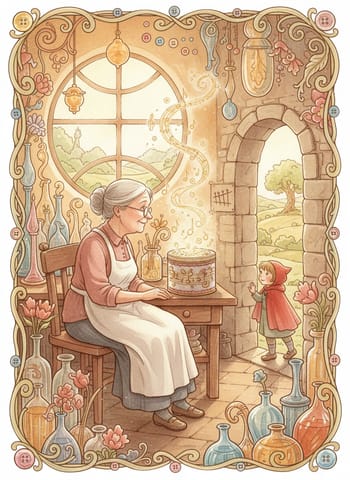
On a shelf by the window sits an old tin. It is round and dented. It is full to the top with buttons. Big ones, small ones, brown ones, silver ones.
Numa prateleira junto à janela fica uma lata velha. É redonda e amassada. Está cheia até a boca de botões. Grandes, pequenos, marrons, prateados.
Today, forty visitors stand behind the rope. Zuri takes a long steel pipe and puts it in the fire. The glass at the end glows like orange honey.
Hoje, quarenta visitantes estão atrás da corda. Zuri pega um longo tubo de aço e o põe no fogo. O vidro na ponta brilha como mel laranja.
"How hot is it?" a boy asks.
"Quão quente é?", pergunta um menino.
"Hotter than your oven," she says. "About a thousand degrees."
"Mais quente que o forno da sua casa", ela diz. "Uns mil graus."
"How long does it take to learn this?" asks a woman.
"Quanto tempo leva para aprender isso?", pergunta uma mulher.
"Many years," Zuri says. "And many burned fingers."
"Muitos anos", diz Zuri. "E muitos dedos queimados."
She turns the pipe. She blows a soft breath through it. A bubble grows at the end, round and clear. The visitors say "ooh" together.
Ela gira o tubo. Sopra por ele um hálito suave. Uma bolha cresce na ponta, redonda e transparente. Os visitantes dizem "ooh" juntos.
This is the same every day. The visitors ask about heat. They ask about price. They ask if the glass is safe to touch. Nobody asks about the tin.
É sempre igual, todo dia. Os visitantes perguntam sobre o calor. Perguntam sobre o preço. Perguntam se o vidro é seguro de tocar. Ninguém pergunta sobre a lata.
Zuri looks at it sometimes. Twenty years ago, Zuri opened this workshop. Nobody asks the one simple question. It sits there on the shelf, full of buttons. Everyone looks past it.
Zuri às vezes olha para ela. Vinte anos atrás, Zuri abriu esta oficina. Ninguém faz a única pergunta simples. A lata fica ali na prateleira, cheia de botões. Todos olham para além dela.
At noon, the last group leaves. Zuri sits down and drinks some cold water. The tin hums a little. It is a soft, low sound, like a fridge in another room. It hums only a little. It hums only when a lost button's owner is near.
Ao meio-dia, o último grupo vai embora. Zuri se senta e bebe um pouco de água gelada. A lata zumbe um pouquinho. É um som suave e grave, como uma geladeira em outro cômodo. Ela zumbe só um pouquinho. Zumbe apenas quando o dono de um botão perdido está por perto.
"Not today," she tells it. "Nobody asks."
"Hoje não", diz ela à lata. "Ninguém pergunta."
The next day is the same. And the next. A school class comes, then a family from far away. A man takes fifty photos of the furnace. No one looks at the shelf.
O dia seguinte é igual. E o outro também. Vem uma turma de escola, depois uma família de longe. Um homem tira cinquenta fotos do forno. Ninguém olha para a prateleira.
On Thursday, a woman comes in late. Her name is Hiba. She wears a long green coat. She stands at the back, behind everyone else. She does not take photos. She just watches Zuri's hands.
Na quinta-feira, uma mulher chega tarde. Chama-se Hiba. Veste um longo casaco verde. Fica lá atrás, atrás de todos os outros. Não tira fotos. Só observa as mãos de Zuri.
Zuri makes a small blue bowl. She turns it and shapes it. A quick tap cuts it free. The visitors clap.
Zuri faz uma pequena tigela azul. Ela a gira e lhe dá forma. Uma batidinha rápida a solta. Os visitantes aplaudem.
Then they leave, one by one. Soon the room is empty. Only Hiba stays.
Depois eles vão embora, um a um. Logo a sala está vazia. Só Hiba fica.
"You are very good at this," Hiba says.
"Você é muito boa nisso", diz Hiba.
"Thank you."
"Obrigada."
Hiba walks slowly around the room. She looks at the benches. She looks at the furnace. Then she stops in front of the shelf.
Hiba caminha devagar pela sala. Olha as bancadas. Olha o forno. Então para diante da prateleira.
The tin hums. It is louder now. Zuri holds her breath.
A lata zumbe. Agora está mais alto. Zuri prende a respiração.
"What is this?" Hiba asks. "Why are there so many buttons?"
"O que é isto?", Hiba pergunta. "Por que há tantos botões?"
For a moment, Zuri cannot speak. Twenty years, she thinks. Twenty years of waiting for this.
Por um momento, Zuri não consegue falar. Vinte anos, pensa ela. Vinte anos esperando por isto.
"Do you really want to know?" she asks.
"Você quer mesmo saber?", pergunta.
"Yes. I think so." Hiba smiles a little. "It hums. Is that normal?"
"Quero. Acho que sim." Hiba sorri um pouco. "Ela zumbe. Isso é normal?"
"Not for a normal tin." Zuri stands up. She takes the tin from the shelf. It feels warm in her hands, like a living thing. "Please sit."
"Não para uma lata normal." Zuri se levanta. Pega a lata da prateleira. Ela está morna em suas mãos, como um ser vivo. "Por favor, sente-se."
Hiba sits on a stool. Zuri puts the tin on the bench between them.
Hiba se senta num banquinho. Zuri põe a lata na bancada entre as duas.
"Every button here fell from a visitor's coat," Zuri says. "Over twenty years. People stand close to the furnace, and they lean over the rope. Buttons come loose. They roll on the floor, and I find them in the evening."
"Cada botão aqui caiu do casaco de um visitante", diz Zuri. "Ao longo de vinte anos. As pessoas ficam perto do forno e se debruçam sobre a corda. Os botões se soltam. Rolam pelo chão, e eu os encontro à noite."
"That is normal," says Hiba. "Buttons fall off."
"Isso é normal", diz Hiba. "Botões caem."
"Yes. But they do not stay lost." Zuri touches the tin. "When its owner comes back to this room, a button hums. Only that one. It calls to them."
"Sim. Mas eles não ficam perdidos." Zuri toca a lata. "Quando o dono volta a esta sala, um botão zumbe. Só aquele. Ele chama por ele."
Hiba looks at the tin. Her eyes are wide. "That is not possible."
Hiba olha para a lata. Seus olhos estão arregalados. "Isso não é possível."
"I know. But it happens." Zuri smiles. "The problem is simple. A button cannot go home unless someone asks about the tin. That is the rule. I cannot give it back. Someone must ask first."
"Eu sei. Mas acontece." Zuri sorri. "O problema é simples. Um botão não pode ir para casa a menos que alguém pergunte sobre a lata. Essa é a regra. Eu não posso devolver. Alguém precisa perguntar primeiro."
"Nobody ever asks?"
"Ninguém nunca pergunta?"
"Nobody. In twenty years." Zuri shrugs. "People look at the fire. They look at the glass. A tin of old buttons is not interesting."
"Ninguém. Em vinte anos." Zuri dá de ombros. "As pessoas olham o fogo. Olham o vidro. Uma lata de botões velhos não é interessante."
Hiba smiles. Then she stops. She looks down at her coat. The left sleeve has a loose thread at the end. It has no button.
Hiba sorri. Depois para. Olha para o próprio casaco. A manga esquerda tem um fio solto na ponta. Não tem botão.
"I lost a button ten days ago," she says softly. "A big green one. It matched the coat. I looked everywhere."
"Perdi um botão há dez dias", diz baixinho. "Um botão verde grande. Combinava com o casaco. Procurei por toda parte."
"Was it a big green button with a gold ring?"
"Era um botão verde grande, com um aro dourado?"
"Yes!" Hiba says. "How do you know that?"
"Sim!", diz Hiba. "Como você sabe?"
Zuri opens the tin. She puts her hand inside. The humming gets louder and louder. The whole bench seems to shake. She moves past the brown buttons and the silver ones. She passes a pile of tiny white ones.
Zuri abre a lata. Enfia a mão dentro. O zumbido fica cada vez mais alto. A bancada inteira parece tremer. Ela passa pelos botões marrons e pelos prateados. Passa por uma pilha de brancos minúsculos.
At the bottom, she finds it. It is large and green. A thin gold ring runs around the edge. It hums in her palm like a small bird.
No fundo, ela o encontra. É grande e verde. Um fino aro dourado corre pela borda. Ele zumbe na palma dela como um passarinho.
"It fell here last Monday," says Zuri. "I did not know whose it was. I only put it in the tin."
"Ele caiu aqui na segunda-feira passada", diz Zuri. "Eu não sabia de quem era. Só o coloquei na lata."
Hiba stares at it. "You waited for me to ask."
Hiba o encara. "Você esperou que eu perguntasse."
"No, I waited for anyone to ask." Zuri puts the button in her hand. "It is lucky that you came on Thursday."
"Não, esperei que qualquer pessoa perguntasse." Zuri põe o botão na mão dela. "Foi uma sorte você ter vindo na quinta."
The button stops humming. It lies still and quiet. The tin goes silent, too, for the first time in many days.
O botão para de zumbir. Fica parado e quieto. A lata também silencia, pela primeira vez em muitos dias.
Zuri's hands shake. After twenty years, a button goes home.
As mãos de Zuri tremem. Depois de vinte anos, um botão vai para casa.
"Thank you," says Hiba. She holds the button up to the light. "I do not know what to say. Do all of them do this?"
"Obrigada", diz Hiba. Ela ergue o botão contra a luz. "Não sei o que dizer. Todos fazem isso?"
"All of them. Every single one." Zuri looks at the tin. It is still half full. "So many people come back to this town. I think they all want to see the glass again. But nobody asks."
"Todos. Cada um deles." Zuri olha para a lata. Ainda está pela metade. "Tanta gente volta a esta cidade. Acho que todos querem ver o vidro de novo. Mas ninguém pergunta."
"Then I will tell my friends," Hiba says. "I will tell them to ask you about the tin."
"Então vou contar às minhas amigas", diz Hiba. "Vou dizer a elas que perguntem a você sobre a lata."
"Please do." Zuri laughs. "I am tired of sitting here with a humming box."
"Por favor, conte." Zuri ri. "Estou cansada de ficar aqui sentada com uma caixa que zumbe."
Hiba looks at her sleeve again. "Do you have a needle?"
Hiba olha para a manga de novo. "Você tem uma agulha?"
"There is one in the drawer, with some green thread." Zuri points. "I keep it for days like this."
"Tem uma na gaveta, com um pouco de linha verde." Zuri aponta. "Guardo para dias como este."
Hiba stands up and opens the drawer. She takes out the needle and the thread. She sits down on the stool again. She threads the needle on the first try.
Hiba se levanta e abre a gaveta. Tira a agulha e a linha. Senta-se de novo no banquinho. Enfia a linha na agulha de primeira.
Zuri puts the tin back on the shelf. She turns up the furnace, and picks up her steel pipe. Outside, the doors open and the next group of visitors comes in.
Zuri devolve a lata à prateleira. Aumenta o forno e pega o tubo de aço. Lá fora, as portas se abrem e o próximo grupo de visitantes entra.