The Boat That Waited for a Whistle
Uma história gratuita em inglês de nível A2 para estudantes, para ler online em 7 idiomas, com opção de ouvir no app gratuito Storyteller.
Raj and Thandi must wake a proud old rowing boat before the junior race, but its brass whistle is missing.
Essa foi a prévia! Ouça a história completa no app gratuito Storyteller. Baixar o app
O áudio não está disponível no momento.
Raj got to the boathouse at six. The city was still asleep. Only the river made a small noise against the stones.
Raj chegou à casa dos barcos às seis. A cidade ainda dormia. Só o rio fazia um barulhinho contra as pedras.
Today was a big day. The junior race started at noon. The coach gave Raj one job. He had to check the first-aid kit.
Hoje era um grande dia. A regata juvenil começava ao meio-dia. O treinador deu a Raj uma única tarefa. Ele tinha de conferir o kit de primeiros socorros.
"It is easy," the coach said last night. "Count everything on the list."
"É fácil", disse o treinador ontem à noite. "Conte tudo o que está na lista."
Raj opened the green tin on the wall. The list was inside the lid. It was written in old blue ink. He read it out loud.
Raj abriu a caixa de lata verde na parede. A lista estava dentro da tampa. Estava escrita em tinta azul antiga. Ele a leu em voz alta.
"Plasters. Tape. Scissors. One bandage. One cold pack. One brass whistle."
"Band-aids. Fita adesiva. Tesoura. Uma atadura. Uma bolsa de gelo. Um apito de latão."
He counted each thing twice. Everything was there, but the whistle. In the foam, he saw a small round space.
Contou cada coisa duas vezes. Tudo estava lá, menos o apito. Na espuma, ele viu um pequeno espaço redondo.
"A whistle?" Raj said. "Why does a first-aid kit need a whistle?"
"Um apito?", disse Raj. "Por que um kit de primeiros socorros precisa de um apito?"
"Because of the boat," said a voice behind him.
"Por causa do barco", disse uma voz atrás dele.
It was Thandi. She was the best rower in the club. She stood in the doorway with her bag on one shoulder.
Era Thandi. Ela era a melhor remadora do clube. Estava na porta, com a mochila num ombro.
"What boat?" Raj asked.
"Que barco?", perguntou Raj.
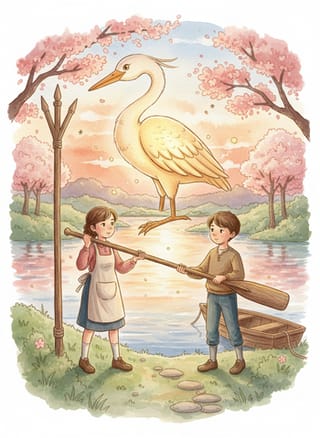
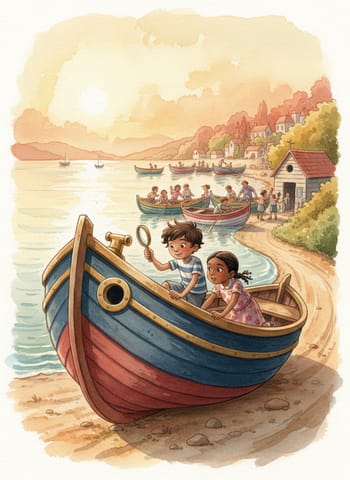
"Heron." Thandi pointed at the long wooden boat on the ramp. Its nose touched the water. "She is older than the club. She won more races than any boat in the city."
"Garça." Thandi apontou para o comprido barco de madeira na rampa. A proa tocava a água. "Ela é mais velha que o clube. Ganhou mais regatas que qualquer barco da cidade."
"So?"
"E daí?"
"So she is very proud. She only moves when she hears the brass whistle. The coach blows it at every start. He puts it back after every race."
"E daí que ela é muito orgulhosa. Ela só se move quando ouve o apito de latão. O treinador o sopra em toda largada. Ele o guarda de volta depois de cada regata."
Raj laughed. Then he looked at her face. Thandi was not joking.
Raj riu. Depois olhou para o rosto dela. Thandi não estava brincando.
"Boats do not listen," he said.
"Barcos não escutam", disse ele.
"Push her," said Thandi. "Go on."
"Empurre-a", disse Thandi. "Vá em frente."
Raj put both hands on the side of the boat. He pushed hard. Thandi pushed next to him. Heron did not move. It felt like pushing a wall.
Raj pôs as duas mãos na lateral do barco. Empurrou com força. Thandi empurrou ao lado dele. A Garça não se mexeu. Era como empurrar uma parede.
"She waits," Thandi said quietly.
"Ela espera", disse Thandi baixinho.
Raj stepped back. His hands shook a little. "The race is at noon," he said. "Heron is our boat. We have no other boat."
Raj recuou. As mãos tremiam um pouco. "A regata é ao meio-dia", disse. "A Garça é o nosso barco. Não temos outro."
"I know."
"Eu sei."
"The other two rowers come at nine. We have no time."
"Os outros dois remadores chegam às nove. Não temos tempo."
Thandi looked at the empty space in the kit. "Then we need a new whistle," she said. "Fast."
Thandi olhou para o espaço vazio no kit. "Então precisamos de um apito novo", disse. "Rápido."
Raj took some money from his pocket. "The sports shop on River Street opens at eight. I will go."
Raj tirou algum dinheiro do bolso. "A loja de esportes da Rua do Rio abre às oito. Eu vou."
"First we look here," said Thandi. "Maybe the old whistle fell behind something."
"Primeiro a gente procura aqui", disse Thandi. "Talvez o apito velho tenha caído atrás de alguma coisa."
They searched the boathouse together for an hour. Then Raj ran to the shop. He stood at the door for twenty minutes. At eight, a man opened it and let him in.
Eles reviraram a casa dos barcos juntos por uma hora. Depois Raj saiu correndo para a loja. Ficou vinte minutos parado na porta. Às oito, um homem a abriu e o deixou entrar.
"I need a whistle," Raj said. "A loud one."
"Preciso de um apito", disse Raj. "Um bem alto."
"I have forty," the man said. He showed Raj a box. "Silver, blue, yellow, or black?"
"Tenho quarenta", disse o homem. Mostrou uma caixa a Raj. "Prateado, azul, amarelo ou preto?"
"Do you have a brass one?"
"Você tem um de latão?"
"No. Brass is old. Nobody makes them now."
"Não. Latão é coisa antiga. Hoje ninguém mais fabrica."
Raj bought a silver whistle. It was plastic, but it was very loud. He ran back to the boathouse with the whistle in his fist.
Raj comprou um apito prateado. Era de plástico, mas muito alto. Voltou correndo para a casa dos barcos com o apito no punho.
Thandi was on her knees by the wall. Her hands were dusty. "I found three pens and a sock," she said. "No whistle."
Thandi estava de joelhos junto à parede. As mãos estavam empoeiradas. "Achei três canetas e uma meia", disse. "Nada de apito."
"I have a new one." Raj held it up. "Stand back."
"Eu tenho um novo." Raj o ergueu. "Afaste-se."
They both went to the ramp. Raj took a big breath. He blew the whistle as hard as he could.
Os dois foram até a rampa. Raj respirou fundo. Soprou o apito com toda a força.
The sound was sharp and bright. It rang across the water. A bird flew off the roof.
O som foi agudo e brilhante. Ecoou pela água. Um pássaro voou do telhado.
Heron stayed still. But something small happened. The boat gave a little shake. Its nose turned away from them. It looked like a child with its arms crossed.
A Garça ficou parada. Mas algo pequeno aconteceu. O barco deu uma leve sacudida. A proa virou para longe deles. Parecia uma criança de braços cruzados.
"She does not like plastic," said Thandi.
"Ela não gosta de plástico", disse Thandi.
"She is a boat!" Raj said. "She cannot dislike things."
"Ela é um barco!", disse Raj. "Ela não pode não gostar das coisas."
"She just did."
"Acabou de não gostar."
Raj sat down on the cold floor. His plan failed. It was half past eight. The other rowers came at nine. The race began at noon. And the boat did not move.
Raj se sentou no chão frio. O plano dele tinha falhado. Eram oito e meia. Os outros remadores chegavam às nove. A regata começava ao meio-dia. E o barco não se mexia.
"Think," Thandi said. She walked in a small circle. "What does the old whistle do? What does the coach do exactly?"
"Pense", disse Thandi. Ela andava em um círculo pequeno. "O que o apito velho faz? O que o treinador faz, exatamente?"
"He blows it," said Raj. "Three times."
"Ele sopra", disse Raj. "Três vezes."
"Three times. Is it always the same?"
"Três vezes. É sempre igual?"
"Yes. Low, low, high." Raj stopped. He looked up. "Low, low, high. Like a song."
"É. Grave, grave, agudo." Raj parou. Levantou os olhos. "Grave, grave, agudo. Como uma música."
"Maybe she does not want the whistle," Thandi said slowly. "Maybe she wants the song."
"Talvez ela não queira o apito", disse Thandi devagar. "Talvez ela queira a música."
"We cannot whistle like brass."
"A gente não sabe assobiar como latão."
"No. But we can try."
"Não. Mas podemos tentar."
Thandi stood next to the boat. She closed her eyes. Then she hummed three notes. Low, low, high. Her voice was soft.
Thandi parou ao lado do barco. Fechou os olhos. Depois cantarolou três notas. Grave, grave, agudo. Sua voz era suave.
Heron shivered. It was only a small shiver, like a horse in the cold. But Raj saw it.
A Garça estremeceu. Foi só um tremorzinho, como o de um cavalo no frio. Mas Raj viu.
"She heard you!"
"Ela ouviu você!"
"She wants more," said Thandi. "She wants a crew. Hum with me."
"Ela quer mais", disse Thandi. "Ela quer uma tripulação. Cantarole comigo."
Raj felt silly. He was a boy in a boathouse, singing to a boat. But he put his hand on the wood. He hummed the three notes next to Thandi.
Raj se sentiu bobo. Era um menino numa casa de barcos, cantando para um barco. Mas pôs a mão na madeira. Cantarolou as três notas ao lado de Thandi.
Heron shook again. This time, the whole boat moved. It slid one hand forward on the ramp.
A Garça tremeu de novo. Dessa vez, o barco inteiro se moveu. Deslizou um palmo para a frente na rampa.
At that moment, the door opened. The other two rowers walked in, early and sleepy. They saw Raj and Thandi with their hands on the boat. They saw the boat move.
Nesse momento, a porta se abriu. Os outros dois remadores entraram, cedo e sonolentos. Viram Raj e Thandi com as mãos no barco. Viram o barco se mover.
"What are you doing?" one of them asked.
"O que vocês estão fazendo?", perguntou um deles.
"Hum," said Thandi. "Low, low, high. Please. Now."
"Cantarolem", disse Thandi. "Grave, grave, agudo. Por favor. Agora."
The two rowers looked at each other. They did not ask any more questions. They put their hands on Heron and hummed.
Os dois remadores se entreolharam. Não fizeram mais perguntas. Puseram as mãos na Garça e cantarolaram.
The sound filled the room. Four voices, three notes. Heron rolled down the ramp like a sleepy animal waking up. Her nose touched the river, and she floated.
O som encheu o salão. Quatro vozes, três notas. A Garça desceu a rampa como um animal sonolento que acorda. A proa tocou o rio, e ela flutuou.
The water held her. She sat there, light and steady, ready to race.
A água a sustentou. Ela ficou ali, leve e firme, pronta para a regata.
Raj let out a long breath. His heart was loud in his chest. "That really happened," he said.
Raj soltou um longo suspiro. O coração batia forte no peito. "Isso realmente aconteceu", disse.
"It did," said one of the rowers. "Did I just sing to a boat?"
"Aconteceu", disse um dos remadores. "Eu acabei de cantar para um barco?"
"You did," said Thandi. She smiled at Raj. "Good plan, by the way."
"Cantou", disse Thandi. Sorriu para Raj. "Aliás, bom plano."
"My plan was a plastic whistle."
"Meu plano era um apito de plástico."
"Your second idea was better."
"Sua segunda ideia foi melhor."
Raj looked at the empty kit on the wall. He closed the lid. "I still have to find the brass whistle," he said.
Raj olhou para o kit vazio na parede. Fechou a tampa. "Ainda preciso achar o apito de latão", disse.
"Check the boat," said Thandi. "Under the seat, maybe."
"Olhe no barco", disse Thandi. "Debaixo do banco, talvez."
"Why under the seat?"
"Por que debaixo do banco?"
"Because she hides things when she is proud." Thandi picked up her oar. "Come on. Let me show you the best way to hold this."
"Porque ela esconde as coisas quando está orgulhosa." Thandi pegou o remo. "Vamos. Deixe-me mostrar a melhor maneira de segurar isto."
"Will you tell the coach?" Raj asked.
"Você vai contar ao treinador?", perguntou Raj.
"No," she said. "Will you tell him his boat likes singing more than whistles?"
"Não", disse ela. "Você vai dizer a ele que o barco dele gosta mais de cantoria do que de apito?"