The Boat That Waited for a Whistle
Una historia gratuita en inglés de nivel A2 para estudiantes, para leer en línea en 7 idiomas, con opción de escucharla en la app gratuita Storyteller.
Raj and Thandi must wake a proud old rowing boat before the junior race, but its brass whistle is missing.
¡Ese fue el avance! Escucha la historia completa en la app gratuita Storyteller. Descargar la app
El audio no está disponible en este momento.
Raj got to the boathouse at six. The city was still asleep. Only the river made a small noise against the stones.
Raj llegó al cobertizo de botes a las seis. La ciudad aún dormía. Solo el río hacía un pequeño ruido contra las piedras.
Today was a big day. The junior race started at noon. The coach gave Raj one job. He had to check the first-aid kit.
Hoy era un gran día. La carrera juvenil empezaba al mediodía. El entrenador le había dado a Raj una sola tarea. Tenía que revisar el botiquín.
"It is easy," the coach said last night. "Count everything on the list."
«Es fácil», dijo el entrenador anoche. «Cuenta todo lo que está en la lista».
Raj opened the green tin on the wall. The list was inside the lid. It was written in old blue ink. He read it out loud.
Raj abrió la caja verde de la pared. La lista estaba dentro de la tapa. Estaba escrita con tinta azul antigua. La leyó en voz alta.
"Plasters. Tape. Scissors. One bandage. One cold pack. One brass whistle."
«Curitas. Cinta. Tijeras. Una venda. Una bolsa de frío. Un silbato de bronce».
He counted each thing twice. Everything was there, but the whistle. In the foam, he saw a small round space.
Contó cada cosa dos veces. Todo estaba ahí, menos el silbato. En la espuma vio un pequeño hueco redondo.
"A whistle?" Raj said. "Why does a first-aid kit need a whistle?"
«¿Un silbato?», dijo Raj. «¿Para qué necesita un botiquín un silbato?».
"Because of the boat," said a voice behind him.
«Por el bote», dijo una voz detrás de él.
It was Thandi. She was the best rower in the club. She stood in the doorway with her bag on one shoulder.
Era Thandi. Era la mejor remera del club. Estaba en la puerta con su bolso al hombro.
"What boat?" Raj asked.
«¿Qué bote?», preguntó Raj.
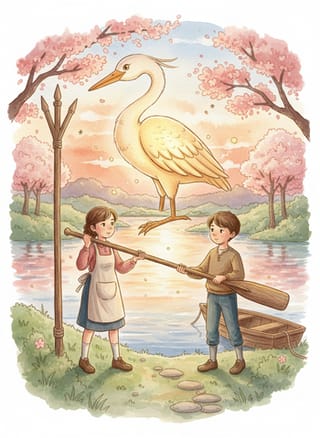
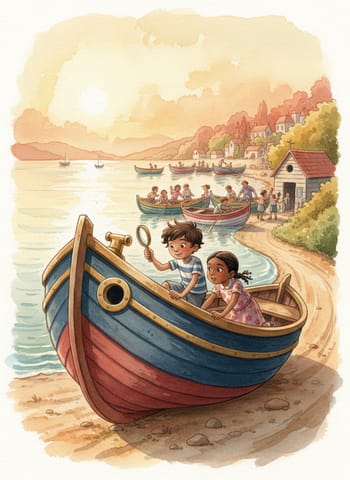
"Heron." Thandi pointed at the long wooden boat on the ramp. Its nose touched the water. "She is older than the club. She won more races than any boat in the city."
«Garza». Thandi señaló el largo bote de madera en la rampa. Tenía la proa tocando el agua. «Es más vieja que el club. Ganó más carreras que cualquier bote de la ciudad».
"So?"
«¿Y qué?».
"So she is very proud. She only moves when she hears the brass whistle. The coach blows it at every start. He puts it back after every race."
«Que es muy orgullosa. Solo se mueve cuando oye el silbato de bronce. El entrenador lo toca en cada salida. Lo vuelve a guardar después de cada carrera».
Raj laughed. Then he looked at her face. Thandi was not joking.
Raj se rio. Luego miró su cara. Thandi no estaba bromeando.
"Boats do not listen," he said.
«Los botes no escuchan», dijo.
"Push her," said Thandi. "Go on."
«Empújala», dijo Thandi. «Anda».
Raj put both hands on the side of the boat. He pushed hard. Thandi pushed next to him. Heron did not move. It felt like pushing a wall.
Raj puso las dos manos en el costado del bote. Empujó fuerte. Thandi empujó a su lado. Garza no se movió. Era como empujar una pared.
"She waits," Thandi said quietly.
«Ella espera», dijo Thandi en voz baja.
Raj stepped back. His hands shook a little. "The race is at noon," he said. "Heron is our boat. We have no other boat."
Raj retrocedió. Le temblaban un poco las manos. «La carrera es al mediodía», dijo. «Garza es nuestro bote. No tenemos otro».
"I know."
«Lo sé».
"The other two rowers come at nine. We have no time."
«Los otros dos remeros llegan a las nueve. No tenemos tiempo».
Thandi looked at the empty space in the kit. "Then we need a new whistle," she said. "Fast."
Thandi miró el hueco vacío en el botiquín. «Entonces necesitamos un silbato nuevo», dijo. «Rápido».
Raj took some money from his pocket. "The sports shop on River Street opens at eight. I will go."
Raj sacó dinero del bolsillo. «La tienda de deportes de la calle del Río abre a las ocho. Yo iré».
"First we look here," said Thandi. "Maybe the old whistle fell behind something."
«Primero busquemos aquí», dijo Thandi. «Quizás el silbato viejo se cayó detrás de algo».
They searched the boathouse together for an hour. Then Raj ran to the shop. He stood at the door for twenty minutes. At eight, a man opened it and let him in.
Registraron el cobertizo juntos durante una hora. Luego Raj corrió a la tienda. Esperó en la puerta veinte minutos. A las ocho, un hombre la abrió y lo dejó entrar.
"I need a whistle," Raj said. "A loud one."
«Necesito un silbato», dijo Raj. «Uno fuerte».
"I have forty," the man said. He showed Raj a box. "Silver, blue, yellow, or black?"
«Tengo cuarenta», dijo el hombre. Le mostró una caja. «¿Plateado, azul, amarillo o negro?».
"Do you have a brass one?"
«¿Tiene uno de bronce?».
"No. Brass is old. Nobody makes them now."
«No. El bronce es antiguo. Ya nadie los hace».
Raj bought a silver whistle. It was plastic, but it was very loud. He ran back to the boathouse with the whistle in his fist.
Raj compró un silbato plateado. Era de plástico, pero sonaba muy fuerte. Corrió de vuelta al cobertizo con el silbato en el puño.
Thandi was on her knees by the wall. Her hands were dusty. "I found three pens and a sock," she said. "No whistle."
Thandi estaba de rodillas junto a la pared. Tenía las manos polvorientas. «Encontré tres bolígrafos y un calcetín», dijo. «Ningún silbato».
"I have a new one." Raj held it up. "Stand back."
«Yo traje uno nuevo». Raj lo levantó. «Atrás».
They both went to the ramp. Raj took a big breath. He blew the whistle as hard as he could.
Fueron los dos a la rampa. Raj tomó una gran bocanada de aire. Sopló el silbato con todas sus fuerzas.
The sound was sharp and bright. It rang across the water. A bird flew off the roof.
El sonido fue agudo y brillante. Resonó sobre el agua. Un pájaro salió volando del techo.
Heron stayed still. But something small happened. The boat gave a little shake. Its nose turned away from them. It looked like a child with its arms crossed.
Garza siguió quieta. Pero pasó algo pequeño. El bote dio una leve sacudida. Su proa se volvió hacia otro lado. Parecía una niña con los brazos cruzados.
"She does not like plastic," said Thandi.
«No le gusta el plástico», dijo Thandi.
"She is a boat!" Raj said. "She cannot dislike things."
«¡Es un bote!», dijo Raj. «No puede tener manías».
"She just did."
«Acaba de tenerlas».
Raj sat down on the cold floor. His plan failed. It was half past eight. The other rowers came at nine. The race began at noon. And the boat did not move.
Raj se sentó en el piso frío. Su plan había fracasado. Eran las ocho y media. Los otros remeros llegaban a las nueve. La carrera empezaba al mediodía. Y el bote no se movía.
"Think," Thandi said. She walked in a small circle. "What does the old whistle do? What does the coach do exactly?"
«Piensa», dijo Thandi. Caminaba en un pequeño círculo. «¿Qué hace el silbato viejo? ¿Qué hace exactamente el entrenador?».
"He blows it," said Raj. "Three times."
«Lo toca», dijo Raj. «Tres veces».
"Three times. Is it always the same?"
«Tres veces. ¿Siempre igual?».
"Yes. Low, low, high." Raj stopped. He looked up. "Low, low, high. Like a song."
«Sí. Grave, grave, agudo». Raj se detuvo. Levantó la vista. «Grave, grave, agudo. Como una canción».
"Maybe she does not want the whistle," Thandi said slowly. "Maybe she wants the song."
«Quizás ella no quiere el silbato», dijo Thandi despacio. «Quizás quiere la canción».
"We cannot whistle like brass."
«No podemos silbar como el bronce».
"No. But we can try."
«No. Pero podemos intentarlo».
Thandi stood next to the boat. She closed her eyes. Then she hummed three notes. Low, low, high. Her voice was soft.
Thandi se paró junto al bote. Cerró los ojos. Luego tarareó tres notas. Grave, grave, agudo. Su voz era suave.
Heron shivered. It was only a small shiver, like a horse in the cold. But Raj saw it.
Garza se estremeció. Fue solo un estremecimiento pequeño, como el de un caballo en el frío. Pero Raj lo vio.
"She heard you!"
«¡Te oyó!».
"She wants more," said Thandi. "She wants a crew. Hum with me."
«Quiere más», dijo Thandi. «Quiere una tripulación. Tararea conmigo».
Raj felt silly. He was a boy in a boathouse, singing to a boat. But he put his hand on the wood. He hummed the three notes next to Thandi.
Raj se sintió ridículo. Era un chico en un cobertizo de botes, cantándole a un bote. Pero puso la mano en la madera. Tarareó las tres notas junto a Thandi.
Heron shook again. This time, the whole boat moved. It slid one hand forward on the ramp.
Garza se sacudió de nuevo. Esta vez se movió todo el bote. Se deslizó una mano hacia adelante en la rampa.
At that moment, the door opened. The other two rowers walked in, early and sleepy. They saw Raj and Thandi with their hands on the boat. They saw the boat move.
En ese momento, se abrió la puerta. Los otros dos remeros entraron, temprano y somnolientos. Vieron a Raj y a Thandi con las manos sobre el bote. Vieron moverse el bote.
"What are you doing?" one of them asked.
«¿Qué están haciendo?», preguntó uno de ellos.
"Hum," said Thandi. "Low, low, high. Please. Now."
«Tarareen», dijo Thandi. «Grave, grave, agudo. Por favor. Ahora».
The two rowers looked at each other. They did not ask any more questions. They put their hands on Heron and hummed.
Los dos remeros se miraron. No hicieron más preguntas. Pusieron las manos sobre Garza y tararearon.
The sound filled the room. Four voices, three notes. Heron rolled down the ramp like a sleepy animal waking up. Her nose touched the river, and she floated.
El sonido llenó el cobertizo. Cuatro voces, tres notas. Garza rodó por la rampa como un animal dormilón que despierta. Su proa tocó el río, y flotó.
The water held her. She sat there, light and steady, ready to race.
El agua la sostuvo. Se quedó ahí, ligera y firme, lista para competir.
Raj let out a long breath. His heart was loud in his chest. "That really happened," he said.
Raj soltó un largo suspiro. Su corazón sonaba fuerte en el pecho. «Eso pasó de verdad», dijo.
"It did," said one of the rowers. "Did I just sing to a boat?"
«Pasó», dijo uno de los remeros. «¿Acabo de cantarle a un bote?».
"You did," said Thandi. She smiled at Raj. "Good plan, by the way."
«Así es», dijo Thandi. Le sonrió a Raj. «Buen plan, por cierto».
"My plan was a plastic whistle."
«Mi plan era un silbato de plástico».
"Your second idea was better."
«Tu segunda idea fue mejor».
Raj looked at the empty kit on the wall. He closed the lid. "I still have to find the brass whistle," he said.
Raj miró el botiquín vacío en la pared. Cerró la tapa. «Todavía tengo que encontrar el silbato de bronce», dijo.
"Check the boat," said Thandi. "Under the seat, maybe."
«Revisa el bote», dijo Thandi. «Debajo del asiento, quizás».
"Why under the seat?"
«¿Por qué debajo del asiento?».
"Because she hides things when she is proud." Thandi picked up her oar. "Come on. Let me show you the best way to hold this."
«Porque esconde cosas cuando está orgullosa». Thandi tomó su remo. «Vamos. Déjame mostrarte la mejor manera de sostener esto».
"Will you tell the coach?" Raj asked.
«¿Se lo dirás al entrenador?», preguntó Raj.
"No," she said. "Will you tell him his boat likes singing more than whistles?"
«No», dijo ella. «¿Tú le dirás que a su bote le gusta más cantar que los silbatos?».