The Heron Lantern and the Oar
Uma história gratuita em inglês de nível A2 para estudantes, para ler online em 7 idiomas, com opção de ouvir no app gratuito Storyteller.
A lantern maker and her friend must decide whether their only oar becomes a pole or steers a boat on the river.
Essa foi a prévia! Ouça a história completa no app gratuito Storyteller. Baixar o app
O áudio não está disponível no momento.
It is the last afternoon before the Festival of Lights. Ximena's workshop is full of paper, glue and thin bamboo. Many lanterns hang from the roof. They glow in blue and gold and green.
É a última tarde antes do Festival das Luzes. A oficina de Ximena está cheia de papel, cola e bambu fino. Muitas lanternas pendem do teto. Brilham em azul, dourado e verde.
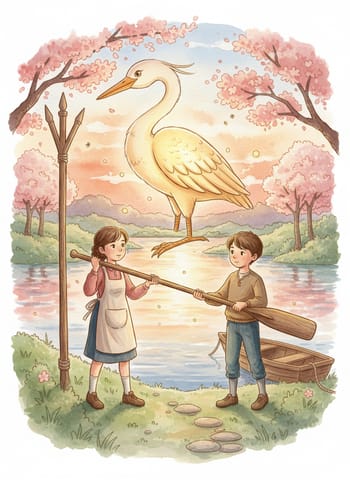
In the middle of the room stands the biggest lantern of all. It is a heron, taller than two people. Its wings are white silk. Its eyes are two small round lamps.
No meio da sala está a maior lanterna de todas. É uma garça, mais alta que duas pessoas. As asas são de seda branca. Os olhos são duas pequenas lâmpadas redondas.
Ximena makes one great lantern every year. Tonight, the town will see it.
Ximena faz uma grande lanterna por ano. Esta noite, a cidade vai vê-la.
Egon walks in with a long wooden shape on his shoulder. It is an oar. The blade is pale and worn. One side has a deep scratch.
Egon entra com um objeto comprido de madeira no ombro. É um remo. A pá é clara e gasta. De um lado há um arranhão fundo.
"I found it behind the boat shed," he says. "It is the only spare oar left."
"Achei atrás do galpão dos barcos", diz ele. "É o único remo reserva que sobrou."
"Why an oar?" asks Ximena.
"Por que um remo?", pergunta Ximena.
"You need something. The heron has no pole, and no steering stick."
"Você precisa de alguma coisa. A garça não tem vara nem haste para conduzir."
She looks at the heron. He is right. The lantern has a place for a pole under its feet. The old pole broke last week. The wood for a new one is not dry.
Ela olha para a garça. Ele tem razão. A lanterna tem um encaixe para uma vara sob os pés. A vara velha quebrou na semana passada. A madeira para uma nova não está seca.
"So the oar must be the pole," she says.
"Então o remo tem de ser a vara", diz ela.
"Or the oar must be an oar," says Egon.
"Ou o remo tem de ser um remo", diz Egon.
Ximena frowns. "What do you mean?"
Ximena franze a testa. "O que você quer dizer?"
"The festival has two ways to end," says Egon. "Some people march the great lantern through the streets. Some people float it down the river in a boat. We have to choose one."
"O festival tem duas maneiras de terminar", diz Egon. "Alguns marcham com a grande lanterna pelas ruas. Outros a fazem flutuar rio abaixo num barco. Temos de escolher uma."
Ximena knows this already. Each way is good. Neither way is wrong. She has only one oar. She can prepare only one of them.
Ximena já sabe disso. Os dois jeitos são bons. Nenhum está errado. Ela só tem um remo. Só pode preparar um deles.
"If we march," she says, "the oar becomes the pole. Four people carry the heron on the pole. Everyone in town can see it."
"Se marcharmos", diz ela, "o remo vira a vara. Quatro pessoas carregam a garça na vara. Todo mundo na cidade pode ver."
"If we float," says Egon, "the oar steers the boat. The heron shines on the water. The river carries the light away."
"Se flutuarmos", diz Egon, "o remo conduz o barco. A garça brilha sobre a água. O rio leva a luz embora."
"Which do you like?"
"Qual você prefere?"
"I like the streets," says Egon. "I want to hear the children shout when it passes."
"Gosto das ruas", diz Egon. "Quero ouvir as crianças gritando quando ela passar."
"I like the river," says Ximena. "But I do not know why."
"Eu gosto do rio", diz Ximena. "Mas não sei por quê."
They both go quiet. The lanterns move above them.
Os dois ficam em silêncio. As lanternas se movem acima deles.
Then Ximena has an idea. She lifts the oar. She carries it to the washing trough at the back. It is a long tub of water for her brushes.
Então Ximena tem uma ideia. Ela levanta o remo. Leva-o até o tanque de lavar nos fundos. É uma tina comprida de água para os pincéis dela.
"What are you doing?" asks Egon.
"O que você está fazendo?", pergunta Egon.
"A test," says Ximena. "A small test with a big answer."
"Um teste", diz Ximena. "Um pequeno teste com uma grande resposta."
She puts the blade of the oar into the water. For a moment nothing happens. Then a soft light begins at the end of the wood. It is a faint silver glow, like the moon on a pond.
Ela mergulha a pá do remo na água. Por um momento, nada acontece. Então uma luz suave começa na ponta da madeira. É um brilho prateado e tênue, como a lua num lago.
Egon steps closer. The glow runs up the oar to Ximena's hands. It does not hurt. It feels cool and quick, like a fish.
Egon se aproxima. O brilho sobe pelo remo até as mãos de Ximena. Não dói. É fresco e rápido, como um peixe.
"It knows the water," Ximena whispers.
"Ele conhece a água", sussurra Ximena.
"It is an oar," says Egon. "Of course it knows the water."
"É um remo", diz Egon. "Claro que conhece a água."
"No. Look."
"Não. Olhe."
Ximena lifts the oar out of the trough. The glow fades at once. She puts a bamboo pole in the tub instead. Nothing happens. The pole is only a pole.
Ximena tira o remo do tanque. O brilho some na hora. Ela põe uma vara de bambu na tina no lugar. Nada acontece. A vara é só uma vara.
"The oar likes the river," says Egon slowly.
"O remo gosta do rio", diz Egon devagar.
"And the heron likes it too." Ximena points to the lantern. Its wing lamps blink, one by one. They shine brighter when the oar is near the water.
"E a garça também gosta." Ximena aponta para a lanterna. As lâmpadas das asas piscam, uma a uma. Brilham mais quando o remo está perto da água.
"But the streets," says Egon. He sounds sad. "The children will miss it."
"Mas as ruas", diz Egon. Ele parece triste. "As crianças vão sentir falta."
"I know," says Ximena. "A new pole needs a week. We do not have a week."
"Eu sei", diz Ximena. "Uma vara nova leva uma semana. Não temos uma semana."
"Then the oar must choose," says Egon.
"Então o remo é que escolhe", diz Egon.
"It did," she says. "The oar is special. I cannot use it as a stick."
"Ele escolheu", diz ela. "O remo é especial. Não posso usá-lo como um pau."
Egon laughs. He puts the oar down on the table and sits beside it.
Egon ri. Põe o remo sobre a mesa e se senta ao lado dele.
"All right," he says. "The river. But I have one wish."
"Tudo bem", diz. "O rio. Mas tenho um desejo."
"Tell me."
"Diga."
"Four friends carry the heron down one street. It is a short walk. The children can still see it."
"Quatro amigos carregam a garça por uma rua. É uma caminhada curta. As crianças ainda podem vê-la."
Ximena thinks about it. This is a good idea. It is not both choices, but it is a kind plan. The heron will pass the school, the market and the old gate. Then it will reach the water.
Ximena pensa nisso. É uma boa ideia. Não são as duas escolhas, mas é um plano gentil. A garça vai passar pela escola, pelo mercado e pelo velho portão. Depois chegará à água.
"One street," she says. "Not the whole town."
"Uma rua", diz ela. "Não a cidade toda."
"One street is enough."
"Uma rua basta."
They shake hands over the oar. It is heavy and smooth. The light inside it glows once, like a heartbeat.
Eles apertam as mãos sobre o remo. Ele é pesado e liso. A luz dentro dele brilha uma vez, como um batimento do coração.
They work until the sun goes down. Egon fixes the heron's wings with new thread. Ximena paints a thin line of gold along the oar's blade. She covers the scratch with silver paint. When she finishes, the oar looks like a piece of the river.
Trabalham até o sol se pôr. Egon conserta as asas da garça com linha nova. Ximena pinta uma fina linha dourada ao longo da pá do remo. Cobre o arranhão com tinta prateada. Quando termina, o remo parece um pedaço do rio.
At dusk, the first drums sound outside. The town begins to gather. Voices rise in the street, and children laugh.
Ao anoitecer, os primeiros tambores soam lá fora. A cidade começa a se reunir. As vozes sobem pela rua, e as crianças riem.
Ximena holds the oar in both hands. Egon and three friends lift the heron by its base. The wings catch the light of every lantern on the wall.
Ximena segura o remo com as duas mãos. Egon e três amigos levantam a garça pela base. As asas captam a luz de todas as lanternas da parede.
At the workshop door, Ximena stops. The river waits at the end of the road. It is dark and quiet and wide. She feels the oar warm in her palms.
Na porta da oficina, Ximena para. O rio espera no fim da estrada. Está escuro, quieto e largo. Ela sente o remo morno nas palmas.
"Egon," she says. "Do you want to steer, or do I?"
"Egon", diz ela. "Você quer conduzir, ou eu?"