The Bell on Plank Nine
Uma história gratuita em inglês de nível A2 para estudantes, para ler online em 7 idiomas, com opção de ouvir no app gratuito Storyteller.
Gus wishes his old bridge could tell him when it is hurt, and a loud new doorbell begins to ring for every weak plank.
Essa foi a prévia! Ouça a história completa no app gratuito Storyteller. Baixar o app
O áudio não está disponível no momento.
Gus fixed the old footbridge at the end of his street. It crossed a deep ravine. The wood was grey and soft. The ropes were older than Gus.
Gus consertava a velha passarela no fim da sua rua. Ela atravessava uma ravina funda. A madeira era cinza e mole. As cordas eram mais velhas que Gus.
Every morning he walked along it with a hammer. He pushed each plank with his boot. He listened for a bad sound. Some planks were safe. Some planks were not.
Toda manhã ele andava por ela com um martelo. Empurrava cada tábua com a bota. Escutava à procura de um som ruim. Algumas tábuas eram seguras. Outras não.
"One day a plank will break," he told his cat. "And I will not be there."
"Um dia uma tábua vai quebrar", disse ele à sua gata. "E eu não vou estar lá."
The cat looked at him and said nothing.
A gata olhou para ele e não disse nada.
The bridge had forty-two planks. Gus could not check them all every hour. He had a bad knee. He also worked at the mill on the far side. The mill took most of his day.
A ponte tinha quarenta e duas tábuas. Gus não conseguia checá-las todas a cada hora. Tinha um joelho ruim. Também trabalhava no moinho do outro lado. O moinho tomava a maior parte do seu dia.
On Tuesday, Rumi came across with her cart. She sold soap, nails and pots to the farms on the hill. She came every week. Her donkey walked slowly, and the wheels made the whole bridge shake.
Na terça-feira, Rumi atravessou com a carroça. Vendia sabão, pregos e panelas para as fazendas da colina. Vinha toda semana. Seu burro andava devagar, e as rodas faziam a ponte inteira tremer.
"Your bridge sings when I cross it," said Rumi.
"Sua ponte canta quando eu passo", disse Rumi.
"It is not a song," said Gus. "It is a warning."
"Não é uma canção", disse Gus. "É um aviso."
"Then it needs a better voice," said Rumi. She laughed and pulled the donkey on.
"Então precisa de uma voz melhor", disse Rumi. Ela riu e puxou o burro para a frente.
That evening Gus sat on the bridge. His feet hung over the edge. The ravine was dark and very deep. A small stone fell from his hand. He did not hear it land.
Naquela noite, Gus sentou-se na ponte. Seus pés pendiam da beirada. A ravina era escura e muito funda. Uma pedrinha caiu da sua mão. Ele não ouviu quando ela chegou ao fundo.
"I wish you could talk," he said to the bridge. "I wish you could tell me when you are hurt."
"Eu queria que você pudesse falar", disse à ponte. "Queria que você me avisasse quando estiver machucada."
Nothing answered. Of course not. It was only wood. Gus went home to bed.
Nada respondeu. Claro que não. Era só madeira. Gus foi para casa dormir.
That week he also bought a new doorbell. It was in a box on his kitchen table. His last doorbell was a toy bird. It shouted "Visitor!" at midnight, and Gus hated it.
Naquela semana ele também comprou uma campainha nova. Estava numa caixa sobre a mesa da cozinha. A campainha anterior era um pássaro de brinquedo. Gritava "Visita!" à meia-noite, e Gus a odiava.
"This one has no parrot inside," the shop owner told him. "It does not talk. It only rings. It is the loudest bell I sell."
"Esta não tem papagaio dentro", disse-lhe o dono da loja. "Ela não fala. Só toca. É a campainha mais alta que eu vendo."
"Good," said Gus.
"Ótimo", disse Gus.
In the morning, the box on his table was empty. Gus looked under the table. He looked in the garden. Then a sound came from the bridge.
De manhã, a caixa em cima da mesa estava vazia. Gus olhou embaixo da mesa. Olhou no jardim. Então um som veio da ponte.
DING-DONG!
DING-DONG!
It was so loud that the birds left the trees. Gus ran out of the house. His knee hurt, but he did not stop.
Foi tão alto que os pássaros deixaram as árvores. Gus saiu correndo de casa. O joelho doía, mas ele não parou.
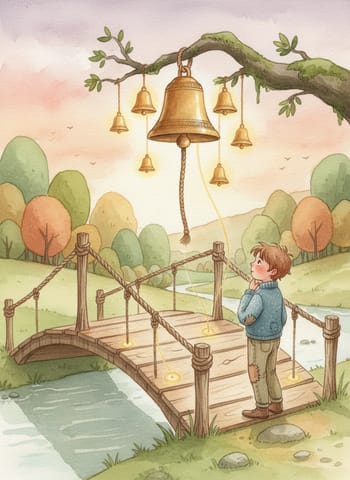
The new bell sat on the first post of the bridge. A thin silver wire went from the bell along the rope. It looked like a vine, but it was not a plant. Gus did not know that wire.
A campainha nova estava no primeiro poste da ponte. Um fio fino de prata ia da campainha ao longo da corda. Parecia uma trepadeira, mas não era uma planta. Gus não conhecia aquele fio.
Rumi stood on the bridge with her hand on her chest. Her donkey stood far behind her with stiff legs.
Rumi estava na ponte com a mão no peito. Seu burro ficara bem atrás, com as pernas rígidas.
"I did nothing," said Rumi. "I took one step, and the whole world screamed."
"Eu não fiz nada", disse Rumi. "Dei um passo, e o mundo inteiro gritou."
"Which step?" asked Gus.
"Qual passo?", perguntou Gus.
"The ninth plank."
"A nona tábua."
Gus knelt down and pushed plank nine with his thumb. The wood was soft like old cheese. He stood on plank ten. Nothing happened. He stepped back onto plank nine.
Gus se ajoelhou e apertou a tábua nove com o polegar. A madeira estava mole como queijo velho. Ele subiu na tábua dez. Nada aconteceu. Voltou para a tábua nove.
DING-DONG!
DING-DONG!
It was louder this time. Gus began to laugh.
Desta vez foi mais alto. Gus começou a rir.
"I asked the bridge to talk," he said. "It gave me a bell."
"Eu pedi à ponte que falasse", disse. "Ela me deu uma campainha."
"A bell is better," said Rumi. "A bridge with words never stops talking."
"Uma campainha é melhor", disse Rumi. "Uma ponte com palavras nunca para de falar."
They walked over the bridge together, one plank at a time. Gus counted out loud. Most planks stayed quiet. Plank seventeen made a small ding, like a spoon on a cup. Plank twenty-three made a bigger one. Plank nine was still the loudest.
Atravessaram a ponte juntos, uma tábua de cada vez. Gus contava em voz alta. A maioria das tábuas ficou calada. A tábua dezessete fez um dingue baixinho, como uma colher numa xícara. A tábua vinte e três fez um maior. A tábua nove ainda era a mais barulhenta.
"The worse the plank, the louder the bell," said Rumi.
"Quanto pior a tábua, mais alto o sino", disse Rumi.
"Yes," said Gus. "And I did not know about twenty-three."
"Sim", disse Gus. "E eu não sabia da vinte e três."
He wrote the numbers on his hand with a pencil. His hand shook a little. He walked here for years, and he missed one.
Ele anotou os números na mão com um lápis. A mão tremia um pouco. Andava por ali havia anos e deixara passar uma.
That night the bell woke him up. DING-DONG, DING-DONG, DING-DONG! The noise was terrible. Gus jumped out of bed. He took his lamp and ran to the bridge.
Naquela noite a campainha o acordou. DING-DONG, DING-DONG, DING-DONG! O barulho era terrível. Gus pulou da cama. Pegou o lampião e correu para a ponte.
A white goat stood in the middle of the bridge. It stood on plank thirty-one. It chewed a rope and looked very happy.
Uma cabra branca estava no meio da ponte. Estava sobre a tábua trinta e um. Mastigava uma corda e parecia muito feliz.
Gus did not shout. He walked slowly and held out his hand. "Come here, you fool," he said. "Come to me."
Gus não gritou. Andou devagar e estendeu a mão. "Venha cá, sua boba", disse. "Venha até mim."
The goat came. It was heavy, and the plank under it cracked. A long, dark line ran across the wood. Gus pulled the goat to safety. The plank broke behind them and fell into the ravine.
A cabra veio. Era pesada, e a tábua sob ela rachou. Uma linha longa e escura cruzou a madeira. Gus puxou a cabra para um lugar seguro. A tábua se partiu atrás deles e caiu na ravina.
For a long time, Gus did not move. He sat on the ground with the goat's head on his knee. The bell was quiet now.
Por muito tempo, Gus não se mexeu. Ficou sentado no chão com a cabeça da cabra no joelho. A campainha agora estava quieta.
"You rang," he told the post. "Now I know."
"Você tocou", disse ao poste. "Agora eu sei."
In the morning, the whole village came to look. They stood at the end of the bridge. Their hands covered their ears.
De manhã, o vilarejo inteiro veio olhar. Ficaram parados na ponta da ponte. Com as mãos tapando os ouvidos.
"The bell is too loud," said a man with a basket.
"A campainha é alta demais", disse um homem com uma cesta.
"It is not loud enough," said Gus. "It woke me. It saved a goat."
"Não é alta o bastante", disse Gus. "Ela me acordou. Salvou uma cabra."
"It saved my goat!" shouted a woman at the back. "I looked for him all night."
"Salvou a minha cabra!", gritou uma mulher lá no fundo. "Procurei por ele a noite toda."
The man with the basket said nothing more.
O homem da cesta não disse mais nada.
Rumi came with her cart. It was full of new wood and long nails. She did not ask for money. She only said, "I cross this bridge every week. I want to keep crossing it."
Rumi chegou com a carroça. Estava cheia de madeira nova e pregos compridos. Ela não pediu dinheiro. Só disse: "Eu atravesso esta ponte toda semana. Quero continuar atravessando."
They worked all day. Gus put a new plank in the gap at thirty-one. Rumi held the wood. The village children brought water and sat on the ground to watch. Every time a new plank went in, Gus stepped on it. Every time, the bell stayed quiet. The children cheered.
Trabalharam o dia todo. Gus colocou uma tábua nova no vão da trinta e um. Rumi segurava a madeira. As crianças do vilarejo trouxeram água e se sentaram no chão para assistir. Toda vez que uma tábua nova entrava, Gus pisava nela. Toda vez, a campainha ficava calada. As crianças comemoravam.
By evening only three planks were left. Plank seventeen was easy. Plank twenty-three took a long time. The wood under it was bad too.
Ao anoitecer sobravam só três tábuas. A dezessete foi fácil. A vinte e três demorou muito. A madeira embaixo dela também estava ruim.
At last Rumi stood next to plank nine. It was the worst of all.
Por fim Rumi parou ao lado da tábua nove. Era a pior de todas.
"Do you want to step on it one more time?" she asked. "For the sound?"
"Quer pisar nela mais uma vez?", perguntou. "Pelo som?"
Gus shook his head. "I know that sound now," he said. "I will not forget it."
Gus balançou a cabeça. "Agora eu conheço esse som", disse. "Não vou esquecer."
He knelt on his sore knee. He took a long nail from his pocket. The bell hung over his head, ready and silent. Gus lifted the hammer and hit the first nail.
Ajoelhou-se com o joelho dolorido. Tirou um prego comprido do bolso. A campainha pendia sobre sua cabeça, pronta e silenciosa. Gus ergueu o martelo e bateu no primeiro prego.