Gus fixed the old footbridge at the end of his street. It crossed a deep ravine. The wood was grey and soft. The ropes were older than Gus.
格斯负责修他那条街尽头的老人行桥。桥横跨一道很深的峡谷。木头是灰色的,已经变软。绳索比格斯的年纪还大。
Every morning he walked along it with a hammer. He pushed each plank with his boot. He listened for a bad sound. Some planks were safe. Some planks were not.
每天早上,他拿着锤子沿着桥走一遍。他用靴子踩每一块木板,听有没有不对劲的声音。有些木板是安全的。有些木板不是。
"One day a plank will break," he told his cat. "And I will not be there."
“总有一天会有一块木板断掉,”他对他的猫说,“而我不在场。”
The cat looked at him and said nothing.
猫看着他,什么也没说。
The bridge had forty-two planks. Gus could not check them all every hour. He had a bad knee. He also worked at the mill on the far side. The mill took most of his day.
桥上有四十二块木板。格斯没法每个小时都把它们检查一遍。他的膝盖不好。他还在桥对岸的磨坊上班。磨坊占去了他大部分时间。
On Tuesday, Rumi came across with her cart. She sold soap, nails and pots to the farms on the hill. She came every week. Her donkey walked slowly, and the wheels made the whole bridge shake.
星期二,鲁米推着她的货车过桥。她把肥皂、钉子和锅卖给山上的农家。她每周都来。她的驴走得很慢,车轮让整座桥都跟着晃动。
"Your bridge sings when I cross it," said Rumi.
“你的桥在我过的时候会唱歌。”鲁米说。
"It is not a song," said Gus. "It is a warning."
“那不是歌,”格斯说,“那是警告。”
"Then it needs a better voice," said Rumi. She laughed and pulled the donkey on.
“那它需要一副更好的嗓子。”鲁米说。她笑着,拉着驴继续往前走。
That evening Gus sat on the bridge. His feet hung over the edge. The ravine was dark and very deep. A small stone fell from his hand. He did not hear it land.
那天傍晚,格斯坐在桥上,双脚悬在桥边外面。峡谷又黑又深。一颗小石子从他手里掉下去。他没有听到它落地的声音。
"I wish you could talk," he said to the bridge. "I wish you could tell me when you are hurt."
“我真希望你会说话,”他对桥说,“我希望你受伤的时候能告诉我。”
Nothing answered. Of course not. It was only wood. Gus went home to bed.
没有任何回答。当然不会。它只是木头。格斯回家睡觉了。
That week he also bought a new doorbell. It was in a box on his kitchen table. His last doorbell was a toy bird. It shouted "Visitor!" at midnight, and Gus hated it.
这个星期,他还买了一个新门铃。它装在盒子里,放在他厨房的桌上。他之前的那个门铃是一只玩具鸟。它会在半夜大喊“有客人!”,格斯讨厌透了。
"This one has no parrot inside," the shop owner told him. "It does not talk. It only rings. It is the loudest bell I sell."
“这个里面没有鹦鹉,”店主告诉他,“它不会说话。它只会响。这是我店里最响的铃。”
"Good," said Gus.
“好。”格斯说。
In the morning, the box on his table was empty. Gus looked under the table. He looked in the garden. Then a sound came from the bridge.
早晨,他桌上的盒子是空的。格斯看了桌子底下。他又去花园里找。然后,桥那边传来了一个声音。
DING-DONG!
叮咚!
It was so loud that the birds left the trees. Gus ran out of the house. His knee hurt, but he did not stop.
声音大得连鸟儿都飞离了树。格斯冲出屋子。他的膝盖很疼,但他没有停下。
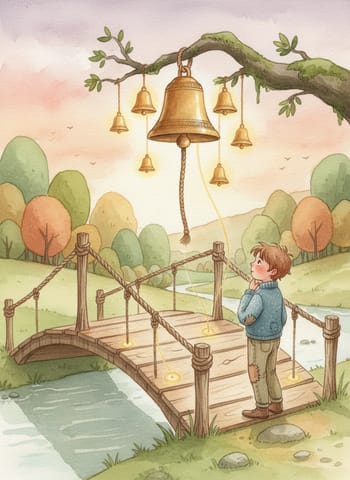
The new bell sat on the first post of the bridge. A thin silver wire went from the bell along the rope. It looked like a vine, but it was not a plant. Gus did not know that wire.
新铃铛挂在桥的第一根立柱上。一根细细的银丝从铃铛沿着绳索延伸出去。它看上去像一根藤蔓,但并不是植物。格斯不认得这根丝线。
Rumi stood on the bridge with her hand on her chest. Her donkey stood far behind her with stiff legs.
鲁米站在桥上,一只手按着胸口。她的驴远远地站在她身后,四条腿僵硬。
"I did nothing," said Rumi. "I took one step, and the whole world screamed."
“我什么也没干,”鲁米说,“我只迈了一步,全世界就尖叫起来。”
"Which step?" asked Gus.
“哪一步?”格斯问。
"The ninth plank."
“第九块木板。”
Gus knelt down and pushed plank nine with his thumb. The wood was soft like old cheese. He stood on plank ten. Nothing happened. He stepped back onto plank nine.
格斯跪下来,用拇指按了按第九块木板。木头软得像陈年的奶酪。他站到第十块上。什么也没发生。他又退回到第九块上。
DING-DONG!
叮咚!
It was louder this time. Gus began to laugh.
这次更响了。格斯笑了起来。
"I asked the bridge to talk," he said. "It gave me a bell."
“我让桥开口说话,”他说,“它却给了我一只铃铛。”
"A bell is better," said Rumi. "A bridge with words never stops talking."
“铃铛更好,”鲁米说,“会说话的桥永远不会闭嘴。”
They walked over the bridge together, one plank at a time. Gus counted out loud. Most planks stayed quiet. Plank seventeen made a small ding, like a spoon on a cup. Plank twenty-three made a bigger one. Plank nine was still the loudest.
他们一起过了桥,一次一块木板。格斯大声数着数。大多数木板都很安静。第十七块发出了一声小小的叮,像勺子碰到杯子。第二十三块的声音大一些。第九块仍然是最响的。
"The worse the plank, the louder the bell," said Rumi.
“木板越糟,铃声越响。”鲁米说。
"Yes," said Gus. "And I did not know about twenty-three."
“对,”格斯说,“而我之前根本不知道二十三号有问题。”
He wrote the numbers on his hand with a pencil. His hand shook a little. He walked here for years, and he missed one.
他用铅笔把几个数字写在手上。他的手有点发抖。他在这里走了很多年,竟然漏掉了一块。
That night the bell woke him up. DING-DONG, DING-DONG, DING-DONG! The noise was terrible. Gus jumped out of bed. He took his lamp and ran to the bridge.
那天夜里,铃声把他吵醒了。叮咚,叮咚,叮咚!噪音可怕极了。格斯一下子从床上跳起来。他拿上灯,朝桥跑去。
A white goat stood in the middle of the bridge. It stood on plank thirty-one. It chewed a rope and looked very happy.
一只白山羊站在桥中间。它站在第三十一块木板上。它在嚼一根绳子,看上去非常开心。
Gus did not shout. He walked slowly and held out his hand. "Come here, you fool," he said. "Come to me."
格斯没有喊叫。他慢慢走过去,伸出手。“过来,你这个傻瓜,”他说,“到我这儿来。”
The goat came. It was heavy, and the plank under it cracked. A long, dark line ran across the wood. Gus pulled the goat to safety. The plank broke behind them and fell into the ravine.
山羊过来了。它很重,脚下的木板裂开了。一道又长又黑的线横穿木头。格斯把山羊拉到了安全的地方。木板在他们身后断裂,掉进了峡谷。
For a long time, Gus did not move. He sat on the ground with the goat's head on his knee. The bell was quiet now.
很长时间里,格斯一动不动。他坐在地上,山羊的头枕在他的膝盖上。铃铛现在安静了。
"You rang," he told the post. "Now I know."
“你响了,”他对立柱说,“现在我知道了。”
In the morning, the whole village came to look. They stood at the end of the bridge. Their hands covered their ears.
早晨,全村人都来看。他们站在桥头,用手捂着耳朵。
"The bell is too loud," said a man with a basket.
“铃太响了。”一个提篮子的男人说。
"It is not loud enough," said Gus. "It woke me. It saved a goat."
“还不够响,”格斯说,“它把我叫醒了。它救了一只山羊。”
"It saved my goat!" shouted a woman at the back. "I looked for him all night."
“它救了我的山羊!”后面一个女人喊道,“我找了它一整夜。”
The man with the basket said nothing more.
提篮子的男人再也没说话。
Rumi came with her cart. It was full of new wood and long nails. She did not ask for money. She only said, "I cross this bridge every week. I want to keep crossing it."
鲁米推着货车来了。车上装满了新木头和长钉子。她没要钱。她只说了一句:“我每周都要过这座桥。我想一直过下去。”
They worked all day. Gus put a new plank in the gap at thirty-one. Rumi held the wood. The village children brought water and sat on the ground to watch. Every time a new plank went in, Gus stepped on it. Every time, the bell stayed quiet. The children cheered.
他们干了一整天。格斯在三十一号的缺口处装上了新木板。鲁米扶着木头。村里的孩子们提来了水,坐在地上看。每装上一块新木板,格斯就踩一踩。每一次,铃都保持安静。孩子们欢呼起来。
By evening only three planks were left. Plank seventeen was easy. Plank twenty-three took a long time. The wood under it was bad too.
到傍晚,只剩三块木板了。第十七块很容易。第二十三块花了很长时间。它下面的木头也是坏的。
At last Rumi stood next to plank nine. It was the worst of all.
最后,鲁米站到第九块木板旁边。它是最糟的一块。
"Do you want to step on it one more time?" she asked. "For the sound?"
“你想再踩一次吗?”她问,“听听那个声音?”
Gus shook his head. "I know that sound now," he said. "I will not forget it."
格斯摇了摇头。“那个声音我现在知道了,”他说,“我不会忘记的。”
He knelt on his sore knee. He took a long nail from his pocket. The bell hung over his head, ready and silent. Gus lifted the hammer and hit the first nail.
他用酸痛的膝盖跪下来。他从口袋里取出一根长钉子。铃铛悬在他头顶,准备就绪,一片寂静。格斯举起锤子,敲下了第一根钉子。