The Tin That Hummed
Una historia gratuita en inglés de nivel A2 para estudiantes, para leer en línea en 7 idiomas, con opción de escucharla en la app gratuita Storyteller.
A glassblower waits twenty years for a visitor to ask about the tin of buttons that hums on her shelf.
¡Ese fue el avance! Escucha la historia completa en la app gratuita Storyteller. Descargar la app
El audio no está disponible en este momento.
Zuri opens the workshop doors at ten. The furnace is already hot. A line of visitors waits on the pavement.
Zuri abre las puertas del taller a las diez. El horno ya está caliente. Una fila de visitantes espera en la acera.
The workshop is her whole life. It has one big furnace and two long benches. A rope keeps visitors back. Every day, people come to watch her make glass.
El taller es toda su vida. Tiene un gran horno y dos largas mesas de trabajo. Una cuerda mantiene a los visitantes atrás. Todos los días viene gente a verla hacer vidrio.
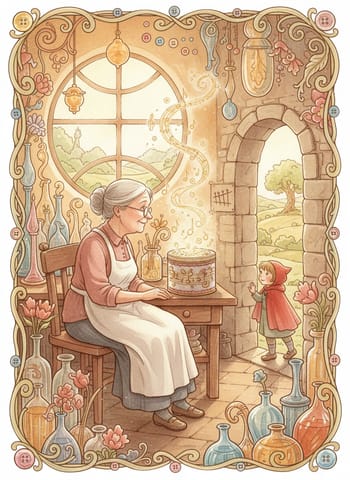
On a shelf by the window sits an old tin. It is round and dented. It is full to the top with buttons. Big ones, small ones, brown ones, silver ones.
En un estante junto a la ventana hay una vieja lata. Es redonda y está abollada. Está llena hasta el borde de botones. Grandes, pequeños, marrones, plateados.
Today, forty visitors stand behind the rope. Zuri takes a long steel pipe and puts it in the fire. The glass at the end glows like orange honey.
Hoy hay cuarenta visitantes detrás de la cuerda. Zuri toma una larga caña de acero y la mete en el fuego. El vidrio en la punta brilla como miel naranja.
"How hot is it?" a boy asks.
«¿Qué tan caliente está?», pregunta un niño.
"Hotter than your oven," she says. "About a thousand degrees."
«Más que tu horno», dice ella. «Unos mil grados».
"How long does it take to learn this?" asks a woman.
«¿Cuánto tiempo se tarda en aprender esto?», pregunta una mujer.
"Many years," Zuri says. "And many burned fingers."
«Muchos años», dice Zuri. «Y muchos dedos quemados».
She turns the pipe. She blows a soft breath through it. A bubble grows at the end, round and clear. The visitors say "ooh" together.
Gira la caña. Sopla un suave aliento a través de ella. En la punta crece una burbuja, redonda y transparente. Los visitantes dicen «¡oh!» a coro.
This is the same every day. The visitors ask about heat. They ask about price. They ask if the glass is safe to touch. Nobody asks about the tin.
Es igual todos los días. Los visitantes preguntan por el calor. Preguntan por el precio. Preguntan si el vidrio es seguro de tocar. Nadie pregunta por la lata.
Zuri looks at it sometimes. Twenty years ago, Zuri opened this workshop. Nobody asks the one simple question. It sits there on the shelf, full of buttons. Everyone looks past it.
Zuri la mira a veces. Hace veinte años, Zuri abrió este taller. Nadie hace la única pregunta sencilla. Está ahí en el estante, llena de botones. Todos miran más allá.
At noon, the last group leaves. Zuri sits down and drinks some cold water. The tin hums a little. It is a soft, low sound, like a fridge in another room. It hums only a little. It hums only when a lost button's owner is near.
Al mediodía, el último grupo se va. Zuri se sienta y bebe un poco de agua fría. La lata zumba un poco. Es un sonido suave y grave, como un refrigerador en otra habitación. Zumba solo un poco. Zumba solo cuando el dueño de un botón perdido está cerca.
"Not today," she tells it. "Nobody asks."
«Hoy no», le dice. «Nadie pregunta».
The next day is the same. And the next. A school class comes, then a family from far away. A man takes fifty photos of the furnace. No one looks at the shelf.
El día siguiente es igual. Y el otro. Viene una clase de la escuela, luego una familia de muy lejos. Un hombre saca cincuenta fotos del horno. Nadie mira el estante.
On Thursday, a woman comes in late. Her name is Hiba. She wears a long green coat. She stands at the back, behind everyone else. She does not take photos. She just watches Zuri's hands.
El jueves, una mujer entra tarde. Se llama Hiba. Lleva un largo abrigo verde. Se queda al fondo, detrás de todos los demás. No saca fotos. Solo mira las manos de Zuri.
Zuri makes a small blue bowl. She turns it and shapes it. A quick tap cuts it free. The visitors clap.
Zuri hace un pequeño cuenco azul. Lo gira y le da forma. Un golpecito rápido lo separa. Los visitantes aplauden.
Then they leave, one by one. Soon the room is empty. Only Hiba stays.
Luego se van, uno por uno. Pronto la sala queda vacía. Solo Hiba se queda.
"You are very good at this," Hiba says.
«Es usted muy buena en esto», dice Hiba.
"Thank you."
«Gracias».
Hiba walks slowly around the room. She looks at the benches. She looks at the furnace. Then she stops in front of the shelf.
Hiba camina despacio por la sala. Mira las mesas. Mira el horno. Luego se detiene frente al estante.
The tin hums. It is louder now. Zuri holds her breath.
La lata zumba. Ahora es más fuerte. Zuri contiene la respiración.
"What is this?" Hiba asks. "Why are there so many buttons?"
«¿Qué es esto?», pregunta Hiba. «¿Por qué hay tantos botones?».
For a moment, Zuri cannot speak. Twenty years, she thinks. Twenty years of waiting for this.
Por un momento, Zuri no puede hablar. Veinte años, piensa. Veinte años esperando esto.
"Do you really want to know?" she asks.
«¿De verdad quiere saberlo?», pregunta.
"Yes. I think so." Hiba smiles a little. "It hums. Is that normal?"
«Sí. Creo que sí». Hiba sonríe un poco. «Zumba. ¿Es normal?».
"Not for a normal tin." Zuri stands up. She takes the tin from the shelf. It feels warm in her hands, like a living thing. "Please sit."
«No en una lata normal». Zuri se levanta. Toma la lata del estante. Se siente tibia en sus manos, como una cosa viva. «Por favor, siéntese».
Hiba sits on a stool. Zuri puts the tin on the bench between them.
Hiba se sienta en un taburete. Zuri pone la lata sobre la mesa entre las dos.
"Every button here fell from a visitor's coat," Zuri says. "Over twenty years. People stand close to the furnace, and they lean over the rope. Buttons come loose. They roll on the floor, and I find them in the evening."
«Cada botón de aquí se cayó del abrigo de un visitante», dice Zuri. «A lo largo de veinte años. La gente se para cerca del horno y se inclina sobre la cuerda. Los botones se sueltan. Ruedan por el suelo, y yo los encuentro por la tarde».
"That is normal," says Hiba. "Buttons fall off."
«Eso es normal», dice Hiba. «Los botones se caen».
"Yes. But they do not stay lost." Zuri touches the tin. "When its owner comes back to this room, a button hums. Only that one. It calls to them."
«Sí. Pero no se quedan perdidos». Zuri toca la lata. «Cuando su dueño vuelve a esta sala, un botón zumba. Solo ese. Los llama».
Hiba looks at the tin. Her eyes are wide. "That is not possible."
Hiba mira la lata. Tiene los ojos muy abiertos. «Eso no es posible».
"I know. But it happens." Zuri smiles. "The problem is simple. A button cannot go home unless someone asks about the tin. That is the rule. I cannot give it back. Someone must ask first."
«Lo sé. Pero ocurre». Zuri sonríe. «El problema es simple. Un botón no puede volver a casa a menos que alguien pregunte por la lata. Esa es la regla. Yo no puedo devolverlo. Alguien debe preguntar primero».
"Nobody ever asks?"
«¿Nadie pregunta nunca?».
"Nobody. In twenty years." Zuri shrugs. "People look at the fire. They look at the glass. A tin of old buttons is not interesting."
«Nadie. En veinte años». Zuri se encoge de hombros. «La gente mira el fuego. Mira el vidrio. Una lata de botones viejos no es interesante».
Hiba smiles. Then she stops. She looks down at her coat. The left sleeve has a loose thread at the end. It has no button.
Hiba sonríe. Luego se detiene. Mira su abrigo. La manga izquierda tiene un hilo suelto en el extremo. No tiene botón.
"I lost a button ten days ago," she says softly. "A big green one. It matched the coat. I looked everywhere."
«Perdí un botón hace diez días», dice en voz baja. «Uno grande y verde. Combinaba con el abrigo. Busqué por todas partes».
"Was it a big green button with a gold ring?"
«¿Era un botón grande y verde con un aro dorado?».
"Yes!" Hiba says. "How do you know that?"
«¡Sí!», dice Hiba. «¿Cómo lo sabe?».
Zuri opens the tin. She puts her hand inside. The humming gets louder and louder. The whole bench seems to shake. She moves past the brown buttons and the silver ones. She passes a pile of tiny white ones.
Zuri abre la lata. Mete la mano adentro. El zumbido se hace cada vez más fuerte. Toda la mesa parece temblar. Pasa por los botones marrones y los plateados. Pasa por un montón de diminutos blancos.
At the bottom, she finds it. It is large and green. A thin gold ring runs around the edge. It hums in her palm like a small bird.
En el fondo, lo encuentra. Es grande y verde. Un fino aro dorado recorre el borde. Zumba en su palma como un pajarito.
"It fell here last Monday," says Zuri. "I did not know whose it was. I only put it in the tin."
«Cayó aquí el lunes pasado», dice Zuri. «No sabía de quién era. Solo lo puse en la lata».
Hiba stares at it. "You waited for me to ask."
Hiba lo mira fijamente. «Esperó a que yo preguntara».
"No, I waited for anyone to ask." Zuri puts the button in her hand. "It is lucky that you came on Thursday."
«No, esperé a que preguntara cualquiera». Zuri le pone el botón en la mano. «Es una suerte que haya venido el jueves».
The button stops humming. It lies still and quiet. The tin goes silent, too, for the first time in many days.
El botón deja de zumbar. Yace quieto y callado. La lata también se queda en silencio, por primera vez en muchos días.
Zuri's hands shake. After twenty years, a button goes home.
A Zuri le tiemblan las manos. Después de veinte años, un botón vuelve a casa.
"Thank you," says Hiba. She holds the button up to the light. "I do not know what to say. Do all of them do this?"
«Gracias», dice Hiba. Sostiene el botón a la luz. «No sé qué decir. ¿Todos hacen esto?».
"All of them. Every single one." Zuri looks at the tin. It is still half full. "So many people come back to this town. I think they all want to see the glass again. But nobody asks."
«Todos. Cada uno». Zuri mira la lata. Todavía está medio llena. «Mucha gente vuelve a este pueblo. Creo que todos quieren volver a ver el vidrio. Pero nadie pregunta».
"Then I will tell my friends," Hiba says. "I will tell them to ask you about the tin."
«Entonces se lo contaré a mis amigos», dice Hiba. «Les diré que le pregunten por la lata».
"Please do." Zuri laughs. "I am tired of sitting here with a humming box."
«Por favor, hágalo». Zuri ríe. «Estoy cansada de estar aquí sentada con una caja que zumba».
Hiba looks at her sleeve again. "Do you have a needle?"
Hiba mira otra vez su manga. «¿Tiene una aguja?».
"There is one in the drawer, with some green thread." Zuri points. "I keep it for days like this."
«Hay una en el cajón, con un poco de hilo verde». Zuri señala. «La guardo para días como este».
Hiba stands up and opens the drawer. She takes out the needle and the thread. She sits down on the stool again. She threads the needle on the first try.
Hiba se levanta y abre el cajón. Saca la aguja y el hilo. Se sienta de nuevo en el taburete. Enhebra la aguja al primer intento.
Zuri puts the tin back on the shelf. She turns up the furnace, and picks up her steel pipe. Outside, the doors open and the next group of visitors comes in.
Zuri vuelve a poner la lata en el estante. Sube el fuego del horno y toma su caña de acero. Afuera, las puertas se abren y entra el siguiente grupo de visitantes.