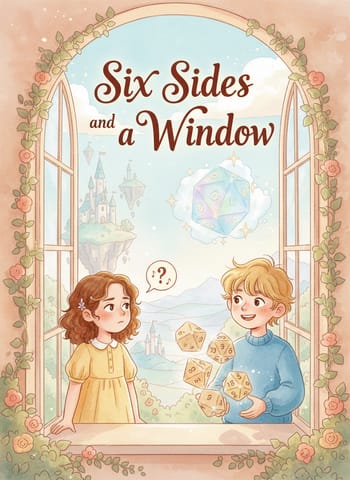
Six Sides and a Window
Uma história gratuita em inglês de nível A2 para estudantes, para ler online em 7 idiomas, com opção de ouvir no app gratuito Storyteller.
Dalia thinks the boy with the dice is mocking her, until she asks him why he rolls them.
Essa foi a prévia! Ouça a história completa no app gratuito Storyteller. Baixar o app
O áudio não está disponível no momento.
The ticket booth of the old cinema is a small glass box. It stands by the front door. Inside there is a stool and a lamp. There is also a little metal tray for money. The glass has a round hole at the bottom. People pass their coins through it.
A bilheteria do velho cinema é uma pequena caixa de vidro. Fica junto à porta da frente. Lá dentro há um banquinho e uma luminária. Há também uma bandejinha de metal para o dinheiro. O vidro tem um buraco redondo embaixo. As pessoas passam as moedas por ele.
Dalia sits in the booth every Saturday. She is sixteen. The job is quiet, and she likes quiet. She sells tickets, tears them in half and gives back the change. Between films, she reads a book on her knee.
Dalia fica na bilheteria todo sábado. Ela tem dezesseis anos. O trabalho é tranquilo, e ela gosta de sossego. Vende ingressos, rasga-os ao meio e devolve o troco. Entre os filmes, lê um livro apoiado no joelho.
Every Saturday at ten past four, a boy comes to her window. His name is Paolo. She knows it because a friend at school tells her. He is tall and thin. He wears a green scarf even in summer.
Todo sábado, às quatro e dez, um garoto vem à janela dela. O nome dele é Paolo. Ela sabe porque uma amiga da escola contou. Ele é alto e magro. Usa um cachecol verde até no verão.
Paolo always does the same thing. He puts a small cloth bag on the counter. He opens it and takes out a die. He rolls it on the metal tray. It clicks and spins and stops.
Paolo sempre faz a mesma coisa. Põe uma pequena bolsa de pano no balcão. Abre-a e tira um dado. Rola o dado na bandeja de metal. Ele faz clique, gira e para.
He looks at the die for a long time. Then he looks at Dalia. Then he buys a ticket.
Ele olha o dado por muito tempo. Depois olha para Dalia. Depois compra um ingresso.
The first time, Dalia finds it funny. The second time, she finds it strange. Now it is the sixth Saturday, and she is tired of it.
Na primeira vez, Dalia achou engraçado. Na segunda, achou estranho. Agora é o sexto sábado, e ela está cansada disso.
Today the line behind Paolo is long. Six people wait with their coats and their popcorn money. Dalia sees them look at their watches.
Hoje a fila atrás de Paolo está comprida. Seis pessoas esperam com os casacos e o dinheiro da pipoca. Dalia vê todas olharem os relógios.
Paolo puts the bag on the tray. The dice click together in the bag.
Paolo põe a bolsa na bandeja. Os dados tilintam juntos dentro dela.
"Please don't," Dalia says.
"Por favor, não", diz Dalia.
Paolo stops with his hand in the bag. "Sorry?"
Paolo para com a mão dentro da bolsa. "Como?"
"The dice. Please don't roll them today. People wait."
"Os dados. Por favor, não role hoje. As pessoas estão esperando."
Paolo looks behind him. He sees the line. He moves his hand away from the tray. "Okay," he says in a low voice. "One ticket for the half-past-four film, please."
Paolo olha para trás. Vê a fila. Tira a mão da bandeja. "Tudo bem", diz em voz baixa. "Um ingresso para o filme das quatro e meia, por favor."
Dalia tears the ticket. She pushes it through the hole. He gives her the coins. His fingers are cold. He looks at her as if he wants to say more. But he only picks up his bag and goes.
Dalia rasga o ingresso. Empurra-o pelo buraco. Ele lhe dá as moedas. Os dedos dele estão frios. Ele a olha como se quisesse dizer mais. Mas só pega a bolsa e vai embora.
Dalia watches him walk to the door. His shoulders are low. She feels a small, hard stone in her stomach.
Dalia o observa caminhar até a porta. Os ombros dele estão caídos. Ela sente uma pedrinha dura no estômago.
She tells herself it is his fault. He makes a game out of her work. He laughs at her with those dice, she thinks. Maybe it is a joke with his friends. Maybe he thinks she is just a number on a die.
Diz a si mesma que a culpa é dele. Ele faz um jogo com o trabalho dela. Ele ri dela com aqueles dados, pensa. Talvez seja uma piada com os amigos. Talvez ele ache que ela é só um número num dado.
But there is a problem with this idea. He never laughs. He never smiles. He always looks a little worried.
Mas há um problema com essa ideia. Ele nunca ri. Nunca sorri. Sempre parece um pouco preocupado.
The film starts. The lobby becomes quiet. Dalia opens her book, but she cannot read. The words slide around the page. She keeps seeing his green scarf.
O filme começa. O saguão fica quieto. Dalia abre o livro, mas não consegue ler. As palavras escorregam pela página. Ela continua vendo o cachecol verde dele.
At six o'clock, the film ends. People come out into the lobby. Some stop at her window to ask about the next show. Paolo comes out last. He walks slowly. He does not look at the booth.
Às seis horas, o filme termina. As pessoas saem para o saguão. Algumas param na janela dela para perguntar da próxima sessão. Paolo sai por último. Anda devagar. Não olha para a bilheteria.
Dalia gets up from her stool. She opens the little side door of the booth. She never does that. The air outside the glass feels bigger.
Dalia se levanta do banquinho. Abre a portinha lateral da cabine. Ela nunca faz isso. O ar do lado de fora do vidro parece maior.
"Paolo," she says.
"Paolo", diz ela.
He turns around. His eyes are wide, as if he expects bad news.
Ele se vira. Os olhos dele estão arregalados, como se esperasse más notícias.
"I'm sorry," Dalia says. "I was rude before. But I also want to ask you something. Why do you roll the dice every time? Is it a joke about me?"
"Desculpe", diz Dalia. "Fui grosseira antes. Mas também quero te perguntar uma coisa. Por que você rola os dados toda vez? É uma piada comigo?"
"A joke?" Paolo says. His mouth falls open. "No! I thought you hated it."
"Uma piada?", diz Paolo. Sua boca se abre. "Não! Achei que você odiasse isso."
"I hate it," says Dalia. "I think you laugh at me."
"Eu odeio", diz Dalia. "Acho que você ri de mim."
"Never," says Paolo. He shakes his head hard. "I thought you were angry with me because I take too long. I could not stop doing it. If I stop, it feels wrong."
"Nunca", diz Paolo. Ele balança a cabeça com força. "Achei que você estava brava comigo porque eu demoro demais. Não consegui parar de fazer isso. Se eu paro, parece errado."
"But why?" asks Dalia. "What are the dice for?"
"Mas por quê?", pergunta Dalia. "Para que servem os dados?"
Paolo sits down on the bench by the wall. After a moment, Dalia sits beside him. He opens the cloth bag and pours the dice into his hand.
Paolo senta no banco junto à parede. Depois de um momento, Dalia senta ao lado dele. Ele abre a bolsa de pano e despeja os dados na mão.
There are fourteen of them, and none of them match. One is large and wooden. One is small and blue. One has ten sides, and one has only four. One has letters on it, not numbers. One is so old that the dots are almost gone.
São catorze, e nenhum é igual ao outro. Um é grande e de madeira. Um é pequeno e azul. Um tem dez lados, e um tem só quatro. Um tem letras, não números. Um é tão velho que os pontos quase sumiram.
"I can't choose," says Paolo. "Not my seat, not anything. I stand in front of the board and I wait. I always want the best seat. I never find it. Last year I missed two whole films because I could not decide."
"Não consigo escolher", diz Paolo. "Nem meu lugar, nem nada. Fico na frente do mapa de assentos e espero. Sempre quero o melhor lugar. Nunca o encontro. No ano passado perdi dois filmes inteiros porque não consegui decidir."
"So you roll the dice," says Dalia.
"Então você rola os dados", diz Dalia.
"Yes. The dice choose my seat. If I roll a four, I sit in row four. If I roll a letter, I sit at the row end. It's not a game. It's a way to stop thinking."
"Sim. Os dados escolhem meu lugar. Se tiro um quatro, sento na fileira quatro. Se tiro uma letra, sento no fim da fileira. Não é um jogo. É um jeito de parar de pensar."
Dalia looks at the dice in his open hand. "Where did you find them?"
Dalia olha os dados na mão aberta dele. "Onde você os achou?"
"Everywhere," says Paolo. "Each one was lost by some game. The blue one is from a flea market. The wooden one is from under a cafe chair. I like them because each one is the only one. They are all a bit wrong, but they work."
"Em todo lugar", diz Paolo. "Cada um foi perdido por algum jogo. O azul é de uma feira de pulgas. O de madeira estava debaixo de uma cadeira de café. Gosto deles porque cada um é único. Todos são um pouco errados, mas funcionam."
Dalia smiles. It is the first time she smiles at him. "I'm sorry I said stop," she says.
Dalia sorri. É a primeira vez que sorri para ele. "Desculpe por ter dito para parar", diz ela.
"I'm sorry I never told you," says Paolo. "I do not know how to start."
"Desculpe por nunca ter contado", diz Paolo. "Não sei como começar."
They sit for a while. The lobby lamps hum. A cleaner starts to clean the lobby.
Ficam sentados um tempo. As luminárias do saguão zumbem. Uma faxineira começa a limpar o saguão.
"Can I try one?" Dalia asks.
"Posso tentar um?", pergunta Dalia.
Paolo gives her the small blue die. She shakes it in her hands. She drops it on the bench. It rolls and stops on a three.
Paolo lhe dá o dado azul pequeno. Ela o sacode nas mãos. Solta-o no banco. Ele rola e para num três.
"Row three," says Paolo. "Next Saturday."
"Fileira três", diz Paolo. "No próximo sábado."
"Row three," says Dalia. "I will keep it for you. I will tell nobody."
"Fileira três", diz Dalia. "Vou guardar para você. Não vou contar a ninguém."
Paolo laughs. It is a soft, surprised laugh. He puts the dice back in the bag one by one. Before he closes the bag, he stops. He keeps the blue die out and puts it in her hand.
Paolo ri. É uma risada suave e surpresa. Ele guarda os dados na bolsa, um por um. Antes de fechá-la, para. Deixa o dado azul de fora e o põe na mão dela.
"For the booth," he says. "In case someone else cannot choose."
"Para a bilheteria", diz ele. "Caso alguém mais não consiga escolher."
Then he waves and walks out into the evening street. His green scarf disappears behind the glass door.
Então acena e sai para a rua do entardecer. O cachecol verde dele desaparece atrás da porta de vidro.
Dalia goes back to her booth and closes the little side door. She sits on the stool and turns on the lamp. She puts the blue die on the metal tray, under the light.
Dalia volta para a cabine e fecha a portinha lateral. Senta no banquinho e acende a luminária. Põe o dado azul na bandeja de metal, sob a luz.
It stays there until closing time. It is the smallest thing in the whole room. Light from the street sign falls across it. The three dots look like three small stars.
Ele fica ali até a hora de fechar. É a menor coisa de toda a sala. A luz do letreiro da rua cai sobre ele. Os três pontos parecem três estrelinhas.