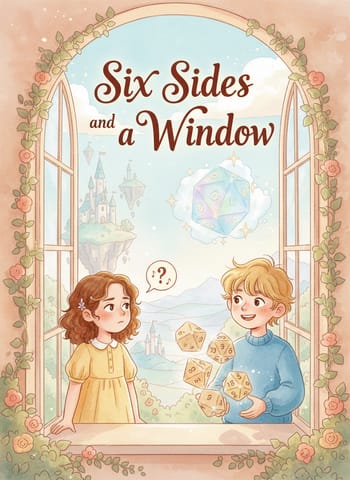
Six Sides and a Window
Una historia gratuita en inglés de nivel A2 para estudiantes, para leer en línea en 7 idiomas, con opción de escucharla en la app gratuita Storyteller.
Dalia thinks the boy with the dice is mocking her, until she asks him why he rolls them.
¡Ese fue el avance! Escucha la historia completa en la app gratuita Storyteller. Descargar la app
El audio no está disponible en este momento.
The ticket booth of the old cinema is a small glass box. It stands by the front door. Inside there is a stool and a lamp. There is also a little metal tray for money. The glass has a round hole at the bottom. People pass their coins through it.
La taquilla del viejo cine es una pequeña caja de vidrio. Está junto a la puerta principal. Dentro hay un banquito y una lámpara. También hay una bandeja metálica para el dinero. El vidrio tiene un agujero redondo en la parte de abajo. La gente pasa las monedas por él.
Dalia sits in the booth every Saturday. She is sixteen. The job is quiet, and she likes quiet. She sells tickets, tears them in half and gives back the change. Between films, she reads a book on her knee.
Dalia se sienta en la taquilla todos los sábados. Tiene dieciséis años. El trabajo es tranquilo, y a ella le gusta la tranquilidad. Vende entradas, las rompe por la mitad y da el cambio. Entre una película y otra, lee un libro apoyado en la rodilla.
Every Saturday at ten past four, a boy comes to her window. His name is Paolo. She knows it because a friend at school tells her. He is tall and thin. He wears a green scarf even in summer.
Todos los sábados a las cuatro y diez, un chico llega a su ventanilla. Se llama Paolo. Lo sabe porque se lo dijo una amiga del colegio. Es alto y delgado. Lleva una bufanda verde incluso en verano.
Paolo always does the same thing. He puts a small cloth bag on the counter. He opens it and takes out a die. He rolls it on the metal tray. It clicks and spins and stops.
Paolo siempre hace lo mismo. Pone una pequeña bolsa de tela en el mostrador. La abre y saca un dado. Lo lanza sobre la bandeja metálica. Hace clic, gira y se detiene.
He looks at the die for a long time. Then he looks at Dalia. Then he buys a ticket.
Mira el dado durante largo rato. Luego mira a Dalia. Luego compra una entrada.
The first time, Dalia finds it funny. The second time, she finds it strange. Now it is the sixth Saturday, and she is tired of it.
La primera vez, a Dalia le parece gracioso. La segunda vez, le parece raro. Ahora es el sexto sábado, y está harta.
Today the line behind Paolo is long. Six people wait with their coats and their popcorn money. Dalia sees them look at their watches.
Hoy la fila detrás de Paolo es larga. Seis personas esperan con sus abrigos y su dinero para las palomitas. Dalia los ve mirar sus relojes.
Paolo puts the bag on the tray. The dice click together in the bag.
Paolo pone la bolsa en la bandeja. Los dados chocan entre sí dentro de la bolsa.
"Please don't," Dalia says.
«Por favor, no», dice Dalia.
Paolo stops with his hand in the bag. "Sorry?"
Paolo se detiene con la mano en la bolsa. «¿Perdón?».
"The dice. Please don't roll them today. People wait."
«Los dados. Por favor, no los lances hoy. La gente espera».
Paolo looks behind him. He sees the line. He moves his hand away from the tray. "Okay," he says in a low voice. "One ticket for the half-past-four film, please."
Paolo mira hacia atrás. Ve la fila. Aparta la mano de la bandeja. «Está bien», dice en voz baja. «Una entrada para la película de las cuatro y media, por favor».
Dalia tears the ticket. She pushes it through the hole. He gives her the coins. His fingers are cold. He looks at her as if he wants to say more. But he only picks up his bag and goes.
Dalia rompe la entrada. La pasa por el agujero. Él le da las monedas. Sus dedos están fríos. La mira como si quisiera decir algo más. Pero solo recoge su bolsa y se va.
Dalia watches him walk to the door. His shoulders are low. She feels a small, hard stone in her stomach.
Dalia lo ve caminar hacia la puerta. Lleva los hombros caídos. Siente una piedra pequeña y dura en el estómago.
She tells herself it is his fault. He makes a game out of her work. He laughs at her with those dice, she thinks. Maybe it is a joke with his friends. Maybe he thinks she is just a number on a die.
Se dice que es culpa de él. Hace un juego de su trabajo. Se ríe de ella con esos dados, piensa. Quizá es una broma con sus amigos. Quizá cree que ella es solo un número en un dado.
But there is a problem with this idea. He never laughs. He never smiles. He always looks a little worried.
Pero esa idea tiene un problema. Él nunca se ríe. Nunca sonríe. Siempre parece un poco preocupado.
The film starts. The lobby becomes quiet. Dalia opens her book, but she cannot read. The words slide around the page. She keeps seeing his green scarf.
Empieza la película. El vestíbulo se queda en silencio. Dalia abre su libro, pero no puede leer. Las palabras se deslizan por la página. Sigue viendo su bufanda verde.
At six o'clock, the film ends. People come out into the lobby. Some stop at her window to ask about the next show. Paolo comes out last. He walks slowly. He does not look at the booth.
A las seis, termina la película. La gente sale al vestíbulo. Algunos se detienen en su ventanilla a preguntar por la siguiente función. Paolo sale al final. Camina despacio. No mira hacia la taquilla.
Dalia gets up from her stool. She opens the little side door of the booth. She never does that. The air outside the glass feels bigger.
Dalia se levanta de su banquito. Abre la pequeña puerta lateral de la taquilla. Nunca hace eso. El aire fuera del vidrio se siente más grande.
"Paolo," she says.
«Paolo», dice.
He turns around. His eyes are wide, as if he expects bad news.
Él se da vuelta. Tiene los ojos muy abiertos, como si esperara malas noticias.
"I'm sorry," Dalia says. "I was rude before. But I also want to ask you something. Why do you roll the dice every time? Is it a joke about me?"
«Lo siento», dice Dalia. «Fui grosera antes. Pero también quiero preguntarte algo. ¿Por qué lanzas los dados cada vez? ¿Es una broma sobre mí?».
"A joke?" Paolo says. His mouth falls open. "No! I thought you hated it."
«¿Una broma?», dice Paolo. Se le cae la mandíbula. «¡No! Pensé que lo odiabas».
"I hate it," says Dalia. "I think you laugh at me."
«Lo odio», dice Dalia. «Pienso que te ríes de mí».
"Never," says Paolo. He shakes his head hard. "I thought you were angry with me because I take too long. I could not stop doing it. If I stop, it feels wrong."
«Nunca», dice Paolo. Niega con la cabeza con fuerza. «Pensé que estabas enojada conmigo porque me demoro demasiado. No podía dejar de hacerlo. Si lo dejo, siento que está mal».
"But why?" asks Dalia. "What are the dice for?"
«Pero ¿por qué?», pregunta Dalia. «¿Para qué son los dados?».
Paolo sits down on the bench by the wall. After a moment, Dalia sits beside him. He opens the cloth bag and pours the dice into his hand.
Paolo se sienta en la banca junto a la pared. Después de un momento, Dalia se sienta a su lado. Él abre la bolsa de tela y vierte los dados en su mano.
There are fourteen of them, and none of them match. One is large and wooden. One is small and blue. One has ten sides, and one has only four. One has letters on it, not numbers. One is so old that the dots are almost gone.
Son catorce, y ninguno es igual. Uno es grande y de madera. Uno es pequeño y azul. Uno tiene diez caras, y uno solo tiene cuatro. Uno tiene letras, no números. Uno es tan viejo que los puntos casi han desaparecido.
"I can't choose," says Paolo. "Not my seat, not anything. I stand in front of the board and I wait. I always want the best seat. I never find it. Last year I missed two whole films because I could not decide."
«No puedo elegir», dice Paolo. «Ni mi asiento, ni nada. Me paro frente al tablero y espero. Siempre quiero el mejor asiento. Nunca lo encuentro. El año pasado me perdí dos películas enteras porque no podía decidirme».
"So you roll the dice," says Dalia.
«Así que lanzas los dados», dice Dalia.
"Yes. The dice choose my seat. If I roll a four, I sit in row four. If I roll a letter, I sit at the row end. It's not a game. It's a way to stop thinking."
«Sí. Los dados eligen mi asiento. Si saco un cuatro, me siento en la fila cuatro. Si saco una letra, me siento al extremo de la fila. No es un juego. Es una manera de dejar de pensar».
Dalia looks at the dice in his open hand. "Where did you find them?"
Dalia mira los dados en su mano abierta. «¿Dónde los encontraste?».
"Everywhere," says Paolo. "Each one was lost by some game. The blue one is from a flea market. The wooden one is from under a cafe chair. I like them because each one is the only one. They are all a bit wrong, but they work."
«En todas partes», dice Paolo. «Cada uno lo perdió algún juego. El azul es de un mercado de pulgas. El de madera es de debajo de una silla de café. Me gustan porque cada uno es único. Todos están un poco mal, pero funcionan».
Dalia smiles. It is the first time she smiles at him. "I'm sorry I said stop," she says.
Dalia sonríe. Es la primera vez que le sonríe. «Siento haber dicho que no», dice.
"I'm sorry I never told you," says Paolo. "I do not know how to start."
«Siento no haberte contado nunca», dice Paolo. «No sé cómo empezar».
They sit for a while. The lobby lamps hum. A cleaner starts to clean the lobby.
Se quedan sentados un rato. Las lámparas del vestíbulo zumban. Una señora de la limpieza empieza a limpiar el vestíbulo.
"Can I try one?" Dalia asks.
«¿Puedo probar uno?», pregunta Dalia.
Paolo gives her the small blue die. She shakes it in her hands. She drops it on the bench. It rolls and stops on a three.
Paolo le da el dado azul pequeño. Ella lo agita entre las manos. Lo deja caer sobre la banca. Rueda y se detiene en un tres.
"Row three," says Paolo. "Next Saturday."
«Fila tres», dice Paolo. «El próximo sábado».
"Row three," says Dalia. "I will keep it for you. I will tell nobody."
«Fila tres», dice Dalia. «Te la voy a guardar. No se lo diré a nadie».
Paolo laughs. It is a soft, surprised laugh. He puts the dice back in the bag one by one. Before he closes the bag, he stops. He keeps the blue die out and puts it in her hand.
Paolo se ríe. Es una risa suave y sorprendida. Guarda los dados en la bolsa uno por uno. Antes de cerrarla, se detiene. Deja el dado azul fuera y se lo pone en la mano.
"For the booth," he says. "In case someone else cannot choose."
«Para la taquilla», dice. «Por si alguien más no puede elegir».
Then he waves and walks out into the evening street. His green scarf disappears behind the glass door.
Luego saluda con la mano y sale a la calle del atardecer. Su bufanda verde desaparece tras la puerta de vidrio.
Dalia goes back to her booth and closes the little side door. She sits on the stool and turns on the lamp. She puts the blue die on the metal tray, under the light.
Dalia vuelve a su taquilla y cierra la puerta lateral. Se sienta en el banquito y enciende la lámpara. Pone el dado azul sobre la bandeja metálica, bajo la luz.
It stays there until closing time. It is the smallest thing in the whole room. Light from the street sign falls across it. The three dots look like three small stars.
Se queda allí hasta la hora de cierre. Es lo más pequeño de toda la sala. La luz del letrero de la calle cae sobre él. Los tres puntos parecen tres estrellitas.