A Coin Worth the Wait
Una historia gratuita en inglés de nivel A2 para estudiantes, para leer en línea en 7 idiomas, con opción de escucharla en la app gratuita Storyteller.
Shy Takeshi waits for hours to buy a rare silver coin, then finds a braver way to get it.
¡Ese fue el avance! Escucha la historia completa en la app gratuita Storyteller. Descargar la app
El audio no está disponible en este momento.
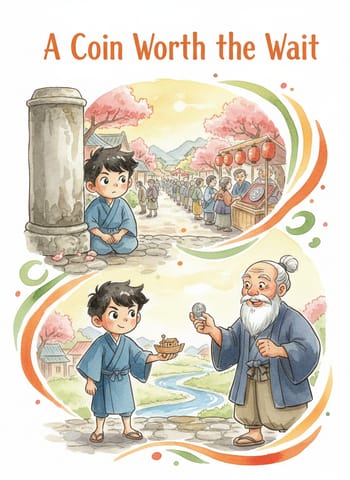
Takeshi stands at the end of a very long queue. It goes down the steps and along the shop window. Then it turns the corner. He cannot see the front.
Takeshi está al final de una fila larguísima. Baja por los escalones y sigue a lo largo de la vitrina de la tienda. Luego dobla la esquina. No alcanza a ver el principio.
It is six in the morning. The sky is grey and the street is quiet. Takeshi holds a small jar of coins in both hands.
Son las seis de la mañana. El cielo está gris y la calle está tranquila. Takeshi sostiene con ambas manos un frasquito de monedas.
Eight months ago, he started to save money for one thing. It is a silver coin with a tiny bird on it. The stamp and coin shop sells only fifty of them. Today is the first day.
Hace ocho meses empezó a ahorrar para una sola cosa. Es una moneda de plata con un pajarito. La tienda de sellos y monedas vende solo cincuenta. Hoy es el primer día.
Takeshi is twenty-eight, and he is shy. He never asks for anything. At work, he waits until people notice him. Today he wants to be different.
Takeshi tiene veintiocho años y es tímido. Nunca pide nada. En el trabajo espera a que la gente lo note. Hoy quiere ser diferente.
The woman in front of him turns around. "Are you here for the bird coin too?" she asks.
La mujer que está delante de él se da la vuelta. «¿Tú también vienes por la moneda del pájaro?», pregunta.
"Yes," says Takeshi. His voice is small.
«Sí», dice Takeshi. Su voz es pequeña.
"Then you need luck," she says. "I count nearly two hundred people ahead of us."
«Entonces necesitas suerte», dice ella. «Cuento casi doscientas personas delante de nosotros».
Takeshi counts the people too. She is right. He feels tired already. Still, he stays.
Takeshi también cuenta a la gente. Ella tiene razón. Ya se siente cansado. Aun así, se queda.
Hours pass. His legs hurt. A boy sells hot snacks from a cart. Takeshi does not move. He is afraid to lose his place.
Pasan las horas. Le duelen las piernas. Un niño vende bocadillos calientes desde un carrito. Takeshi no se mueve. Tiene miedo de perder su lugar.
At nine, the shop opens. The queue moves very slowly. At eleven, a man in a green apron comes out. He is tall, with a loud voice. His name tag says Basil.
A las nueve, la tienda abre. La fila avanza muy lentamente. A las once, sale un hombre con delantal verde. Es alto y tiene una voz fuerte. Su etiqueta dice Basil.
"Friends," Basil calls, "the bird coins are sold out!"
«Amigos», dice Basil en voz alta, «¡las monedas del pájaro se agotaron!».
A sound goes through the queue, like air leaving a bag. People say bad words. Some of them laugh. Many of them walk away.
Un sonido recorre la fila, como aire que se escapa de una bolsa. La gente dice malas palabras. Algunos se ríen. Muchos se van.
Takeshi cannot move. He stares at the man in the apron. He wants to say, "Please, I waited five hours." But the words stay inside him.
Takeshi no puede moverse. Se queda mirando al hombre del delantal. Quiere decir: «Por favor, esperé cinco horas». Pero las palabras se quedan dentro de él.
Basil goes back into the shop. The door closes. Takeshi looks at his jar. The coins look small and silly now.
Basil vuelve a entrar en la tienda. La puerta se cierra. Takeshi mira su frasco. Las monedas se ven pequeñas y ridículas ahora.
He walks home slowly. He puts the jar on the shelf. He does not eat lunch. He lies on the sofa and looks at the ceiling.
Camina a casa despacio. Deja el frasco en el estante. No almuerza. Se tumba en el sofá y mira el techo.
In the evening, he thinks about the day. He asks himself a hard question. Why does he only wait? Waiting does not work today.
Por la tarde piensa en el día. Se hace una pregunta difícil. ¿Por qué solo espera? Hoy esperar no funcionó.
The woman's voice comes back to him. Nearly two hundred people. Nobody tells the people what to do. Nobody gives them a number. It is a mess.
La voz de la mujer vuelve a su mente. Casi doscientas personas. Nadie les dice qué hacer. Nadie les da un número. Es un desorden.
Takeshi sits up. He gets a pen and a sheet of paper. He has a new idea. It is a strange idea, and it scares him. He puts his old jar in his bag, just in case.
Takeshi se incorpora. Toma un bolígrafo y una hoja de papel. Tiene una idea nueva. Es una idea extraña y le da miedo. Mete su viejo frasco en la mochila, por si acaso.
The next morning, Takeshi arrives at the shop at seven. There is no queue. The street is empty. Basil is alone, putting chairs by the window.
A la mañana siguiente, Takeshi llega a la tienda a las siete. No hay fila. La calle está vacía. Basil está solo, poniendo sillas junto a la vitrina.
Takeshi takes a deep breath. He goes in.
Takeshi respira hondo. Entra.
"Good morning," he says. "I am Takeshi. I was in your line yesterday."
«Buenos días», dice. «Soy Takeshi. Estuve ayer en su fila».
Basil looks up. "Ah. Another sad face," he says. "I am sorry. I only sell fifty coins. It is not my fault."
Basil levanta la vista. «Ah. Otra cara triste», dice. «Lo siento. Solo vendo cincuenta monedas. No es mi culpa».
"I know," says Takeshi. "I do not come for a coin today."
«Lo sé», dice Takeshi. «Hoy no vengo por una moneda».
He holds out the paper. On it, he draws a plan. It shows the door, the steps, and a table. He writes numbers from one to two hundred.
Extiende el papel. En él dibuja un plan. Muestra la puerta, los escalones y una mesa. Escribe números del uno al doscientos.
"This is a ticket system," he says. "People take a number. They can go and eat. They come back when you call them."
«Este es un sistema de turnos», dice. «La gente toma un número. Pueden ir a comer. Vuelven cuando usted los llama».
Basil reads the paper. He says nothing for a long time. He rubs his chin.
Basil lee el papel. No dice nada durante un buen rato. Se frota la barbilla.
"Every morning at ten, I have a long line," Basil says. "Yesterday was the worst. A man cried in my shop. Another man pushed a woman. I do not like my queues. But I have no time to fix them."
«Todas las mañanas a las diez tengo una fila larga», dice Basil. «Ayer fue lo peor. Un hombre lloró en mi tienda. Otro empujó a una mujer. No me gustan mis filas. Pero no tengo tiempo de arreglarlas».
"I can help," says Takeshi. His heart beats fast. "Today. For free."
«Yo puedo ayudar», dice Takeshi. El corazón le late rápido. «Hoy. Gratis».
Basil laughs, but he is not unkind. "You are brave, young man. Fine. Show me."
Basil se ríe, pero no es cruel. «Eres valiente, muchacho. Está bien. Muéstrame».
They work together for an hour. Takeshi cuts paper into small squares. He writes numbers on each one. Basil finds a box and a pen. They put a table by the door.
Trabajan juntos durante una hora. Takeshi corta papel en cuadritos. Escribe números en cada uno. Basil encuentra una caja y un bolígrafo. Ponen una mesa junto a la puerta.
At ten, the new customers come. A small queue forms. Takeshi stands next to the table.
A las diez llegan los primeros clientes. Se forma una fila pequeña. Takeshi se queda de pie junto a la mesa.
"Good morning!" he says, much louder than usual. "Please take a number. The shop opens in ten minutes."
«¡Buenos días!», dice, mucho más fuerte de lo habitual. «Por favor, tomen un número. La tienda abre en diez minutos».
A man frowns. "Why a number?"
Un hombre frunce el ceño. «¿Para qué un número?».
"So you can sit down," says Takeshi. "Or have a coffee. We call your number when it is time."
«Para que puedan sentarse», dice Takeshi. «O tomar un café. Llamamos su número cuando sea el momento».
The man thinks about it. Then he shrugs and takes a ticket. The others follow.
El hombre lo piensa. Luego se encoge de hombros y toma un boleto. Los demás lo siguen.
Takeshi cannot believe it. People listen to him. They smile. They go to the café across the road. The street is calm.
Takeshi no puede creerlo. La gente lo escucha. Sonríen. Van a la cafetería al otro lado de la calle. La calle está tranquila.
By noon, thirty customers come and go. Nobody shouts. Nobody pushes. Basil stands behind the counter with a big smile on his face. He sells stamps and coins quickly, and he even talks to people.
Para el mediodía, treinta clientes van y vienen. Nadie grita. Nadie empuja. Basil está detrás del mostrador con una gran sonrisa en la cara. Vende sellos y monedas con rapidez, e incluso conversa con la gente.
At two, the shop is empty. Basil locks the door and turns the sign. He sits down on a chair and breathes out.
A las dos, la tienda está vacía. Basil cierra la puerta con llave y le da la vuelta al letrero. Se sienta en una silla y suelta el aire.
"I never have such a good day," he says. "My legs do not hurt. My head does not hurt."
«Nunca tengo un día tan bueno», dice. «No me duelen las piernas. No me duele la cabeza».
"I am glad," says Takeshi. He feels tired, but happy.
«Me alegro», dice Takeshi. Se siente cansado, pero feliz.
Basil opens a drawer under the counter. He takes out a small box. He puts it in front of Takeshi.
Basil abre un cajón debajo del mostrador. Saca una cajita. La pone frente a Takeshi.
"Open it," he says.
«Ábrela», dice.
Inside is a silver coin with a tiny bird on it.
Dentro hay una moneda de plata con un pajarito.
"This is the fifty-first," Basil says. "I keep one coin for a lucky person. I did not know who. But today I know."
«Esta es la número cincuenta y uno», dice Basil. «Guardo una moneda para una persona con suerte. No sabía quién sería. Pero hoy ya lo sé».
Takeshi stares at the coin. His eyes feel wet. "I cannot take it," he says. "I worked for you, not for the coin."
Takeshi se queda mirando la moneda. Siente los ojos húmedos. «No puedo aceptarla», dice. «Trabajé para usted, no por la moneda».
"That is why you can take it," says Basil. "Now, do not argue with me. How much do you have?"
«Por eso puedes aceptarla», dice Basil. «Ahora no discutas conmigo. ¿Cuánto tienes?».
Takeshi opens his bag and takes out the old jar slowly.
Takeshi abre su mochila y saca el viejo frasco con lentitud.
He puts the jar on the counter. Then he pulls out the coins one by one. He stacks them in small towers. Basil counts them out loud.
Pone el frasco sobre el mostrador. Luego saca las monedas una por una. Las apila en torrecitas. Basil las cuenta en voz alta.
The last tower is right on the price. Takeshi smiles and slides the box into his pocket.
La última torre llega justo al precio. Takeshi sonríe y se desliza la cajita en el bolsillo.