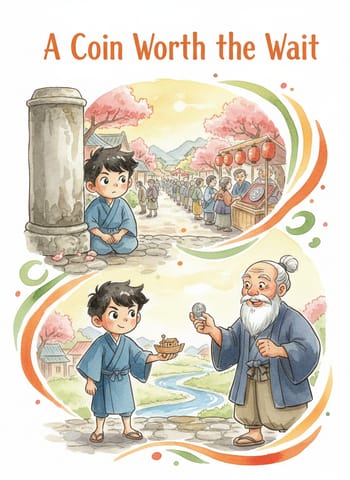
A Coin Worth the Wait
भाषा सीखने वालों के लिए स्तर A2 की एक मुफ़्त अंग्रेज़ी कहानी, जिसे 7 भाषाओं में ऑनलाइन पढ़ा जा सकता है और मुफ़्त Storyteller ऐप में सुना भी जा सकता है।
Shy Takeshi waits for hours to buy a rare silver coin, then finds a braver way to get it.
झलक पूरी हुई! पूरी कहानी मुफ़्त Storyteller ऐप में सुनें। ऐप पाएँ
अभी ऑडियो उपलब्ध नहीं है।
Takeshi stands at the end of a very long queue. It goes down the steps and along the shop window. Then it turns the corner. He cannot see the front.
ताकेशी एक बहुत लंबी कतार के आख़िरी छोर पर खड़ा है। वह सीढ़ियों से नीचे उतरती है और दुकान की खिड़की के साथ-साथ चलती है। फिर वह कोने से मुड़ जाती है। उसे आगे का सिरा दिखाई नहीं देता।
It is six in the morning. The sky is grey and the street is quiet. Takeshi holds a small jar of coins in both hands.
सुबह के छह बजे हैं। आसमान स्लेटी है और गली शांत है। ताकेशी दोनों हाथों में सिक्कों का एक छोटा मर्तबान थामे है।
Eight months ago, he started to save money for one thing. It is a silver coin with a tiny bird on it. The stamp and coin shop sells only fifty of them. Today is the first day.
आठ महीने पहले उसने एक ही चीज़ के लिए पैसे जमा करना शुरू किया था। वह चाँदी का एक सिक्का है जिस पर एक नन्ही चिड़िया बनी है। डाक-टिकट और सिक्कों की दुकान ऐसे सिर्फ़ पचास सिक्के बेचती है। आज पहला दिन है।
Takeshi is twenty-eight, and he is shy. He never asks for anything. At work, he waits until people notice him. Today he wants to be different.
ताकेशी अट्ठाईस साल का है, और वह शर्मीला है। वह कभी किसी से कुछ नहीं माँगता। दफ़्तर में वह तब तक इंतज़ार करता है जब तक लोग उस पर ध्यान न दें। आज वह कुछ अलग होना चाहता है।
The woman in front of him turns around. "Are you here for the bird coin too?" she asks.
उसके आगे खड़ी औरत पीछे मुड़ती है। "आप भी चिड़िया वाले सिक्के के लिए आए हैं?" वह पूछती है।
"Yes," says Takeshi. His voice is small.
"हाँ," ताकेशी कहता है। उसकी आवाज़ धीमी है।
"Then you need luck," she says. "I count nearly two hundred people ahead of us."
"तो आपको क़िस्मत चाहिए," वह कहती है। "मेरे हिसाब से हमारे आगे लगभग दो सौ लोग हैं।"
Takeshi counts the people too. She is right. He feels tired already. Still, he stays.
ताकेशी भी लोगों को गिनता है। वह सही कह रही है। वह अभी से थका हुआ महसूस करता है। फिर भी वह खड़ा रहता है।
Hours pass. His legs hurt. A boy sells hot snacks from a cart. Takeshi does not move. He is afraid to lose his place.
घंटे बीत जाते हैं। उसके पैर दुखने लगते हैं। एक लड़का ठेले पर गरमागरम नाश्ता बेच रहा है। ताकेशी अपनी जगह से नहीं हिलता। उसे अपनी जगह खोने का डर है।
At nine, the shop opens. The queue moves very slowly. At eleven, a man in a green apron comes out. He is tall, with a loud voice. His name tag says Basil.
नौ बजे दुकान खुलती है। कतार बहुत धीरे-धीरे आगे बढ़ती है। ग्यारह बजे हरे एप्रन वाला एक आदमी बाहर आता है। वह लंबा है और उसकी आवाज़ ऊँची है। उसके नाम-पट्टे पर बेज़िल लिखा है।
"Friends," Basil calls, "the bird coins are sold out!"
"दोस्तो," बेज़िल पुकारता है, "चिड़िया वाले सिक्के बिक चुके हैं!"
A sound goes through the queue, like air leaving a bag. People say bad words. Some of them laugh. Many of them walk away.
कतार में एक आवाज़ दौड़ जाती है, जैसे किसी थैले से हवा निकल गई हो। लोग गालियाँ देते हैं। कुछ हँस पड़ते हैं। बहुत-से लोग चल देते हैं।
Takeshi cannot move. He stares at the man in the apron. He wants to say, "Please, I waited five hours." But the words stay inside him.
ताकेशी हिल नहीं पाता। वह एप्रन वाले आदमी को घूरता रहता है। वह कहना चाहता है, "प्लीज़, मैंने पाँच घंटे इंतज़ार किया है।" पर शब्द उसके अंदर ही रह जाते हैं।
Basil goes back into the shop. The door closes. Takeshi looks at his jar. The coins look small and silly now.
बेज़िल वापस दुकान में चला जाता है। दरवाज़ा बंद हो जाता है। ताकेशी अपने मर्तबान को देखता है। सिक्के अब छोटे और बेवकूफ़ाना लगते हैं।
He walks home slowly. He puts the jar on the shelf. He does not eat lunch. He lies on the sofa and looks at the ceiling.
वह धीरे-धीरे घर चल देता है। वह मर्तबान को अलमारी पर रख देता है। वह दोपहर का खाना नहीं खाता। वह सोफ़े पर लेटकर छत को देखता रहता है।
In the evening, he thinks about the day. He asks himself a hard question. Why does he only wait? Waiting does not work today.
शाम को वह दिन के बारे में सोचता है। वह ख़ुद से एक कठिन सवाल पूछता है। वह सिर्फ़ इंतज़ार ही क्यों करता है? आज तो इंतज़ार काम नहीं आया।
The woman's voice comes back to him. Nearly two hundred people. Nobody tells the people what to do. Nobody gives them a number. It is a mess.
उस औरत की आवाज़ उसे फिर याद आती है। लगभग दो सौ लोग। लोगों को कोई नहीं बताता कि क्या करना है। उन्हें कोई नंबर नहीं देता। सब अव्यवस्था है।
Takeshi sits up. He gets a pen and a sheet of paper. He has a new idea. It is a strange idea, and it scares him. He puts his old jar in his bag, just in case.
ताकेशी उठकर बैठ जाता है। वह एक कलम और काग़ज़ का पन्ना लेता है। उसके मन में एक नया ख़याल आया है। यह एक अजीब ख़याल है, और यह उसे डराता है। वह अपना पुराना मर्तबान, बस यूँ ही, अपने बैग में रख लेता है।
The next morning, Takeshi arrives at the shop at seven. There is no queue. The street is empty. Basil is alone, putting chairs by the window.
अगली सुबह ताकेशी सात बजे दुकान पर पहुँचता है। कोई कतार नहीं है। गली सुनसान है। बेज़िल अकेला खिड़की के पास कुर्सियाँ रख रहा है।
Takeshi takes a deep breath. He goes in.
ताकेशी गहरी साँस लेता है। वह अंदर जाता है।
"Good morning," he says. "I am Takeshi. I was in your line yesterday."
"सुप्रभात," वह कहता है। "मैं ताकेशी हूँ। मैं कल आपकी कतार में था।"
Basil looks up. "Ah. Another sad face," he says. "I am sorry. I only sell fifty coins. It is not my fault."
बेज़िल ऊपर देखता है। "अच्छा। एक और उदास चेहरा," वह कहता है। "माफ़ करना। मैं सिर्फ़ पचास सिक्के बेचता हूँ। इसमें मेरी ग़लती नहीं है।"
"I know," says Takeshi. "I do not come for a coin today."
"मैं जानता हूँ," ताकेशी कहता है। "मैं आज सिक्के के लिए नहीं आया।"
He holds out the paper. On it, he draws a plan. It shows the door, the steps, and a table. He writes numbers from one to two hundred.
वह काग़ज़ आगे बढ़ाता है। उस पर उसने एक योजना बनाई है। उसमें दरवाज़ा, सीढ़ियाँ और एक मेज़ दिखाई गई है। उसने एक से दो सौ तक नंबर लिखे हैं।
"This is a ticket system," he says. "People take a number. They can go and eat. They come back when you call them."
"यह टिकट की व्यवस्था है," वह कहता है। "लोग एक नंबर ले लेते हैं। वे जाकर खाना खा सकते हैं। जब आप बुलाएँ, तब वे लौट आते हैं।"
Basil reads the paper. He says nothing for a long time. He rubs his chin.
बेज़िल काग़ज़ पढ़ता है। वह देर तक कुछ नहीं कहता। वह अपनी ठुड्डी सहलाता है।
"Every morning at ten, I have a long line," Basil says. "Yesterday was the worst. A man cried in my shop. Another man pushed a woman. I do not like my queues. But I have no time to fix them."
"हर सुबह दस बजे मेरी लंबी कतार लग जाती है," बेज़िल कहता है। "कल सबसे बुरा दिन था। एक आदमी मेरी दुकान में रो पड़ा। एक और आदमी ने एक औरत को धक्का दे दिया। मुझे अपनी कतारें पसंद नहीं हैं। पर उन्हें ठीक करने का मेरे पास वक़्त नहीं है।"
"I can help," says Takeshi. His heart beats fast. "Today. For free."
"मैं मदद कर सकता हूँ," ताकेशी कहता है। उसका दिल तेज़ धड़क रहा है। "आज ही। मुफ़्त में।"
Basil laughs, but he is not unkind. "You are brave, young man. Fine. Show me."
बेज़िल हँसता है, पर बेरुख़ी से नहीं। "तुम बहादुर हो, नौजवान। ठीक है। मुझे दिखाओ।"
They work together for an hour. Takeshi cuts paper into small squares. He writes numbers on each one. Basil finds a box and a pen. They put a table by the door.
वे एक घंटे तक साथ काम करते हैं। ताकेशी काग़ज़ को छोटे चौकोर टुकड़ों में काटता है। वह हर टुकड़े पर एक नंबर लिखता है। बेज़िल एक डिब्बा और एक कलम ढूँढ़ लाता है। वे दरवाज़े के पास एक मेज़ रख देते हैं।
At ten, the new customers come. A small queue forms. Takeshi stands next to the table.
दस बजे नए ग्राहक आते हैं। एक छोटी-सी कतार बन जाती है। ताकेशी मेज़ के पास खड़ा है।
"Good morning!" he says, much louder than usual. "Please take a number. The shop opens in ten minutes."
"सुप्रभात!" वह आम दिनों से कहीं ज़्यादा ऊँची आवाज़ में कहता है। "कृपया एक नंबर ले लीजिए। दुकान दस मिनट में खुलेगी।"
A man frowns. "Why a number?"
एक आदमी त्योरी चढ़ाता है। "नंबर क्यों?"
"So you can sit down," says Takeshi. "Or have a coffee. We call your number when it is time."
"ताकि आप बैठ सकें," ताकेशी कहता है। "या कॉफ़ी पी सकें। जब समय आएगा, हम आपका नंबर पुकारेंगे।"
The man thinks about it. Then he shrugs and takes a ticket. The others follow.
आदमी इस बारे में सोचता है। फिर वह कंधे उचकाता है और एक टिकट ले लेता है। बाकी लोग भी वैसा ही करते हैं।
Takeshi cannot believe it. People listen to him. They smile. They go to the café across the road. The street is calm.
ताकेशी को यक़ीन नहीं होता। लोग उसकी बात सुन रहे हैं। वे मुस्कुरा रहे हैं। वे सड़क के पार वाले कैफ़े में जा रहे हैं। गली शांत है।
By noon, thirty customers come and go. Nobody shouts. Nobody pushes. Basil stands behind the counter with a big smile on his face. He sells stamps and coins quickly, and he even talks to people.
दोपहर तक तीस ग्राहक आते-जाते हैं। कोई चिल्लाता नहीं। कोई धक्का नहीं देता। बेज़िल काउंटर के पीछे चेहरे पर बड़ी मुस्कान लिए खड़ा है। वह डाक-टिकट और सिक्के जल्दी-जल्दी बेचता है, और लोगों से बातें भी करता है।
At two, the shop is empty. Basil locks the door and turns the sign. He sits down on a chair and breathes out.
दो बजे दुकान ख़ाली हो जाती है। बेज़िल दरवाज़े पर ताला लगाता है और तख़्ती पलट देता है। वह एक कुर्सी पर बैठकर लंबी साँस छोड़ता है।
"I never have such a good day," he says. "My legs do not hurt. My head does not hurt."
"मेरा कोई दिन इतना अच्छा नहीं गुज़रता," वह कहता है। "मेरे पैर नहीं दुख रहे। मेरा सिर नहीं दुख रहा।"
"I am glad," says Takeshi. He feels tired, but happy.
"मुझे ख़ुशी है," ताकेशी कहता है। वह थका हुआ है, पर ख़ुश है।
Basil opens a drawer under the counter. He takes out a small box. He puts it in front of Takeshi.
बेज़िल काउंटर के नीचे की एक दराज़ खोलता है। वह एक छोटा डिब्बा निकालता है। वह उसे ताकेशी के सामने रख देता है।
"Open it," he says.
"खोलो इसे," वह कहता है।
Inside is a silver coin with a tiny bird on it.
अंदर चाँदी का एक सिक्का है जिस पर एक नन्ही चिड़िया बनी है।
"This is the fifty-first," Basil says. "I keep one coin for a lucky person. I did not know who. But today I know."
"यह इक्यावनवाँ है," बेज़िल कहता है। "मैं एक सिक्का किसी भाग्यशाली इंसान के लिए रख लेता हूँ। मुझे पता नहीं था कि वह कौन होगा। पर आज मुझे पता है।"
Takeshi stares at the coin. His eyes feel wet. "I cannot take it," he says. "I worked for you, not for the coin."
ताकेशी सिक्के को घूरता रहता है। उसकी आँखें नम हो जाती हैं। "मैं इसे नहीं ले सकता," वह कहता है। "मैंने आपके लिए काम किया था, सिक्के के लिए नहीं।"
"That is why you can take it," says Basil. "Now, do not argue with me. How much do you have?"
"इसीलिए तुम इसे ले सकते हो," बेज़िल कहता है। "अब मुझसे बहस मत करो। तुम्हारे पास कितने पैसे हैं?"
Takeshi opens his bag and takes out the old jar slowly.
ताकेशी अपना बैग खोलता है और धीरे से पुराना मर्तबान निकालता है।
He puts the jar on the counter. Then he pulls out the coins one by one. He stacks them in small towers. Basil counts them out loud.
वह मर्तबान काउंटर पर रखता है। फिर वह सिक्के एक-एक करके निकालता है। वह उन्हें छोटी-छोटी मीनारों में जमा देता है। बेज़िल उन्हें ज़ोर से गिनता है।
The last tower is right on the price. Takeshi smiles and slides the box into his pocket.
आख़िरी मीनार ठीक दाम पर पहुँचती है। ताकेशी मुस्कुराता है और डिब्बा अपनी जेब में सरका लेता है।