Takeshi stands at the end of a very long queue. It goes down the steps and along the shop window. Then it turns the corner. He cannot see the front.
武史站在一条很长很长的队伍末尾。队伍从台阶上排下来,沿着商店的橱窗,又拐过街角。他看不到队伍的前头。
It is six in the morning. The sky is grey and the street is quiet. Takeshi holds a small jar of coins in both hands.
现在是早上六点。天空灰蒙蒙的,街上很安静。武史双手捧着一个装硬币的小罐子。
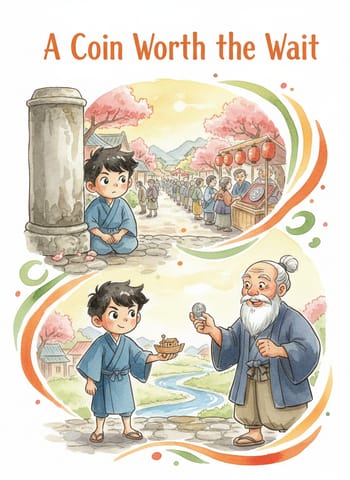
Eight months ago, he started to save money for one thing. It is a silver coin with a tiny bird on it. The stamp and coin shop sells only fifty of them. Today is the first day.
八个月前,他开始为一件东西攒钱,那是一枚银币,上面有一只小小的鸟。这家邮票钱币店只卖五十枚,今天是开售的第一天。
Takeshi is twenty-eight, and he is shy. He never asks for anything. At work, he waits until people notice him. Today he wants to be different.
武史二十八岁,性格腼腆。他从不向别人要求什么。在公司里,他总是等着别人注意到他。今天,他想有些不一样。
The woman in front of him turns around. "Are you here for the bird coin too?" she asks.
排在他前面的女人转过身来。“你也是来买那枚小鸟银币的吗?”她问。
"Yes," says Takeshi. His voice is small.
“是的,”武史说。他的声音很小。
"Then you need luck," she says. "I count nearly two hundred people ahead of us."
“那你得有好运气才行,”她说,“我数了数,我们前面差不多有两百人。”
Takeshi counts the people too. She is right. He feels tired already. Still, he stays.
武史也数了数前面的人。她说得没错。他已经觉得累了,但还是留了下来。
Hours pass. His legs hurt. A boy sells hot snacks from a cart. Takeshi does not move. He is afraid to lose his place.
几个小时过去了。他的腿开始疼。一个男孩推着小车卖热点心。武史一动不动,生怕丢了自己的位置。
At nine, the shop opens. The queue moves very slowly. At eleven, a man in a green apron comes out. He is tall, with a loud voice. His name tag says Basil.
九点,店门开了。队伍移动得极慢。十一点,一个系绿围裙的男人走了出来。他个子很高,嗓门很大,名牌上写着巴兹尔。
"Friends," Basil calls, "the bird coins are sold out!"
“朋友们,”巴兹尔喊道,“小鸟银币卖完啦!”
A sound goes through the queue, like air leaving a bag. People say bad words. Some of them laugh. Many of them walk away.
一阵声音从队伍里传过,像气从袋子里漏出去。有人骂了脏话,有人笑了,许多人转身走开了。
Takeshi cannot move. He stares at the man in the apron. He wants to say, "Please, I waited five hours." But the words stay inside him.
武史动弹不得。他盯着那个系围裙的男人。他想说:“求你了,我等了五个小时。”可是那些话都留在了他的心里。
Basil goes back into the shop. The door closes. Takeshi looks at his jar. The coins look small and silly now.
巴兹尔回到店里,门关上了。武史看着他的罐子。那些硬币现在显得又小又可笑。
He walks home slowly. He puts the jar on the shelf. He does not eat lunch. He lies on the sofa and looks at the ceiling.
他慢慢走回家,把罐子放到架子上,午饭也没吃,躺在沙发上望着天花板。
In the evening, he thinks about the day. He asks himself a hard question. Why does he only wait? Waiting does not work today.
晚上,他回想这一天,问了自己一个难题:为什么我只会等呢?今天,光等是行不通的。
The woman's voice comes back to him. Nearly two hundred people. Nobody tells the people what to do. Nobody gives them a number. It is a mess.
那个女人的声音又在他耳边响起。差不多两百人。没有人告诉大家该怎么做,没有人给大家发号码,乱成一团。
Takeshi sits up. He gets a pen and a sheet of paper. He has a new idea. It is a strange idea, and it scares him. He puts his old jar in his bag, just in case.
武史坐了起来。他拿来一支笔和一张纸。他有了一个新主意。这主意很奇怪,也让他害怕。他把旧罐子放进包里,以防万一。
The next morning, Takeshi arrives at the shop at seven. There is no queue. The street is empty. Basil is alone, putting chairs by the window.
第二天早上,武史七点就到了店门口。没有队伍,街上空荡荡的。巴兹尔一个人在窗边摆椅子。
Takeshi takes a deep breath. He goes in.
武史深吸一口气,走了进去。
"Good morning," he says. "I am Takeshi. I was in your line yesterday."
“早上好,”他说,“我叫武史。昨天我也在你们的队伍里。”
Basil looks up. "Ah. Another sad face," he says. "I am sorry. I only sell fifty coins. It is not my fault."
巴兹尔抬起头。“啊,又一张苦脸,”他说,“抱歉,我只卖五十枚硬币,这不是我的错。”
"I know," says Takeshi. "I do not come for a coin today."
“我知道,”武史说,“我今天不是来买硬币的。”
He holds out the paper. On it, he draws a plan. It shows the door, the steps, and a table. He writes numbers from one to two hundred.
他递出那张纸,上面画着一份方案:门、台阶和一张桌子,还写着从一到两百的号码。
"This is a ticket system," he says. "People take a number. They can go and eat. They come back when you call them."
“这是一套取号系统,”他说,“大家领一个号码,可以去吃点东西,等你叫到号再回来。”
Basil reads the paper. He says nothing for a long time. He rubs his chin.
巴兹尔读着那张纸,很久没有说话,一只手摸着下巴。
"Every morning at ten, I have a long line," Basil says. "Yesterday was the worst. A man cried in my shop. Another man pushed a woman. I do not like my queues. But I have no time to fix them."
“每天早上十点,我这里都排长队,”巴兹尔说,“昨天最糟。有个男人在我店里哭了,另一个男人推了一位女士。我不喜欢这些队伍,可我没时间去解决。”
"I can help," says Takeshi. His heart beats fast. "Today. For free."
“我可以帮忙,”武史说,他的心怦怦直跳,“今天就行,不收钱。”
Basil laughs, but he is not unkind. "You are brave, young man. Fine. Show me."
巴兹尔笑了,但并无恶意。“你真勇敢,年轻人。好吧,演示给我看。”
They work together for an hour. Takeshi cuts paper into small squares. He writes numbers on each one. Basil finds a box and a pen. They put a table by the door.
他们一起忙了一个小时。武史把纸裁成小方块,在每一张上写了号码。巴兹尔找来一个盒子和一支笔。他们在门边放了一张桌子。
At ten, the new customers come. A small queue forms. Takeshi stands next to the table.
十点,新的顾客来了,一条小小的队伍排了起来。武史站在桌子旁边。
"Good morning!" he says, much louder than usual. "Please take a number. The shop opens in ten minutes."
“早上好!”他说,声音比平时大得多,“请领一个号码。店铺十分钟后开门。”
A man frowns. "Why a number?"
一个男人皱起眉头。“为什么要号码?”
"So you can sit down," says Takeshi. "Or have a coffee. We call your number when it is time."
“这样您就可以坐下来,”武史说,“或者去喝杯咖啡。轮到您的时候,我们会叫您的号码。”
The man thinks about it. Then he shrugs and takes a ticket. The others follow.
男人想了想,耸耸肩,拿了一张号码票。其他人也跟着拿了。
Takeshi cannot believe it. People listen to him. They smile. They go to the café across the road. The street is calm.
武史简直不敢相信。人们听他的话,还对他微笑,走到街对面的咖啡馆去。街上一片平静。
By noon, thirty customers come and go. Nobody shouts. Nobody pushes. Basil stands behind the counter with a big smile on his face. He sells stamps and coins quickly, and he even talks to people.
到了中午,三十位顾客来了又走。没人喊叫,没人推搡。巴兹尔站在柜台后面,脸上带着大大的笑容。他很快地卖出邮票和硬币,甚至还有空和顾客聊天。
At two, the shop is empty. Basil locks the door and turns the sign. He sits down on a chair and breathes out.
两点,店里空了。巴兹尔锁上门,翻过牌子,在椅子上坐下,长长地呼出一口气。
"I never have such a good day," he says. "My legs do not hurt. My head does not hurt."
“我从来没有过这么好的一天,”他说,“我的腿不疼,头也不疼。”
"I am glad," says Takeshi. He feels tired, but happy.
“我很高兴,”武史说。他觉得累,但心里很高兴。
Basil opens a drawer under the counter. He takes out a small box. He puts it in front of Takeshi.
巴兹尔拉开柜台下的一个抽屉,拿出一只小盒子,放到武史面前。
"Open it," he says.
“打开看看,”他说。
Inside is a silver coin with a tiny bird on it.
里面是一枚银币,上面有一只小小的鸟。
"This is the fifty-first," Basil says. "I keep one coin for a lucky person. I did not know who. But today I know."
“这是第五十一枚,”巴兹尔说,“我总留一枚给一个幸运的人。我原先不知道是谁,但今天我知道了。”
Takeshi stares at the coin. His eyes feel wet. "I cannot take it," he says. "I worked for you, not for the coin."
武史盯着那枚银币,眼眶湿润了。“我不能收,”他说,“我是为你干活,不是为了银币。”
"That is why you can take it," says Basil. "Now, do not argue with me. How much do you have?"
“正因为这样,你才可以收下,”巴兹尔说,“好了,别跟我争。你带了多少钱?”
Takeshi opens his bag and takes out the old jar slowly.
武史打开包,慢慢取出那只旧罐子。
He puts the jar on the counter. Then he pulls out the coins one by one. He stacks them in small towers. Basil counts them out loud.
他把罐子放到柜台上,把硬币一枚一枚拿出来,叠成一座座小塔。巴兹尔大声数着。
The last tower is right on the price. Takeshi smiles and slides the box into his pocket.
最后一座小塔,数目正好是价钱。武史笑了笑,把盒子滑进了口袋。