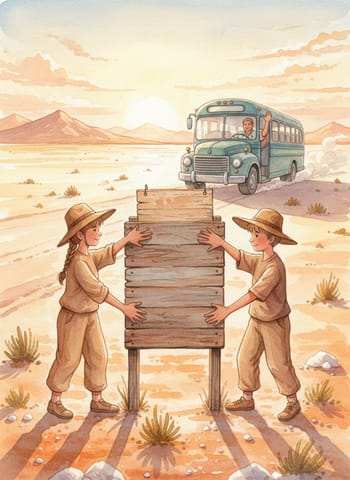
The price board at the Saltwater Stop was older than Lior and Dalila put together.
盐水站的价目牌,比利奥尔和达利拉两人的年纪加起来还要老。
It stood on two crooked posts at the edge of the car park, between their two stalls. Someone had painted it black long ago. The paint had cracked like dry mud. The stop sat on a salt flat so wide that the horizon looked like a drawn line. Coaches came across it twice a day, and the board was the first thing the passengers read.
它立在停车场边上两根歪斜的柱子上,正好在两人的摊位之间。很久以前有人把它漆成了黑色,漆皮像干透的泥巴一样开裂了。这个车站坐落在一片辽阔的盐滩上,地平线看上去就像一条画出来的线。长途大巴每天两次穿过盐滩开来,乘客们第一眼看到的就是这块牌子。
Lior sold cold lemon water from a blue cool box. Dalila sold small salt crystals, polished and strung on leather cords. Both of them worked at the stop every summer. Both of them thought the best corner belonged to them.
利奥尔在一只蓝色保温箱旁卖冰柠檬水。达利拉卖小小的盐晶,打磨光滑,穿在皮绳上。两人每年夏天都在车站摆摊。两人都认为最好的那个角落应该属于自己。
The trouble began with the board.
麻烦是从价目牌开始的。
On Monday, Lior wrote his price in the first row of the board. He wrote "Cold lemon water, three coins" in tall, square letters, like a man signing a letter. On Tuesday, Dalila wiped it with her sleeve. She wrote "Lemon water, three coins, crystals, five coins" in round, curling letters across the whole top half.
星期一,利奥尔把他的价格写在牌子的第一行。他用又高又方的字写下“冰柠檬水,三枚硬币”,像是在给人签一封信。星期二,达利拉用袖子把它擦掉了。她用圆圆的、卷卷的字,在整个上半块牌子上写下:“柠檬水,三枚硬币,盐晶,五枚硬币。”
On Wednesday, Lior rubbed out her curls. He drew a line down the middle of the board and wrote his name above the left side. He did not write hers on the right.
星期三,利奥尔擦掉了她那些卷曲的字。他在牌子中间画了一条线,把自己的名字写在左边的上方。他没有把她的名字写在右边。
"You cannot split a board that belongs to the stop," Dalila said.
“你不能把属于车站的牌子分开,”达利拉说。
"I am not splitting it. I am organising it."
“我不是在分开它。我是在整理它。”
"You are taking it."
“你是在霸占它。”
"You are writing too big."
“是你写得太大了。”
They did not speak for the rest of the afternoon. Each of them watched the other from behind a stall. Each pretended to be busy. In the evening the light turned the flat pink. They both walked past the board without looking at it.
那个下午剩下的时间里,他们谁也没和谁说话。两人各自躲在摊位后面,盯着对方,又都假装自己很忙。傍晚时分,光线把盐滩染成了粉红色。他们路过那块牌子时,都没有看它一眼。
By Friday the board was a mess. There were crossed-out numbers, smudged names, and a line down the middle that went crooked halfway. A man who stopped for a drink read it for a long time. Then he walked on without buying anything.
到星期五,牌子已经一团糟了。上面有划掉的数字,抹花的名字,中间那条线画到一半还歪了。一个停下来喝水的男人看了它很久,然后什么也没买就走了。
"See what you did," said Dalila.
“看看你干的好事,”达利拉说。
"Me?" Lior said. "You started it."
“我?”利奥尔说,“是你先开始的。”
At noon on Saturday, a big white coach rolled across the flat. It stopped in a cloud of fine salt dust. The door opened with a sigh. A woman in a bright scarf stepped out and clapped her hands.
星期六中午,一辆白色大巴开过盐滩,停在一团细细的盐尘里。车门叹息般地打开了。一位围着鲜艳围巾的女士走下车,拍了拍手。
"Fifteen minutes, everyone," she called. "Then we leave. The next town is far."
“大家十五分钟,”她喊道,“然后我们就走。下一个镇子还远着呢。”
Forty passengers poured out. They were tired and thirsty, and they carried cameras and empty water bottles. They went straight to the board. For a moment, there was a quiet murmur as they tried to read it.
四十名乘客涌了出来。他们又累又渴,带着相机和空水瓶。他们径直走向那块牌子。有一会儿,大家低声议论着,试图看懂它。
"What does that say?" a man asked.
“这上面写的是什么?”一个男人问。
"I think it says three coins for lemon," said a girl. "Or thirty."
“我想是柠檬水三枚硬币,”一个女孩说,“也可能是三十。”
"Is the crystal five, or fifty?"
“盐晶是五,还是五十?”
"Where do I pay?"
“该在哪儿付钱?”
Nobody could tell which price belonged to which stall. Some of the passengers tried Lior's cool box and some tried Dalila's table. Nobody was sure of the numbers, and nobody wanted to argue. A few of them looked at their watches. One man took out his phone and began taking a photograph of the board, shaking his head.
没有人能分清哪个价格属于哪个摊位。有些乘客去了利奥尔的保温箱,有些去了达利拉的桌子。没有人确定那些数字,也没有人想争论。有几个人看了看手表。一个男人掏出手机,对着牌子拍照,摇着头。
The woman in the scarf walked over to the stalls. She had kind eyes, but she looked worried.
围着围巾的女士走到摊位前。她的眼神很温和,但看上去有些担忧。
"I need to know," she said, "if my passengers can buy things here, and quickly. If they can't read your board, they will go back to the coach and wait. I have done this journey many times. The stop with a clear board gets the money."
“我得知道,”她说,“我的乘客能不能在这里买东西,而且要快。要是他们看不懂你们的牌子,就会回到车上等着。这条路线我跑过很多次了。牌子清楚的那个站,才能赚到钱。”
Lior opened his mouth. Dalila opened hers. Neither of them said a word.
利奥尔张开嘴。达利拉也张开了嘴。两人谁也没说出一个字。
The woman waited. "I will say it plainly," she said. "You have thirteen minutes. If you cannot give me one clear price list, I will drive away. The next coach will see the same mess."
女士等着。“我直说吧,”她说,“你们还有十三分钟。要是你们给不出一份清楚的价目表,我就开车走。下一辆大巴看到的,还是同样一团糟。”
She walked back to the coach. The passengers stood in the sun and waited.
她走回大巴。乘客们站在太阳底下等着。
Lior looked at Dalila. Dalila looked at the board. For a long moment, the only sound was the hum of the cool box.
利奥尔看看达利拉。达利拉看着那块牌子。有很长一会儿,唯一的声音是保温箱的嗡嗡声。
"I have a rag," Lior said at last.
“我有块抹布,”利奥尔终于说。
"I have a bucket," said Dalila, and her voice was small.
“我有只桶,”达利拉说,声音很小。
They worked quickly. Lior wet the rag in the bucket and wiped the board clean. Dalila fetched a thick white marker from her stall and shook it hard. The surface shone dark and wet for a few seconds. Then it began to dry in the sun.
他们动作很快。利奥尔把抹布在桶里浸湿,把牌子擦干净。达利拉从摊位上拿来一支粗粗的白色记号笔,用力摇了摇。牌面湿漉漉地发亮了几秒钟,然后在阳光下开始变干。
"You do the numbers," she said. "Your numbers are clear."
“你来写数字,”她说,“你的数字很清楚。”
"You do the words. Yours are pretty."
“你来写字。你的字漂亮。”
"Pretty words do not help anyone who is thirsty."
“漂亮的字帮不了口渴的人。”
"They help if people can read them."
“人们看得懂,它们就有用。”
Dalila almost smiled. She took the marker and wrote the first line in her round hand: "Lemon water, with ice." Lior took a marker from the cool box lid. Beside it he added the price in his tall, square figures: "3." Then she wrote "Salt crystal on a cord," and he wrote "5."
达利拉差点笑出来。她拿起记号笔,用圆润的笔迹写下第一行:“柠檬水,加冰。”利奥尔从保温箱盖上拿起一支笔,在旁边用他又高又方的数字加上了价格:“3”。然后她写下“盐晶,带绳”,他写上“5”。
The letters were different, but they sat side by side, and the board looked better at once.
字迹各不相同,但它们并排放在一起,牌子立刻看上去好多了。
"We could do one more thing," Dalila said. She was talking fast now. "If someone buys both, they pay seven coins and not eight."
“我们还可以再做一件事,”达利拉说。她现在说得很快。“如果有人两样都买,就付七枚硬币,不是八枚。”
"Seven," said Lior. "That is fair." He wrote it at the bottom and drew a neat line beneath it.
“七枚,”利奥尔说,“公平。”他把它写在最下面,又在下面画了一条整齐的线。
They stepped back. In the middle of the board, the two kinds of handwriting leaned together like two people talking quietly.
他们退后几步。牌子中间,两种笔迹互相倚靠着,就像两个人在轻声说话。
"Ready?" he said.
“准备好了吗?”他说。
"Ready."
“准备好了。”
The woman in the scarf blew a whistle, and the forty passengers came back. This time nobody asked what the numbers meant. A girl took three coins out of her pocket and bought a lemon water. A man with a camera bought a crystal for his daughter. Then they started buying both, and the line grew so long that Lior ran out of cups. Dalila ran to a crate behind the stall to fetch more. Lior counted the coins into a tin and called out the prices. Together they served the whole coach in eleven minutes.
围着围巾的女士吹响了哨子,四十名乘客回来了。这一次,没有人问那些数字是什么意思。一个女孩从口袋里掏出三枚硬币,买了一杯柠檬水。一个拿相机的男人给女儿买了一块盐晶。接着人们开始两样都买,队伍排得那么长,利奥尔的杯子都用完了。达利拉跑到摊位后面的一只箱子那里去拿更多的杯子。利奥尔把硬币数着放进一只铁盒,一边喊着价格。他们一起在十一分钟里服务完了整车乘客。
When the woman in the scarf climbed the steps, she looked down at them from the door.
围巾女士登上台阶时,从车门口低头看着他们。
"That," she said, "is a good board."
“这,”她说,“是一块好牌子。”
The coach rolled away across the flat, and the dust settled slowly behind it.
大巴驶过盐滩,尘土在它身后慢慢落定。
For a while they sat on the cool box and counted the coins. The tin was almost full. Neither of them said who had earned more. Lior pushed the tin across the lid, and Dalila took half. Then she pushed one extra coin back to him, because he had run out of cups so fast.
他们坐在保温箱上,数了一会儿硬币。铁盒几乎满了。两人谁也没提是谁挣得更多。利奥尔把铁盒推过箱盖,达利拉拿走了一半。然后她又推回一枚硬币给他,因为他杯子用完得那么快。
"The line under the seven is crooked," she said.
“七下面那条线是歪的,”她说。
"I know. I will fix it tomorrow."
“我知道。明天我来改。”
"Do not," said Dalila. "Leave it."
“别改,”达利拉说,“留着吧。”
By evening the sun sank low, and the flat turned from white to pale gold. The shadows of the crooked posts stretched away across the salt. The board stood between the two stalls, and the last light touched the writing on it. There were tall, square numbers and round, curling words. In the stillness, it looked as if the two hands had been working there together for years.
傍晚,太阳沉得很低,盐滩从白色变成了淡金色。两根歪柱子的影子在盐地上拉得很长。牌子立在两个摊位之间,最后一抹阳光落在上面的字迹上。有又高又方的数字,也有圆圆卷卷的字。在这一片寂静里,它看起来就像那两双手已经在那儿一起干了好多年。