The left-luggage room at Gate Street is a long, narrow room with a counter at one end. Behind the counter stand rows of metal shelves, and every shelf is full of other people's lives. There are suitcases, guitar cases, boxes tied with string and one stuffed rabbit. Lorna has worked here for three years.
盖特街的行李寄存处是一间狭长的屋子,一头是柜台。柜台后面摆着一排排金属架,每一层架子上都装满了别人的生活。有行李箱,有吉他盒,有用细绳捆起来的纸箱,还有一只毛绒兔子。洛娜在这里工作了三年。
At the back of the room, high on the wall, there is a small window. It looks out onto the flat roof of the ticket office next door. For one month, a blue-and-white ball has sat on that roof. It leans against a metal vent, and Lorna looks at it every morning.
屋子最里面,高高的墙上有一扇小窗。窗外是隔壁售票处的平屋顶。一个月来,一只蓝白相间的球一直停在那个屋顶上。它靠着一根金属通风管,洛娜每天早上都会看它一眼。
She knows exactly how it got there. A little girl was waiting for a bus with her father. She kicked the ball too hard, and it flew over the wall and rolled onto the roof. The girl did not cry. She stood still and looked up, as if the ball might change its mind.
她清楚地知道它是怎么上去的。一个小女孩和爸爸一起在等公交车。她把球踢得太用力,球飞过围墙,滚到了屋顶上。女孩没有哭。她站着一动不动,抬头望着,仿佛球会改变主意似的。
"I'll get it down for you," Lorna told her father. "Come back tomorrow."
“我帮你把它拿下来,”洛娜对女孩的爸爸说,“明天再来。”
He has come back every day since. He never asks about the ball. He simply stands at the counter, and Lorna says, "Not yet," and he nods and leaves.
从那以后,他每天都来。他从不问起那只球。他只是站在柜台前,洛娜说:“还没有。”他点点头,然后离开。
The roof is the problem. The only way up is a hatch behind the tallest shelf, and nobody has opened it for years. Lorna does not have the key. She also has no ladder and no permission, and the manager is away until next week. So the ball waits, and so does Lorna.
问题出在屋顶上。唯一的通道是最高那排货架后面的一个活板门,已经好多年没人打开过了。洛娜没有钥匙。她也没有梯子,更没有许可,而经理要到下星期才回来。所以球在等,洛娜也在等。
On a quiet afternoon a man walks in, carrying a heavy blue bag. He is perhaps thirty, with a dark beard and a careful way of standing. He puts a small book on the counter and opens it to a page with a pencil mark.
一个安静的下午,一个男人走了进来,拎着一只沉重的蓝色大包。他大概三十岁,留着黑胡子,站姿小心翼翼。他把一本小册子放在柜台上,翻到做了铅笔记号的一页。
"Good afternoon," he reads. "I would like to leave my bag. It is for six hours. Is it possible?"
“下午好,”他照着念道,“我想寄存我的包。六个小时。可以吗?”
"Of course," says Lorna. "Name, please?"
“当然可以,”洛娜说,“请问姓名?”
"Fabrice." He smiles with relief. "Your English is very fast. My English is slow, but I am learning."
“法布里斯。”他松了一口气,笑了。“你的英语说得很快。我的英语很慢,但是我在学。”
"Your English is fine," says Lorna. "You've said it better than most people I know."
“你的英语很好,”洛娜说,“你说得比我认识的大多数人都好。”
She writes a ticket and takes the bag. Fabrice has a bus to catch at nine, and he has six hours to fill before it leaves. He does not seem to know what to do with them. He walks to the end of the room and back. Then he stops by the little window at the back, and he stays there.
她写了一张票,接过包。法布里斯要赶九点的公交车,在开车之前还有六个小时要打发。他似乎不知道该怎么打发。他走到屋子尽头,又走回来。然后他在后面的小窗旁停下,就待在那里。
"Excuse me," he says. "What is this? On the roof?"
“打扰一下,”他说,“这是什么?在屋顶上?”
"A ball," Lorna says.
“一只球。”洛娜说。
"I see that it is a ball. But why is it there?"
“我看出它是一只球。可是它为什么在那里?”
So she tells him. She does it slowly, with simple words. She does the same with every visitor who carries a phrase book. Fabrice listens with his head on one side. When she says "kicked," he repeats it quietly. When she says "hatch," he asks her to draw one.
于是她告诉了他。她说得很慢,用的都是简单的词。每一个拿着短语手册的游客,她都是这样对待的。法布里斯歪着头听着。她说到“踢”的时候,他轻声重复了一遍。她说到“活板门”,他请她画一个。
She draws a square on the back of a ticket. He studies it as if it is a map.
她在一张票的背面画了一个方块。他研究它,像在看一张地图。
"I know this," he says. "In my country, I am a roofer. For eleven years I climb roofs. This hatch is easy."
“我知道这个,”他说,“在我的国家,我是屋顶工。十一年来,我一直爬屋顶。这个活板门很容易。”
"It is locked," says Lorna. "And there's no ladder."
“它上了锁,”洛娜说,“而且没有梯子。”
"Is there a… " He searches for the word and makes a shape in the air with his hands.
“有没有……”他在找那个词,用双手在空中比画出一个形状。
"A trolley?" asks Lorna. "A big one for the bags?"
“推车?”洛娜问,“那种运行李的大推车?”
"Yes! A trolley. And a long stick?"
“对!推车。还要一根长棍子?”
Lorna looks at him. For three years she has been the person who helps. She gives directions, finds lost tickets and teaches people to say "platform." Nobody has ever offered to climb a roof for her. She feels something unfamiliar, and it takes her a moment to name it. It is the feeling of being helped.
洛娜看着他。三年来,她一直是那个帮助别人的人。她指路,找丢失的票,教人们说“站台”。从来没有人主动提出要为她爬屋顶。她有一种陌生的感觉,过了一会儿才叫得出它的名字。那是被人帮助的感觉。
"I have a broom," she says. "And there's a screwdriver in the drawer."
“我有一把扫帚,”她说,“抽屉里还有一把螺丝刀。”
The hatch is old and stiff. Fabrice pulls the tallest shelf away from the wall with a loud squeal. A cloud of dust rises. Lorna holds her hand over her mouth. He does not mind the dust. He takes the screwdriver and starts on the lock. He hums a tune that sounds very old.
活板门又旧又涩。法布里斯把最高的货架拉离墙壁,发出一声刺耳的尖叫。一团灰尘腾起。洛娜用手捂住嘴。他并不介意灰尘。他拿起螺丝刀,开始撬锁。他哼着一支听起来很古老的曲子。
"Do you do this often?" she asks.
“你经常做这个吗?”她问。
"Every day, at home. Here it is a holiday." He grins. "But my hands remember."
“在家每天都做。在这里是度假。”他咧嘴笑了。“可是我的手还记得。”
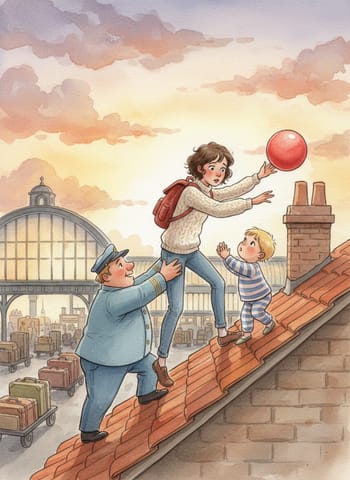
It takes twenty minutes. At last the lock gives a small click, and the hatch swings open. A square of white sky appears above them. Fabrice puts one foot on the trolley, and it rolls. He says a word in his own language, and Lorna catches the trolley with both hands.
花了二十分钟。终于,锁轻轻咔嗒一声,活板门荡了开来。他们头顶出现了一方白色的天空。法布里斯一只脚踩在推车上,推车滑动了。他用自己的语言说了一个词,洛娜用双手抓住了推车。
"Hold it," he says. "Please. Strongly."
“抓住,”他说,“请。用力。”
"I'm holding!"
“我抓着呢!”
He climbs through the hatch, first his arms, then his shoulders, then his knees. For a moment only his boots hang in the air. Then they disappear too. Lorna stands alone in the left-luggage room. She holds the trolley with all her weight and listens to footsteps on the ceiling.
他爬进活板门,先是胳膊,然后是肩膀,再是膝盖。有一会儿,只有他的靴子悬在空中。接着它们也消失了。洛娜独自站在行李寄存处。她用全身的力气扶着推车,听着天花板上的脚步声。
"Can you see it?" she calls.
“你看见它了吗?”她喊道。
"I see it! It is behind the vent." The footsteps stop. "It is hard to reach. I must lie down."
“看见了!在通风管后面。”脚步声停了。“很难够到。我得趴下。”
Lorna waits. A bus engine starts outside, and then another. Customers come and go behind her, but today they find a closed counter with a note. She has written, "Back in ten minutes," and then crossed out ten, and written twenty.
洛娜等着。外面一辆公交车的引擎发动了,接着又是一辆。顾客在她身后来来去去,但今天他们只看到一个关着的柜台和一张便条。她写的是“十分钟后回来”,然后划掉了十,改成了二十。
"Lorna!" The voice is high above her. "I have it!"
“洛娜!”声音从她头顶很高的地方传来。“我拿到了!”
A moment later the ball drops through the hatch and bounces twice on the floor. She picks it up. It is dusty and a little soft, but whole. A thin line of grey marker runs round its middle, as if someone wrote on it long ago.
片刻之后,球从活板门掉下来,在地上弹了两下。她把它捡起来。它沾满灰尘,有点发软,但是完好无损。一圈细细的灰色记号笔线绕着它的腰,好像很久以前有人在上面写过字。
Fabrice comes down the same way he went up, backwards and slowly. His shirt is black with dirt, and he is smiling like a boy. He sits on the trolley and shakes the dust out of his beard.
法布里斯下来的方式和上去时一样,倒着,慢慢地。他的衬衫被弄得黑乎乎的,笑得像个男孩。他坐在推车上,把胡子里的灰抖掉。
"Thank you," Lorna says. The words feel too small. "I mean it. Thank you."
“谢谢你,”洛娜说。这几个字显得太轻了。“我是认真的。谢谢你。”
"No, no," says Fabrice. "Thank you. You speak with me for one hour. I speak English more than in one month."
“不,不,”法布里斯说,“谢谢你。你和我说了一个小时的话。我说的英语比一个月里说的还多。”
The girl's father arrives at four, as he does every day. He stands at the counter and looks at Lorna, and she says nothing at all. She just puts the ball in his hands. He looks at it for a long time. Then he laughs and says a few words in an unsteady voice. He hurries out to find his daughter.
女孩的爸爸四点钟到了,和每天一样。他站在柜台前看着洛娜,而她什么也没说。她只是把球放进了他的手里。他看了它很久。然后他笑了,用颤抖的声音说了几句话。他匆匆跑出去找他的女儿了。
Lorna wipes the counter and turns back to the room. Fabrice is washing his hands at the small sink. Beside him lies his phrase book, still open, and she sees a new pencil mark on the page. It is next to the word "hatch."
洛娜擦了擦柜台,转身面向屋子。法布里斯正在小水槽边洗手。他的旁边放着那本短语手册,还翻开着,她看见那一页上多了一个新的铅笔记号。它在“活板门”这个词旁边。
When she dusts the shelves that evening, she notices something else. The ball has left a faint ring of dust on the floor where she put it down. In the middle of the ring lies a small bit of paper, that came off the ball. It has a few letters in grey marker, and a place name she does not know.
那天傍晚她擦拭货架时,注意到另一件事。球在她放下的地方,在地上留下了一圈淡淡的灰尘痕迹。圈子中央躺着一小片从球上掉下来的纸。上面有几个灰色记号笔写的字母,还有一个她不认识的地名。
Fabrice walks over to look. He reads it once, and then again. His mouth opens, and then it closes.
法布里斯走过来看。他读了一遍,又读了一遍。他张开了嘴,然后又闭上了。
"What does it say?" Lorna asks.
“上面写的是什么?”洛娜问。
Outside, the loudspeaker crackles into life. A voice announces the nine o'clock bus. Fabrice folds the paper twice and puts it in his pocket.
外面,扬声器噼啪一响,活了过来。一个声音宣布九点的公交车。法布里斯把纸对折了两次,放进口袋。