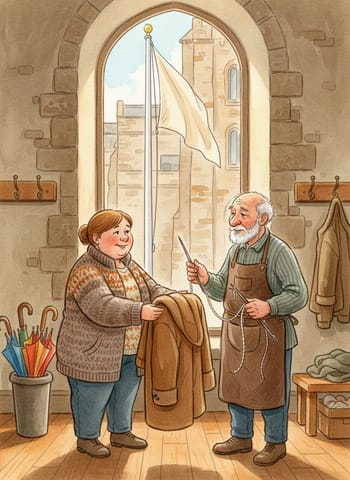
Every morning at eight, Abena turned the brass wheel in the back corner of the cloakroom. The wheel was old and heavy. It pulled a long cord up through the wall and over the roof. The cord ran out to the flagpole above the museum door.
每天早上八点,阿贝娜都会转动衣帽间后角落里的那只黄铜轮子。轮子又旧又沉。它拉着一根长绳穿过墙壁,绕到屋顶上。绳子一直通到博物馆门上方的旗杆。
For eleven years the flag had risen halfway and then stopped. Nobody at the museum knew why. Abena always gave the wall two soft knocks and said good morning to the flag in her head. Then she went back to her counter.
十一年来,那面旗总是升到一半就停住。博物馆里没人知道原因。阿贝娜总是轻轻敲两下墙,在心里对旗说声早上好。然后她回到自己的柜台后面。
She liked her routine. She liked the smell of floor polish and the quiet before the first visitors came. She liked the long rows of empty hooks, waiting for coats.
她喜欢自己的日常。她喜欢地板蜡的气味,喜欢第一批参观者到来之前的安静。她喜欢那一长排空荡荡的挂钩,等着外套的到来。
On a Monday in March, somebody tapped on the counter. It was ten past eight, and the museum was still closed. Abena had not turned the wheel yet. She looked up from her list of school visits, annoyed with herself.
三月的一个星期一,有人敲了敲柜台。那时是八点十分,博物馆还没开门。阿贝娜还没转动轮子。她从学校参观名单上抬起头,对自己有些恼火。
A tall man stood there with a canvas bag on his shoulder. He held a coil of thin rope in one hand. He looked friendly and slightly unsure of himself.
一个高个子男人站在那里,肩上挎着一只帆布包。他一只手里拿着一卷细绳。他看上去很友善,又有点拿不准。
"Sorry to bother you," he said. "I know you are not open yet. Is this where the flag cord comes into the building?"
“打扰了,”他说,“我知道你们还没开门。请问旗子的绳子是从这里进楼的吗?”
Abena stared at him. "How do you know about the cord?"
阿贝娜盯着他。“你怎么知道绳子的事?”
"I work across the road," he said. "I mend sails and tents. My workshop window looks straight at your roof."
“我在马路对面工作,”他说,“我修帆和帐篷。我工作间的窗户正对着你们的屋顶。”
"Every morning your flag goes up halfway and stops. I have seen it a thousand times. Today I finally decided to come over."
“每天早上,你们的旗子升到一半就停了。我看过上千次。今天我终于决定过来看看。”
"It has done that for eleven years," Abena said.
“它这样已经十一年了,”阿贝娜说。
The man laughed. "Then I am very late. My name is Anand. May I look at it?"
男人笑了。“那我可真是太晚了。我叫阿南德。我可以看看吗?”
"The wheel belongs to the building," Abena said. "The director says nobody may touch it. It is on a list of old things."
“轮子属于这栋建筑,”阿贝娜说,“馆长说谁都不许碰。它在一份古旧物件的清单上。”
"I will not touch the wheel," said Anand. "I only want to look at the roof. If I am wrong, I will go away and never mention the flag again."
“我不会碰轮子,”阿南德说,“我只想看看屋顶。如果我错了,我就走,再也不提那面旗。”
Abena thought about it. She did not usually say yes to strangers with rope. But he sounded honest, and eleven years was a long time to knock on a wall.
阿贝娜考虑了一下。她通常不会对拿着绳子的陌生人说好。但他听上去很诚恳,而且对着一面墙敲了十一年,也实在是太久了。
She phoned the director's office. An assistant listened, sighed, and said the caretaker could take Anand up, if Anand signed a paper first.
她给馆长办公室打了电话。一名助理听完,叹了口气,说看管员可以带阿南德上去,不过阿南德得先签一份文件。
Anand signed it. Then they found the caretaker, a man with a bad knee, drinking his coffee.
阿南德签了。然后他们找到了看管员,一个膝盖不好的男人,正在喝咖啡。
The caretaker looked at the stairs, then at his knee, then at Abena. "You go with him," he said, and gave her a ring of keys. "You know that wheel better than anyone. Bring the keys back."
看管员看看楼梯,看看自己的膝盖,又看看阿贝娜。“你陪他去,”他说着,递给她一串钥匙。“那个轮子,你比谁都熟。钥匙记得送回来。”
So Abena climbed the narrow stairs behind a stranger, which she had never done before. The last door opened onto a flat roof with a low wall around it. The flagpole stood at the far end, thin and dark against the pale sky.
于是阿贝娜跟在一个陌生人身后爬上了狭窄的楼梯,这是她从未做过的事。最后一道门通向一个四周有矮墙的平屋顶。旗杆立在远端,在淡色的天空下又细又黑。
Anand knelt at the base of the pole. "Come and see," he said.
阿南德在旗杆底部跪下。“来看看,”他说。
The cord crossed the roof and turned a corner over a small wooden pulley. Then it climbed the pole. A long crack split the wood down the middle.
绳子穿过屋顶,在一个小木滑轮上拐了个弯。然后沿着旗杆向上。一道长长的裂缝把木头从中间劈开。
"There is your problem," Anand said. "The wheel in your cloakroom is fine. This pulley is old and soft."
“问题就在这儿,”阿南德说,“你们衣帽间里的轮子没问题。是这个滑轮又旧又软。”
He pulled gently on the cord, and a fat knot slid into view. "Somebody joined two pieces of cord here and tied them together. When the knot reaches the crack, it catches. Then everything stops."
他轻轻拉了拉绳子,一个粗大的结滑进了视线。“有人在这里把两段绳子接起来,打了个结。结一到裂缝处,就卡住了。然后一切都停下。”
"Somebody in a hurry," Abena said.
“是个赶时间的人,”阿贝娜说。
"Somebody in a hurry, eleven years ago," Anand agreed. "If you force the knot through, the wood will split. Please leave the flag down today."
“十一年前,一个赶时间的人,”阿南德同意道,“如果你硬把这个结拽过去,木头会裂开。请今天先让旗子降着。”
"Can you fix it?" she asked.
“你能修好吗?”她问。
He shook his head. "I need a small metal pulley, and I do not have one. But I know a man with a lathe. If I ask politely, he will make me a brass wheel. It will take two days."
他摇摇头。“我需要一个小的金属滑轮,我手头没有。不过我认识一个有车床的人。我客气地求他,他会给我做一个黄铜轮。要两天。”
Abena looked at the bare pole. She remembered the photographs in the entrance hall, where the flag stood proudly at the very top.
阿贝娜看着光秃秃的旗杆。她想起门厅里的那些照片,照片里旗子骄傲地飘在最顶端。
"Two days is nothing," she said. "I have waited eleven years."
“两天不算什么,”她说,“我已经等了十一年。”
The museum opened at half past nine, and the first problem arrived at once. A boy in a school group pointed through the glass door. "Why is there no flag?"
博物馆九点半开门,第一个问题马上就来了。一个学校团队里的男孩隔着玻璃门指着外面。“为什么没有旗子?”
"It is on holiday," said Abena. The boy accepted this immediately. His teacher did not look so sure.
“它放假了,”阿贝娜说。男孩立刻接受了。他的老师看上去就没那么确信。
All morning, coats came across her counter, thirty and then forty more. Abena hung each one on a hook and handed out numbered tokens. She loved the rhythm of the work. But that day she kept glancing at the glass door. The man with the rope might walk back through it.
整个上午,外套一件件越过她的柜台,先是三十件,又是四十件。阿贝娜把每一件挂在一个挂钩上,发出编号牌。她喜欢这份工作的节奏。可那天她总是不停地瞥向玻璃门。那个拿着绳子的人也许会从那里走回来。
On Tuesday, Anand did not come. At eight o'clock Abena put her hand on the wheel out of habit, then took it away again. The cloakroom was as quiet as always. For some reason, the quiet no longer felt comfortable.
星期二,阿南德没有来。八点钟,阿贝娜出于习惯把手放到轮子上,又把手拿开。衣帽间和往常一样安静。不知为什么,这份安静不再让人觉得舒服了。
On Wednesday morning, he did not come either. She told herself that this was normal. People had jobs. Brass wheels were difficult to make. She checked the clock eleven times before lunch.
星期三早上,他也没有来。她对自己说这很正常。人们有工作。黄铜轮子很难做。午饭前她看了十一次钟。
He walked in at closing time, when the last visitors were leaving. There was a dark smudge on his cheek, and he held something wrapped in a cloth.
他在闭馆时走了进来,最后一批参观者正在离开。他脸颊上有一道黑黑的污迹,手里拿着一个用布包着的东西。
"I am sorry," he said. "My friend had to start again twice. The first wheel was not round enough."
“对不起,”他说,“我朋友不得不重做了两次。第一个轮子不够圆。”
"Is it round now?" Abena asked.
“现在够圆了吗?”阿贝娜问。
"Perfectly round." Anand opened the cloth. The little brass wheel shone in his hand. "I also brought a new cord. I will weave the ends together instead of tying a knot. Then nothing can catch."
“非常圆。”阿南德打开布。那个小小的黄铜轮子在他手里闪着光。“我还带来一根新绳子。我会把两头编在一起,而不是打结。这样就没有什么能卡住了。”
The caretaker had already gone home, so Abena took the keys herself. They climbed the stairs together in the half dark. She held the lamp while Anand worked. Their fingers touched once when he passed her the old pulley.
看管员已经回家了,所以阿贝娜亲自拿了钥匙。她们俩在半明半暗中一起爬上楼梯。阿南德干活时,她举着灯。他递给她旧滑轮的时候,他们的手指碰了一下。
He set the brass wheel in its place. Then he joined the cord with a smooth, thick weave of strands. She could not follow it with her eyes. His hands were careful and quick, like the hands of a surgeon.
他把黄铜轮子装到位。然后他用光滑而粗实的编法把绳子接了起来。她的眼睛跟不上。他的手谨慎而迅速,像外科医生的手。
"Where did you learn to do that?" she asked.
“你在哪里学的这个?”她问。
"On boats," he said. "My father repaired sails. Now I live in a town with no harbour, and I mend tents." He smiled. "Somebody has to look after the things that lift."
“在船上,”他说,“我父亲修帆。现在我住在一个没有港口的小镇,修帐篷。”他笑了笑。“总得有人照看那些往上升的东西。”
At last he stood up and wiped his hands on his trousers. "Go downstairs," he said. "Turn the wheel slowly. I will stay here and watch the pulley."
最后他站起来,在裤子上擦了擦手。“你下楼去,”他说,“慢慢转轮子。我留在这里看着滑轮。”
Abena went down through the empty museum. The cloakroom was dim and smelled of polish. The hooks stood in their rows like a small, quiet crowd. She put both hands on the brass wheel and turned.
阿贝娜穿过空荡荡的博物馆下楼。衣帽间光线昏暗,有地板蜡的味道。挂钩一排排立着,像一小群安静的人。她把双手放在黄铜轮子上,转动起来。
It moved easily, with a soft click at every tooth. She turned, and turned, and kept turning. She waited for the stop that had come every morning for eleven years. It did not come.
它转得很顺,每过一个齿都轻轻咔哒一声。她转啊转,一直转。她等着那个十一年来每个早晨都会出现的停顿。它没有来。
Then the wheel gave a small jump and held firm by itself. Abena stood very still.
然后轮子轻轻一跳,自己稳稳地固定住了。阿贝娜一动不动地站着。
She walked out through the glass doors and onto the front steps. The street lamps had just come on. A minute later, Anand appeared beside her, breathing hard from the stairs.
她穿过玻璃门,走到前面的台阶上。路灯刚刚亮起。一分钟后,阿南德出现在她身旁,爬楼梯爬得气喘吁吁。
High above the door, the flag hung at the very top of the pole. It was fully open for the first time in eleven years.
门的上方很高的地方,旗子挂在旗杆的最顶端。十一年来第一次,它完全展开了。
Neither of them spoke. His shoulder was close to hers. Above them the cord hummed softly against the new brass wheel. The flag moved a little in the dark, as if it were breathing.
两个人都没有说话。他的肩膀靠近她的肩膀。在他们头顶,绳子贴着新的黄铜轮子,发出轻轻的嗡鸣。旗子在黑暗中微微飘动,仿佛在呼吸。