The Ball on the Roof
Uma história gratuita em inglês de nível B1 para estudantes, para ler online em 7 idiomas, com opção de ouvir no app gratuito Storyteller.
A luggage clerk who always helps others lets a nervous English learner climb onto a roof to fetch a child's lost ball.
Essa foi a prévia! Ouça a história completa no app gratuito Storyteller. Baixar o app
O áudio não está disponível no momento.
The left-luggage room at Gate Street is a long, narrow room with a counter at one end. Behind the counter stand rows of metal shelves, and every shelf is full of other people's lives. There are suitcases, guitar cases, boxes tied with string and one stuffed rabbit. Lorna has worked here for three years.
O guarda-volumes da Rua do Portão é uma sala longa e estreita com um balcão numa ponta. Atrás do balcão há fileiras de prateleiras de metal, e cada prateleira está cheia de vidas alheias. Há malas, estojos de violão, caixas amarradas com barbante e um coelho de pelúcia. Lorna trabalha aqui há três anos.
At the back of the room, high on the wall, there is a small window. It looks out onto the flat roof of the ticket office next door. For one month, a blue-and-white ball has sat on that roof. It leans against a metal vent, and Lorna looks at it every morning.
Nos fundos da sala, no alto da parede, há uma pequena janela. Ela dá para o telhado plano da bilheteria ao lado. Faz um mês que uma bola azul e branca está nesse telhado. Está encostada num respiradouro de metal, e Lorna olha para ela toda manhã.
She knows exactly how it got there. A little girl was waiting for a bus with her father. She kicked the ball too hard, and it flew over the wall and rolled onto the roof. The girl did not cry. She stood still and looked up, as if the ball might change its mind.
Ela sabe exatamente como a bola foi parar lá. Uma menininha esperava o ônibus com o pai. Chutou a bola forte demais, e ela voou sobre o muro e rolou para o telhado. A menina não chorou. Ficou parada, olhando para cima, como se a bola pudesse mudar de ideia.
"I'll get it down for you," Lorna told her father. "Come back tomorrow."
"Eu vou trazê-la de volta para ela", disse Lorna ao pai. "Volte amanhã."
He has come back every day since. He never asks about the ball. He simply stands at the counter, and Lorna says, "Not yet," and he nods and leaves.
Ele voltou todos os dias desde então. Nunca pergunta pela bola. Simplesmente fica parado no balcão, e Lorna diz: "Ainda não", e ele assente e vai embora.
The roof is the problem. The only way up is a hatch behind the tallest shelf, and nobody has opened it for years. Lorna does not have the key. She also has no ladder and no permission, and the manager is away until next week. So the ball waits, and so does Lorna.
O problema é o telhado. O único acesso é uma escotilha atrás da prateleira mais alta, e ninguém a abre há anos. Lorna não tem a chave. Também não tem escada nem permissão, e o gerente está fora até a semana que vem. Então a bola espera, e Lorna também.
On a quiet afternoon a man walks in, carrying a heavy blue bag. He is perhaps thirty, with a dark beard and a careful way of standing. He puts a small book on the counter and opens it to a page with a pencil mark.
Numa tarde tranquila, um homem entra carregando uma pesada bolsa azul. Tem uns trinta anos, barba escura e um jeito cuidadoso de ficar em pé. Põe um livrinho no balcão e o abre numa página com uma marca de lápis.
"Good afternoon," he reads. "I would like to leave my bag. It is for six hours. Is it possible?"
"Boa tarde", lê ele. "Eu gostaria de deixar minha bolsa. É por seis horas. É possível?"
"Of course," says Lorna. "Name, please?"
"Claro", diz Lorna. "Seu nome, por favor?"
"Fabrice." He smiles with relief. "Your English is very fast. My English is slow, but I am learning."
"Fabrice." Ele sorri aliviado. "Seu inglês é muito rápido. Meu inglês é lento, mas estou aprendendo."
"Your English is fine," says Lorna. "You've said it better than most people I know."
"Seu inglês está ótimo", diz Lorna. "Você falou melhor do que a maioria das pessoas que conheço."
She writes a ticket and takes the bag. Fabrice has a bus to catch at nine, and he has six hours to fill before it leaves. He does not seem to know what to do with them. He walks to the end of the room and back. Then he stops by the little window at the back, and he stays there.
Ela escreve um tíquete e pega a bolsa. Fabrice tem um ônibus para pegar às nove e seis horas para preencher até ele partir. Não parece saber o que fazer com elas. Anda até o fim da sala e volta. Depois para junto da janelinha dos fundos e fica ali.
"Excuse me," he says. "What is this? On the roof?"
"Com licença", diz ele. "O que é isto? No telhado?"
"A ball," Lorna says.
"Uma bola", diz Lorna.
"I see that it is a ball. But why is it there?"
"Eu vejo que é uma bola. Mas por que está lá?"
So she tells him. She does it slowly, with simple words. She does the same with every visitor who carries a phrase book. Fabrice listens with his head on one side. When she says "kicked," he repeats it quietly. When she says "hatch," he asks her to draw one.
Então ela conta. Faz isso devagar, com palavras simples. Faz o mesmo com todo visitante que carrega um guia de frases. Fabrice escuta com a cabeça inclinada. Quando ela diz "chutou", ele repete baixinho. Quando diz "escotilha", pede que ela desenhe uma.
She draws a square on the back of a ticket. He studies it as if it is a map.
Ela desenha um quadrado no verso de um tíquete. Ele o estuda como se fosse um mapa.
"I know this," he says. "In my country, I am a roofer. For eleven years I climb roofs. This hatch is easy."
"Eu conheço isto", diz. "No meu país, sou telhadista. Por onze anos eu subo em telhados. Esta escotilha é fácil."
"It is locked," says Lorna. "And there's no ladder."
"Está trancada", diz Lorna. "E não tem escada."
"Is there a… " He searches for the word and makes a shape in the air with his hands.
"Tem um… " Ele procura a palavra e faz uma forma no ar com as mãos.
"A trolley?" asks Lorna. "A big one for the bags?"
"Um carrinho?", pergunta Lorna. "Um grande, para as malas?"
"Yes! A trolley. And a long stick?"
"Sim! Um carrinho. E uma vara comprida?"
Lorna looks at him. For three years she has been the person who helps. She gives directions, finds lost tickets and teaches people to say "platform." Nobody has ever offered to climb a roof for her. She feels something unfamiliar, and it takes her a moment to name it. It is the feeling of being helped.
Lorna olha para ele. Há três anos ela é a pessoa que ajuda. Dá informações, acha passagens perdidas e ensina as pessoas a dizer "plataforma". Ninguém jamais se ofereceu para subir num telhado por ela. Sente algo desconhecido, e leva um momento para dar nome a isso. É a sensação de ser ajudada.
"I have a broom," she says. "And there's a screwdriver in the drawer."
"Tenho uma vassoura", diz ela. "E há uma chave de fenda na gaveta."
The hatch is old and stiff. Fabrice pulls the tallest shelf away from the wall with a loud squeal. A cloud of dust rises. Lorna holds her hand over her mouth. He does not mind the dust. He takes the screwdriver and starts on the lock. He hums a tune that sounds very old.
A escotilha é velha e emperrada. Fabrice afasta a prateleira mais alta da parede com um guincho alto. Uma nuvem de poeira se ergue. Lorna cobre a boca com a mão. Ele não se importa com a poeira. Pega a chave de fenda e começa na fechadura. Cantarola uma melodia que soa muito antiga.
"Do you do this often?" she asks.
"Você faz isso com frequência?", pergunta ela.
"Every day, at home. Here it is a holiday." He grins. "But my hands remember."
"Todo dia, em casa. Aqui é feriado." Ele sorri. "Mas minhas mãos lembram."
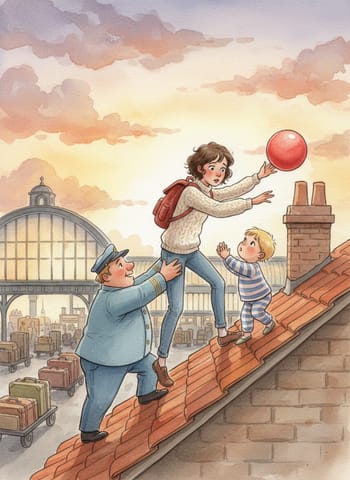
It takes twenty minutes. At last the lock gives a small click, and the hatch swings open. A square of white sky appears above them. Fabrice puts one foot on the trolley, and it rolls. He says a word in his own language, and Lorna catches the trolley with both hands.
Leva vinte minutos. Por fim a fechadura dá um clique pequeno, e a escotilha se abre. Um quadrado de céu branco aparece acima deles. Fabrice põe um pé no carrinho, e ele rola. Diz uma palavra na sua própria língua, e Lorna segura o carrinho com as duas mãos.
"Hold it," he says. "Please. Strongly."
"Segure", diz ele. "Por favor. Forte."
"I'm holding!"
"Estou segurando!"
He climbs through the hatch, first his arms, then his shoulders, then his knees. For a moment only his boots hang in the air. Then they disappear too. Lorna stands alone in the left-luggage room. She holds the trolley with all her weight and listens to footsteps on the ceiling.
Ele sobe pela escotilha, primeiro os braços, depois os ombros, depois os joelhos. Por um momento só as botas ficam penduradas no ar. Depois elas também desaparecem. Lorna fica sozinha no guarda-volumes. Segura o carrinho com todo o peso e escuta passos no teto.
"Can you see it?" she calls.
"Está vendo?", grita ela.
"I see it! It is behind the vent." The footsteps stop. "It is hard to reach. I must lie down."
"Eu vejo! Está atrás do respiradouro." Os passos param. "É difícil de alcançar. Preciso deitar."
Lorna waits. A bus engine starts outside, and then another. Customers come and go behind her, but today they find a closed counter with a note. She has written, "Back in ten minutes," and then crossed out ten, and written twenty.
Lorna espera. Um motor de ônibus liga lá fora, e depois outro. Clientes vão e vêm atrás dela, mas hoje encontram um balcão fechado com um bilhete. Ela escreveu "Volto em dez minutos", depois riscou dez e escreveu vinte.
"Lorna!" The voice is high above her. "I have it!"
"Lorna!" A voz vem do alto. "Eu peguei!"
A moment later the ball drops through the hatch and bounces twice on the floor. She picks it up. It is dusty and a little soft, but whole. A thin line of grey marker runs round its middle, as if someone wrote on it long ago.
Um instante depois a bola cai pela escotilha e quica duas vezes no chão. Ela a pega. Está empoeirada e um pouco mole, mas inteira. Uma fina linha de marcador cinza rodeia o meio dela, como se alguém tivesse escrito nela havia muito tempo.
Fabrice comes down the same way he went up, backwards and slowly. His shirt is black with dirt, and he is smiling like a boy. He sits on the trolley and shakes the dust out of his beard.
Fabrice desce pelo mesmo caminho por onde subiu, de costas e devagar. A camisa dele está preta de sujeira, e ele sorri como um menino. Senta no carrinho e sacode a poeira da barba.
"Thank you," Lorna says. The words feel too small. "I mean it. Thank you."
"Obrigada", diz Lorna. As palavras parecem pequenas demais. "É sério. Obrigada."
"No, no," says Fabrice. "Thank you. You speak with me for one hour. I speak English more than in one month."
"Não, não", diz Fabrice. "Obrigado. Você fala comigo uma hora. Eu falo inglês mais que em um mês."
The girl's father arrives at four, as he does every day. He stands at the counter and looks at Lorna, and she says nothing at all. She just puts the ball in his hands. He looks at it for a long time. Then he laughs and says a few words in an unsteady voice. He hurries out to find his daughter.
O pai da menina chega às quatro, como todo dia. Fica no balcão e olha para Lorna, e ela não diz nada. Apenas põe a bola nas mãos dele. Ele olha para ela por muito tempo. Depois ri e diz algumas palavras com voz trêmula. Sai apressado para encontrar a filha.
Lorna wipes the counter and turns back to the room. Fabrice is washing his hands at the small sink. Beside him lies his phrase book, still open, and she sees a new pencil mark on the page. It is next to the word "hatch."
Lorna limpa o balcão e se volta para a sala. Fabrice está lavando as mãos na pequena pia. Ao lado dele está o guia de frases, ainda aberto, e ela vê uma nova marca de lápis na página. Está ao lado da palavra "escotilha".
When she dusts the shelves that evening, she notices something else. The ball has left a faint ring of dust on the floor where she put it down. In the middle of the ring lies a small bit of paper, that came off the ball. It has a few letters in grey marker, and a place name she does not know.
Quando espana as prateleiras naquela noite, ela nota outra coisa. A bola deixou um leve círculo de poeira no chão, onde ela a pôs. No meio do círculo há um pedacinho de papel, que se soltou da bola. Tem algumas letras em marcador cinza e o nome de um lugar que ela não conhece.
Fabrice walks over to look. He reads it once, and then again. His mouth opens, and then it closes.
Fabrice se aproxima para ver. Lê uma vez, depois outra. A boca dele se abre e depois se fecha.
"What does it say?" Lorna asks.
"O que diz?", pergunta Lorna.
Outside, the loudspeaker crackles into life. A voice announces the nine o'clock bus. Fabrice folds the paper twice and puts it in his pocket.
Lá fora, o alto-falante estala e ganha vida. Uma voz anuncia o ônibus das nove. Fabrice dobra o papel duas vezes e o guarda no bolso.