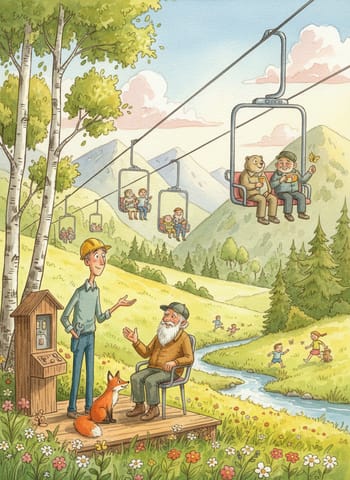
In winter, the chairlift at Kessel Mountain carried skiers to the top in six minutes. In summer, it carried hikers in forty.
冬天,凯瑟尔山的缆车用六分钟把滑雪的人送到山顶。夏天,它要用四十分钟载着徒步的人上山。
Takeshi had run the lift station for seven summers. The snow melted every May, and the green grass came back to the slopes. The big machines that made snow stood silent in the fields like sleeping animals. Only one old chairlift kept moving, and it moved at the speed of a walking cow.
武志在这个缆车站干了七个夏天。每年五月,积雪融化,绿草重新爬上山坡。造雪的大机器静静地立在田野里,像睡着的动物。只有一架老缆车还在动,速度和一头走路的牛差不多。
On a bright Tuesday in July, a visitor arrived at the bottom station. He carried a heavy bag of tools. He was a tall man with a clipboard and a company badge. His name was Raj.
七月里一个晴朗的星期二,一位访客来到了山下的站点。他提着一大包沉重的工具,是个高个子男人,拿着记事板,别着公司的工牌。他叫拉杰。
"I am here for the yearly check," he said. "The owners want a report on the motor. They are thinking about an upgrade."
“我是来做年度检查的,”他说,“老板们想要一份关于电机的报告。他们在考虑升级。”
"An upgrade?" said Takeshi.
“升级?”武志说。
"A faster lift for summer. Ten minutes instead of forty. More riders, more money." Raj shrugged, as if he did not care much either way. "That is what they told me."
“夏天要一架更快的缆车。十分钟,而不是四十分钟。游客更多,钱也更多。”拉杰耸了耸肩,仿佛无论怎样他都不太在意。“他们是这么对我说的。”
Takeshi said nothing. He poured water into a plastic cup and handed it over. Then he went back to his stool. The first chair of the day swung out of the station.
武志什么也没说。他往一个塑料杯里倒了水,递了过去。然后回到自己的凳子上。当天的第一把座椅晃出了站台。
Raj spent the morning inside the motor room. Takeshi could hear him working through the thin wall. There was the sound of a spanner, a long silence, and then a low whistle. At noon, Raj came out with oil on his hands.
拉杰上午都待在电机房里。武志隔着薄薄的墙能听见他干活的声音:扳手的响声,一阵长长的沉默,然后是一声低低的口哨。中午,拉杰出来了,手上沾着油。
"The motor is strong," he said. "It can run three times faster than this. Why does it crawl?"
“电机很有劲,”他说,“它能比现在快三倍。为什么它爬得这么慢?”
"The owner set it that way many years ago," said Takeshi. "Safer for old knees."
“这是很多年前老板定的,”武志说,“对老膝盖更安全。”
"Safer," Raj repeated. He did not sound convinced.
“更安全,”拉杰重复了一遍。他听起来并不信服。
In the afternoon, Raj decided to watch the passengers. He sat on a bench near the entrance with his clipboard on his lap. Takeshi did his usual work. He helped a mother lift a pushchair onto a chair, and he gave a young man a map. He stopped the lift for a moment so an older hiker could sit down safely.
下午,拉杰决定看看乘客。他坐在入口旁的一条长椅上,记事板放在腿上。武志做着他平常的活。他帮一位母亲把婴儿车抬上座椅,给一个年轻人一张地图。他让缆车停了一会儿,好让一位年长的徒步者安稳地坐下。
People came in different moods. Some were cheerful, and some looked impatient already. A teenage boy checked his phone twice before he even sat down.
人们带着不同的心情来。有些很开心,有些一来就显得不耐烦。一个十几岁的男孩还没坐下就看了两次手机。
"Forty minutes!" one man said, with a laugh that was not friendly. "My legs are faster than this."
“四十分钟!”一个男人笑着说,那笑声并不友善,“我的两条腿都比这快。”
"Then walk," said Takeshi, and he smiled. The man did not walk. He climbed onto the chair and grumbled until it disappeared into the trees.
“那就走上去吧,”武志说着,露出了微笑。那人没有走。他爬上座椅,一路嘟囔着,直到消失在树林里。
Raj wrote something on his clipboard. "You hear this complaint all day?"
拉杰在记事板上写了点什么。“你一天到晚都听着这样的抱怨?”
"Every day," said Takeshi. "It is part of the job."
“每天都是,”武志说,“这是工作的一部分。”
"And it does not bother you?"
“你不觉得烦吗?”
"No." Takeshi looked up the hill, where the cables shone in the sun. "Wait until they come down."
“不。”武志望向山上,缆绳在阳光下闪着光。“等他们下来再看。”
Raj frowned, but he stayed. At five o'clock, the first riders returned from the top. A couple stepped off the chair, and they were holding hands. A man in a blue shirt was smiling at nobody in particular. Two sisters were laughing so hard that one of them had to sit down on the grass.
拉杰皱着眉,但还是留了下来。五点钟,第一批乘客从山顶回来了。一对情侣走下座椅,手牵着手。一个穿蓝衬衫的男人对着空气微笑。两姐妹笑得太厉害,其中一个不得不坐到草地上。
"They look happy," Raj said slowly.
“他们看起来很高兴,”拉杰慢慢地说。
"Mostly," said Takeshi. "Not always at the start. But when they come back, yes."
“大多是这样,”武志说,“刚开始不一定。但回来的时候,是的。”
That evening, they ate dinner together in the small kitchen behind the station. Takeshi cooked rice and vegetables on a camping burner. They talked about the mountain, and about the old machines Raj had repaired in other valleys. The conversation was easy.
那天傍晚,他们在站台后面的小厨房里一起吃晚饭。武志用野营炉做了米饭和蔬菜。他们聊起了这座山,聊起拉杰在别的山谷修过的老机器。谈话很轻松。
Raj put his fork down.
拉杰放下了叉子。
"May I ask you something? It has been in my head all day."
“我可以问你件事吗?它在我脑子里转了一整天。”
"Please," said Takeshi.
“请问,”武志说。
"Why did you never ask the owners to make the lift faster? Seven summers. You hear the complaints. You could have a busier station, a better salary. Yet you keep it slow."
“你为什么从来不请老板把缆车弄快一点?七个夏天了。你听了那么多抱怨。你本可以有一个更忙的站点,更高的薪水。可你偏偏让它慢着。”
For a long time, Takeshi did not answer. Outside, a bird sang a short, simple song.
武志很久没有回答。外面,一只鸟唱起一支简短而简单的歌。
"Nobody has asked me that before," he said at last. "In seven years, they only asked how many riders we had."
“以前没有人问过我这个,”他终于说,“七年来,他们只问过我们载了多少乘客。”
"I am asking now."
“我现在就在问。”
Takeshi turned his cup in his hands. "The first summer, I thought the same as you. I thought the lift was a problem. Then one afternoon, I rode up to fix a broken light. It took forty minutes, and I had nothing to do. No phone signal. No one to talk to except a silent hill."
武志转着手里的杯子。“头一个夏天,我和你想的一样。我觉得缆车是个问题。后来有一天下午,我上山去修一盏坏灯。花了四十分钟,我无事可做。没有手机信号。除了一座沉默的山,没人可以说话。”
"And?"
“然后呢?”
"I thought about my brother. We had not spoken for three years, since an argument about our parents' house. I had not planned to think about him. It simply happened somewhere around the twentieth minute." He smiled a little. "At the top, I sent him a message. It was only two words."
“我想起了我哥哥。我们已经三年没说话了,因为一场关于父母房子的争吵。我本来没打算想他。只是在大约第二十分钟的时候,念头自己冒了出来。”他微微一笑。“到了山顶,我给他发了一条消息,只有两个字。”
"What did he answer?"
“他怎么回的?”
"He answered in ten seconds." Takeshi laughed quietly. "He had been waiting longer than I realised."
“十秒钟就回了。”武志轻轻笑了。“他等的时间比我意识到的更长。”
Raj looked at the floor.
拉杰低头看着地板。
"After that, I started to listen to the riders," Takeshi continued. "On the way down, people tell me things. A woman once told me she had finally decided to leave her job. A father said he had never spent a whole hour with his daughter without screens. A young man had a question to ask. He found the courage only when the chair reached the high pines."
“从那以后,我开始听乘客们说话,”武志接着说,“下山的路上,人们会告诉我一些事。有位女士说她终于决定辞职了。一位父亲说他从没有一整个小时不看屏幕地陪过女儿。一个年轻人有个问题要问,直到座椅升到高高的松树间,他才有了勇气。”
"And a fast lift?"
“那快一点的缆车呢?”
"In ten minutes, nobody gets lonely enough to think. They look at the view, and they take a photograph." Takeshi opened his hands. "I am not saying slowness is always good. I only say it gives people something. Nobody ever asks what."
“十分钟,没人会孤单到去思考。他们看看风景,拍张照片。”武志张开双手。“我不是说慢总是好的。我只是说,它给了人们一些东西。从来没有人问过是什么。”
The kitchen was quiet. The only sound was the old clock above the sink.
厨房里静了下来。唯一的声音来自水槽上方那只旧钟。
"I came here to measure a motor," Raj said finally.
“我来这里是为了测量一台电机,”拉杰终于说。
"And now?"
“现在呢?”
"Now I think I should measure something else."
“现在我觉得我该测量点别的东西。”
The next morning, Raj rode the lift to the top by himself. His tool bag sat on his knees. He did not hurry. He watched the grass pass under his feet, and then the trees. The long grey cable ran ahead of him. Somewhere above the halfway point, he put his clipboard away.
第二天早上,拉杰自己乘缆车上了山顶。工具包放在他膝盖上。他不着急。他看着草地从脚下掠过,然后是树林。灰色的长缆绳在他前方延伸。过了半山腰不远的地方,他把记事板收了起来。
At the summit station, he stayed for an hour. He sat on a rock and looked at the valley. A little before noon, he took out his phone and wrote a message to someone. He did not tell Takeshi who.
在山顶站,他待了一个小时。他坐在一块岩石上,望着山谷。中午前不久,他拿出手机,给某个人写了条消息。他没有告诉武志是谁。
When he returned to the bottom, Takeshi was waiting with a cup of water.
他回到山下时,武志正端着一杯水等他。
"Did you finish your report?"
“报告写完了吗?”
"Not yet." Raj took out his pen and sat down at the small desk in the office. The form was waiting for him with its empty boxes. He read the line that asked about recommended changes.
“还没有。”拉杰拿出笔,在办公室的小桌前坐下。表格带着空白的格子在等他。他读到询问建议改动的那一行。
Then he wrote, in clear capital letters, "Speed correct. Do not change," and signed his name at the bottom.
然后他用清晰的大写字写下:“速度正确。不要改动”,并在底下签了名。