The car wash sits at the end of a slip road. Here the motorway curves away toward the sea. At six in the morning, the lorries already roar past on the bridge above. Their noise falls on the roof like a long, low note that never changes.
洗车店坐落在一条匝道的尽头。高速公路在这里拐弯,通向大海。早晨六点,卡车已经在上方的桥上轰鸣而过。它们的噪音像一个永远不变的、低沉而悠长的音符,落在屋顶上。
Amit has worked there on Saturdays and Sundays since March. He is sixteen, he is saving for a second-hand camera, and he is late again.
阿米特从三月起,每个周六和周日都在这里打工。他十六岁,正在攒钱买一台二手相机,而他又迟到了。
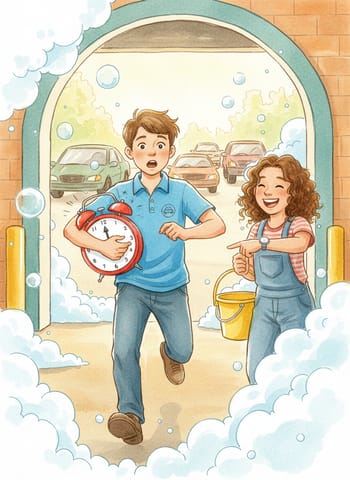
He runs down the slip road with his jacket half on. The big doors are open, and the brushes are already turning. Foam drips from the ceiling in slow white strings.
他跑下匝道,外套只穿了一半。大门敞开着,刷子已经在转了。泡沫从天花板上缓缓滴下,拉成一缕缕白线。
Quentin stands at the first bay with a hose in his hand. He is the same age as Amit, but he looks as if he has been awake for hours. He probably has.
昆廷站在第一个车位前,手里拿着水管。他和阿米特同岁,却看上去像是已经醒了好几个小时。也许确实如此。
"Forty minutes," Quentin says without turning round. "You missed the whole first lorry."
“四十分钟,”昆廷头也没回地说,“你错过了整整第一辆卡车。”
"I know. I am sorry," Amit says. He reaches for a bucket, because doing something feels better than standing still.
“我知道。对不起。”阿米特说。他伸手去拿一只水桶,因为做点什么总比站着不动好受些。
"Don't say sorry to me. Say it to her."
“别对我说对不起。去对她说。”
She is the owner, and she is standing in the office window with her arms folded. She does not shout. That is the worst part. She only looks at Amit for a long moment. Then she lifts three fingers, one for each Saturday he has been late.
她是老板,正抱着双臂站在办公室的窗口。她没有大喊大叫。这才是最糟糕的地方。她只是久久地看着阿米特。然后她举起三根手指,每一根代表他迟到的一个周六。
At the end of the shift she calls him in. The office smells of warm coffee and wet rubber. A small radio plays quietly on the shelf.
下班的时候,她把他叫了进去。办公室里有温热咖啡和湿橡胶的气味。架子上一台小收音机轻轻地响着。
"I like you, Amit," she says. "You work hard when you are here. But a car wash opens at six, whether the cleaner is ready or not."
“我喜欢你,阿米特,”她说,“你来了之后干活很卖力。可是洗车店六点开门,不管清洁工准备好没有。”
"It won't happen again," Amit says.
“不会再有下次了。”阿米特说。
"Then it won't." She turns back to her papers. "One more time, and I will have to find someone else."
“那就不会再有。”她转回身去看她的文件。“再有一次,我就得另找别人了。”
Amit walks home along the verge with his hands in his pockets. The cars pour past in both directions. Every one of them seems to be going somewhere on time.
阿米特双手插在口袋里,沿着路边草地走回家。车流在两个方向上奔涌。每一辆似乎都在准时地驶向某个地方。
The truth is not complicated. He has an alarm on his phone, and he turns it off in his sleep. He does not even remember doing it. Each morning he wakes at seven. The phone is silent beside him, and his stomach is full of cold dread.
真相并不复杂。他手机上设了闹钟,可他在睡梦中把它关掉了。他甚至不记得自己做过这件事。每天早晨他七点醒来。手机在他身边悄无声息,他的肚子里满是冰冷的恐惧。
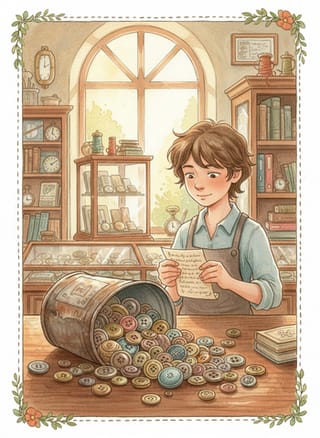
On Monday he visits the market behind the station. At the back of a junk stall, he finds the loudest alarm clock he has ever seen. It sits between a broken lamp and a box of buttons. It is round and heavy, with two silver bells on top and a metal hammer between them.
星期一,他去了车站后面的集市。在一个旧货摊的最里面,他发现了自己见过的最响的闹钟。它放在一盏坏灯和一盒纽扣之间。它又圆又重,顶上有两个银色的铃,两个铃之间有一把金属锤子。
"Does it work?" he asks the stallholder.
“它能用吗?”他问摊主。
"Work?" the man says. "People have complained about it from the next street. That one rings like a fire in a bell factory."
“能用?”那人说,“隔壁那条街的人都投诉过它。那东西一响,就像钟表厂着了火。”
Amit pays four pounds and carries it home like a trophy.
阿米特付了四英镑,像捧着一座奖杯一样把它抱回了家。
On Friday night he winds it up, sets it for five, and puts it on his bedside table. He goes to sleep feeling like a new person. In the dark, the little hammer ticks softly, almost kindly.
星期五晚上,他给它上好发条,定在五点,放在床头柜上。他睡着时觉得自己像变了一个新人。黑暗中,那把小锤子轻轻地嘀嗒作响,几乎带着善意。
At five o'clock the clock explodes. The noise is enormous. It fills the room, rattles the glass in the window, and drives a pain straight through his skull. Amit sits up, finds the clock with one hand, and presses the button on the back.
五点钟,闹钟炸响了。噪音大得惊人。它充满了整个房间,震得窗玻璃咯咯作响,一阵疼痛直直扎穿他的头骨。阿米特坐起来,伸手摸到闹钟,按下了背后的按钮。
The silence is wonderful. He lies down for a moment, only to rest his eyes.
寂静美妙极了。他躺下了一小会儿,只是想让眼睛歇一歇。
When he opens them again, the sun is on the wall and his phone says ten past seven. He lies there for a long minute, looking at the ceiling. The clock has not failed. He has simply beaten it, the same way he has beaten every other alarm he owns.
再睁开眼睛时,阳光已经照在墙上,手机上显示七点十分。他躺了很长的一分钟,望着天花板。闹钟没有失灵。只是他打败了它,就像他打败了自己所有其他的闹钟一样。
This time the owner does not even come out of the office. Quentin finds him at the gate and walks him in without a word. At eleven, Quentin puts a hand on his shoulder.
这一次,老板连办公室都没有出来。昆廷在大门口找到他,一言不发地把他领了进去。十一点,昆廷把一只手放在他的肩上。
"You have got to stop fighting it from the bed," Quentin says. "You will always win from the bed."
“你不能再躺在床上跟它对着干了,”昆廷说,“你在床上永远都会赢。”
"What am I supposed to do, sleep on the floor?" Amit says.
“那我该怎么办,睡在地板上吗?”阿米特说。
"No, but you could put the clock somewhere you cannot reach." Quentin shrugs, as if the idea costs him nothing. "My mum puts hers across the room. She says her feet get angry before her brain does."
“不是,不过你可以把闹钟放在你够不着的地方。”昆廷耸耸肩,仿佛这个主意对他毫不费力。“我妈妈把她的放在房间另一头。她说,她的脚会比脑子先生气。”
Amit thinks about it all afternoon. He thinks about it while he scrubs the wheels of a delivery van. He thinks about it again while he rinses a tall estate car. By the end of the day, he has a plan with three parts.
阿米特想了一整个下午。他刷一辆送货面包车的车轮时在想。他冲洗一辆高大的旅行车时又在想。到一天结束时,他有了一个分成三步的计划。
First, he will go to bed at ten, even though he likes to edit photos late at night. Second, he will carry the clock to the hallway. He will put it on top of the tall bookcase. Third, he will leave a metal cake tin under the bookcase, so that the sound bounces and grows.
第一,他十点钟上床睡觉,尽管他喜欢深夜修照片。第二,他把闹钟搬到走廊里。他要把它放在高高的书柜顶上。第三,他要在书柜下面放一只金属蛋糕盒,这样声音会反弹,变得更大。
On Friday night he follows the plan exactly. It is harder than he expects. His thumb keeps drifting toward the photographs. The flat is quiet in a way that makes him restless. At ten, he switches off the light anyway. He lies in the dark and listens to the lorries far away on the bridge.
星期五晚上,他严格按照计划行事。这比他预想的要难。他的拇指总是忍不住滑向那些照片。这套公寓安静得让他心神不宁。十点钟,他还是关了灯。他躺在黑暗里,听着远处桥上的卡车声。
At five o'clock the whole flat wakes up.
五点钟,整套公寓都醒了。
The noise is worse than before, because now it has a tin to jump on. It crashes through the hallway like a train. A door opens upstairs. Somewhere below, a neighbour bangs on the ceiling with a broom, again and again.
噪音比之前更糟,因为现在它有了一只铁盒可以跳。它像一列火车一样横冲直撞穿过走廊。楼上有一扇门打开了。楼下某处,一位邻居拿着扫帚一遍又一遍地敲着天花板。
Amit throws off the blanket before he knows what he is doing. He stumbles into the hallway, drags a chair across the floor, and climbs up. The clock is shaking on the shelf, and the silver bells are a blur. He grabs it with both hands and finds the button.
阿米特还没意识到自己在做什么,就已经掀掉了毯子。他跌跌撞撞地冲进走廊,把一把椅子拖过地板,爬了上去。闹钟在架子上抖个不停,两个银铃已经晃成一团模糊的影子。他双手抓住它,摸到了按钮。
The silence this time is different. He is standing on a chair in his socks, wide awake. His heart is racing and his ears are ringing. There is no soft pillow within reach. There is no wall of sunlight waiting for him.
这一次的寂静不一样了。他穿着袜子站在椅子上,完全清醒。他的心怦怦直跳,耳朵嗡嗡作响。伸手够得着的地方没有柔软的枕头。也没有一面阳光灿烂的墙在等着他。
He splashes cold water on his face, pulls on his work boots, and runs.
他往脸上泼了冷水,穿上工作靴,跑了出去。
The slip road is empty and dark blue when he reaches it. The lorries on the bridge still have their lights on. At the gate, he finds the chain locked and the car wash silent. He sits down on the kerb to wait, breathing hard.
他赶到匝道时,那里空无一人,是一片深蓝色。桥上的卡车还亮着灯。在大门口,他发现链子锁着,洗车店一片寂静。他坐在路缘石上等着,大口喘气。
At twenty to six, the owner's small car turns in off the road. She stops, rolls down the window, and looks at him for a very long time.
五点四十分,老板的小车从公路上拐了进来。她停下车,摇下车窗,久久地看着他。
"Good morning," Amit says.
“早上好。”阿米特说。
"You are early," she says.
“你来得早。”她说。
"I know. I had help." He holds up the clock, which he has carried all the way under his arm. The little hammer is still trembling.
“我知道。我有帮手。”他举起那个闹钟,他是一路夹在胳膊底下带来的。那把小锤子还在颤抖。
She laughs, a short, surprised sound, and opens the gate. By six o'clock the brushes are turning and the foam is falling. Amit has already rinsed the first lorry. Nobody has to tell him what to do.
她笑了,是一声短促而惊讶的笑,然后打开了大门。到六点钟,刷子已经在转,泡沫也落下了。阿米特已经冲洗完了第一辆卡车。没有人需要告诉他该做什么。
Quentin arrives just after, with his jacket zipped to his chin. He stops at the edge of the bay and stares at Amit. Then he looks at the clean lorry, and then at the clock on the shelf.
昆廷随后赶到,外套的拉链一直拉到下巴。他在车位边停住,盯着阿米特。然后他看看干净的卡车,又看看架子上的闹钟。
"Who are you?" Quentin says. "And what have you done with my friend?"
“你是谁?”昆廷说,“你把我朋友怎么了?”
Amit grins and wipes his hands on his apron. Far above, the motorway hums its single note.
阿米特咧嘴笑了,在围裙上擦着手。远远的上方,高速公路哼着它那唯一的音符。
"Do you think my neighbours will ever forgive me?" he asks.
“你觉得我的邻居们会原谅我吗?”他问。