The Loudest Clock at the Car Wash
Una historia gratuita en inglés de nivel B1 para estudiantes, para leer en línea en 7 idiomas, con opción de escucharla en la app gratuita Storyteller.
A sixteen-year-old with a weekend job keeps arriving late until a noisy clock and a friend's advice change his mornings.
¡Ese fue el avance! Escucha la historia completa en la app gratuita Storyteller. Descargar la app
El audio no está disponible en este momento.
The car wash sits at the end of a slip road. Here the motorway curves away toward the sea. At six in the morning, the lorries already roar past on the bridge above. Their noise falls on the roof like a long, low note that never changes.
El autolavado está al final de una vía de acceso. Aquí la autopista se curva hacia el mar. A las seis de la mañana, los camiones ya rugen sobre el puente de arriba. Su ruido cae sobre el techo como una nota larga y grave que nunca cambia.
Amit has worked there on Saturdays and Sundays since March. He is sixteen, he is saving for a second-hand camera, and he is late again.
Amit trabaja allí los sábados y domingos desde marzo. Tiene dieciséis años, está ahorrando para una cámara de segunda mano, y otra vez llega tarde.
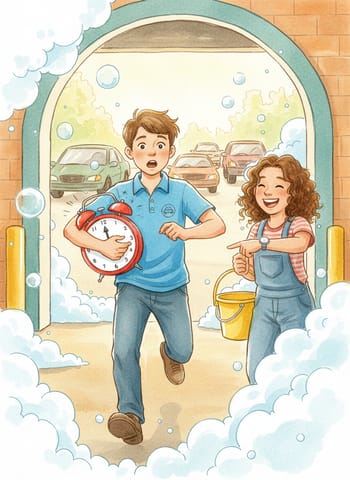
He runs down the slip road with his jacket half on. The big doors are open, and the brushes are already turning. Foam drips from the ceiling in slow white strings.
Corre por la vía de acceso con la chaqueta a medio poner. Las puertas grandes están abiertas y los cepillos ya están girando. La espuma gotea del techo en hilos blancos y lentos.
Quentin stands at the first bay with a hose in his hand. He is the same age as Amit, but he looks as if he has been awake for hours. He probably has.
Quentin está en la primera bahía con una manguera en la mano. Tiene la misma edad que Amit, pero parece que lleva horas despierto. Probablemente es así.
"Forty minutes," Quentin says without turning round. "You missed the whole first lorry."
«Cuarenta minutos», dice Quentin sin darse vuelta. «Te perdiste todo el primer camión».
"I know. I am sorry," Amit says. He reaches for a bucket, because doing something feels better than standing still.
«Lo sé. Lo siento», dice Amit. Toma un balde, porque hacer algo se siente mejor que quedarse parado.
"Don't say sorry to me. Say it to her."
«No me pidas perdón a mí. Pídeselo a ella».
She is the owner, and she is standing in the office window with her arms folded. She does not shout. That is the worst part. She only looks at Amit for a long moment. Then she lifts three fingers, one for each Saturday he has been late.
Ella es la dueña, y está parada en la ventana de la oficina con los brazos cruzados. No grita. Eso es lo peor. Solo mira a Amit durante un largo momento. Luego levanta tres dedos, uno por cada sábado que ha llegado tarde.
At the end of the shift she calls him in. The office smells of warm coffee and wet rubber. A small radio plays quietly on the shelf.
Al final del turno lo llama. La oficina huele a café tibio y goma mojada. Una radio pequeña suena bajito en el estante.
"I like you, Amit," she says. "You work hard when you are here. But a car wash opens at six, whether the cleaner is ready or not."
«Me caes bien, Amit», dice. «Trabajas duro cuando estás aquí. Pero un autolavado abre a las seis, esté listo el empleado o no».
"It won't happen again," Amit says.
«No volverá a pasar», dice Amit.
"Then it won't." She turns back to her papers. "One more time, and I will have to find someone else."
«Entonces no pasará». Vuelve a sus papeles. «Una vez más, y tendré que buscar a otra persona».
Amit walks home along the verge with his hands in his pockets. The cars pour past in both directions. Every one of them seems to be going somewhere on time.
Amit camina a casa por la orilla del camino con las manos en los bolsillos. Los autos pasan en ambas direcciones. Cada uno parece ir a algún lado a tiempo.
The truth is not complicated. He has an alarm on his phone, and he turns it off in his sleep. He does not even remember doing it. Each morning he wakes at seven. The phone is silent beside him, and his stomach is full of cold dread.
La verdad no es complicada. Tiene una alarma en el teléfono, y la apaga dormido. Ni siquiera recuerda haberlo hecho. Cada mañana despierta a las siete. El teléfono está en silencio a su lado, y su estómago está lleno de un miedo frío.
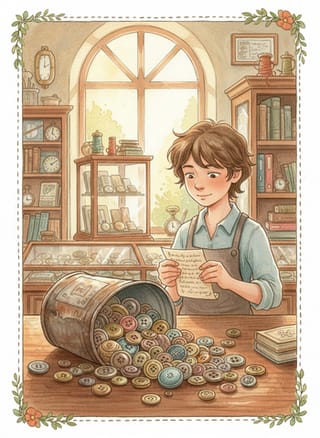
On Monday he visits the market behind the station. At the back of a junk stall, he finds the loudest alarm clock he has ever seen. It sits between a broken lamp and a box of buttons. It is round and heavy, with two silver bells on top and a metal hammer between them.
El lunes visita el mercado detrás de la estación. En el fondo de un puesto de cachivaches, encuentra el despertador más ruidoso que ha visto en su vida. Está entre una lámpara rota y una caja de botones. Es redondo y pesado, con dos campanas plateadas arriba y un martillo de metal entre ellas.
"Does it work?" he asks the stallholder.
«¿Funciona?», le pregunta al vendedor.
"Work?" the man says. "People have complained about it from the next street. That one rings like a fire in a bell factory."
«¿Funciona?», dice el hombre. «La gente se ha quejado de él desde la calle de al lado. Ese suena como un incendio en una fábrica de campanas».
Amit pays four pounds and carries it home like a trophy.
Amit paga cuatro libras y lo lleva a casa como un trofeo.
On Friday night he winds it up, sets it for five, and puts it on his bedside table. He goes to sleep feeling like a new person. In the dark, the little hammer ticks softly, almost kindly.
El viernes por la noche le da cuerda, lo pone a las cinco y lo deja en su mesita de noche. Se duerme sintiéndose una persona nueva. En la oscuridad, el martillito hace tictac suave, casi amable.
At five o'clock the clock explodes. The noise is enormous. It fills the room, rattles the glass in the window, and drives a pain straight through his skull. Amit sits up, finds the clock with one hand, and presses the button on the back.
A las cinco en punto el reloj explota. El ruido es enorme. Llena el cuarto, hace temblar el vidrio de la ventana y le clava un dolor directo en el cráneo. Amit se incorpora, encuentra el reloj con una mano y aprieta el botón de atrás.
The silence is wonderful. He lies down for a moment, only to rest his eyes.
El silencio es maravilloso. Se acuesta un momento, solo para descansar los ojos.
When he opens them again, the sun is on the wall and his phone says ten past seven. He lies there for a long minute, looking at the ceiling. The clock has not failed. He has simply beaten it, the same way he has beaten every other alarm he owns.
Cuando los abre otra vez, el sol está en la pared y su teléfono dice las siete y diez. Se queda un largo minuto mirando el techo. El reloj no ha fallado. Simplemente lo ha vencido, igual que ha vencido a todas las demás alarmas que tiene.
This time the owner does not even come out of the office. Quentin finds him at the gate and walks him in without a word. At eleven, Quentin puts a hand on his shoulder.
Esta vez la dueña ni siquiera sale de la oficina. Quentin lo encuentra en la entrada y lo lleva adentro sin decir palabra. A las once, Quentin le pone una mano en el hombro.
"You have got to stop fighting it from the bed," Quentin says. "You will always win from the bed."
«Tienes que dejar de pelear con él desde la cama», dice Quentin. «Desde la cama siempre vas a ganar».
"What am I supposed to do, sleep on the floor?" Amit says.
«¿Y qué se supone que haga, dormir en el suelo?», dice Amit.
"No, but you could put the clock somewhere you cannot reach." Quentin shrugs, as if the idea costs him nothing. "My mum puts hers across the room. She says her feet get angry before her brain does."
«No, pero podrías poner el reloj en un lugar donde no lo alcances». Quentin se encoge de hombros, como si la idea no le costara nada. «Mi mamá pone el suyo al otro lado del cuarto. Dice que a los pies les da rabia antes que al cerebro».
Amit thinks about it all afternoon. He thinks about it while he scrubs the wheels of a delivery van. He thinks about it again while he rinses a tall estate car. By the end of the day, he has a plan with three parts.
Amit lo piensa toda la tarde. Lo piensa mientras friega las ruedas de una camioneta de reparto. Lo piensa otra vez mientras enjuaga una camioneta familiar alta. Al final del día, tiene un plan de tres partes.
First, he will go to bed at ten, even though he likes to edit photos late at night. Second, he will carry the clock to the hallway. He will put it on top of the tall bookcase. Third, he will leave a metal cake tin under the bookcase, so that the sound bounces and grows.
Primero, se acostará a las diez, aunque le gusta editar fotos hasta tarde. Segundo, llevará el reloj al pasillo. Lo pondrá encima del librero alto. Tercero, dejará una lata de metal para tortas debajo del librero, para que el sonido rebote y crezca.
On Friday night he follows the plan exactly. It is harder than he expects. His thumb keeps drifting toward the photographs. The flat is quiet in a way that makes him restless. At ten, he switches off the light anyway. He lies in the dark and listens to the lorries far away on the bridge.
El viernes por la noche sigue el plan al pie de la letra. Es más difícil de lo que esperaba. Su pulgar se va solo hacia las fotografías. El departamento está en silencio de una manera que lo pone inquieto. A las diez, apaga la luz de todos modos. Se acuesta en la oscuridad y escucha los camiones lejanos sobre el puente.
At five o'clock the whole flat wakes up.
A las cinco en punto, todo el departamento despierta.
The noise is worse than before, because now it has a tin to jump on. It crashes through the hallway like a train. A door opens upstairs. Somewhere below, a neighbour bangs on the ceiling with a broom, again and again.
El ruido es peor que antes, porque ahora tiene una lata donde rebotar. Retumba por el pasillo como un tren. Se abre una puerta arriba. En algún lugar abajo, un vecino golpea el techo con una escoba, una y otra vez.
Amit throws off the blanket before he knows what he is doing. He stumbles into the hallway, drags a chair across the floor, and climbs up. The clock is shaking on the shelf, and the silver bells are a blur. He grabs it with both hands and finds the button.
Amit se quita la manta antes de saber lo que hace. Tropieza hacia el pasillo, arrastra una silla por el suelo y se sube. El reloj tiembla en el estante, y las campanas plateadas son un borrón. Lo agarra con las dos manos y encuentra el botón.
The silence this time is different. He is standing on a chair in his socks, wide awake. His heart is racing and his ears are ringing. There is no soft pillow within reach. There is no wall of sunlight waiting for him.
El silencio esta vez es distinto. Está de pie sobre una silla en calcetines, bien despierto. Su corazón late a toda velocidad y le zumban los oídos. No hay ninguna almohada blanda al alcance. No hay ninguna pared de sol esperándolo.
He splashes cold water on his face, pulls on his work boots, and runs.
Se echa agua fría en la cara, se pone las botas de trabajo y sale corriendo.
The slip road is empty and dark blue when he reaches it. The lorries on the bridge still have their lights on. At the gate, he finds the chain locked and the car wash silent. He sits down on the kerb to wait, breathing hard.
La vía de acceso está vacía y de un azul oscuro cuando llega. Los camiones del puente todavía tienen las luces encendidas. En la entrada, encuentra la cadena con candado y el autolavado en silencio. Se sienta en el borde de la acera a esperar, respirando con dificultad.
At twenty to six, the owner's small car turns in off the road. She stops, rolls down the window, and looks at him for a very long time.
A las seis menos veinte, el autito de la dueña entra desde el camino. Se detiene, baja la ventanilla y lo mira durante mucho rato.
"Good morning," Amit says.
«Buenos días», dice Amit.
"You are early," she says.
«Llegaste temprano», dice ella.
"I know. I had help." He holds up the clock, which he has carried all the way under his arm. The little hammer is still trembling.
«Lo sé. Tuve ayuda». Levanta el reloj, que ha cargado todo el camino bajo el brazo. El martillito todavía tiembla.
She laughs, a short, surprised sound, and opens the gate. By six o'clock the brushes are turning and the foam is falling. Amit has already rinsed the first lorry. Nobody has to tell him what to do.
Ella se ríe, un sonido corto y sorprendido, y abre la puerta. A las seis en punto los cepillos giran y la espuma cae. Amit ya ha enjuagado el primer camión. Nadie tiene que decirle qué hacer.
Quentin arrives just after, with his jacket zipped to his chin. He stops at the edge of the bay and stares at Amit. Then he looks at the clean lorry, and then at the clock on the shelf.
Quentin llega poco después, con la chaqueta cerrada hasta la barbilla. Se detiene en el borde de la bahía y se queda mirando a Amit. Luego mira el camión limpio, y después el reloj en el estante.
"Who are you?" Quentin says. "And what have you done with my friend?"
«¿Quién eres tú?», dice Quentin. «¿Y qué hiciste con mi amigo?»
Amit grins and wipes his hands on his apron. Far above, the motorway hums its single note.
Amit sonríe y se limpia las manos en el delantal. Muy arriba, la autopista zumba su única nota.
"Do you think my neighbours will ever forgive me?" he asks.
«¿Crees que mis vecinos me perdonarán algún día?», pregunta.