The Loudest Clock at the Car Wash
Uma história gratuita em inglês de nível B1 para estudantes, para ler online em 7 idiomas, com opção de ouvir no app gratuito Storyteller.
A sixteen-year-old with a weekend job keeps arriving late until a noisy clock and a friend's advice change his mornings.
Essa foi a prévia! Ouça a história completa no app gratuito Storyteller. Baixar o app
O áudio não está disponível no momento.
The car wash sits at the end of a slip road. Here the motorway curves away toward the sea. At six in the morning, the lorries already roar past on the bridge above. Their noise falls on the roof like a long, low note that never changes.
O lava-rápido fica no fim de uma alça de acesso. Ali a rodovia faz uma curva em direção ao mar. Às seis da manhã, os caminhões já passam rugindo na ponte lá em cima. O barulho deles cai sobre o telhado como uma nota longa e grave que nunca muda.
Amit has worked there on Saturdays and Sundays since March. He is sixteen, he is saving for a second-hand camera, and he is late again.
Amit trabalha lá aos sábados e domingos desde março. Tem dezesseis anos, está juntando dinheiro para uma câmera usada e está atrasado de novo.
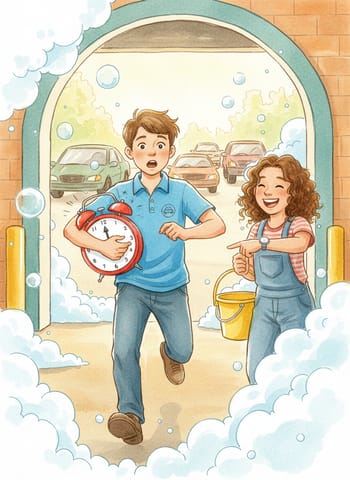
He runs down the slip road with his jacket half on. The big doors are open, and the brushes are already turning. Foam drips from the ceiling in slow white strings.
Ele corre pela alça de acesso com a jaqueta pela metade. Os portões grandes estão abertos, e as escovas já estão girando. A espuma pinga do teto em fios brancos e lentos.
Quentin stands at the first bay with a hose in his hand. He is the same age as Amit, but he looks as if he has been awake for hours. He probably has.
Quentin está na primeira baia com uma mangueira na mão. Tem a mesma idade de Amit, mas parece estar acordado há horas. Provavelmente está.
"Forty minutes," Quentin says without turning round. "You missed the whole first lorry."
"Quarenta minutos", diz Quentin sem se virar. "Você perdeu o primeiro caminhão inteiro."
"I know. I am sorry," Amit says. He reaches for a bucket, because doing something feels better than standing still.
"Eu sei. Desculpe", diz Amit. Ele pega um balde, porque fazer alguma coisa é melhor do que ficar parado.
"Don't say sorry to me. Say it to her."
"Não peça desculpa para mim. Peça para ela."
She is the owner, and she is standing in the office window with her arms folded. She does not shout. That is the worst part. She only looks at Amit for a long moment. Then she lifts three fingers, one for each Saturday he has been late.
Ela é a dona e está na janela do escritório, de braços cruzados. Não grita. Essa é a pior parte. Só olha para Amit por um longo momento. Depois levanta três dedos, um para cada sábado em que ele chegou atrasado.
At the end of the shift she calls him in. The office smells of warm coffee and wet rubber. A small radio plays quietly on the shelf.
No fim do turno, ela o chama. O escritório cheira a café quente e borracha molhada. Um rádio pequeno toca baixinho na prateleira.
"I like you, Amit," she says. "You work hard when you are here. But a car wash opens at six, whether the cleaner is ready or not."
"Eu gosto de você, Amit", diz ela. "Você trabalha duro quando está aqui. Mas um lava-rápido abre às seis, quer o funcionário esteja pronto ou não."
"It won't happen again," Amit says.
"Não vai acontecer de novo", diz Amit.
"Then it won't." She turns back to her papers. "One more time, and I will have to find someone else."
"Então não vai." Ela volta para os papéis. "Mais uma vez, e vou ter que procurar outra pessoa."
Amit walks home along the verge with his hands in his pockets. The cars pour past in both directions. Every one of them seems to be going somewhere on time.
Amit volta para casa pelo acostamento com as mãos nos bolsos. Os carros passam nas duas direções. Cada um deles parece estar indo a algum lugar na hora certa.
The truth is not complicated. He has an alarm on his phone, and he turns it off in his sleep. He does not even remember doing it. Each morning he wakes at seven. The phone is silent beside him, and his stomach is full of cold dread.
A verdade não é complicada. Ele tem um alarme no celular e o desliga enquanto dorme. Nem se lembra de ter feito isso. Toda manhã, acorda às sete. O celular está em silêncio ao lado dele, e o estômago está cheio de um medo frio.
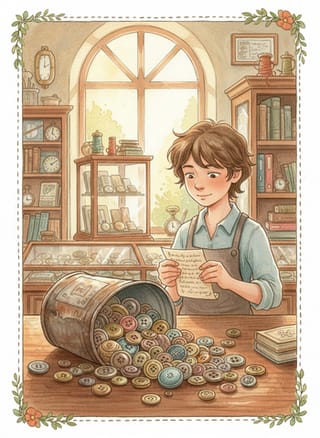
On Monday he visits the market behind the station. At the back of a junk stall, he finds the loudest alarm clock he has ever seen. It sits between a broken lamp and a box of buttons. It is round and heavy, with two silver bells on top and a metal hammer between them.
Na segunda-feira, ele visita o mercado atrás da estação. No fundo de uma barraca de quinquilharias, encontra o despertador mais barulhento que já viu. Está entre um abajur quebrado e uma caixa de botões. É redondo e pesado, com dois sinos de prata em cima e um martelo de metal entre eles.
"Does it work?" he asks the stallholder.
"Funciona?", pergunta ele ao dono da barraca.
"Work?" the man says. "People have complained about it from the next street. That one rings like a fire in a bell factory."
"Funciona?", diz o homem. "As pessoas já reclamaram dele da rua ao lado. Esse toca como um incêndio numa fábrica de sinos."
Amit pays four pounds and carries it home like a trophy.
Amit paga quatro libras e o leva para casa como um troféu.
On Friday night he winds it up, sets it for five, and puts it on his bedside table. He goes to sleep feeling like a new person. In the dark, the little hammer ticks softly, almost kindly.
Na sexta à noite, ele dá corda, o programa para as cinco e o põe na mesa de cabeceira. Vai dormir sentindo-se uma pessoa nova. No escuro, o martelinho faz tique-taque baixinho, quase com carinho.
At five o'clock the clock explodes. The noise is enormous. It fills the room, rattles the glass in the window, and drives a pain straight through his skull. Amit sits up, finds the clock with one hand, and presses the button on the back.
Às cinco horas, o despertador explode. O barulho é enorme. Enche o quarto, faz o vidro da janela vibrar e atravessa o crânio dele com uma dor. Amit se senta, encontra o despertador com uma mão e aperta o botão de trás.
The silence is wonderful. He lies down for a moment, only to rest his eyes.
O silêncio é maravilhoso. Ele se deita por um momento, só para descansar os olhos.
When he opens them again, the sun is on the wall and his phone says ten past seven. He lies there for a long minute, looking at the ceiling. The clock has not failed. He has simply beaten it, the same way he has beaten every other alarm he owns.
Quando os abre de novo, o sol está na parede e o celular marca sete e dez. Ele fica deitado por um longo minuto, olhando para o teto. O despertador não falhou. Ele simplesmente o venceu, do mesmo jeito que venceu todos os outros alarmes que tem.
This time the owner does not even come out of the office. Quentin finds him at the gate and walks him in without a word. At eleven, Quentin puts a hand on his shoulder.
Desta vez, a dona nem sai do escritório. Quentin o encontra no portão e o leva para dentro sem dizer uma palavra. Às onze, Quentin põe a mão no ombro dele.
"You have got to stop fighting it from the bed," Quentin says. "You will always win from the bed."
"Você precisa parar de lutar contra ele da cama", diz Quentin. "Da cama, você sempre vai ganhar."
"What am I supposed to do, sleep on the floor?" Amit says.
"O que eu devo fazer, dormir no chão?", diz Amit.
"No, but you could put the clock somewhere you cannot reach." Quentin shrugs, as if the idea costs him nothing. "My mum puts hers across the room. She says her feet get angry before her brain does."
"Não, mas você podia pôr o despertador num lugar que não consiga alcançar." Quentin dá de ombros, como se a ideia não lhe custasse nada. "Minha mãe põe o dela do outro lado do quarto. Ela diz que os pés dela ficam bravos antes do cérebro."
Amit thinks about it all afternoon. He thinks about it while he scrubs the wheels of a delivery van. He thinks about it again while he rinses a tall estate car. By the end of the day, he has a plan with three parts.
Amit pensa nisso a tarde inteira. Pensa enquanto esfrega as rodas de uma van de entrega. Pensa de novo enquanto enxágua uma perua alta. No fim do dia, tem um plano em três partes.
First, he will go to bed at ten, even though he likes to edit photos late at night. Second, he will carry the clock to the hallway. He will put it on top of the tall bookcase. Third, he will leave a metal cake tin under the bookcase, so that the sound bounces and grows.
Primeiro, vai dormir às dez, embora goste de editar fotos tarde da noite. Segundo, vai levar o despertador para o corredor. Vai colocá-lo em cima da estante alta. Terceiro, vai deixar uma forma de bolo de metal embaixo da estante, para o som ressoar e crescer.
On Friday night he follows the plan exactly. It is harder than he expects. His thumb keeps drifting toward the photographs. The flat is quiet in a way that makes him restless. At ten, he switches off the light anyway. He lies in the dark and listens to the lorries far away on the bridge.
Na sexta à noite, ele segue o plano à risca. É mais difícil do que esperava. O polegar dele fica se desviando para as fotografias. O apartamento está quieto de um jeito que o deixa inquieto. Às dez, ele apaga a luz mesmo assim. Deita no escuro e escuta os caminhões longe, na ponte.
At five o'clock the whole flat wakes up.
Às cinco horas, o apartamento inteiro acorda.
The noise is worse than before, because now it has a tin to jump on. It crashes through the hallway like a train. A door opens upstairs. Somewhere below, a neighbour bangs on the ceiling with a broom, again and again.
O barulho é pior do que antes, porque agora tem uma forma onde pular. Ele estrondeia pelo corredor como um trem. Uma porta se abre no andar de cima. Em algum lugar embaixo, um vizinho bate no teto com uma vassoura, uma vez atrás da outra.
Amit throws off the blanket before he knows what he is doing. He stumbles into the hallway, drags a chair across the floor, and climbs up. The clock is shaking on the shelf, and the silver bells are a blur. He grabs it with both hands and finds the button.
Amit joga o cobertor longe antes de saber o que está fazendo. Tropeça até o corredor, arrasta uma cadeira pelo chão e sobe. O despertador treme na prateleira, e os sinos de prata são um borrão. Ele o agarra com as duas mãos e acha o botão.
The silence this time is different. He is standing on a chair in his socks, wide awake. His heart is racing and his ears are ringing. There is no soft pillow within reach. There is no wall of sunlight waiting for him.
O silêncio desta vez é diferente. Ele está de pé numa cadeira, de meias, bem acordado. O coração dispara e os ouvidos zumbem. Não há travesseiro macio ao alcance. Não há parede de sol esperando por ele.
He splashes cold water on his face, pulls on his work boots, and runs.
Ele joga água fria no rosto, calça as botas de trabalho e sai correndo.
The slip road is empty and dark blue when he reaches it. The lorries on the bridge still have their lights on. At the gate, he finds the chain locked and the car wash silent. He sits down on the kerb to wait, breathing hard.
A alça de acesso está vazia e azul-escura quando ele chega. Os caminhões na ponte ainda estão com os faróis acesos. No portão, ele encontra a corrente trancada e o lava-rápido em silêncio. Senta-se no meio-fio para esperar, respirando com força.
At twenty to six, the owner's small car turns in off the road. She stops, rolls down the window, and looks at him for a very long time.
Às seis menos vinte, o carrinho da dona entra pela estrada. Ela para, abaixa o vidro e olha para ele por muito tempo.
"Good morning," Amit says.
"Bom dia", diz Amit.
"You are early," she says.
"Você está cedo", diz ela.
"I know. I had help." He holds up the clock, which he has carried all the way under his arm. The little hammer is still trembling.
"Eu sei. Tive ajuda." Ele ergue o despertador, que carregou o caminho todo debaixo do braço. O martelinho ainda está tremendo.
She laughs, a short, surprised sound, and opens the gate. By six o'clock the brushes are turning and the foam is falling. Amit has already rinsed the first lorry. Nobody has to tell him what to do.
Ela ri, um som curto e surpreso, e abre o portão. Às seis horas, as escovas estão girando e a espuma está caindo. Amit já enxaguou o primeiro caminhão. Ninguém precisa dizer a ele o que fazer.
Quentin arrives just after, with his jacket zipped to his chin. He stops at the edge of the bay and stares at Amit. Then he looks at the clean lorry, and then at the clock on the shelf.
Quentin chega logo depois, com a jaqueta fechada até o queixo. Para na beira da baia e fica olhando para Amit. Depois olha para o caminhão limpo, e depois para o despertador na prateleira.
"Who are you?" Quentin says. "And what have you done with my friend?"
"Quem é você?", diz Quentin. "E o que você fez com o meu amigo?"
Amit grins and wipes his hands on his apron. Far above, the motorway hums its single note.
Amit abre um sorriso e limpa as mãos no avental. Bem no alto, a rodovia zumbe sua única nota.
"Do you think my neighbours will ever forgive me?" he asks.
"Você acha que meus vizinhos algum dia vão me perdoar?", pergunta ele.