The ferry across the Long River has no engine. It is a flat wooden boat, wide enough for ten people and one cart. A thick rope runs from one bank to the other. To cross, you take the rope in your hands and pull. Rumi does this forty times a day, and her arms are as hard as fence posts.
横渡长河的渡船没有引擎。它是一条平底木船,宽得能载十个人和一辆货车。一根粗绳从河的这一岸拉到另一岸。要过河,你就双手抓住绳子往前拉。鲁米一天要这样拉四十趟,她的胳膊硬得像篱笆桩。
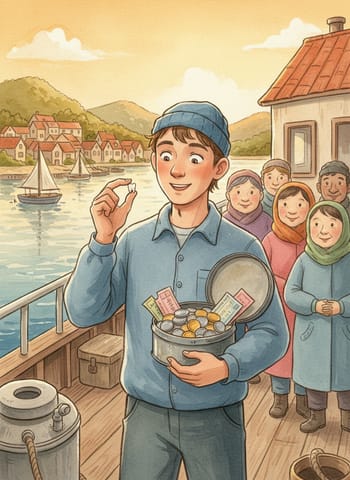
She is twenty-three, and this is her second summer on the ferry. She likes the work. The river is slow and brown, and the boat moves with a soft creak, hand over hand. The only part she dislikes is the fare tin. It is an old biscuit tin that sits by the rope. It is always nearly empty.
她二十三岁,这是她在渡船上的第二个夏天。她喜欢这份工作。河水缓慢,呈棕色,船随着手一把一把地拉动,发出轻轻的吱呀声。她唯一不喜欢的是那只船费盒。那是一只旧饼干铁盒,放在绳子旁边,总是几乎空着。
The fare is two small coins. Rumi does not ask for it. People drop the coins in the tin when they board, and most of them do. A few forget. A few have no change. She never chases anyone. But she counts the tin each night, and she knows when something is wrong.
船费是两枚小硬币。鲁米从不开口要。人们上船时把硬币扔进盒子,大多数人都会。有几个人忘了。有几个人没有零钱。她从不追着谁要。但她每天夜里都要数一数盒子,她知道什么时候不对劲。
On this particular morning, she opens the lid and finds something unusual. Between three coins lies a small white envelope. It is thin, a little crumpled, and sealed with a piece of tape. On the front, in neat pencil, are two words: FOR FARE.
就在这天早晨,她打开盖子,发现了一件不寻常的东西。三枚硬币之间躺着一个小小的白信封。它很薄,有点皱,用一小条胶带封着。封面上,用整齐的铅笔字写着四个字:留作船资。
"That's new," Rumi says to nobody.
“这可新鲜,”鲁米对着空气说。
She opens it carefully. Inside, wrapped in a tissue, is a tiny tooth. It is a baby tooth, small and white, with a narrow root. She holds it in her palm and looks at it for a long time. Then she puts it back in the tissue and sits down on the bench to think.
她小心地打开它。里面用一张纸巾裹着一颗小小的牙齿。是颗乳牙,小小的,白白的,带着一条细细的牙根。她把它放在掌心,看了很久。然后她把它包回纸巾里,在长凳上坐下来思考。
"All right," she says. "Who pays a ferry with a tooth?"
“好吧,”她说,“谁会用一颗牙齿来付渡船费呢?”
It is a question she cannot ignore. She loves a small mystery almost as much as the river. This is the best one she has had all summer. She decides to solve it before the last crossing of the day. She will write down everything she learns, on the back of her ticket book.
这是她无法忽视的问题。她爱小小的谜团,几乎和爱这条河一样。这是整个夏天她遇到的最好的一个。她决定在当天最后一趟渡船之前把它解开。她会把了解到的一切都写在票本的背面。
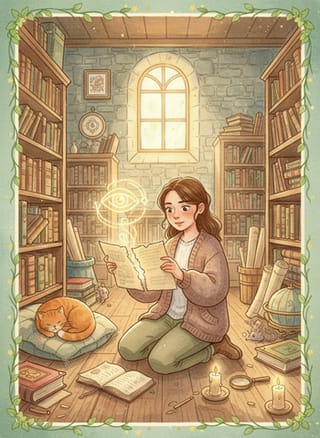
The first clue is the envelope itself. Rumi studies the writing. The pencil is soft and careful. It is the writing of someone who wants to be understood. It is not a child's handwriting, and it is not a doctor's. The tape is new, but the paper is soft and old. It spent years in a drawer. Somebody wrote this a long time ago, then put it away, and only recently took it out again.
第一条线索是信封本身。鲁米研究那些字。铅笔字迹柔和而认真。那是想让人看懂的人写的字。它不是孩子的笔迹,也不是医生的。胶带是新的,但纸又软又旧。它在抽屉里待了很多年。有人很久以前写下了它,然后收了起来,直到最近才重新拿出来。
"A grown-up's writing, old paper," Rumi writes. "A tooth that waited."
“大人的字迹,旧纸,”鲁米写道,“一颗等待过的牙。”
The second clue comes at noon. The boat is almost full. A farmer with a basket of onions sits near the front. Two women with bright scarves lean on the side. A boy with a fishing rod keeps asking her if the river is deep. And at the back, standing by himself, is a young man with a very large backpack.
第二条线索在中午出现。船几乎满了。一位带着一篮洋葱的农夫坐在前面。两位围着鲜艳围巾的女士靠在船边。一个拿着钓竿的男孩不停地问她河水深不深。而在最后面,独自站着的是一个背着巨大背包的年轻人。
Rumi has not seen him before. He is about nineteen, with a thin face and a short haircut that looks new. He holds the strap of his backpack in both hands, like a child at a station. Every few minutes, he pats the pocket of his jacket and then looks anxiously at the tin.
鲁米以前没见过他。他大约十九岁,脸很瘦,头发剪得很短,看起来是新剪的。他双手抓着背包带,像车站里的一个孩子。每隔几分钟,他就拍拍夹克的口袋,然后焦急地看一眼铁盒。
"Excuse me," he says, when the boat is halfway across. "How much is the fare?"
“打扰一下,”船到了河中间时,他说,“船费是多少?”
"Two small coins," Rumi says. She keeps pulling the rope. "Put them in the tin."
“两枚小硬币,”鲁米说。她继续拉着绳子。“放进盒子里就行。”
"I only have big notes," the young man says. "I just came out of the bank in town. I don't have any coins at all."
“我只有大面额的纸币,”年轻人说,“我刚从镇上的银行出来。我一枚硬币都没有。”
"Then you owe me, and you can pay next time."
“那你就欠我一次,下回再付。”
"There won't be a next time," he says. "I'm going to the city, to start a job. Tomorrow I begin at a shop that fixes bicycles. I may not come back for a year."
“不会有下回了,”他说,“我要去城里上班。明天我就开始在一家修自行车的店里工作。我可能一年都不会回来。”
He pats his pocket again.
他又拍了拍口袋。
"I wanted to pay properly. I really did."
“我想好好地付。我真的想。”
Rumi looks at him over her shoulder. He is very serious. She likes him already, in the way you like a nervous stranger who is trying hard.
鲁米回头看了他一眼。他非常认真。她已经喜欢上他了,就像你会喜欢一个努力表现的紧张的陌生人那样。
The third clue is small and almost invisible. When the young man speaks, he rubs his jaw, on the left side, with two fingers. He does it without noticing, as people do when they think about something old. Rumi watches the gesture. Then she looks at the tin, and then at his pocket again.
第三条线索很小,几乎看不见。年轻人说话时,会用两根手指揉左边的下巴。他自己没有察觉,就像人们想起久远的事情时那样。鲁米注视着这个动作。然后她看了看铁盒,又看了看他的口袋。
"What's your name?" she asks.
“你叫什么名字?”她问。
"Takeshi."
“武史。”
"Takeshi," she says. "Do you know what is in the envelope?"
“武史,”她说,“你知道信封里是什么吗?”
He goes completely still. The boy with the fishing rod looks up. Takeshi takes a long breath and says, in a small voice, "You found it."
他整个人一动不动了。拿钓竿的男孩抬起头。武史深深吸了一口气,小声说:“你发现了。”
"I found it in the tin this morning," says Rumi. "Before you came. So it was there when you boarded. Somebody put it in before sunrise."
“今天早晨我在盒子里发现的,”鲁米说,“在你来之前。所以你上船的时候它就已经在那里了。是有人在日出之前放进去的。”
"Nobody put it there," says Takeshi. "I did. I came to the landing last night and left it. I wanted to cross without coins. I thought it would be fine."
“没有人放,”武史说,“是我放的。我昨晚来过码头,把它留在了那里。我想不带硬币过河。我以为没问题。”
He looks at his shoes.
他低头看着自己的鞋。
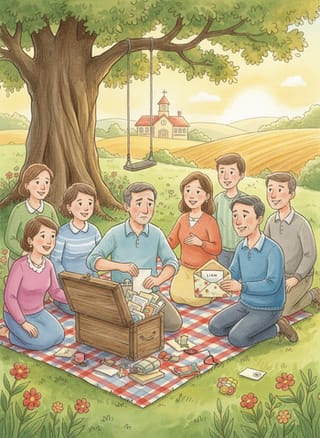
"My mother wrote on it. She wrote it when I was six."
“信封上的字是我妈妈写的。是我六岁的时候写的。”
"Why a tooth?" asks Rumi.
“为什么是一颗牙?”鲁米问。
"It's a joke. It's an old joke, from the village." He laughs. "When I was small, I was afraid of the river. Every time we crossed, I cried. So my mother told me that the ferry takes a tooth as payment if you have no coins. She said it wasn't a lie, because a tooth was a very good thing to give. Then I lost my first tooth. She put it in an envelope and wrote FOR FARE on the front. I could pay the river and feel brave."
“这是个玩笑。村里的一个老玩笑。”他笑了。“我小时候怕河。每次过河我都哭。所以我妈妈告诉我,如果你没有硬币,渡船会收一颗牙当船费。她说这不算撒谎,因为牙是很好的东西,可以拿来付。后来我掉了第一颗牙。她把它装进信封,在封面上写了‘留作船资’。这样我就能付河的钱,也觉得自己很勇敢。”
"And you kept it for thirteen years," Rumi says.
“你把它留了十三年,”鲁米说。
"She kept it, actually. In the kitchen drawer. When I packed this week, she put it in my jacket pocket without saying anything. She said I should have the fare ready." He shakes his head. "I forgot the coins, but I remembered the joke. So I left the tooth in the tin last night, and then I felt terrible. I thought I'd given away something important. But I don't want to take it back now, because you might think I lied."
“其实是她留的。放在厨房的抽屉里。这星期我收拾行李的时候,她一声不吭地把它放进了我夹克的口袋里。她说我应该把船费准备好。”他摇摇头。“我忘了带硬币,却记得那个玩笑。所以昨晚我把牙留在了盒子里,然后就难受极了。我觉得自己送出去了很重要的东西。可我现在又不想拿回来,因为你可能会以为我撒了谎。”
For a moment, nobody speaks. The women with scarves stop talking. The farmer turns around on his basket, holding an onion in one hand. The boy with the fishing rod stares at Takeshi with great respect.
有那么一会儿,没人说话。围围巾的女士们停止了交谈。农夫在篮子上转过身,手里还拿着一颗洋葱。拿钓竿的男孩怀着极大的敬意盯着武史。
Then Rumi starts to laugh. She laughs so hard that her hands slip on the rope, and the boat slows down. The whole boat laughs with her. Takeshi hides his face in both hands.
然后鲁米笑了起来。她笑得那么厉害,手从绳子上滑开了,船慢了下来。整条船的人都跟着她笑。武史用双手捂住了脸。
"It's not funny," he says through his fingers.
“这不好笑,”他从指缝里说。
"It's very funny," Rumi says. "I thought I had a crime to solve. I thought a thief left his teeth in my tin. And it's just a boy who forgot his small coins."
“非常好笑,”鲁米说,“我还以为我有个案子要破。我还以为有小偷把牙齿落在了我的盒子里。结果只是一个忘了带零钱的小伙子。”
She wipes her eyes.
她擦了擦眼睛。
"Here. Take it back."
“给。拿回去吧。”
She puts the little tissue in his open hand. He looks at it. Then he folds his fingers around it, carefully.
她把那小小的纸巾包放进他摊开的手里。他看了看它。然后他小心地合拢了手指。
"Thank you," he says. "But the fare—"
“谢谢你,”他说,“可是船费——”
"The fare for a tooth is a very serious matter," Rumi says. "I must think about it."
“一颗牙的船费是件非常严肃的事,”鲁米说,“我得好好想一想。”
She nods toward the thick, wet rope, which hangs between her hands.
她朝那根又粗又湿的绳子点点头,绳子正悬在她两手之间。
"Come here, Takeshi. Take the other side of the rope. Teeth don't pay on this boat, but arms do."
“过来,武史。抓住绳子的另一边。在这条船上,牙齿付不了账,不过胳膊可以。”