The shop was called Hendrik's Stamps and Coins, and it was smaller than most people's kitchens. Glass cases ran along both walls. Behind the counter, a hundred tiny drawers held paper squares, silver rounds and little magnifying glasses. Salma had worked there on Saturdays since the start of the school year.
那家店叫“亨德里克邮票与钱币店”,比大多数人家的厨房还小。玻璃柜沿着两面墙排开。柜台后面,上百个小抽屉里放着纸片、银币和小放大镜。从开学起,萨尔玛每个星期六都在这里打工。
She liked the quiet. She liked the way Hendrik talked to customers as if each one had come from a faraway country. Most of all, she liked that nobody in the shop ever asked her what she wanted to be.
她喜欢这里的安静。她喜欢亨德里克跟顾客说话的样子,好像每一位都是从遥远的国度来的。最重要的是,她喜欢店里从来没有人问她将来想做什么。
On the last Saturday of spring, a woman in a green coat pushed open the door. She carried a round biscuit tin with a faded picture of a lighthouse on the lid.
春天的最后一个星期六,一位穿绿色外套的女士推开了门。她拿着一只圆形的饼干铁盒,盖子上印着一幅褪了色的灯塔图案。
"I am clearing a cupboard," the woman said. "These were my neighbour's. She asked me to sell them to someone who will care."
“我在清理一个柜子,”那位女士说,“这些是我邻居的。她请我把它们卖给会珍惜的人。”
"What are they?" Hendrik asked.
“是什么东西?”亨德里克问。
"Buttons. Hundreds of them."
“纽扣。好几百颗。”
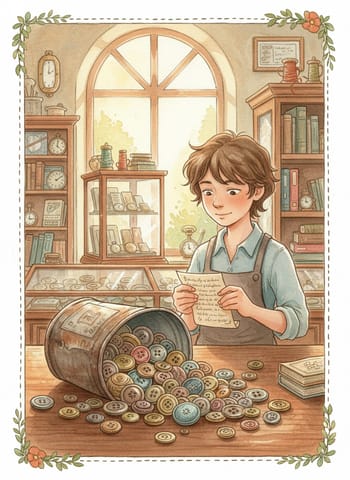
She set the tin on the counter and opened it. Salma leaned forward. The buttons lay in the tin like a small, loud crowd. Some were glass, some were wood, and some were dull metal with tiny anchors on them. A few were as big as coins, and a few were smaller than her fingernail.
她把铁盒放在柜台上,打开了。萨尔玛探身向前。纽扣躺在盒子里,像一小群吵吵闹闹的人。有些是玻璃的,有些是木头的,还有些是暗淡的金属,上面有小小的船锚。几颗有硬币那么大,几颗比她的指甲还小。
Hendrik picked one up with tweezers and turned it under the lamp. "I am not an expert in buttons," he said. "But I know someone who is. May I keep the tin for the afternoon?"
亨德里克用镊子夹起一颗,在灯下转了转。“我不是纽扣专家,”他说,“不过我认识一位。我能把这盒子留一个下午吗?”
"Of course," the woman said. "I will come back on Monday."
“当然,”那位女士说,“我星期一再来。”
When she left, Hendrik pushed the tin across the counter. "Salma, I have a job for you. Sort these, and tell me what you think we should do with them."
她走了以后,亨德里克把铁盒推过柜台。“萨尔玛,我有件事交给你。把它们分一分类,然后告诉我,你觉得我们该怎么处理。”
"What do you mean, what we should do?"
“你说该怎么处理是什么意思?”
"We have two good choices. I will explain after you look." He smiled. "I want to hear what you notice before I tell you what I think."
“我们有两个不错的选择。你看完之后我再解释。”他笑了。“我想先听听你注意到了什么,再说我的想法。”
Salma spread a white cloth on the table in the back. She tipped the buttons out and began to sort them into piles by material. Glass, wood, shell, metal. It was slow work, but she found it calming.
萨尔玛在后屋的桌上铺了一块白布。她把纽扣倒出来,开始按材质分成几堆。玻璃的、木头的、贝壳的、金属的。这是慢活儿,但她觉得很平静。
At the bottom of the tin, she found something else. It was a roll of tiny paper tags, each one tied to a button with a thread. She counted nine. On each tag, someone had written a date and a short note in careful ink.
在盒底,她发现了别的东西。那是一卷小小的纸标签,每一张都用线系在一颗纽扣上。她数了数,一共九张。每张标签上,有人用认真的墨水字写了日期和一句简短的话。
She read the first. "March 4. Coat for the ferryman's son. Brass, four holes." She smiled. People wrote the most ordinary things.
她读了第一张。“三月四日。渡船夫儿子的外套。黄铜,四孔。”她笑了。人们写的都是最平常的事。
She read the second. "June 19. Wedding jacket, mother-of-pearl." She read the third. "October 2. School blazer, the button that fell in the soup."
她读了第二张。“六月十九日。婚礼夹克,珍珠母贝。”她读了第三张。“十月二日。校服外套,掉进汤里的那颗纽扣。”
She laughed out loud. Hendrik looked up from his catalogue.
她笑出了声。亨德里克从他的目录上抬起头来。
"What is funny?"
“什么这么好笑?”
"These buttons have stories," Salma said. "The tags say whose coat each button came from. It looks like a tailor kept them."
“这些纽扣有故事,”萨尔玛说,“标签上写着每颗纽扣来自谁的外套。看起来是一位裁缝留下的。”
Hendrik came over and bent to read. For a long moment, he said nothing. Then he whistled softly.
亨德里克走过来,弯下腰去读。很长一会儿,他没有说话。然后他轻轻吹了声口哨。
"A tailor's record," he said. "That is something."
“一份裁缝的记录,”他说,“这可不得了。”
He went to the phone and made two calls. When he came back, he sat on the stool opposite her and counted on his fingers.
他去打了电话,打了两个。回来后,他在她对面的凳子上坐下,掰着手指数。
"Here are the two choices," he said. "The first is a collector I know. He loves old buttons, and he pays well for glass and brass. If you sort the best forty into a case, he will pay five times the tin price. The money would help the shop through the summer."
“这是两个选择,”他说,“第一个是我认识的一位收藏家。他喜欢旧纽扣,玻璃和黄铜的他出价很高。如果你把最好的四十颗挑出来放进一个展示盒,他会出五倍于铁盒的价钱。这笔钱能帮店撑过夏天。”
"And the second choice?" Salma asked.
“那第二个选择呢?”萨尔玛问。
"The second is a woman who runs an art class at the primary school down the road. She wants buttons for a big picture on the hall wall. She can pay only a little, but she would use every button in the tin."
“第二个是一位女士,她在路那头的小学教美术课。她想要纽扣,在礼堂的墙上做一幅大画。她只能付一点点钱,但铁盒里的每一颗纽扣她都会用上。”
Salma looked at the piles on the cloth. Both choices sounded fair. Hendrik was a good man, and the shop needed money. But the school picture sounded fun, and it would be seen by hundreds of children.
萨尔玛看着布上的那几堆纽扣。两个选择听起来都合理。亨德里克是个好人,店也需要钱。但学校的那幅画听起来很有趣,而且会被几百个孩子看到。
"Which one would you pick?" she asked.
“你会选哪一个?”她问。
"That is exactly why I asked you," Hendrik said. "You found the tags. You have looked at them longer than I have. So you decide, and I will back you."
“这正是我问你的原因,”亨德里克说,“标签是你发现的。你比我看得久。所以你来决定,我支持你。”
The words made her stomach flutter. In her life, someone had always decided things for her. Her parents decided which school she attended. Her friends decided which cafe they visited. Nobody had ever said "you decide" and then waited.
这话让她的胃一阵发颤。在她的生活里,总是有人替她做决定。父母决定她上哪所学校。朋友们决定去哪家咖啡馆。从来没有人说过“你来决定”,然后等着。
She spent another hour with the buttons. She read all nine tags again. She looked at the glass ones in the light, and she weighed the brass ones in her hand. At four o'clock, she knew what she wanted to do.
她又和那些纽扣待了一个钟头。她把九张标签又读了一遍。她把玻璃纽扣举到光下看,又把黄铜纽扣放在手里掂了掂。四点钟,她知道自己想怎么做了。
"I choose the school," she said.
“我选学校,”她说。
Hendrik leaned back. "Tell me why."
亨德里克靠在椅背上。“告诉我为什么。”
"If we sell forty good buttons to the collector, we lose the rest. The tags would go to one case, and the plain buttons would go back into a drawer. Nobody would see the whole tin."
“如果我们把四十颗好纽扣卖给收藏家,其余的就失去了。标签会进到一个展示盒里,普通的纽扣会放回抽屉。没人能看到整盒的全部。”
"True."
“没错。”
"But the school will use all of them. Each child will touch a button that was once on a real coat." She took a breath. "And the tags are like a little book. If the picture tells the stories, then the tin stays together. I think the tailor would have liked that."
“可是学校会把它们全部用上。每个孩子都会摸到一颗曾经在真正外套上的纽扣。”她吸了一口气。“而且那些标签就像一本小书。如果画把故事讲出来,铁盒就能保持完整。我想那位裁缝会喜欢的。”
Hendrik was quiet for a few seconds. Then he nodded slowly.
亨德里克沉默了几秒。然后他慢慢点了点头。
"The money matters, you know," he said. "We will have a thin summer."
“钱是很重要的,你知道,”他说,“我们会有一个紧巴巴的夏天。”
"I know," Salma said. "But I can work extra days. Not because I must, but because I want to."
“我知道,”萨尔玛说,“可我可以多来几天。不是因为我必须,而是因为我愿意。”
"You have thought about it carefully." He held out his hand, as if she were another dealer. "Then it is decided. I will call the school."
“你考虑得很周到。”他伸出手,好像她是另一位同行。“那就这么定了。我来给学校打电话。”
On Monday, the woman in the green coat came back. Salma explained the choice. The woman laughed, then asked if she could visit the picture when it was finished.
星期一,穿绿外套的女士回来了。萨尔玛向她解释了这个选择。那位女士笑了,然后问画做好后她能不能去看看。
"Yes," Salma said. "I will make sure there is a sign."
“可以,”萨尔玛说,“我会确保有一块牌子。”
Three weeks later, Hendrik closed the shop for an hour. The two of them walked down the road to the primary school. The hall smelled of floor wax and crayons. At the far end, high on the wall, a long mural climbed toward the ceiling. It showed a tailor's window, a lighthouse and a street full of people in coats. Every coat had real buttons stitched onto it.
三个星期后,亨德里克把店关了一个钟头。两个人沿着马路走到那所小学。礼堂里有地板蜡和蜡笔的味道。在最远的一端,高高的墙上,一幅长长的壁画向着天花板攀升。画里有一扇裁缝店的橱窗,一座灯塔,还有一条挤满穿外套的人的街。每件外套上都缝着真正的纽扣。
The children had not left a single button out. Brass anchors shone on a sailor's jacket. A tiny glass one sat at the centre of a bride's sleeve. At the bottom of the mural, paper tags hung on threads. Each tag had a short note in a child's careful handwriting.
孩子们一颗纽扣也没落下。黄铜船锚在水手的夹克上闪着光。一颗小小的玻璃纽扣缀在新娘衣袖的中央。壁画的底部,纸标签用线挂着。每张标签上都有一句短短的话,是孩子工整的笔迹。
Salma stood with her hands behind her back. The art class had gone home, and the hall was empty. Sun came through the tall windows and lay across the buttons like water. For a long moment, the whole wall seemed to glow. Beneath it, on a low shelf, the tin with the lighthouse on its lid sat open and empty.
萨尔玛双手背在身后站着。美术课的孩子们已经回家了,礼堂里空荡荡的。阳光从高高的窗子里照进来,像水一样铺在纽扣上。好一会儿,整面墙仿佛都在发光。在它下方,一个低矮的架子上,盖子上印着灯塔的那只铁盒敞开着,空了。