The Tin of Buttons at the Coin Shop
भाषा सीखने वालों के लिए स्तर B1 की एक मुफ़्त अंग्रेज़ी कहानी, जिसे 7 भाषाओं में ऑनलाइन पढ़ा जा सकता है और मुफ़्त Storyteller ऐप में सुना भी जा सकता है।
A teenager who works in a small shop must decide what to do with a tin of old buttons that carry a tailor's notes.
झलक पूरी हुई! पूरी कहानी मुफ़्त Storyteller ऐप में सुनें। ऐप पाएँ
अभी ऑडियो उपलब्ध नहीं है।
The shop was called Hendrik's Stamps and Coins, and it was smaller than most people's kitchens. Glass cases ran along both walls. Behind the counter, a hundred tiny drawers held paper squares, silver rounds and little magnifying glasses. Salma had worked there on Saturdays since the start of the school year.
दुकान का नाम "हेंड्रिक की डाक-टिकट और सिक्कों की दुकान" था, और वह ज़्यादातर लोगों की रसोई से भी छोटी थी। दोनों दीवारों के साथ काँच की अलमारियाँ चलती थीं। काउंटर के पीछे सौ नन्ही दराज़ों में काग़ज़ के चौकोर टुकड़े, चाँदी के गोले और छोटे-छोटे आवर्धक शीशे रखे थे। सलमा स्कूल-वर्ष की शुरुआत से शनिवार को वहाँ काम करती थी।
She liked the quiet. She liked the way Hendrik talked to customers as if each one had come from a faraway country. Most of all, she liked that nobody in the shop ever asked her what she wanted to be.
उसे वहाँ की शांति पसंद थी। उसे यह पसंद था कि हेंड्रिक ग्राहकों से ऐसे बात करता था जैसे हर कोई किसी दूर देश से आया हो। सबसे ज़्यादा उसे यह पसंद था कि दुकान में कोई उससे कभी नहीं पूछता था कि वह क्या बनना चाहती है।
On the last Saturday of spring, a woman in a green coat pushed open the door. She carried a round biscuit tin with a faded picture of a lighthouse on the lid.
वसंत के आख़िरी शनिवार को हरे कोट वाली एक औरत ने दरवाज़ा धकेलकर खोला। वह ढक्कन पर फीकी लाइटहाउस की तस्वीर वाला एक गोल बिस्कुट का डिब्बा लिए थी।
"I am clearing a cupboard," the woman said. "These were my neighbour's. She asked me to sell them to someone who will care."
"मैं एक अलमारी साफ़ कर रही हूँ," औरत ने कहा। "ये मेरी पड़ोसन के थे। उसने कहा था कि इन्हें किसी ऐसे को बेच दूँ जो इनकी क़द्र करे।"
"What are they?" Hendrik asked.
"ये क्या हैं?" हेंड्रिक ने पूछा।
"Buttons. Hundreds of them."
"बटन। सैकड़ों।"
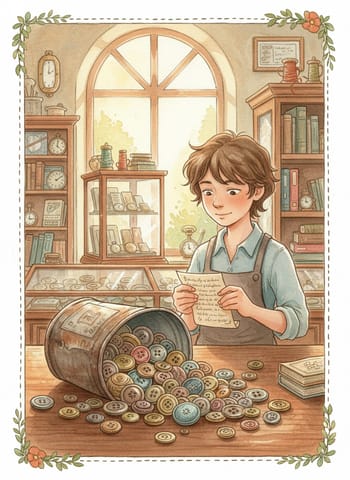
She set the tin on the counter and opened it. Salma leaned forward. The buttons lay in the tin like a small, loud crowd. Some were glass, some were wood, and some were dull metal with tiny anchors on them. A few were as big as coins, and a few were smaller than her fingernail.
उसने डिब्बा काउंटर पर रखकर खोला। सलमा आगे झुकी। बटन डिब्बे में एक छोटी, शोर मचाती भीड़ की तरह पड़े थे। कुछ काँच के थे, कुछ लकड़ी के, और कुछ फीकी धातु के जिन पर नन्हे लंगर बने थे। कुछ सिक्कों जितने बड़े थे, और कुछ उसके नाख़ून से भी छोटे।
Hendrik picked one up with tweezers and turned it under the lamp. "I am not an expert in buttons," he said. "But I know someone who is. May I keep the tin for the afternoon?"
हेंड्रिक ने चिमटी से एक उठाया और बत्ती के नीचे उसे घुमाया। "मैं बटनों का विशेषज्ञ नहीं हूँ," उसने कहा। "पर मैं एक ऐसे को जानता हूँ जो है। क्या मैं दोपहर भर के लिए डिब्बा रख सकता हूँ?"
"Of course," the woman said. "I will come back on Monday."
"बिल्कुल," औरत ने कहा। "मैं सोमवार को वापस आऊँगी।"
When she left, Hendrik pushed the tin across the counter. "Salma, I have a job for you. Sort these, and tell me what you think we should do with them."
जब वह चली गई, तो हेंड्रिक ने डिब्बा काउंटर के पार सरका दिया। "सलमा, मेरे पास तुम्हारे लिए एक काम है। इन्हें छाँटो, और मुझे बताओ कि तुम्हारे ख़याल से हमें इनका क्या करना चाहिए।"
"What do you mean, what we should do?"
"क्या मतलब, हमें क्या करना चाहिए?"
"We have two good choices. I will explain after you look." He smiled. "I want to hear what you notice before I tell you what I think."
"हमारे पास दो अच्छे विकल्प हैं। तुम्हारे देखने के बाद मैं समझाऊँगा।" वह मुस्कुराया। "मैं अपनी राय बताने से पहले यह सुनना चाहता हूँ कि तुमने क्या नोटिस किया।"
Salma spread a white cloth on the table in the back. She tipped the buttons out and began to sort them into piles by material. Glass, wood, shell, metal. It was slow work, but she found it calming.
सलमा ने पीछे की मेज़ पर सफ़ेद कपड़ा बिछाया। उसने बटन उँडेले और उन्हें सामग्री के हिसाब से ढेरों में छाँटना शुरू किया। काँच, लकड़ी, सीप, धातु। यह धीमा काम था, पर उसे यह सुकून देने वाला लगा।
At the bottom of the tin, she found something else. It was a roll of tiny paper tags, each one tied to a button with a thread. She counted nine. On each tag, someone had written a date and a short note in careful ink.
डिब्बे की तली में उसे कुछ और मिला। यह नन्हे काग़ज़ी टैगों का एक रोल था, हर एक धागे से एक बटन से बँधा। उसने नौ गिने। हर टैग पर किसी ने सावधान स्याही में एक तारीख़ और एक छोटा नोट लिखा था।
She read the first. "March 4. Coat for the ferryman's son. Brass, four holes." She smiled. People wrote the most ordinary things.
उसने पहला पढ़ा। "4 मार्च। माँझी के बेटे का कोट। पीतल, चार छेद।" वह मुस्कुराई। लोग कितनी मामूली बातें लिखते हैं।
She read the second. "June 19. Wedding jacket, mother-of-pearl." She read the third. "October 2. School blazer, the button that fell in the soup."
उसने दूसरा पढ़ा। "19 जून। शादी की जैकेट, सीपी का मोती।" उसने तीसरा पढ़ा। "2 अक्टूबर। स्कूल का ब्लेज़र, वह बटन जो सूप में गिर गया था।"
She laughed out loud. Hendrik looked up from his catalogue.
वह ज़ोर से हँस पड़ी। हेंड्रिक ने अपनी सूची से ऊपर देखा।
"What is funny?"
"क्या मज़ेदार है?"
"These buttons have stories," Salma said. "The tags say whose coat each button came from. It looks like a tailor kept them."
"इन बटनों की कहानियाँ हैं," सलमा ने कहा। "टैग बताते हैं कि हर बटन किसके कोट से आया। लगता है किसी दर्ज़ी ने इन्हें रखा था।"
Hendrik came over and bent to read. For a long moment, he said nothing. Then he whistled softly.
हेंड्रिक पास आया और पढ़ने के लिए झुका। एक लंबे पल तक वह कुछ नहीं बोला। फिर उसने धीरे से सीटी बजाई।
"A tailor's record," he said. "That is something."
"एक दर्ज़ी का रिकॉर्ड," उसने कहा। "यह तो कुछ है।"
He went to the phone and made two calls. When he came back, he sat on the stool opposite her and counted on his fingers.
वह फ़ोन के पास गया और दो कॉल किए। जब लौटा, तो वह उसके सामने के स्टूल पर बैठ गया और उँगलियों पर गिनने लगा।
"Here are the two choices," he said. "The first is a collector I know. He loves old buttons, and he pays well for glass and brass. If you sort the best forty into a case, he will pay five times the tin price. The money would help the shop through the summer."
"ये दो विकल्प हैं," उसने कहा। "पहला एक संग्राहक है जिसे मैं जानता हूँ। उसे पुराने बटन पसंद हैं, और वह काँच और पीतल के लिए अच्छा पैसा देता है। अगर तुम सबसे अच्छे चालीस को एक केस में छाँट दो, तो वह डिब्बे की क़ीमत से पाँच गुना देगा। वह पैसा गर्मियों में दुकान को सहारा देगा।"
"And the second choice?" Salma asked.
"और दूसरा विकल्प?" सलमा ने पूछा।
"The second is a woman who runs an art class at the primary school down the road. She wants buttons for a big picture on the hall wall. She can pay only a little, but she would use every button in the tin."
"दूसरी एक औरत है जो सड़क के आगे प्राथमिक स्कूल में कला की कक्षा चलाती है। उसे हॉल की दीवार पर बड़े चित्र के लिए बटन चाहिए। वह बस थोड़ा-सा दे सकती है, पर वह डिब्बे का हर बटन इस्तेमाल करेगी।"
Salma looked at the piles on the cloth. Both choices sounded fair. Hendrik was a good man, and the shop needed money. But the school picture sounded fun, and it would be seen by hundreds of children.
सलमा ने कपड़े पर पड़े ढेरों को देखा। दोनों विकल्प उचित लग रहे थे। हेंड्रिक भला आदमी था, और दुकान को पैसे की ज़रूरत थी। पर स्कूल का चित्र मज़ेदार लग रहा था, और उसे सैकड़ों बच्चे देखेंगे।
"Which one would you pick?" she asked.
"आप कौन-सा चुनेंगे?" उसने पूछा।
"That is exactly why I asked you," Hendrik said. "You found the tags. You have looked at them longer than I have. So you decide, and I will back you."
"इसीलिए तो मैंने तुमसे पूछा," हेंड्रिक ने कहा। "टैग तुमने ढूँढ़े। तुमने उन्हें मुझसे ज़्यादा देर तक देखा है। तो तुम तय करो, और मैं तुम्हारा साथ दूँगा।"
The words made her stomach flutter. In her life, someone had always decided things for her. Her parents decided which school she attended. Her friends decided which cafe they visited. Nobody had ever said "you decide" and then waited.
इन शब्दों से उसके पेट में गुदगुदी हुई। उसकी ज़िंदगी में हमेशा कोई और उसके लिए चीज़ें तय करता आया था। उसके माता-पिता ने तय किया कि वह किस स्कूल में जाएगी। उसके दोस्तों ने तय किया कि वे किस कैफ़े में जाएँगे। किसी ने कभी "तुम तय करो" कहकर इंतज़ार नहीं किया था।
She spent another hour with the buttons. She read all nine tags again. She looked at the glass ones in the light, and she weighed the brass ones in her hand. At four o'clock, she knew what she wanted to do.
उसने बटनों के साथ एक घंटा और बिताया। उसने नौ टैग फिर से पढ़े। उसने काँच वाले बटन रोशनी में देखे, और पीतल वाले हाथ में तौले। चार बजे तक उसे पता था कि वह क्या करना चाहती है।
"I choose the school," she said.
"मैं स्कूल को चुनती हूँ," उसने कहा।
Hendrik leaned back. "Tell me why."
हेंड्रिक पीछे टिककर बैठ गया। "मुझे वजह बताओ।"
"If we sell forty good buttons to the collector, we lose the rest. The tags would go to one case, and the plain buttons would go back into a drawer. Nobody would see the whole tin."
"अगर हम संग्राहक को चालीस अच्छे बटन बेचते हैं, तो बाक़ी खो देते हैं। टैग एक केस में चले जाएँगे, और सादे बटन वापस दराज़ में। कोई पूरा डिब्बा नहीं देख पाएगा।"
"True."
"सच है।"
"But the school will use all of them. Each child will touch a button that was once on a real coat." She took a breath. "And the tags are like a little book. If the picture tells the stories, then the tin stays together. I think the tailor would have liked that."
"पर स्कूल इन सबका इस्तेमाल करेगा। हर बच्चा एक ऐसे बटन को छुएगा जो कभी असली कोट पर था।" उसने साँस ली। "और टैग एक छोटी किताब की तरह हैं। अगर चित्र कहानियाँ सुनाएगा, तो डिब्बा साथ रहेगा। मुझे लगता है दर्ज़ी को यह पसंद आता।"
Hendrik was quiet for a few seconds. Then he nodded slowly.
हेंड्रिक कुछ सेकंड चुप रहा। फिर उसने धीरे से सिर हिलाया।
"The money matters, you know," he said. "We will have a thin summer."
"पैसे का भी महत्व है, जानती हो," उसने कहा। "हमारी गर्मियाँ तंग रहेंगी।"
"I know," Salma said. "But I can work extra days. Not because I must, but because I want to."
"मुझे पता है," सलमा ने कहा। "पर मैं अतिरिक्त दिन काम कर सकती हूँ। इसलिए नहीं कि मुझे करना है, बल्कि इसलिए कि मैं करना चाहती हूँ।"
"You have thought about it carefully." He held out his hand, as if she were another dealer. "Then it is decided. I will call the school."
"तुमने इस पर ध्यान से सोचा है।" उसने हाथ आगे बढ़ाया, मानो वह कोई और व्यापारी हो। "तो तय हो गया। मैं स्कूल को फ़ोन करूँगा।"
On Monday, the woman in the green coat came back. Salma explained the choice. The woman laughed, then asked if she could visit the picture when it was finished.
सोमवार को हरे कोट वाली औरत वापस आई। सलमा ने उसे चुनाव समझाया। औरत हँसी, फिर पूछा कि क्या वह चित्र पूरा होने पर उसे देखने आ सकती है।
"Yes," Salma said. "I will make sure there is a sign."
"हाँ," सलमा ने कहा। "मैं पक्का करूँगी कि वहाँ एक तख़्ती हो।"
Three weeks later, Hendrik closed the shop for an hour. The two of them walked down the road to the primary school. The hall smelled of floor wax and crayons. At the far end, high on the wall, a long mural climbed toward the ceiling. It showed a tailor's window, a lighthouse and a street full of people in coats. Every coat had real buttons stitched onto it.
तीन हफ़्ते बाद हेंड्रिक ने एक घंटे के लिए दुकान बंद कर दी। दोनों सड़क पर चलकर प्राथमिक स्कूल गए। हॉल में फ़र्श की मोम और क्रेयॉन की गंध थी। दूर के छोर पर, दीवार पर ऊँचा, एक लंबा भित्तिचित्र छत की ओर चढ़ रहा था। उसमें एक दर्ज़ी की खिड़की, एक लाइटहाउस और कोट पहने लोगों से भरी सड़क थी। हर कोट पर असली बटन सिले थे।
The children had not left a single button out. Brass anchors shone on a sailor's jacket. A tiny glass one sat at the centre of a bride's sleeve. At the bottom of the mural, paper tags hung on threads. Each tag had a short note in a child's careful handwriting.
बच्चों ने एक भी बटन नहीं छोड़ा था। एक नाविक की जैकेट पर पीतल के लंगर चमक रहे थे। एक नन्हा काँच का बटन दुल्हन की आस्तीन के बीच बैठा था। भित्तिचित्र के सबसे नीचे काग़ज़ी टैग धागों पर लटक रहे थे। हर टैग पर किसी बच्चे की सावधान लिखावट में एक छोटा नोट था।
Salma stood with her hands behind her back. The art class had gone home, and the hall was empty. Sun came through the tall windows and lay across the buttons like water. For a long moment, the whole wall seemed to glow. Beneath it, on a low shelf, the tin with the lighthouse on its lid sat open and empty.
सलमा हाथ पीछे बाँधे खड़ी रही। कला की कक्षा घर जा चुकी थी, और हॉल ख़ाली था। ऊँची खिड़कियों से धूप आकर बटनों पर पानी की तरह फैल गई। एक लंबे पल के लिए पूरी दीवार जगमगाती-सी लगी। उसके नीचे, एक नीची शेल्फ़ पर, ढक्कन पर लाइटहाउस वाला डिब्बा खुला और ख़ाली रखा था।