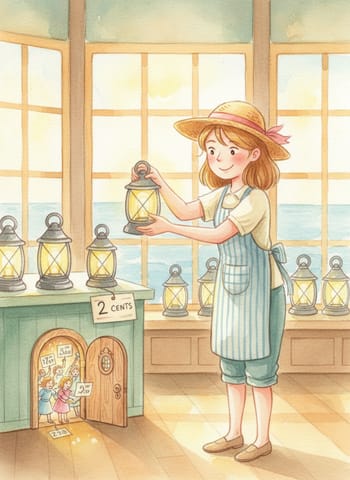
The gift shop sat at the bottom of the lighthouse, with its back against the tower wall. Mika had worked there for exactly four days. She knew where the postcards lived, and she knew how to wrap a glass boat in paper. She did not yet know why the shop had such a small door.
礼品店开在灯塔的底层,背靠着塔墙。米卡在这里干了整整四天。她知道明信片放在哪儿,也会用纸把玻璃小船包好。可她还不明白,这家店为什么会有一扇那么小的门。
It stood behind the postcard stand. The door was no higher than her shoulder, and it was painted the same blue as the sea. A brass key hung from a hook beside it. When she asked about it on her first day, the owner just laughed.
那扇门就在明信片架后面。门不比她的肩膀高,漆成和大海一样的蓝色。旁边的挂钩上挂着一把黄铜钥匙。第一天她问起这扇门时,店主只是笑了笑。
"That door goes to the old oil cellar," the owner said. "Behind it, there is a short stair up to the tower. It was made for the lamp boys, a hundred years ago. We keep it shut because only a child can use it."
“那扇门通向旧油窖,”店主说,“油窖后面有一道短短的楼梯,通到塔上。一百年前是给点灯的小伙计们造的。我们一直把它关着,因为只有小孩子才进得去。”
Mirza, who had worked in the shop for two summers, told her the rest. "She also keeps notes in there," he whispered. "Nobody knows what kind. Don't ask."
在店里干了两个夏天的米尔扎把剩下的告诉了她。“她还在里面存着一些字条,”他低声说,“没人知道是什么样的字条。别问。”
On Friday morning, the owner left for the mainland to collect a delivery. She gave them a long list and a short speech. "The new lanterns arrive today. They go on the front shelf, and each one costs fourteen pounds. Mika, you make the price tags. Mirza, you are in charge of the till. Please do not burn the place down."
星期五早上,店主去大陆取货。她留给他们一张长长的清单和一段简短的叮嘱。“新灯笼今天到。它们摆在前面的架子上,每个十四英镑。米卡,你来做价签。米尔扎,你管收银台。请别把这地方烧了。”
The lanterns were beautiful. They were made of wood and coloured glass. Each one had a tiny white tower painted by hand. Mika unpacked them carefully, one by one. She lined them up on the front shelf, where the morning light made the glass glow like sweets.
那些灯笼很漂亮。它们用木头和彩色玻璃做成。每一个上面都有一座手绘的小白塔。米卡小心翼翼地把它们一个个拆开,在前面的架子上排成一排,晨光里,玻璃亮得像糖果。
Then she sat at the counter with a pen and a pile of little paper tags. She wrote the price on the first one and then the second. She felt proud of her neat numbers. The shop was quiet, the sea was blue, and nothing could go wrong on a day like this.
然后她坐在柜台前,拿着笔和一叠小纸签。她在第一张上写了价钱,又写了第二张。她为自己工整的数字感到骄傲。店里很安静,大海一片蔚蓝,在这样的日子里,什么都不会出错。
At noon, a tour group came in from the tower path. They were laughing and tired from the wind, and they wanted something to take home. Mirza stood at the till, and Mika wrapped. Within an hour, six of the new lanterns left the shelf. The people thanked her warmly.
中午,一个旅行团从塔边的小路走了进来。他们笑着,被风吹得有些累,想带点东西回家。米尔扎站在收银台后面,米卡负责包装。不到一个小时,就有六个新灯笼离开了架子。人们热情地向她道谢。
At two o'clock, the shop was empty again. Mirza opened the till and started to count. He counted once and frowned. He counted again, slowly, and his frown became a long silence. Then he walked over to the shelf and picked up one of the remaining tags.
两点钟,店里又空了。米尔扎打开收银抽屉,开始数钱。他数了一遍,皱起眉头。他又慢慢数了一遍,皱起的眉头变成了一阵长长的沉默。然后他走到架子旁,拿起一张剩下的价签。
"Mika," he said. "Come here, please."
“米卡,”他说,“请过来一下。”
She came over, wiping her hands on her apron. Mirza held the tag out to her. On the little piece of paper, in her own neat handwriting, it said four pounds.
她一边在围裙上擦手,一边走过来。米尔扎把价签递给她。在那张小纸片上,她自己工整的笔迹写着:四英镑。
"It should be fourteen," Mirza said. "You forgot the one."
“应该是十四英镑,”米尔扎说,“你漏了个‘十’。”
Mika stared at the number. Her stomach felt like a stone. Then she looked at the shelf and counted the gaps. "Six lanterns," she whispered. "I sold six lanterns for four pounds each. That is sixty pounds the shop has lost."
米卡盯着那个数字。她觉得胃里像压了块石头。然后她看看架子,数了数空出来的位置。“六个灯笼,”她低声说,“我把六个灯笼都按四英镑一个卖了。店里亏了六十英镑。”
"Don't panic yet," said Mirza. He looked at the clock. "The tour group climbed the tower at half past one. The tour is forty-five minutes. Then they walk straight down the cliff path to their boat."
“先别慌,”米尔扎说。他看了看钟。“旅行团一点半上了塔。参观要四十五分钟。然后他们会沿着悬崖小路直接走下去上船。”
"So they are still up there."
“这么说他们还在上面。”
"Almost certainly." Mirza picked up a pen. "Write down what you remember. Who bought a lantern? What did they look like?"
“差不多肯定。”米尔扎拿起一支笔。“把你记得的写下来。谁买了灯笼?他们长什么样?”
Mika closed her eyes. She saw a woman with a yellow scarf and a young man with a camera. She saw a boy holding a toy dog. She saw two women in matching blue coats, and a tall older man with a walking stick. She wrote them all down. The list was clear.
米卡闭上眼睛。她看见一位围黄围巾的女士,一个拿相机的年轻人。她看见一个抱着玩具狗的男孩。她看见两位穿着同款蓝大衣的女士,还有一位拄拐杖的高个子老先生。她把他们全写了下来。名单很清楚。
There was only one problem. The tower stairs were narrow, with a rope across the bottom. Mirza was the only person who could stand by the till. Mika would need to climb two hundred steps to meet the group. The guide would stop her at the rope.
只有一个问题。塔里的楼梯很窄,底下还拦着一道绳子。米尔扎是唯一能守在收银台的人。米卡得爬上两百级台阶才能追上旅行团。导游会在绳子那儿拦住她。
Mika turned slowly and looked at the little blue door.
米卡慢慢转过身,看着那扇蓝色的小门。
"No," said Mirza at once. "The owner said never. She said it twice."
“不行,”米尔扎马上说,“店主说过绝对不行。她说了两遍。”
"She said it is only for children," Mika said. "I am small. I am nearly a child." She took the brass key off the hook. "The stair goes to the first balcony. The group stops there for photographs. Mirza, I will be back in ten minutes."
“她说这只是给孩子用的,”米卡说,“我个子小。我差不多就是个孩子。”她把黄铜钥匙从挂钩上取了下来。“楼梯通到第一层阳台。旅行团会在那儿停下来拍照。米尔扎,我十分钟就回来。”
She had to kneel to go in. The door opened onto a dark, cold space that smelled of old oil and dust. A narrow stone stair curled upward in front of her. She climbed with her hands on the walls. Somewhere above, she heard voices.
她得跪下才能进去。门开向一个又黑又冷的空间,里面有旧油和灰尘的气味。一道狭窄的石头楼梯在她面前盘旋而上。她双手扶着墙往上爬。头顶某处,她听到了说话声。
At the top, a second little door opened into the light. Mika crawled out onto the balcony and stood up. Twelve people turned to stare at her. The guide opened his mouth, but she was faster.
到了顶上,第二扇小门开向亮处。米卡爬到阳台上,站了起来。十二个人都转过头来盯着她。导游张开了嘴,可她比他先开了口。
"Excuse me," she said. "I am so sorry. I work in the shop at the bottom. I made a big mistake with the price of the lanterns, and I need to tell you."
“打扰一下,”她说,“真对不起。我在底下那家店工作。我把灯笼的价钱弄错了,大错特错,我得告诉你们。”
Nobody said anything. Then the woman with the yellow scarf started to laugh. "You came up through the wall to tell us the price of a lantern?"
没人说话。然后,围黄围巾的女士笑了起来。“你从墙里钻出来,就为了告诉我们一个灯笼的价钱?”
"Yes," Mika said. "It should be fourteen pounds, not four. If you can pay the difference at the shop, I will be very grateful. If you cannot, you can give the lantern back and I will return your money."
“是的,”米卡说,“应该是十四英镑,不是四英镑。如果你们能到店里补上差价,我会非常感激。如果不行,你们可以把灯笼还回来,我把钱退给你们。”
She waited for the shouting. Instead, the boy with the toy dog said, "She was brave." The others laughed and nodded.
她等着挨骂。可是,那个抱着玩具狗的男孩说:“她好勇敢。”其他人笑着点了点头。
Back in the shop, the line was long, and everyone was friendly. Five of the people paid the ten extra pounds with a smile. They said the lanterns were worth it. Nobody had ever climbed a wall to be honest with them before. The woman with the yellow scarf gave Mika an extra coin for her courage.
回到店里,队伍排得很长,每个人都很友善。其中五个人笑着补了十英镑。他们说这灯笼值这个价。以前从没有人爬过一堵墙,就为了对他们诚实。围黄围巾的女士为了奖励米卡的勇气,还多给了她一枚硬币。
The last buyer was the tall man with the walking stick. He turned the lantern in his hands and sighed. "It is lovely," he said. "But I am a retired man, and fourteen pounds is more than I planned. May I return it?"
最后一位买主是那位拄拐杖的高个子老先生。他把灯笼在手里转了转,叹了口气。“真可爱,”他说,“可我是个退休的人,十四英镑比我预算的多。我可以退掉吗?”
"Of course," said Mika. She gave him his four pounds. Mirza put the lantern back on the shelf. She wrote a brand new tag with a clear, careful fourteen. She checked it three times.
“当然可以,”米卡说。她把他的四英镑还给了他。米尔扎把灯笼放回了架子。她写了一张崭新的价签,上面是清清楚楚、认认真真的十四。她检查了三遍。
The owner returned at five o'clock with a van full of boxes. She listened to the whole story with her arms crossed. At the end, she looked at the little blue door. Then she looked at the key in Mika's hand.
店主五点回来,货车里装满了箱子。她抱着胳膊,把整件事听完了。最后,她看了看那扇蓝色的小门,又看了看米卡手里的钥匙。
"The money is all here," she said slowly. "And the door was not locked for half an hour."
“钱都在这儿,”她慢慢地说,“可是那扇门有半个小时没锁。”
"I am sorry," Mika said. "I will put a note inside."
“对不起,”米卡说,“我会在里面放一张字条。”
"A note?" said the owner.
“字条?”店主说。
Mirza coughed. "She means in the door. The notes."
米尔扎咳嗽了一声。“她是说放进那扇门里。那些字条。”
The owner smiled for the first time that day. She took the key and opened the little door wide. Inside, on the first step, lay a huge heap of folded paper. Hundreds of pieces, yellow and soft with age. "Thirty years of my own mistakes," she said. "Every one of them goes in here. Now you have your first."
这一天里,店主头一回笑了。她拿过钥匙,把小门完全打开。里面第一级台阶上,堆着一大堆折起来的纸。有几百张,泛黄,因年代久远而变得柔软。“这是我三十年来犯的错,”她说,“每一个都放在这里。现在,你也有了第一个。”
Mika wrote four short lines, folded the paper twice and pushed it carefully onto the pile. Then she looked up. "Is there still room?"
米卡写了四行短短的字,把纸折了两折,小心翼翼地推到那堆纸上。然后她抬起头。“还有地方吗?”
"Barely," said the owner. "But yours will keep the others company."
“勉强够,”店主说,“不过你的会陪着其他的作伴。”
Mirza leaned against the postcard stand. "So that is why the door is so small," he said. "It was never too small for people. It was too small for all her mistakes."
米尔扎靠在明信片架上。“原来这就是门这么小的缘故,”他说,“它从来不是对人太小,而是对她所有的错误太小。”