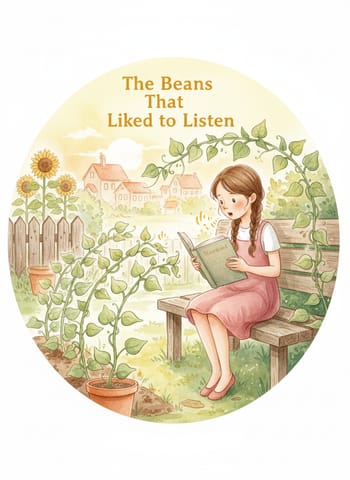
The Beans That Liked to Listen
Uma história gratuita em inglês de nível A1 para estudantes, para ler online em 7 idiomas, com opção de ouvir no app gratuito Storyteller.
A shy girl reads aloud to the weak bean plants in the school garden, and they grow toward her voice.
Essa foi a prévia! Ouça a história completa no app gratuito Storyteller. Baixar o app
O áudio não está disponível no momento.
In April, the school garden was in trouble. The soil was dry. The bean plants were thin and pale. The class watered them every day. Nothing changed.
Em abril, a horta da escola estava com problemas. A terra estava seca. Os pés de feijão estavam finos e pálidos. A turma os regava todos os dias. Nada mudava.
Uma looked after the beans on Tuesdays. She was twelve, and she was shy. In class, she never raised her hand. When the teacher asked her to read, her voice shook.
Uma cuidava dos feijões às terças-feiras. Ela tinha doze anos e era tímida. Na aula, nunca levantava a mão. Quando a professora pedia que ela lesse, sua voz tremia.
One Tuesday after school, she went to the garden alone. The sun was low. The beans leaned to one side.
Numa terça-feira depois da aula, ela foi sozinha até a horta. O sol estava baixo. Os feijões se inclinavam para um lado.
"I am sorry," she said to them. "I do not know how to help."
"Desculpem", disse ela às plantas. "Eu não sei como ajudar vocês."
She sat down on the grass. She had a book in her bag. It was a story about a fox and a boat. She took it out and began to read, very quietly. She read to the beans because nobody else was there.
Ela se sentou na grama. Tinha um livro na mochila. Era uma história sobre uma raposa e um barco. Ela o tirou da mochila e começou a ler, bem baixinho. Leu para os feijões porque não havia mais ninguém ali.
At first, her voice was small. But the garden was calm. The beans did not laugh. Her voice grew stronger. She read the whole first chapter.
No começo, sua voz era pequena. Mas a horta estava calma. Os feijões não riram. Sua voz foi ficando mais forte. Ela leu o primeiro capítulo inteiro.
When she stood up, she felt a little better. She took her bag and went home.
Quando se levantou, sentia-se um pouco melhor. Pegou a mochila e foi para casa.
The next Tuesday, she came back. The beans were taller. Not much, but she saw it. She looked at the one next to the fence. It was a full hand higher.
Na terça-feira seguinte, ela voltou. Os feijões estavam mais altos. Não muito, mas ela percebeu. Olhou para o que ficava perto da cerca. Estava uma mão inteira mais alto.
"That is strange," she said. She touched a leaf. It was green and soft.
"Que estranho", disse ela. Tocou numa folha. Era verde e macia.
Uma read to them again. This time, she read two chapters. Her voice moved up and down with the story. When the fox spoke, her voice went low and slow.
Uma leu para eles de novo. Desta vez, leu dois capítulos. Sua voz subia e descia com a história. Quando a raposa falava, sua voz ficava grave e lenta.
In May, the beans grew as tall as her knee. Small white flowers opened on every plant.
Em maio, os feijões cresceram até a altura do joelho dela. Pequenas flores brancas se abriram em todas as plantas.
Bruno, a boy from her class, saw her one afternoon. He walked past the fence with a ball. He stopped.
Bruno, um menino da turma dela, a viu numa tarde. Ele passava pela cerca com uma bola. Parou.
"Are you talking to the plants?" he asked.
"Você está falando com as plantas?", perguntou.
Uma jumped. Her face went hot. "No," she said. "I mean, yes. I read to them."
Uma levou um susto. Seu rosto ficou quente. "Não", disse ela. "Quer dizer, sim. Eu leio para elas."
Bruno laughed, but not in a mean way. "That is silly," he said. "Plants do not hear."
Bruno riu, mas sem maldade. "Que bobagem", disse ele. "Plantas não ouvem."
"These do," Uma said. She pointed. "Look."
"Estas ouvem", disse Uma. Ela apontou. "Olhe."
She opened the book. She read one line, loud and clear. Slowly, the beans leaned toward her like children. A small green leaf turned in her direction.
Ela abriu o livro. Leu uma frase, em voz alta e clara. Devagar, os feijões se inclinaram na direção dela como crianças. Uma folhinha verde virou para o lado dela.
Bruno's mouth opened. He dropped the ball. It rolled across the grass. Neither of them moved.
A boca de Bruno se abriu. Ele deixou a bola cair. Ela rolou pela grama. Nenhum dos dois se mexeu.
"They like it," he said at last.
"Elas gostam", disse ele por fim.
"I think they like my voice," Uma said.
"Acho que elas gostam da minha voz", disse Uma.
"You have a lot of listeners," Bruno said. He smiled. "You should read to the class too."
"Você tem muitos ouvintes", disse Bruno. Ele sorriu. "Você devia ler para a turma também."
"I cannot," said Uma. "I am afraid."
"Não consigo", disse Uma. "Tenho medo."
"The beans are not afraid. You read to them every week."
"Os feijões não têm medo. Você lê para eles toda semana."
She thought about it. That night, she wrote a list of her reading days. She counted nine. Nine times she read without fear.
Ela pensou no assunto. Naquela noite, escreveu uma lista dos seus dias de leitura. Contou nove. Nove vezes ela leu sem medo.
On Open Day, parents came to see the garden. The beans stood tall and full. Families took photos. The teacher asked if someone wanted to speak.
No Dia de Portas Abertas, os pais vieram ver a horta. Os feijões estavam altos e cheios. As famílias tiravam fotos. A professora perguntou se alguém queria falar.
Nobody spoke. Then Uma lifted her hand.
Ninguém falou. Então Uma levantou a mão.
She stood in front of the beans with her book. She took a long breath and began to read. Her voice was clear. The crowd grew quiet. The beans turned slowly toward her, and everyone saw it.
Ela ficou em frente aos feijões com o livro. Respirou fundo e começou a ler. Sua voz estava clara. A multidão ficou em silêncio. Os feijões se viraram devagar na direção dela, e todos viram.
When she finished, Uma closed the book. Then she bowed to the plants.
Quando terminou, Uma fechou o livro. Depois fez uma reverência para as plantas.