The Hill with No Name
Una historia gratuita en inglés de nivel A1 para estudiantes, para leer en línea en 7 idiomas, con opción de escucharla en la app gratuita Storyteller.
Two friends climb the one hill near their village that has no name on the map and give it one.
¡Ese fue el avance! Escucha la historia completa en la app gratuita Storyteller. Descargar la app
El audio no está disponible en este momento.
Mira and Luka lived in a small village. Behind the village there was a hill. It was green and round. On the town map, it had no name.
Mira y Luka vivían en un pueblo pequeño. Detrás del pueblo había una colina. Era verde y redonda. En el mapa del pueblo, no tenía nombre.
One evening Mira looked at the map. "Every hill has a name," she said. "Except this one."
Una tarde, Mira miró el mapa. «Todas las colinas tienen nombre», dijo. «Menos esta».
"Maybe nobody climbs it," said Luka.
«Quizá nadie la sube», dijo Luka.
"Then we will," said Mira. "On Saturday. We will find a name for it."
«Entonces la subiremos nosotros», dijo Mira. «El sábado. Le encontraremos un nombre».
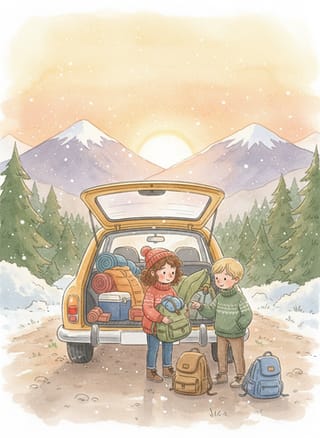
On Saturday they met at seven o'clock. The air was cool. Mira had a backpack. Inside were four sandwiches and two apples. There was also a bottle of water. Luka had a notebook and a pen. He also had an empty jar.
El sábado se encontraron a las siete. El aire estaba fresco. Mira llevaba una mochila. Adentro había cuatro sándwiches y dos manzanas. También había una botella de agua. Luka llevaba un cuaderno y una pluma. También llevaba un frasco vacío.
"Why do you have a jar?" asked Mira.
«¿Para qué es el frasco?», preguntó Mira.
"You will see," said Luka.
«Ya verás», dijo Luka.
They walked along a dirt road. Cows watched them from a field. Then the road became a path. The path went into the trees. It was dark and cool there. Birds sang above them.
Caminaron por un camino de tierra. Las vacas los miraban desde un campo. Luego el camino se volvió un sendero. El sendero entraba en el bosque. Allí estaba oscuro y fresco. Los pájaros cantaban sobre ellos.
After an hour they came to a stream. The water was clear and cold. A line of flat stones went across it.
Después de una hora llegaron a un arroyo. El agua era clara y fría. Una fila de piedras planas lo cruzaba.
"I go first," said Luka. He stepped on the first stone. It moved a little. He jumped to the next stone. Then he jumped again. At the last stone, his foot slipped. One shoe went into the water.
«Yo voy primero», dijo Luka. Pisó la primera piedra. Se movió un poco. Saltó a la siguiente piedra. Luego volvió a saltar. En la última piedra, se le resbaló el pie. Un zapato cayó al agua.
"Cold!" he shouted.
«¡Qué fría!», gritó.
Mira laughed. "Sit down," she said. "Your shoe will dry in the sun."
Mira se rio. «Siéntate», dijo. «Tu zapato se secará al sol».
They ate an apple on the grass. Luka's shoe made a small wet noise when he moved. After ten minutes they went on.
Se comieron una manzana en el pasto. El zapato de Luka hacía un pequeño ruido mojado cuando se movía. Después de diez minutos siguieron adelante.
The path became steep. The trees ended. Now there was only grass and rock. The wind was strong. Mira used her hands to climb the hard parts. Luka came behind her.
El sendero se volvió empinado. Los árboles se acabaron. Ahora solo había pasto y roca. El viento era fuerte. Mira usaba las manos para subir las partes difíciles. Luka venía detrás de ella.
"How much farther?" asked Luka.
«¿Cuánto falta?», preguntó Luka.
"I do not know," said Mira. "But we are higher than the church now."
«No sé», dijo Mira. «Pero ya estamos más arriba que la iglesia».
She was right. When she looked back, the church was small. The houses looked like toys.
Tenía razón. Cuando miró hacia atrás, la iglesia se veía pequeña. Las casas parecían juguetes.
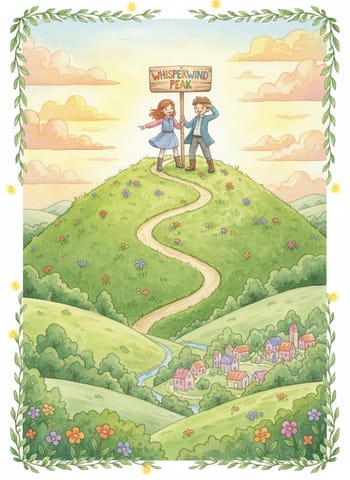
At last the ground became flat. They were at the top. Mira put her hands on her knees. Luka sat down and laughed.
Por fin el terreno se aplanó. Habían llegado a la cima. Mira apoyó las manos en las rodillas. Luka se sentó y se rio.
From the top they could see everything. They saw the village and the river. They saw the long white road. They saw cows like tiny dots. Far away, a train moved slowly across the valley.
Desde la cima podían verlo todo. Veían el pueblo y el río. Veían el largo camino blanco. Veían las vacas como puntitos. A lo lejos, un tren cruzaba lentamente el valle.
"It is beautiful," said Mira.
«Es hermoso», dijo Mira.
"It is very high," said Luka. "And my shoe is still wet."
«Es muy alto», dijo Luka. «Y mi zapato sigue mojado».
They ate their sandwiches in the wind. The bread tasted better than at home.
Se comieron los sándwiches con el viento. El pan sabía mejor que en casa.
"Now we need a name," said Mira.
«Ahora necesitamos un nombre», dijo Mira.
"What is the best thing about this hill?" asked Luka.
«¿Qué es lo mejor de esta colina?», preguntó Luka.
Mira thought. "The sandwiches," she said.
Mira pensó. «Los sándwiches», dijo.
"Sandwich Hill," said Luka. He wrote it in the notebook. "It is a good name."
«Colina Sándwich», dijo Luka. Lo escribió en el cuaderno. «Es un buen nombre».
"It is a silly name," said Mira. "I like it."
«Es un nombre tonto», dijo Mira. «Me gusta».
Luka tore a page from the notebook. He wrote, "This is Sandwich Hill. Mira and Luka climbed it on Saturday." He folded the paper. He put it in the jar. He closed the lid.
Luka arrancó una hoja del cuaderno. Escribió: «Esta es la Colina Sándwich. Mira y Luka la subieron un sábado». Dobló el papel. Lo metió en el frasco. Cerró la tapa.
They built a small pile of stones at the top. They put the jar inside the pile. The wind could not take it.
Armaron un pequeño montón de piedras en la cima. Pusieron el frasco dentro del montón. El viento no podría llevárselo.
Then they walked down the hill. The way back felt much shorter.
Luego bajaron la colina. El camino de regreso se sintió mucho más corto.
The next Saturday, Mira went up the hill again, alone. She wanted to see the view one more time. She went to the pile of stones and looked inside.
El sábado siguiente, Mira volvió a subir la colina, sola. Quería ver el paisaje una vez más. Fue hasta el montón de piedras y miró adentro.
The jar was still there. Under their paper there was a new one. The handwriting was small and neat.
El frasco seguía ahí. Debajo de su papel había otro nuevo. La letra era pequeña y ordenada.
It said, "Good name. I will bring a sandwich next week."
Decía: «Buen nombre. La próxima semana traeré un sándwich».