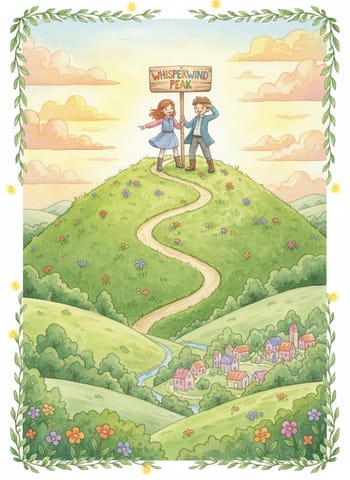
Mira and Luka lived in a small village. Behind the village there was a hill. It was green and round. On the town map, it had no name.
米拉和卢卡住在一个小村庄里。村子后面有一座山丘,绿绿的、圆圆的。在镇上的地图上,它没有名字。
One evening Mira looked at the map. "Every hill has a name," she said. "Except this one."
一天傍晚,米拉看着地图。“每座山都有名字,”她说,“只有这座没有。”
"Maybe nobody climbs it," said Luka.
“也许没人爬过它,”卢卡说。
"Then we will," said Mira. "On Saturday. We will find a name for it."
“那我们就去爬,”米拉说,“星期六去。我们给它找个名字。”
On Saturday they met at seven o'clock. The air was cool. Mira had a backpack. Inside were four sandwiches and two apples. There was also a bottle of water. Luka had a notebook and a pen. He also had an empty jar.
星期六,他们七点钟碰了面。空气凉凉的。米拉背着背包,里面有四个三明治、两个苹果,还有一瓶水。卢卡带了一个笔记本和一支笔,还有一个空罐子。
"Why do you have a jar?" asked Mira.
“你带罐子干什么?”米拉问。
"You will see," said Luka.
“你会看到的,”卢卡说。
They walked along a dirt road. Cows watched them from a field. Then the road became a path. The path went into the trees. It was dark and cool there. Birds sang above them.
他们沿着一条土路走。奶牛在田野里望着他们。后来土路变成了小径,小径通进了树林。林子里又暗又凉,鸟儿在头顶唱歌。
After an hour they came to a stream. The water was clear and cold. A line of flat stones went across it.
走了一个小时,他们来到一条小溪边。溪水清清凉凉的,一排平平的石头横过溪面。
"I go first," said Luka. He stepped on the first stone. It moved a little. He jumped to the next stone. Then he jumped again. At the last stone, his foot slipped. One shoe went into the water.
“我先走,”卢卡说。他踩上第一块石头,石头晃了一下。他跳到下一块,又跳了一次。到最后一块石头时,他的脚一滑,一只鞋掉进了水里。
"Cold!" he shouted.
“好冷!”他大喊。
Mira laughed. "Sit down," she said. "Your shoe will dry in the sun."
米拉笑了。“坐下吧,”她说,“你的鞋晒晒太阳就干了。”
They ate an apple on the grass. Luka's shoe made a small wet noise when he moved. After ten minutes they went on.
他们坐在草地上吃了一个苹果。卢卡一动,鞋子就发出一点湿湿的声音。十分钟后,他们继续往前走。
The path became steep. The trees ended. Now there was only grass and rock. The wind was strong. Mira used her hands to climb the hard parts. Luka came behind her.
小路变陡了,树林也到头了,只剩下草和石头。风很大。遇到难爬的地方,米拉就手脚并用,卢卡跟在她后面。
"How much farther?" asked Luka.
“还有多远?”卢卡问。
"I do not know," said Mira. "But we are higher than the church now."
“我不知道,”米拉说,“不过我们已经比教堂高了。”
She was right. When she looked back, the church was small. The houses looked like toys.
她说得没错。回头一看,教堂变得很小,房子像玩具一样。
At last the ground became flat. They were at the top. Mira put her hands on her knees. Luka sat down and laughed.
终于,地面变平了,他们到了山顶。米拉双手撑着膝盖,卢卡坐下来笑了。
From the top they could see everything. They saw the village and the river. They saw the long white road. They saw cows like tiny dots. Far away, a train moved slowly across the valley.
从山顶上可以看到一切。他们看到了村庄和河流,看到了长长的白色公路,看到了像小点一样的奶牛。远处,一列火车慢慢驶过山谷。
"It is beautiful," said Mira.
“真美,”米拉说。
"It is very high," said Luka. "And my shoe is still wet."
“真高,”卢卡说,“而且我的鞋还是湿的。”
They ate their sandwiches in the wind. The bread tasted better than at home.
他们在风中吃了三明治。面包吃起来比在家里香多了。
"Now we need a name," said Mira.
“现在我们需要一个名字,”米拉说。
"What is the best thing about this hill?" asked Luka.
“这座山最好的地方是什么?”卢卡问。
Mira thought. "The sandwiches," she said.
米拉想了想。“三明治,”她说。
"Sandwich Hill," said Luka. He wrote it in the notebook. "It is a good name."
“三明治山,”卢卡说。他把它写进了笔记本。“这名字不错。”
"It is a silly name," said Mira. "I like it."
“这名字太傻了,”米拉说,“可我喜欢。”
Luka tore a page from the notebook. He wrote, "This is Sandwich Hill. Mira and Luka climbed it on Saturday." He folded the paper. He put it in the jar. He closed the lid.
卢卡从笔记本上撕下一页,写道:“这里是三明治山。米拉和卢卡星期六爬上了它。”他把纸折好,放进罐子,盖上了盖子。
They built a small pile of stones at the top. They put the jar inside the pile. The wind could not take it.
他们在山顶垒了一小堆石头,把罐子放进石堆里,这样风就带不走它了。
Then they walked down the hill. The way back felt much shorter.
然后他们走下山。回去的路感觉短多了。
The next Saturday, Mira went up the hill again, alone. She wanted to see the view one more time. She went to the pile of stones and looked inside.
下一个星期六,米拉一个人又上了山。她想再看一次风景。她走到石堆旁,朝里面看了看。
The jar was still there. Under their paper there was a new one. The handwriting was small and neat.
罐子还在那儿。在他们那张纸的下面,多了一张新的,字迹小小的,很工整。
It said, "Good name. I will bring a sandwich next week."
上面写着:“好名字。我下周会带一个三明治来。”