The Drip on the Letter O
Una historia gratuita en inglés de nivel A1 para estudiantes, para leer en línea en 7 idiomas, con opción de escucharla en la app gratuita Storyteller.
A sign painter's helper paints her first shop sign alone, and a drip of black paint almost spoils it.
¡Ese fue el avance! Escucha la historia completa en la app gratuita Storyteller. Descargar la app
El audio no está disponible en este momento.
Lise worked for a sign painter named Bertil. Their small shop stood on a busy street. Every morning, Bertil mixed the paint. Every morning, Lise washed the brushes.
Lise trabajaba para un pintor de letreros llamado Bertil. Su pequeño taller estaba en una calle concurrida. Todas las mañanas, Bertil mezclaba la pintura. Todas las mañanas, Lise lavaba los pinceles.
She was new, and she wanted to paint. But for three months, she only cleaned.
Era nueva y quería pintar. Pero durante tres meses solo había limpiado.
One Monday, Bertil looked at his sore wrist. He put down his brush.
Un lunes, Bertil se miró la muñeca dolorida. Dejó el pincel.
"I have a job at the shoe shop," he said. "Henrik wants a new sign. I cannot hold the brush today."
«Tengo un trabajo en la zapatería», dijo. «Henrik quiere un letrero nuevo. Hoy no puedo sostener el pincel».
"Who paints it?" Lise asked.
«¿Quién lo pinta?», preguntó Lise.
"You do," Bertil said.
«Tú», dijo Bertil.
Lise looked at him. "Me? Alone?"
Lise lo miró. «¿Yo? ¿Sola?».
"You know the letters. You watched me for months."
«Conoces las letras. Me viste trabajar durante meses».
"I only watched," she said.
«Solo miraba», dijo ella.
"Then now you paint," Bertil said. He gave her a ruler and a pencil. He gave her black paint.
«Pues ahora pintas», dijo Bertil. Le dio una regla y un lápiz. Le dio pintura negra.
Lise walked to the shoe shop. Henrik stood at the door. He was a tall man with kind, tired eyes. Above him hung the old sign. The paint was gone.
Lise caminó hasta la zapatería. Henrik estaba en la puerta. Era un hombre alto, de ojos amables y cansados. Sobre él colgaba el letrero viejo. La pintura se había borrado.
"Where is Bertil?" Henrik asked.
«¿Dónde está Bertil?», preguntó Henrik.
"His wrist hurts. I am Lise. I paint your sign."
«Le duele la muñeca. Soy Lise. Yo pinto su letrero».
Henrik looked at her hands. Then he nodded. "Please begin. I have shoes to fix."
Henrik le miró las manos. Luego asintió. «Empiece, por favor. Tengo zapatos que arreglar».
Lise drew the letters in pencil first. She measured each one with the ruler. Her hand was slow, but the lines were straight. People stopped and watched her. A boy said, "She is good."
Lise dibujó primero las letras a lápiz. Midió cada una con la regla. Su mano era lenta, pero las líneas quedaron rectas. La gente se detenía a mirarla. Un niño dijo: «Es buena».
Then she took the brush. She painted H. She painted E. She painted N. The black paint was smooth and bright.
Luego tomó el pincel. Pintó la H. Pintó la E. Pintó la N. La pintura negra era lisa y brillante.
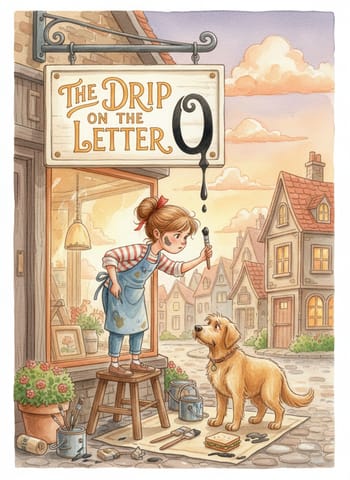
In SHOES, she painted a big round O. She was almost done. Then a drop of paint fell from the brush. It ran down the white board. It made a long black line under the O.
En SHOES pintó una O grande y redonda. Casi había terminado. Entonces una gota de pintura cayó del pincel. Corrió por el tablero blanco. Dejó una larga línea negra debajo de la O.
Lise stopped. Her face went hot.
Lise se detuvo. Se le encendió la cara.
"No," she whispered. She wanted to wash it off. But the paint was already dry at the edges.
«No», susurró. Quiso lavarla. Pero la pintura ya estaba seca en los bordes.
Henrik came out of his shop. He looked at the sign. He did not speak.
Henrik salió de su tienda. Miró el letrero. No dijo nada.
"I am sorry," Lise said. "I paint the whole board again."
«Lo siento», dijo Lise. «Pinto todo el tablero otra vez».
"That takes all day," Henrik said.
«Eso tomaría todo el día», dijo Henrik.
"Yes."
«Sí».
"Wait," said a voice behind her. It was Bertil. He held his wrist in his other hand. "I walked here. I wanted to see."
«Espera», dijo una voz detrás de ella. Era Bertil. Se sujetaba la muñeca con la otra mano. «Vine caminando. Quería ver».
He looked at the long black line for a moment. Lise waited for him to be angry.
Miró un momento la larga línea negra. Lise esperó a que se enojara.
"Every painter makes a drip," he said. "I made one last week."
«Todos los pintores hacen un goteo», dijo. «Yo hice uno la semana pasada».
"What did you do?" she asked.
«¿Qué hizo?», preguntó ella.
"I looked at it. A drip is only a line. What can a line become?"
«Lo miré. Un goteo es solo una línea. ¿En qué puede convertirse una línea?».
Lise looked again. The line was thin and long. It had a small round end at the bottom.
Lise volvió a mirar. La línea era delgada y larga. Tenía un pequeño extremo redondo abajo.
"A shoelace," she said slowly.
«Una agujeta», dijo despacio.
"Maybe," Bertil said. "Paint it."
«Quizás», dijo Bertil. «Píntala».
Lise took the thinnest brush. She made the line curl to the left. Then she made a small loop. She added two short tips at the end. They looked like a real lace. The O became a shoe with a lace hanging down.
Lise tomó el pincel más fino. Hizo que la línea se curvara a la izquierda. Luego hizo un pequeño lazo. Añadió dos puntas cortas al final. Parecían una agujeta de verdad. La O se convirtió en un zapato con una agujeta colgando.
Nobody spoke. Henrik walked closer to the sign. He touched the air near the lace.
Nadie habló. Henrik se acercó al letrero. Tocó el aire junto a la agujeta.
"It looks like a loose shoe," he said. "That is my work. People bring me shoes with loose laces and holes."
«Parece un zapato desatado», dijo. «Ese es mi trabajo. La gente me trae zapatos con agujetas sueltas y agujeros».
"I can make it neater," Lise said.
«Puedo hacerlo más prolijo», dijo Lise.
"No," Henrik said. "Leave it."
«No», dijo Henrik. «Déjelo así».
Bertil smiled and gave her a small paper. It was his old list of paint colors. "Tomorrow you paint the bike shop," he said. "I hold the ladder."
Bertil sonrió y le dio un papelito. Era su vieja lista de colores de pintura. «Mañana pintas la tienda de bicicletas», dijo. «Yo sostengo la escalera».
Lise put the brush in the tin. Henrik hung the new sign above his door. Then he turned the card in his window. CLOSED became OPEN.
Lise puso el pincel en la lata. Henrik colgó el letrero nuevo sobre su puerta. Luego volteó el cartel de su ventana. CERRADO se convirtió en ABIERTO.