The Dog Who Barked at Gates
Una historia gratuita en inglés de nivel A1 para estudiantes, para leer en línea en 7 idiomas, con opción de escucharla en la app gratuita Storyteller.
A dog-walker chooses to spend one early week helping a frightened, difficult dog instead of dropping him.
¡Ese fue el avance! Escucha la historia completa en la app gratuita Storyteller. Descargar la app
El audio no está disponible en este momento.
Zuri walked dogs for her job. Every morning she took six dogs to the park. Five of them were easy. The sixth was Biko.
Zuri paseaba perros como trabajo. Todas las mañanas llevaba seis perros al parque. Cinco eran fáciles. El sexto era Biko.
Biko was a big brown dog. He pulled hard on his lead. He barked at bikes, at gates, and at birds. Last week he pulled Zuri onto the grass. Her knee hurt for two days.
Biko era un perro grande y café. Tiraba fuerte de la correa. Les ladraba a las bicicletas, a las rejas y a los pájaros. La semana pasada arrastró a Zuri hasta el pasto. La rodilla le dolió dos días.
On Monday, Marek asked Zuri to come to his office. Marek owned the dog company. He sat behind a small desk with a worried face.
El lunes, Marek le pidió a Zuri que fuera a su oficina. Marek era el dueño de la empresa de perros. Estaba sentado detrás de un escritorio pequeño, con cara de preocupación.
"Biko's owner sent me a message," Marek said. "She asks how he is."
«La dueña de Biko me mandó un mensaje», dijo Marek. «Pregunta cómo está».
"What do I tell her?" Zuri asked.
«¿Qué le digo?», preguntó Zuri.
"Tell her he is too hard," Marek said. "Then we stop. You get an easy job."
«Dile que es demasiado difícil», dijo Marek. «Entonces lo dejamos. Tú te quedas con un trabajo fácil».
Zuri did not answer. She thought about Biko at the park gate. His legs shook and his eyes were wide. He did not look bad to her. He looked afraid.
Zuri no respondió. Pensó en Biko en la reja del parque. Le temblaban las patas y tenía los ojos muy abiertos. A ella no le parecía un perro malo. Le parecía un perro asustado.
"Give me one week," she said. "I walk him alone, very early."
«Dame una semana», dijo. «Lo paseo yo sola, muy temprano».
Marek looked at her for a long time. "One week," he said. "Then you tell her the truth."
Marek la miró durante un buen rato. «Una semana», dijo. «Luego le dices la verdad».
That night, Zuri sat in her kitchen. She wrote a plan on a piece of paper. Go slow. Stay calm. Take cheese. She put the paper next to her keys.
Esa noche, Zuri se sentó en su cocina. Escribió un plan en un papel. Ir despacio. Mantener la calma. Llevar queso. Puso el papel junto a sus llaves.
On Tuesday, she came to Biko's house at six o'clock. The street was quiet. The park was empty. She put cheese in her pocket.
El martes llegó a la casa de Biko a las seis en punto. La calle estaba tranquila. El parque estaba vacío. Se guardó queso en el bolsillo.
Biko pulled at first. Zuri stopped and stood still. She did not shout. When the lead went loose, she gave him cheese. They walked ten steps. Then they stopped again.
Al principio Biko tiró de la correa. Zuri se detuvo y se quedó quieta. No gritó. Cuando la correa se aflojó, le dio queso. Caminaron diez pasos. Luego se detuvieron otra vez.
Her arm was sore and her coffee was cold. She wanted to go home. But Biko sat and looked at her, and she stayed.
Le dolía el brazo y su café estaba frío. Quería irse a casa. Pero Biko se sentó y la miró, y ella se quedó.
The five easy dogs waited at home. Their owners sent short, cross messages. Zuri walked them late that day. She did not like it. But she did not change her plan.
Los cinco perros fáciles esperaban en casa. Sus dueños mandaban mensajes cortos y molestos. Ese día Zuri los paseó tarde. No le gustó. Pero no cambió su plan.
On Wednesday, a boy rode past on a bike. Biko barked once. Zuri gave him cheese and said his name softly. He looked at her, not at the bike.
El miércoles pasó un niño en bicicleta. Biko ladró una sola vez. Zuri le dio queso y dijo su nombre con suavidad. Él la miró a ella, no a la bicicleta.
On Wednesday night, Marek called her. "Is it working?" he asked.
Esa noche, Marek la llamó. «¿Está funcionando?», preguntó.
"A little," Zuri said. "He is slow, but he tries."
«Un poco», dijo Zuri. «Es lento, pero se esfuerza».
"My other clients are cross," Marek said. "I need good news."
«Mis otros clientes están molestos», dijo Marek. «Necesito buenas noticias».
"You get it on Friday," she said.
«Las tendrás el viernes», dijo ella.
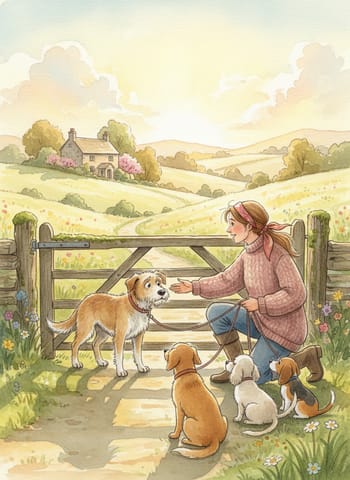
On Thursday, they walked to the gate. Biko stopped. His legs shook. Zuri sat down on the path beside him. She waited. After a minute, he sat down too. Then he walked through the gate with her.
El jueves caminaron hasta la reja. Biko se detuvo. Le temblaban las patas. Zuri se sentó en el camino a su lado. Esperó. Después de un minuto, él también se sentó. Luego cruzó la reja con ella.
On Friday, Biko walked next to her around the park. The lead stayed loose. He barked at one bird, and that was all.
El viernes, Biko caminó a su lado por todo el parque. La correa se mantuvo floja. Le ladró a un solo pájaro, y nada más.
At seven o'clock, Zuri sat on a bench. Biko put his big head on her shoe. She took out her phone and wrote to his owner.
A las siete, Zuri se sentó en una banca. Biko apoyó su cabezota en el zapato de ella. Sacó su teléfono y le escribió a la dueña.
"Biko is not a bad dog," she wrote. "He is afraid of noise. We walk early. He learns fast. Please let me keep him."
«Biko no es un perro malo», escribió. «Le tiene miedo al ruido. Paseamos temprano. Aprende rápido. Por favor, déjeme seguir con él».
She pressed the button to send it. Her hands shook a little. Then she called Marek.
Presionó el botón de enviar. Le temblaban un poco las manos. Luego llamó a Marek.
"Well?" he asked.
«¿Y bien?», preguntó él.
"I tell her the truth," Zuri said. "Biko stays on my list."
«Le digo la verdad», dijo Zuri. «Biko sigue en mi lista».
Marek laughed a little. "Then walk him on Monday," he said. "Same time."
Marek se rio un poco. «Entonces pásealo el lunes», dijo. «A la misma hora».
Zuri stood up and held the lead. Biko stood up too.
Zuri se puso de pie y tomó la correa. Biko también se levantó.
"Come on, Biko," she said. "We have five more dogs to meet."
«Vamos, Biko», dijo. «Todavía tenemos que conocer a otros cinco perros».