The Boat on the Drying Shelf
भाषा सीखने वालों के लिए स्तर A2 की एक मुफ़्त अंग्रेज़ी कहानी, जिसे 7 भाषाओं में ऑनलाइन पढ़ा जा सकता है और मुफ़्त Storyteller ऐप में सुना भी जा सकता है।
Bowls vanish from a pottery studio, and a girl answers the thief with a paper boat of her own.
झलक पूरी हुई! पूरी कहानी मुफ़्त Storyteller ऐप में सुनें। ऐप पाएँ
अभी ऑडियो उपलब्ध नहीं है।
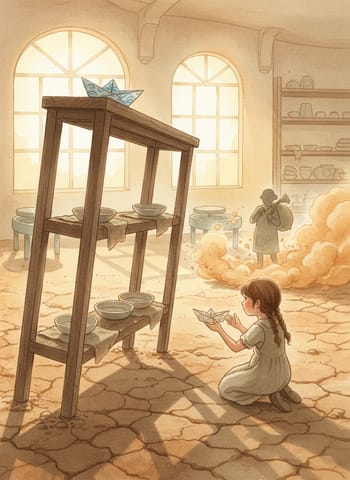
Tala loved the Thursday pottery class. The studio smelled of wet clay and warm stone. Long wooden shelves ran along one wall. On the shelves, the new bowls dried slowly.
टाला को गुरुवार की मिट्टी के बर्तनों की क्लास बहुत पसंद थी। स्टूडियो में गीली मिट्टी और गर्म पत्थर की महक रहती थी। एक दीवार के साथ लकड़ी की लंबी अलमारियाँ बनी थीं। उन अलमारियों पर नए कटोरे धीरे-धीरे सूखते थे।
Every student had a place on the shelf, with a name card. Tala's place was number nine. Una's place, next to hers, was number ten.
हर विद्यार्थी की अलमारी में एक जगह थी, जिस पर नाम का कार्ड लगा था। टाला की जगह नंबर नौ थी। उसके बग़ल में ऊना की जगह नंबर दस थी।
One Thursday, Tala came in and stopped at the door. Number nine was empty. Her blue bowl was gone. In its place sat a small paper boat.
एक गुरुवार टाला अंदर आई और दरवाज़े पर ही ठिठक गई। नंबर नौ ख़ाली था। उसका नीला कटोरा ग़ायब था। उसकी जगह काग़ज़ की एक छोटी-सी नाव रखी थी।
"Una," she said. "Where is my bowl?"
"ऊना," उसने कहा। "मेरा कटोरा कहाँ है?"
Una came over and looked at the shelf. "Maybe you put it somewhere else."
ऊना पास आई और अलमारी को देखने लगी। "शायद तुमने उसे कहीं और रख दिया हो।"
"I put it here. It took me two weeks to make it."
"मैंने उसे यहीं रखा था। उसे बनाने में मुझे दो हफ़्ते लगे थे।"
"Then somebody took it." Una picked up the boat. It was plain white paper, folded small, and it was dry. "And left this."
"तो किसी ने उसे ले लिया।" ऊना ने नाव उठा ली। वह सादे सफ़ेद काग़ज़ की थी, छोटी-सी तह की हुई, और सूखी थी। "और यह छोड़ गया।"
"Why does a thief leave a boat?"
"चोर नाव क्यों छोड़ जाएगा?"
"A very polite thief," said Una.
"एक बहुत शिष्ट चोर," ऊना ने कहा।
Tala did not laugh. She looked along the shelf. Nine other bowls sat in their places. Nothing else was missing. The door was locked every night. The instructor and the owner of the studio each had a key.
टाला नहीं हँसी। उसने अलमारी के साथ-साथ देखा। बाक़ी नौ कटोरे अपनी जगहों पर रखे थे। और कुछ भी ग़ायब नहीं था। दरवाज़े पर हर रात ताला लगता था। प्रशिक्षक और स्टूडियो के मालिक, दोनों के पास एक-एक चाबी थी।
"I want to know who did it," Tala said.
"मैं जानना चाहती हूँ कि यह किसने किया," टाला ने कहा।
"It is only a bowl."
"यह बस एक कटोरा है।"
"It is my bowl."
"यह मेरा कटोरा है।"
The next Thursday, another bowl vanished. This time it was a green cup. It belonged to the girl at number four. Again, a paper boat sat in its place. The studio buzzed with talk all evening.
अगले गुरुवार एक और कटोरा ग़ायब हो गया। इस बार वह एक हरा प्याला था। वह नंबर चार वाली लड़की का था। इस बार भी उसकी जगह काग़ज़ की एक नाव रखी थी। पूरी शाम स्टूडियो में इसी की चर्चा गूँजती रही।
Tala made a plan. She wanted to find footprints. All week, she thought about it. On Wednesday, she asked the instructor if she could stay late. She said she wanted to clean the shelves. The instructor agreed. Tala spread a thin layer of dry clay dust on the floor. She put it right under the shelf.
टाला ने एक योजना बनाई। वह पैरों के निशान ढूँढ़ना चाहती थी। पूरे हफ़्ते वह इसी के बारे में सोचती रही। बुधवार को उसने प्रशिक्षक से पूछा कि क्या वह देर तक रुक सकती है। उसने कहा कि वह अलमारियाँ साफ़ करना चाहती है। प्रशिक्षक मान गया। टाला ने फ़र्श पर सूखी मिट्टी के चूर्ण की एक पतली परत बिछा दी। उसने उसे ठीक अलमारी के नीचे बिछाया।
"If someone walks here, we will see the shoes," she told Una.
"अगर कोई यहाँ चलेगा, तो हमें जूतों के निशान दिख जाएँगे," उसने ऊना से कहा।
On Thursday morning, they came in together. The studio was quiet. Tala's new bowl, a small yellow one, was gone from number nine. A paper boat stood in its place.
गुरुवार सुबह वे साथ अंदर आईं। स्टूडियो शांत था। टाला का नया कटोरा, एक छोटा पीला कटोरा, नंबर नौ से ग़ायब था। उसकी जगह एक काग़ज़ की नाव खड़ी थी।
Tala looked at the floor. The dust was full of footprints. There were small ones and big ones. There were round marks from a broom. The instructor walked there every morning. So did the cleaner and two students who came early.
टाला ने फ़र्श की ओर देखा। चूर्ण पर निशानों की भरमार थी। छोटे निशान थे और बड़े निशान भी। झाड़ू के गोल निशान भी थे। प्रशिक्षक हर सुबह वहाँ चलता था। सफ़ाई करने वाला भी, और जल्दी आने वाले दो विद्यार्थी भी।
"That is no good," said Una.
"यह तो किसी काम का नहीं," ऊना ने कहा।
"I know." Tala frowned. "Everyone walks here. This plan was foolish."
"मुझे पता है।" टाला ने भौंहें सिकोड़ीं। "यहाँ सब चलते हैं। यह योजना बेवक़ूफ़ी थी।"
"It was a good idea. It just did not work."
"यह अच्छा विचार था। बस चला नहीं।"
Tala sat down on a stool. She held the third paper boat in her hands. "We looked at the floor. But the boats are the real message."
टाला एक स्टूल पर बैठ गई। उसने तीसरी काग़ज़ की नाव को हाथों में थाम रखा था। "हम फ़र्श देखते रहे। पर असली संदेश तो ये नावें हैं।"
"What do you mean?"
"तुम्हारा क्या मतलब है?"
"The thief does not hide. The thief leaves a boat each time. It is a note, like a letter." Tala turned the paper over and over. "So let us answer it."
"चोर छिपता नहीं है। चोर हर बार एक नाव छोड़ जाता है। यह एक नोट है, चिट्ठी की तरह।" टाला काग़ज़ को बार-बार पलटती रही। "तो चलो इसका जवाब देते हैं।"
Una's eyes grew bright. "You want to write to the thief?"
ऊना की आँखें चमक उठीं। "तुम चोर को लिखना चाहती हो?"
"Not write. Fold." Tala took a sheet of paper from her bag. She folded it carefully into a boat. It had the same shape as the others. Inside the boat, she wrote one small line in pencil. Where do my bowls go?
"लिखना नहीं। तह करना।" टाला ने अपने बैग से एक काग़ज़ निकाला। उसने उसे सावधानी से तह करके नाव बना दिया। उसका आकार बाक़ी नावों जैसा ही था। नाव के भीतर उसने पेंसिल से एक छोटी-सी पंक्ति लिखी। मेरे कटोरे कहाँ जाते हैं?
She put the boat on the shelf at number nine. Then she went home.
उसने नाव नंबर नौ वाली जगह पर रख दी। फिर वह घर चली गई।
On Friday, the studio was closed. On Saturday, too. Tala thought about it all weekend. Maybe nothing happened. Maybe the thief laughed at her.
शुक्रवार को स्टूडियो बंद था। शनिवार को भी। टाला पूरे सप्ताहांत इसी के बारे में सोचती रही। शायद कुछ हुआ ही नहीं। शायद चोर उस पर हँसा।
On Monday, the instructor opened the studio early for a special class. Tala was the first one in. She ran to the shelf.
सोमवार को प्रशिक्षक ने एक विशेष क्लास के लिए स्टूडियो जल्दी खोल दिया। टाला सबसे पहले अंदर पहुँची। वह दौड़कर अलमारी तक गई।
The boat was gone.
नाव ग़ायब थी।
In its place lay another boat, folded from the same white paper. It was smaller than the first. Tala opened it with shaking fingers. The pencil line read, Follow the water.
उसकी जगह एक और नाव रखी थी, उसी सफ़ेद काग़ज़ की बनी हुई। वह पहली वाली से छोटी थी। टाला ने काँपती उँगलियों से उसे खोला। पेंसिल की पंक्ति में लिखा था, पानी के पीछे-पीछे जाओ।
"Una!" Tala shouted, though Una was not there yet. "Una, come and see!"
"ऊना!" टाला चिल्लाई, हालाँकि ऊना अभी वहाँ नहीं थी। "ऊना, आकर देखो!"
Una arrived ten minutes later. She read the note twice. "Water," she said. "The sink?"
ऊना दस मिनट बाद पहुँची। उसने नोट दो बार पढ़ा। "पानी," उसने कहा। "सिंक?"
"The sink is in here. The note says follow it. Where does the water go?"
"सिंक तो यहीं है। नोट कहता है उसके पीछे-पीछे जाओ। पानी कहाँ जाता है?"
They went to the big sink at the back of the studio. A pipe ran from it along the wall. It went out through a small hole. They followed the pipe outside. It led to a narrow stream behind the building. The stream ran past an old stone wall. Then it went into green bushes.
वे स्टूडियो के पिछले हिस्से में बने बड़े सिंक के पास गईं। उससे एक पाइप दीवार के साथ-साथ जा रहा था। वह एक छोटे छेद से बाहर निकल जाता था। वे पाइप के पीछे-पीछे बाहर गईं। वह इमारत के पीछे एक संकरी धारा तक पहुँचता था। धारा एक पुरानी पत्थर की दीवार के पास से गुज़रती थी। फिर वह हरी झाड़ियों में चली जाती थी।
At the edge of the stream, Tala stopped.
धारा के किनारे पर टाला रुक गई।
On a flat rock, in a shallow pool, sat her blue bowl. It was full of clear water. A tiny bird stood on its edge and drank. Next to it sat the green cup and the yellow bowl. Each held a small paper boat that floated on the water.
एक चपटी चट्टान पर, छिछले पानी के गड्ढे में, उसका नीला कटोरा रखा था। वह साफ़ पानी से भरा था। एक नन्ही चिड़िया उसके किनारे पर खड़ी पानी पी रही थी। उसके पास हरा प्याला और पीला कटोरा रखे थे। हर एक में काग़ज़ की एक छोटी नाव पानी पर तैर रही थी।
"They are bird baths," Una whispered.
"ये तो चिड़ियों के नहाने के कटोरे हैं," ऊना फुसफुसाई।
"Someone set them here for the birds." Tala knelt beside the rock. The bowls were clean and bright. The birds did not seem afraid. "Someone who takes care of this place."
"किसी ने इन्हें चिड़ियों के लिए यहाँ रखा है।" टाला चट्टान के पास घुटनों के बल बैठ गई। कटोरे साफ़ और चमकदार थे। चिड़ियाँ डरी हुई नहीं लग रही थीं। "कोई जो इस जगह का ख़याल रखता है।"
"But who? The instructor?"
"पर कौन? प्रशिक्षक?"
"The instructor does not hide things," said Tala.
"प्रशिक्षक चीज़ें छिपाते नहीं," टाला ने कहा।
They looked around. There were no other footprints in the mud. Only a small animal left paw prints. Past the thicket, a path led up a little hill. The grass on the path was flat. People walked there often.
उन्होंने चारों ओर देखा। कीचड़ में और कोई पैरों के निशान नहीं थे। बस किसी छोटे जानवर के पंजों के निशान थे। झाड़ियों के आगे एक पगडंडी एक छोटी पहाड़ी पर चढ़ती थी। पगडंडी की घास दबी हुई थी। लोग वहाँ अक्सर चलते थे।
Tala lifted her blue bowl from the water. She turned it over in her hands. On the bottom, below her own mark, was a tiny boat. Someone drew it in pencil. Beside it were two words in a neat, careful hand.
टाला ने अपना नीला कटोरा पानी से उठाया। उसने उसे हाथों में पलटा। उसकी तली पर, उसके अपने निशान के नीचे, एक नन्ही नाव बनी थी। किसी ने उसे पेंसिल से खींचा था। उसके बग़ल में सलीक़ेदार, सँभली लिखावट में दो शब्द लिखे थे।
Thank you.
शुक्रिया।
"I do not understand," said Una.
"मुझे समझ नहीं आ रहा," ऊना ने कहा।
"Neither do I." Tala smiled. "But I am not angry any more."
"मुझे भी नहीं।" टाला मुस्कुराई। "पर अब मैं नाराज़ नहीं हूँ।"
Una pointed up the path. A light shone in a small window up the hill. A thin line of smoke rose from the roof. The window had a paper boat on it.
ऊना ने पगडंडी के ऊपर इशारा किया। पहाड़ी पर एक छोटी खिड़की में रोशनी जल रही थी। छत से धुएँ की एक पतली लकीर उठ रही थी। खिड़की पर काग़ज़ की एक नाव रखी थी।
Tala put the blue bowl gently back on the rock. The birds came back at once.
टाला ने नीला कटोरा धीरे से वापस चट्टान पर रख दिया। चिड़ियाँ तुरंत लौट आईं।
"Do we go up?" asked Una.
"क्या हम ऊपर चलें?" ऊना ने पूछा।
Tala looked at the window for a long time. The boat in the window was larger than the others. Along its side, in neat pencil, was her name.
टाला बड़ी देर तक खिड़की को देखती रही। खिड़की वाली नाव बाक़ी नावों से बड़ी थी। उसके किनारे पर, सलीक़ेदार पेंसिल से, उसका नाम लिखा था।