Tala loved the Thursday pottery class. The studio smelled of wet clay and warm stone. Long wooden shelves ran along one wall. On the shelves, the new bowls dried slowly.
塔拉喜欢星期四的陶艺课。工作室里有湿黏土和温热石头的气味。一面墙边摆着长长的木架子。新做的碗在架子上慢慢风干。
Every student had a place on the shelf, with a name card. Tala's place was number nine. Una's place, next to hers, was number ten.
每个学生在架子上都有自己的位置,还有一张名牌。塔拉的位置是九号。紧挨着她的乌娜,位置是十号。
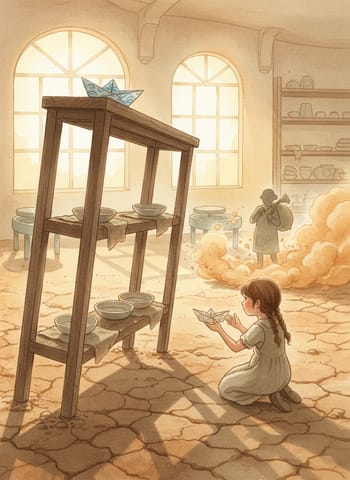
One Thursday, Tala came in and stopped at the door. Number nine was empty. Her blue bowl was gone. In its place sat a small paper boat.
一个星期四,塔拉走进来,在门口愣住了。九号是空的。她的蓝碗不见了。原来放碗的地方,摆着一只小纸船。
"Una," she said. "Where is my bowl?"
“乌娜,”她说,“我的碗呢?”
Una came over and looked at the shelf. "Maybe you put it somewhere else."
乌娜走过来,看了看架子。“也许你放到别处去了。”
"I put it here. It took me two weeks to make it."
“我就放在这儿的。我做了两个星期呢。”
"Then somebody took it." Una picked up the boat. It was plain white paper, folded small, and it was dry. "And left this."
“那就是有人拿走了。”乌娜拿起那只纸船。它是普通的白纸折的,小小的,而且是干的。“还留下了这个。”
"Why does a thief leave a boat?"
“小偷为什么要留下一只船?”
"A very polite thief," said Una.
“一个非常有礼貌的小偷,”乌娜说。
Tala did not laugh. She looked along the shelf. Nine other bowls sat in their places. Nothing else was missing. The door was locked every night. The instructor and the owner of the studio each had a key.
塔拉没有笑。她沿着架子看过去。另外九只碗都在自己的位置上。别的什么也没少。门每天晚上都会锁上。老师和工作室的主人各有一把钥匙。
"I want to know who did it," Tala said.
“我想知道是谁干的,”塔拉说。
"It is only a bowl."
“不过是一只碗而已。”
"It is my bowl."
“那是我的碗。”
The next Thursday, another bowl vanished. This time it was a green cup. It belonged to the girl at number four. Again, a paper boat sat in its place. The studio buzzed with talk all evening.
下个星期四,又一只碗不见了。这回是一只绿杯子,属于四号位的那个女孩。原处同样摆着一只纸船。整个晚上,工作室里都议论纷纷。
Tala made a plan. She wanted to find footprints. All week, she thought about it. On Wednesday, she asked the instructor if she could stay late. She said she wanted to clean the shelves. The instructor agreed. Tala spread a thin layer of dry clay dust on the floor. She put it right under the shelf.
塔拉定了个计划。她想找到脚印。整整一个星期,她都在琢磨这件事。星期三,她问老师能不能留到晚一点。她说想打扫一下架子。老师同意了。塔拉在地板上薄薄地撒了一层干黏土粉,就撒在架子正下方。
"If someone walks here, we will see the shoes," she told Una.
“要是有人走过这儿,我们就能看到鞋印,”她对乌娜说。
On Thursday morning, they came in together. The studio was quiet. Tala's new bowl, a small yellow one, was gone from number nine. A paper boat stood in its place.
星期四早上,她们一起走进来。工作室里静悄悄的。塔拉新做的碗,一只小小的黄碗,从九号位上不见了。原处立着一只纸船。
Tala looked at the floor. The dust was full of footprints. There were small ones and big ones. There were round marks from a broom. The instructor walked there every morning. So did the cleaner and two students who came early.
塔拉低头看地板。粉末上到处都是脚印,有小的,有大的,还有扫帚划出的圆圆的痕迹。老师每天早上都会走过那里,清洁工和两个早到的学生也一样。
"That is no good," said Una.
“这不行啊,”乌娜说。
"I know." Tala frowned. "Everyone walks here. This plan was foolish."
“我知道。”塔拉皱起眉头。“人人都从这儿走。这个计划太傻了。”
"It was a good idea. It just did not work."
“这是个好主意,只是没成功。”
Tala sat down on a stool. She held the third paper boat in her hands. "We looked at the floor. But the boats are the real message."
塔拉在一张凳子上坐下。她手里捧着第三只纸船。“我们一直盯着地板。可真正的信息是这些船。”
"What do you mean?"
“你什么意思?”
"The thief does not hide. The thief leaves a boat each time. It is a note, like a letter." Tala turned the paper over and over. "So let us answer it."
“小偷并没有躲起来。每次他都留下一只船。这是一张字条,就像一封信。”塔拉把纸船翻来覆去地看。“那我们就回信吧。”
Una's eyes grew bright. "You want to write to the thief?"
乌娜的眼睛亮了。“你想给小偷写信?”
"Not write. Fold." Tala took a sheet of paper from her bag. She folded it carefully into a boat. It had the same shape as the others. Inside the boat, she wrote one small line in pencil. Where do my bowls go?
“不是写,是折。”塔拉从包里拿出一张纸。她小心地把它折成一只船,和别的船一模一样。她在船里用铅笔写了一行小字:我的碗都去哪儿了?
She put the boat on the shelf at number nine. Then she went home.
她把船放在九号位的架子上,然后回家了。
On Friday, the studio was closed. On Saturday, too. Tala thought about it all weekend. Maybe nothing happened. Maybe the thief laughed at her.
星期五,工作室关门。星期六也是。塔拉整个周末都在想这件事。也许什么也不会发生。也许小偷在笑话她。
On Monday, the instructor opened the studio early for a special class. Tala was the first one in. She ran to the shelf.
星期一,老师为一堂特别课早早打开了工作室。塔拉第一个到。她冲向架子。
The boat was gone.
船不见了。
In its place lay another boat, folded from the same white paper. It was smaller than the first. Tala opened it with shaking fingers. The pencil line read, Follow the water.
原处放着另一只船,用同样的白纸折成,比第一只还小。塔拉用颤抖的手指把它拆开。铅笔写的那行字是:顺着水走。
"Una!" Tala shouted, though Una was not there yet. "Una, come and see!"
“乌娜!”塔拉喊道,尽管乌娜还没来。“乌娜,快来看!”
Una arrived ten minutes later. She read the note twice. "Water," she said. "The sink?"
十分钟后乌娜到了。她把字条读了两遍。“水,”她说,“是水槽吗?”
"The sink is in here. The note says follow it. Where does the water go?"
“水槽就在这屋里。字条说顺着它走。水流到哪儿去了?”
They went to the big sink at the back of the studio. A pipe ran from it along the wall. It went out through a small hole. They followed the pipe outside. It led to a narrow stream behind the building. The stream ran past an old stone wall. Then it went into green bushes.
她们来到工作室后面的大水槽边。一根管子从水槽沿着墙伸出去,穿过一个小洞。她们顺着管子走到外面。它通向建筑后面一条窄窄的小溪。小溪流过一道旧石墙,然后钻进绿色的灌木丛。
At the edge of the stream, Tala stopped.
在溪边,塔拉停住了。
On a flat rock, in a shallow pool, sat her blue bowl. It was full of clear water. A tiny bird stood on its edge and drank. Next to it sat the green cup and the yellow bowl. Each held a small paper boat that floated on the water.
一块平坦的岩石上,在一汪浅水里,放着她的蓝碗。碗里盛满了清水。一只小鸟站在碗沿上喝水。旁边是那只绿杯子和那只黄碗。每个容器里都漂着一只小纸船。
"They are bird baths," Una whispered.
“它们是给鸟洗澡的水盆,”乌娜小声说。
"Someone set them here for the birds." Tala knelt beside the rock. The bowls were clean and bright. The birds did not seem afraid. "Someone who takes care of this place."
“有人把它们放在这儿给鸟用。”塔拉在岩石边跪下。碗都洗得干干净净,闪闪发亮。鸟儿似乎一点也不怕。“是一个照料着这个地方的人。”
"But who? The instructor?"
“可那是谁呢?老师吗?”
"The instructor does not hide things," said Tala.
“老师不会藏东西,”塔拉说。
They looked around. There were no other footprints in the mud. Only a small animal left paw prints. Past the thicket, a path led up a little hill. The grass on the path was flat. People walked there often.
她们环顾四周。泥地上没有别的脚印,只有一只小动物留下的爪印。灌木丛那边,一条小路通向一座小山坡。路上的草都被踩平了。常有人走这条路。
Tala lifted her blue bowl from the water. She turned it over in her hands. On the bottom, below her own mark, was a tiny boat. Someone drew it in pencil. Beside it were two words in a neat, careful hand.
塔拉把她的蓝碗从水里端起来,在手里翻转。碗底,在她自己做的记号下面,有一只小小的船,是有人用铅笔画的。旁边是工整认真的字迹写的两个字。
Thank you.
谢谢。
"I do not understand," said Una.
“我不明白,”乌娜说。
"Neither do I." Tala smiled. "But I am not angry any more."
“我也不明白。”塔拉笑了。“不过我不生气了。”
Una pointed up the path. A light shone in a small window up the hill. A thin line of smoke rose from the roof. The window had a paper boat on it.
乌娜指着小路上方。山坡上一扇小窗里亮着灯。屋顶上升起一缕细细的烟。窗台上放着一只纸船。
Tala put the blue bowl gently back on the rock. The birds came back at once.
塔拉把蓝碗轻轻放回岩石上。鸟儿立刻飞了回来。
"Do we go up?" asked Una.
“我们上去吗?”乌娜问。
Tala looked at the window for a long time. The boat in the window was larger than the others. Along its side, in neat pencil, was her name.
塔拉望着那扇窗看了很久。窗里的那只船比别的船都大。船舷上,用工整的铅笔字写着她的名字。