The Gate That Would Not Stay Open
Uma história gratuita em inglês de nível B2 para estudantes, para ler online em 7 idiomas, com opção de ouvir no app gratuito Storyteller.
Two teenage rowers try every trick they can think of to stop a boathouse gate from slamming on their boat before practice.
Essa foi a prévia! Ouça a história completa no app gratuito Storyteller. Baixar o app
O áudio não está disponível no momento.
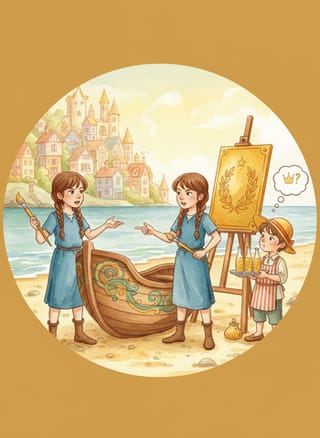
The gate between the boathouse and the river had one job, and it did that job badly. It was supposed to stay open while rowers carried their boats to the water. Instead, it swung shut every time, like a very rude guard.
O portão entre o galpão de barcos e o rio tinha uma só função, e a cumpria mal. Devia ficar aberto enquanto os remadores levavam os barcos até a água. Em vez disso, fechava-se toda vez, como um guarda muito mal-educado.
Koji and Gil had been fighting it for three weeks. Both of them were fifteen, and both had joined the rowing club to get fit. Neither had expected to spend the autumn arguing with a piece of metal.
Koji e Gil brigavam com ele havia três semanas. Os dois tinham quinze anos, e os dois tinham entrado para o clube de remo para entrar em forma. Nenhum dos dois esperava passar o outono discutindo com um pedaço de metal.
"Five-thirty," Gil said, checking his phone on the Tuesday morning. "Coach comes at six-thirty. If we have the eight on the water by then, he'll say nice things about us."
"Cinco e meia", disse Gil, olhando o celular na manhã de terça-feira. "O treinador chega às seis e meia. Se o oito estiver na água até lá, ele vai dizer coisas boas sobre nós."
"He has never said nice things about anybody," said Koji.
"Ele nunca disse coisas boas sobre ninguém", disse Koji.
"Then it will be historic."
"Então vai ser histórico."
The two of them had volunteered to take the racing eight out early, because it sounded like a wonderful idea at nine o'clock at night. The boat was seventeen metres long and weighed as much as a heavy man. In theory, four people could carry it. In practice, two tired teenagers could manage it, but only if nothing got in their way.
Os dois tinham se oferecido para levar o oito de competição cedo, porque aquilo parecia uma ideia maravilhosa às nove horas da noite. O barco tinha dezessete metros de comprimento e pesava como um homem gordo. Em teoria, quatro pessoas poderiam carregá-lo. Na prática, dois adolescentes cansados davam conta, mas só se nada se metesse no caminho.
The gate got in their way.
O portão se meteu no caminho.
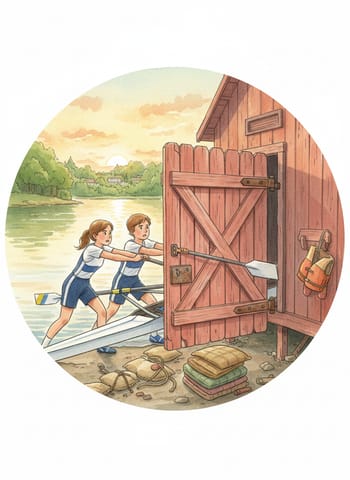
They lifted the boat onto their shoulders and shuffled toward the exit, one step at a time, like two ants carrying a banana. At the doorway, Koji gave the gate a push with his elbow. It swung open with a squeal, and he hurried through. The stern of the boat was halfway out when the gate swung back and slapped it with a loud clang.
Eles levantaram o barco nos ombros e foram se arrastando até a saída, um passo de cada vez, como duas formigas carregando uma banana. Na porta, Koji empurrou o portão com o cotovelo. Ele se abriu com um rangido, e Koji passou depressa. A popa do barco estava a meio caminho de fora quando o portão voltou e bateu nela com um estrondo.
"Ow!" said Gil, who was holding that end and felt the whole boat shiver.
"Ai!", disse Gil, que segurava aquela ponta e sentiu o barco inteiro estremecer.
"I'm sorry. It didn't wait."
"Desculpa. Ele não esperou."
"It never waits!"
"Ele nunca espera!"
They put the boat down on the grass, rubbed their shoulders, and held a short meeting about the problem. Gil proposed the obvious solution first. He found a brick behind the boathouse and placed it against the bottom of the gate. The gate pushed straight over it, like a bull ignoring a flower.
Eles puseram o barco na grama, esfregaram os ombros e fizeram uma breve reunião sobre o problema. Gil propôs primeiro a solução óbvia. Achou um tijolo atrás do galpão e o encostou na parte de baixo do portão. O portão passou direto por cima dele, como um touro ignorando uma flor.
"Right," said Gil. "A bigger brick."
"Certo", disse Gil. "Um tijolo maior."
The next brick was twice the size. The gate dragged it across the concrete with an unpleasant scraping noise, then stopped halfway and thought about its options. A moment later it shut with a small, defeated click.
O tijolo seguinte era duas vezes maior. O portão o arrastou pelo concreto com um barulho de raspagem desagradável, depois parou no meio do caminho e pensou nas opções. Um instante depois, fechou-se com um clique pequeno e derrotado.
"It's rolling downhill," Koji said, squinting. "Look. The path slopes toward the water. That's why it always swings in the same direction."
"Ele está rolando morro abaixo", disse Koji, semicerrando os olhos. "Olha. O caminho tem declive em direção à água. É por isso que ele sempre se fecha para o mesmo lado."
"So we should tie it."
"Então a gente devia amarrar."
"To what?"
"No quê?"
"To the fence."
"Na cerca."
Gil took the rope from the launch box, a long blue one with a knot at the end. He tied the gate to a post, looping the rope round and round until it looked like the gate was being wrapped as a present. For a moment, it worked beautifully. Then the post leaned, the rope tightened, and the whole fence made a groaning noise that sounded alarmingly like an announcement.
Gil pegou a corda da caixa de lançamento, uma comprida e azul, com um nó na ponta. Amarrou o portão a um poste, enrolando a corda e mais corda até parecer que o portão estava sendo embrulhado como um presente. Por um momento, funcionou às mil maravilhas. Então o poste entortou, a corda esticou, e a cerca inteira soltou um gemido que parecia, de um jeito alarmante, um aviso.
"Let's not do that again," said Koji.
"Vamos não fazer isso de novo", disse Koji.
They untied it as quickly as they could. By now it was ten to six. The sky had turned pale, and a few early swans had appeared on the water. The boat lay in the grass like an enormous patient on a hospital bed.
Eles desamarraram o mais rápido que puderam. A essa altura, eram dez para as seis. O céu tinha ficado pálido, e alguns cisnes madrugadores tinham aparecido na água. O barco estava deitado na grama como um paciente enorme numa cama de hospital.
"New plan," said Gil. "I hold the gate with my foot, and you carry the bow."
"Plano novo", disse Gil. "Eu seguro o portão com o pé, e você carrega a proa."
"And who carries the stern?"
"E quem carrega a popa?"
"The boat can walk."
"O barco anda sozinho."
The boat did not walk. Instead, Gil balanced on one leg with his other foot pressed against the gate, while Koji lifted the bow alone and staggered forward. For about two metres the plan went well. Then the stern dropped, Gil hopped, and the gate escaped. The boat landed on the grass with a gentle thump. Gil landed beside it with a not-so-gentle one.
O barco não andou. Em vez disso, Gil se equilibrou numa perna, com o outro pé pressionando o portão, enquanto Koji erguia a proa sozinho e cambaleava para a frente. Por uns dois metros, o plano foi bem. Então a popa caiu, Gil pulou, e o portão escapou. O barco aterrissou na grama com um baque suave. Gil aterrissou ao lado dele com um baque nada suave.
"I think," he said, lying on his back, "that the gate is winning."
"Acho", disse ele, deitado de costas, "que o portão está ganhando."
"It's not winning. It's just persistent."
"Ele não está ganhando. Só é persistente."
"That's what winning is."
"Ganhar é isso."
Koji sat down on the grass next to him and looked at the gate for a long moment. It stood there, innocent and a little smug, its paint peeling in the early light. He noticed something he had missed on all the other mornings. The top hinge was fixed to the post with a long bolt. The bottom one sat slightly crooked, a few millimetres lower than it should have been.
Koji sentou na grama ao lado dele e ficou olhando o portão por um bom tempo. Ali estava ele, inocente e um pouco convencido, com a tinta descascando na luz da manhã. Notou algo que tinha deixado passar em todas as outras manhãs. A dobradiça de cima estava fixada no poste com um parafuso comprido. A de baixo estava um pouco torta, alguns milímetros mais baixa do que devia.
"Gil," he said. "How many of those flat washers do we have in the oar box?"
"Gil", disse ele. "Quantas arruelas daquelas lisas a gente tem na caixa dos remos?"
"Hundreds. Why?"
"Centenas. Por quê?"
"Because the gate isn't swinging because of the slope. It's swinging because the post leans a bit. If the bottom hinge sat higher, the gate would tilt the other way." Koji drew a quick sketch in the dirt with a stick. "Like a door that wants to open instead of close."
"Porque o portão não se fecha por causa do declive. Ele se fecha porque o poste está um pouco inclinado. Se a dobradiça de baixo ficasse mais alta, o portão ia pender para o outro lado." Koji fez um rápido esboço na terra com um graveto. "Como uma porta que quer abrir em vez de fechar."
Gil sat up. For the first time that morning, he looked at the gate with respect.
Gil se sentou. Pela primeira vez naquela manhã, olhou para o portão com respeito.
"That's either genius," he said, "or the stupidest thing you've ever said."
"Isso é ou genial", disse ele, "ou a coisa mais idiota que você já disse."
"Let's find out."
"Vamos descobrir."
They worked in silence for ten minutes. Gil lifted the gate while Koji loosened the bottom bolt. He slid three metal washers over it and tightened it again with the spanner from the toolbox. The gate sat a little differently on its hinges, a little prouder. Koji took a deep breath, gave it a gentle shove, and stepped back.
Trabalharam em silêncio por dez minutos. Gil levantava o portão enquanto Koji afrouxava o parafuso de baixo. Ele deslizou três arruelas de metal por ele e o apertou de novo com a chave inglesa da caixa de ferramentas. O portão ficou apoiado de um jeito um pouco diferente nas dobradiças, um pouco mais orgulhoso. Koji respirou fundo, deu um empurrãozinho nele e deu um passo para trás.
It swung open.
Ele se abriu.
It kept swinging, all the way to the fence, slowly and politely, and then it stopped. It did not slam, and it did not move. It simply stayed there, wide and welcoming, exactly where a gate should be.
Continuou girando, até a cerca, devagar e educadamente, e então parou. Não bateu, e não se mexeu. Simplesmente ficou ali, largo e acolhedor, exatamente onde um portão deve estar.
"Oh," said Gil quietly.
"Ah", disse Gil baixinho.
"Yes."
"É."
"It's open."
"Está aberto."
"I can see that."
"Estou vendo."
They looked at each other and then both began to laugh, so hard that Gil had to hold onto the boat. After that the job was almost easy. They carried the eight through the open gate without a single clang. They lowered it into the river and stood on the dock with their hands on their hips like proud parents.
Eles se entreolharam e então começaram a rir, com tanta força que Gil teve de se segurar no barco. Depois disso, o serviço foi quase fácil. Carregaram o oito pelo portão aberto sem um único estrondo. Baixaram-no no rio e ficaram no cais com as mãos na cintura, como pais orgulhosos.
At exactly six-thirty, Coach Brandt arrived. He walked down the path with a clipboard, stopped in front of the gate, and studied it for several seconds. He looked at the washers, then at the boat on the water, and finally at the two boys.
Exatamente às seis e meia, o treinador Brandt chegou. Desceu o caminho com uma prancheta, parou diante do portão e o estudou por vários segundos. Olhou para as arruelas, depois para o barco na água e, por fim, para os dois garotos.
"Who fixed the gate?"
"Quem consertou o portão?"
"Koji did," said Gil.
"Foi o Koji", disse Gil.
"Gil held it," said Koji.
"O Gil segurou", disse Koji.
The coach said nothing. He gave the gate a small push with one finger, as though he did not trust it. It swung open and stayed open. Then, very slowly, he reached out, pulled it shut, and let go. The gate drifted open again, all by itself, and Coach Brandt very nearly smiled.
O treinador não disse nada. Deu um pequeno empurrão no portão com um dedo, como se não confiasse nele. O portão se abriu e ficou aberto. Então, bem devagar, ele esticou a mão, puxou-o até fechar e soltou. O portão voltou a se abrir sozinho, e o treinador Brandt quase sorriu.