The Stage at the Wrong End
भाषा सीखने वालों के लिए स्तर B1 की एक मुफ़्त अंग्रेज़ी कहानी, जिसे 7 भाषाओं में ऑनलाइन पढ़ा जा सकता है और मुफ़्त Storyteller ऐप में सुना भी जा सकता है।
A street of shopkeepers builds a party stage at the wrong end, and only a pocket compass can say where north really is.
झलक पूरी हुई! पूरी कहानी मुफ़्त Storyteller ऐप में सुनें। ऐप पाएँ
अभी ऑडियो उपलब्ध नहीं है।
By seven o'clock on Saturday morning, Wick Street already looks like a circus that has lost its map. Ladders lean against shop fronts, and flags lie in tangled heaps on the pavement. A van stands in the middle of the road. Its back is open, full of wooden boards and tables.
शनिवार की सुबह सात बजे तक विक स्ट्रीट पहले ही ऐसी लगती है जैसे सर्कस ने अपना नक़्शा खो दिया हो। दुकानों के आगे सीढ़ियाँ टिकी हैं और झंडे फुटपाथ पर उलझे ढेरों में पड़े हैं। सड़क के बीच एक वैन खड़ी है। उसका पिछला हिस्सा खुला है, लकड़ी के तख़्तों और मेज़ों से भरा।
Aarav stands next to the van with a clipboard. He owns the hardware shop. Tonight is the first street party the neighbourhood has held in ten years. The council sent a letter with a plan. Aarav has read it six times and still feels worried.
आरव क्लिपबोर्ड लिए वैन के पास खड़ा है। वह हार्डवेयर की दुकान का मालिक है। आज रात दस सालों में इस मोहल्ले की पहली सड़क-पार्टी है। नगर परिषद ने एक योजना के साथ चिट्ठी भेजी थी। आरव उसे छह बार पढ़ चुका है और फिर भी चिंतित है।
"Okay, everyone," he calls. "Please listen. The plan says the stage goes at the north end of the street, next to the power box. The tables run down the middle. The party lights go from the clock shop to the cheese shop."
"ठीक है, सब लोग," वह पुकारता है। "कृपया सुनिए। योजना कहती है कि मंच सड़क के उत्तरी सिरे पर, बिजली के डिब्बे के पास बनेगा। मेज़ें बीच में चलेंगी। पार्टी की बत्तियाँ घड़ी की दुकान से पनीर की दुकान तक जाएँगी।"
"Perfect," says the flower seller, Calla, who is carrying a bucket of ribbons. "Where is north?"
"बढ़िया," फूल बेचने वाली कैला कहती है, जो फीतों की एक बाल्टी उठाए है। "उत्तर कहाँ है?"
Nobody answers. Eleven shopkeepers look at each other.
कोई जवाब नहीं देता। ग्यारह दुकानदार एक-दूसरे को देखते हैं।
"Easy," says the clock mender. "North is uphill, and uphill is that way." He points confidently towards the shoe shop.
"आसान है," घड़ीसाज़ कहता है। "उत्तर चढ़ाई की तरफ़ है, और चढ़ाई उस तरफ़ है।" वह पूरे यक़ीन से जूते की दुकान की ओर इशारा करता है।
"No, no," says the cheese seller. "North is where the post office is. The post office is always north."
"नहीं, नहीं," पनीर बेचने वाला कहता है। "उत्तर वहाँ है जहाँ डाकघर है। डाकघर हमेशा उत्तर में होता है।"
"The post office is on the corner," says Calla. "Everything is on a corner."
"डाकघर नुक्कड़ पर है," कैला कहती है। "हर चीज़ किसी नुक्कड़ पर है।"
Aarav rubs his forehead. He had hoped that someone would simply know. He takes out his phone and opens the map. The little arrow spins like a puppy chasing its tail. Between the tall buildings, the phone cannot make up its mind.
आरव माथा मलता है। उसे उम्मीद थी कि किसी को बस पता होगा। वह फ़ोन निकालकर नक़्शा खोलता है। नन्हा तीर अपनी पूँछ का पीछा करते पिल्ले की तरह घूम रहा है। ऊँची इमारतों के बीच फ़ोन फ़ैसला नहीं कर पा रहा।
"I'll vote," says the shoe seller. "All in favour of the uphill end, raise your hands."
"मैं वोट करवाता हूँ," जूते वाला कहता है। "चढ़ाई वाले सिरे के पक्ष में जो हैं, हाथ उठाएँ।"
Eight hands go up. Three people look at their shoes. It is not exactly science, but it is enough for a hurry.
आठ हाथ उठते हैं। तीन लोग अपने जूतों को देखते हैं। यह ठीक-ठीक विज्ञान नहीं है, पर जल्दी में चलेगा।
"Fine," Aarav says. "Uphill it is. Let's build."
"ठीक है," आरव कहता है। "तो चढ़ाई वाला सिरा। चलो बनाते हैं।"
For the next two hours, the street fills with noise. Shopkeepers carry boards and hammer nails. The stage grows slowly at the uphill end. It has a bright orange curtain and a banner that says WICK STREET LIVES. The tables stretch down the road in a long line. Calla ties ribbons around every chair, and the cheese seller hangs paper lanterns on a rope.
अगले दो घंटे सड़क शोर से भरी रहती है। दुकानदार तख़्ते उठाते हैं और कीलें ठोकते हैं। मंच चढ़ाई वाले सिरे पर धीरे-धीरे उभरता है। उस पर चटख नारंगी परदा है और एक बैनर जिस पर लिखा है विक स्ट्रीट ज़िंदा है। मेज़ें सड़क पर एक लंबी क़तार में फैल जाती हैं। कैला हर कुर्सी पर फीते बाँधती है, और पनीर वाला एक रस्सी पर काग़ज़ की लालटेनें टाँगता है।
At half past nine, the electrician arrives, a quiet woman in a yellow jacket. She looks at the stage, then at the power box, then at the stage again.
साढ़े नौ बजे बिजली मिस्त्री आती है, पीली जैकेट पहने एक शांत औरत। वह मंच को देखती है, फिर बिजली के डिब्बे को, फिर दोबारा मंच को।
"Good morning," she says. "Why is the stage so far from the power?"
"नमस्ते," वह कहती है। "मंच बिजली से इतनी दूर क्यों है?"
"It isn't," Aarav says. "The power box is at the north end, and that's where we are."
"नहीं है," आरव कहता है। "बिजली का डिब्बा उत्तरी सिरे पर है, और हम वहीं हैं।"
"The power box is over there," the electrician says, and points down the street. It stands next to the clock shop, forty metres away from the new stage.
"बिजली का डिब्बा वहाँ है," मिस्त्री कहती है, और सड़क के नीचे की ओर इशारा करती है। वह घड़ी की दुकान के पास खड़ा है, नए मंच से चालीस मीटर दूर।
Aarav stares at the box. Then he looks at the stage and at the plan in his hand. "That cannot be right," he says.
आरव डिब्बे को घूरता है। फिर वह मंच को और अपने हाथ की योजना को देखता है। "यह सही नहीं हो सकता," वह कहता है।
"I only have a twenty-metre cable," she says. "And the council plan says the stage goes by the box. So either the box has moved, or your stage is at the wrong end."
"मेरे पास सिर्फ़ बीस मीटर की तार है," वह कहती है। "और नगर परिषद की योजना कहती है कि मंच डिब्बे के पास होगा। तो या तो डिब्बा खिसक गया है, या आपका मंच ग़लत सिरे पर है।"
A long silence settles over the street. Even the flags seem to droop. The clock mender takes off his cap and looks inside it, as if the answer might be there.
सड़क पर एक लंबी चुप्पी छा जाती है। झंडे भी ढीले पड़ते लगते हैं। घड़ीसाज़ अपनी टोपी उतारकर उसके अंदर देखता है, मानो जवाब वहीं हो।
"My phone says north is both directions," says the shoe seller.
"मेरे फ़ोन के हिसाब से उत्तर दोनों दिशाओं में है," जूते वाला कहता है।
"Mine says it's lunchtime," says the cheese seller.
"मेरा कहता है कि दोपहर के खाने का समय है," पनीर वाला कहता है।
Calla puts down her bucket. She looks at Aarav, and then at the pocket of his apron. Something small and round makes a bump there. "Aarav," she says. "Don't you have a compass?"
कैला अपनी बाल्टी नीचे रखती है। वह आरव को देखती है, फिर उसके एप्रन की जेब को। वहाँ कोई छोटी गोल चीज़ उभार बना रही है। "आरव," वह कहती है। "तुम्हारे पास कंपास नहीं है क्या?"
Aarav freezes. Everybody in the shop knows about the compass. It is brass, as big as a biscuit, and he carries it everywhere. People tease him about it all the time. He once used it to find the stairs in a department store.
आरव ठिठक जाता है। दुकान में सब कंपास के बारे में जानते हैं। वह पीतल का है, बिस्किट जितना बड़ा, और वह उसे हर जगह साथ रखता है। लोग इसके लिए उसे हर वक़्त छेड़ते हैं। एक बार उसने उससे एक डिपार्टमेंट स्टोर में सीढ़ियाँ ढूँढ़ी थीं।
"I do," he says slowly. "But you all said it was silly."
"है," वह धीरे से कहता है। "पर तुम सबने कहा था कि यह बेवक़ूफ़ी है।"
"It is silly," says the clock mender. "Also, it might be useful today."
"बेवक़ूफ़ी है," घड़ीसाज़ कहता है। "साथ ही, आज शायद काम का भी हो।"
Aarav takes out the compass and opens the lid. He holds it flat on his palm, in the middle of the road, and the needle swings. It wobbles to the left, then to the right, then to the left again. It will not settle.
आरव कंपास निकालता है और ढक्कन खोलता है। वह उसे सड़क के बीच अपनी हथेली पर सपाट पकड़ता है, और सुई झूलती है। वह बाईं ओर डगमगाती है, फिर दाईं ओर, फिर दोबारा बाईं ओर। वह ठहरती ही नहीं।
"It is broken," says the cheese seller.
"यह टूटा हुआ है," पनीर वाला कहता है।
"It isn't broken," Aarav says. "It's confused." He frowns at the heavy steel frame of the stage, then at the van parked next to him. "Metal makes it nervous. I need to stand somewhere clear."
"टूटा नहीं है," आरव कहता है। "उलझन में है।" वह मंच के भारी इस्पात के ढाँचे को, फिर अपने पास खड़ी वैन को भौंहें चढ़ाकर देखता है। "धातु इसे घबरा देती है। मुझे कहीं खुली जगह खड़ा होना होगा।"
He walks to the middle of the street, far from the van and the lamp posts. He crouches and sets the compass on the road. Everybody follows him and forms a circle, as if they are about to watch a magic trick.
वह सड़क के बीच चलकर जाता है, वैन और बत्ती के खंभों से दूर। वह उकड़ू बैठता है और कंपास को सड़क पर रख देता है। सब उसके पीछे-पीछे आते हैं और एक घेरा बना लेते हैं, मानो कोई जादू का खेल देखने वाले हों।
The needle trembles. It slows down, and it stops. It points firmly and calmly to the end of the street where the clock shop stands.
सुई काँपती है। वह धीमी होती है, और रुक जाती है। वह मज़बूती और शांति से सड़क के उस सिरे की ओर इशारा करती है जहाँ घड़ी की दुकान है।
"North," Aarav says. "North is the clock shop. The cheese shop is south, and we have built the stage in the wrong place."
"उत्तर," आरव कहता है। "उत्तर घड़ी की दुकान की तरफ़ है। पनीर की दुकान दक्षिण में है, और हमने मंच ग़लत जगह बना दिया है।"
"The wrong place," repeats the clock mender in a small voice. "I voted for uphill."
"ग़लत जगह," घड़ीसाज़ धीमी आवाज़ में दोहराता है। "मैंने चढ़ाई के लिए वोट दिया था।"
"The hill is east," Calla says kindly. "It was a nice guess."
"पहाड़ी पूरब में है," कैला प्यार से कहती है। "अंदाज़ा अच्छा था।"
For a moment, the whole street is quiet. Eleven people look at a stage that weighs more than a small car. Aarav feels a cold wave of regret. The stage took three hours to build, and the party begins in nine.
कुछ पल पूरी सड़क शांत रहती है। ग्यारह लोग एक ऐसे मंच को देखते हैं जिसका वज़न एक छोटी कार से ज़्यादा है। आरव को पछतावे की ठंडी लहर महसूस होती है। मंच बनाने में तीन घंटे लगे थे, और पार्टी नौ घंटे में शुरू होती है।
Then the electrician says, "You have wheels on the bottom of that stage, don't you?"
फिर मिस्त्री कहती है, "उस मंच के नीचे पहिये लगे हैं, है ना?"
Aarav blinks. He walks to the side of the stage and kneels. Under the wooden skirt, he sees four small black wheels, still locked with metal brakes. The builders borrowed them from the council last week for exactly this kind of thing.
आरव पलक झपकाता है। वह मंच के बग़ल में जाकर घुटनों के बल बैठता है। लकड़ी की झालर के नीचे उसे चार छोटे काले पहिये दिखते हैं, जो अब भी धातु की ब्रेकों से जकड़े हैं। बनाने वालों ने उन्हें पिछले हफ़्ते नगर परिषद से ठीक इसी तरह के काम के लिए उधार लिया था।
"We could roll it," he says.
"हम इसे लुढ़का सकते हैं," वह कहता है।
"We could roll it," says Calla. She is already holding the corner of the orange curtain.
"हम इसे लुढ़का सकते हैं," कैला कहती है। वह पहले ही नारंगी परदे का कोना पकड़े हुए है।
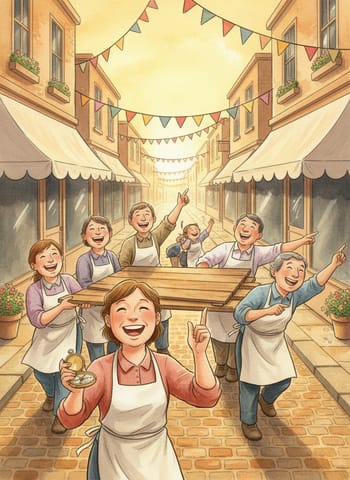
It takes eight people to push the stage down Wick Street. Calla stands at the front and shouts directions. The clock mender walks backwards to watch the wheels. The cheese seller pushes with both shoulders and sings a marching song that no one else knows. The helpers slide the tables to the side, and the stage squeaks along the road.
विक स्ट्रीट पर मंच को धकेलने में आठ लोग लगते हैं। कैला सबसे आगे खड़ी होकर दिशाएँ चिल्लाती है। घड़ीसाज़ पहियों पर नज़र रखने के लिए उलटा चलता है। पनीर वाला दोनों कंधों से धकेलता है और एक ऐसा मार्चिंग गीत गाता है जो किसी और को नहीं आता। मददगार मेज़ों को किनारे सरका देते हैं, और मंच सड़क पर चूँ-चूँ करता आगे बढ़ता है।
After twenty minutes, the stage stops beside the power box. The electrician plugs in her cable and tests it with a small meter. She nods once.
बीस मिनट बाद मंच बिजली के डिब्बे के बग़ल में रुकता है। मिस्त्री अपनी तार लगाती है और एक छोटे मीटर से उसे जाँचती है। वह एक बार सिर हिलाती है।
"It reaches," she says.
"पहुँच रही है," वह कहती है।
The shopkeepers cheer. The clock mender sits down on a step and fans his face with his cap. Calla laughs so hard that she has to lean on a lamp post.
दुकानदार जयकार करते हैं। घड़ीसाज़ एक सीढ़ी पर बैठ जाता है और टोपी से अपना चेहरा पंखता है। कैला इतनी ज़ोर से हँसती है कि उसे बत्ती के खंभे का सहारा लेना पड़ता है।
By evening, the street is full of music. The lights stretch from the clock shop to the cheese shop, and the tables shine with ribbons. Children run between the legs of the grown-ups, and the smell of hot food floats everywhere. Aarav stands near the stage with his compass in his hand. He looks at it for a second, then puts it back in his pocket, proudly.
शाम तक सड़क संगीत से भर जाती है। बत्तियाँ घड़ी की दुकान से पनीर की दुकान तक फैली हैं, और मेज़ें फीतों से चमक रही हैं। बच्चे बड़ों की टाँगों के बीच दौड़ रहे हैं, और गरम खाने की गंध हर जगह तैर रही है। आरव हाथ में कंपास लिए मंच के पास खड़ा है। वह उसे एक पल देखता है, फिर गर्व से उसे वापस जेब में रख लेता है।
"Ready?" Calla asks, holding the switch.
"तैयार?" कैला स्विच थामे हुए पूछती है।
"Ready," Aarav says.
"तैयार," आरव कहता है।
She presses it.
वह उसे दबाती है।
Click.
खट।