The Sand Trail to Berth Four
भाषा सीखने वालों के लिए स्तर B2 की एक मुफ़्त अंग्रेज़ी कहानी, जिसे 7 भाषाओं में ऑनलाइन पढ़ा जा सकता है और मुफ़्त Storyteller ऐप में सुना भी जा सकता है।
A ticket clerk and his colleague use a leaking bucket to find out who takes one ticket every night.
झलक पूरी हुई! पूरी कहानी मुफ़्त Storyteller ऐप में सुनें। ऐप पाएँ
अभी ऑडियो उपलब्ध नहीं है।
The ticket office at Harbour Point is a wooden hut with one window facing the quay and one facing the water. Aksel has run it for six years. He knows the timetable by heart, the price of every crossing and the exact sound the cash drawer makes when it is closed properly. That is why the numbers bother him so much.
हार्बर पॉइंट का टिकट दफ़्तर लकड़ी की एक झोंपड़ी है, जिसकी एक खिड़की घाट की ओर खुलती है और एक पानी की ओर। अक्सेल इसे छह साल से चला रहा है। उसे समय-सारणी ज़बानी याद है, हर सफ़र का किराया याद है और यह भी कि ठीक से बंद होने पर कैश की दराज़ कैसी आवाज़ करती है। इसीलिए ये आँकड़े उसे इतना परेशान करते हैं।
For three weeks, the last ferry of the evening, which leaves from berth four, has gone out with one more passenger than the tickets sold. The count at the gangway says thirty-seven. The till says thirty-six. And every morning, Aksel opens the cupboard where the spare ticket rolls are kept. One single ticket has been torn off the end of a roll, very cleanly, as if with a ruler.
तीन हफ़्ते से शाम की आख़िरी फ़ेरी, जो चौथे बर्थ से छूटती है, बिके हुए टिकटों से एक सवारी ज़्यादा लेकर निकल रही है। गैंगवे पर गिनती सैंतीस आती है। गल्ले में छत्तीस का हिसाब है। और हर सुबह अक्सेल उस अलमारी को खोलता है जहाँ फ़ालतू टिकट-रोल रखे जाते हैं। किसी रोल के सिरे से एक अकेला टिकट बहुत सफ़ाई से फाड़ा गया होता है, मानो फुटे से नापकर।
"It is not much money," Marit says on Tuesday, as she hangs her coat on the hook. She works the afternoon shift and keeps the books. "Seven pounds a night. Maybe a hundred and fifty so far."
"पैसे ज़्यादा नहीं हैं," मंगलवार को मारित अपना कोट खूँटी पर टाँगते हुए कहती है। वह दोपहर की पाली में काम करती है और हिसाब-किताब रखती है। "रात का सात पाउंड। अब तक शायद डेढ़ सौ।"
"It is not the money," Aksel says. "Only two people have keys to this hut. One of them is me. And I know I have not been selling tickets to myself."
"बात पैसों की नहीं है," अक्सेल कहता है। "इस झोंपड़ी की चाबियाँ बस दो लोगों के पास हैं। उनमें से एक मैं हूँ। और मुझे पता है कि मैं ख़ुद को टिकट नहीं बेच रहा।"
"Then it is me?" Marit says, with a small laugh.
"तो फिर मैं हूँ?" मारित हल्की हँसी के साथ कहती है।
"No. Which is exactly what bothers me." He rubs his forehead. "Somebody is getting in, taking one ticket and walking onto the ferry with a smile. And I cannot work out how."
"नहीं। और मुझे यही बात परेशान करती है।" वह माथा मलता है। "कोई अंदर आ रहा है, एक टिकट लेकर मुस्कुराता हुआ फ़ेरी पर चढ़ जा रहा है। और मैं समझ नहीं पा रहा कि कैसे।"
Marit puts down her pen. She has a way of going very still when she is thinking, like a cat at a mouse hole.
मारित अपनी क़लम रख देती है। सोचते समय वह एकदम स्थिर हो जाती है, चूहे के बिल पर बैठी बिल्ली की तरह।
"Then we stop guessing and we catch the footprints," she says. "We do not need to sit up all night. We need to see who walks in."
"तो हम अंदाज़े लगाना बंद करते हैं और पैरों के निशान पकड़ते हैं," वह कहती है। "हमें रात भर जागने की ज़रूरत नहीं। हमें बस यह देखना है कि कौन अंदर आता है।"
They make their first plan that afternoon, between the departures. It is a simple plan. Marit buys a bag of white chalk dust from the hardware shop across the road. After the last crossing, she will spread a thin layer of it over the floor between the back door and the ticket cupboard. In the morning, whoever has been creeping around will have left a clear print of every step.
वे अपनी पहली योजना उसी दोपहर रवानगियों के बीच बनाते हैं। योजना सीधी-सादी है। मारित सड़क के पार वाली हार्डवेयर की दुकान से सफ़ेद चॉक-पाउडर की एक थैली ख़रीदती है। आख़िरी सफ़र के बाद वह पिछले दरवाज़े और टिकट वाली अलमारी के बीच फ़र्श पर उसकी पतली परत बिछा देगी। सुबह जो भी चुपके से घूमता रहा होगा, उसके हर क़दम का साफ़ निशान छूट जाएगा।
At half past nine, with the quay empty and the boats rocking quietly at their ropes, Marit carries out the plan. She sprinkles the dust with a kitchen sieve, in a smooth, even carpet, from the back door to the cupboard and under the window. Aksel watches from the doorway with his arms folded.
साढ़े नौ बजे, जब घाट ख़ाली है और नावें अपनी रस्सियों पर चुपचाप हिल रही हैं, मारित योजना पर अमल करती है। वह रसोई की छन्नी से पाउडर छिड़कती है, पिछले दरवाज़े से अलमारी तक और खिड़की के नीचे, एक चिकने, बराबर क़ालीन की तरह। अक्सेल बाँहें बाँधे दरवाज़े से देखता रहता है।
"It looks like a freshly made bed," he says.
"ऐसा लग रहा है जैसे अभी-अभी बिस्तर बिछाया हो," वह कहता है।
"Do not step on it," Marit says. "Not even by accident."
"इस पर पैर मत रखना," मारित कहती है। "ग़लती से भी नहीं।"
They lock up at ten, and they walk home in opposite directions, pleased with themselves.
वे दस बजे ताला लगाते हैं और अपनी-अपनी उलटी दिशाओं में घर जाते हैं, ख़ुद पर ख़ुश।
The plan collapses at seven the next morning. Aksel unlocks the hut, switches on the lamp and stops in the doorway. The floor is clean. It is not merely clean; it is shining. A faint smell of lemon hangs in the air, and in the corner, a mop is leaning against the wall with a bucket underneath it.
योजना अगली सुबह सात बजे धराशायी हो जाती है। अक्सेल झोंपड़ी का ताला खोलता है, लैंप जलाता है और दरवाज़े पर ठिठक जाता है। फ़र्श साफ़ है। सिर्फ़ साफ़ ही नहीं; चमक रहा है। हवा में नींबू की हल्की महक है, और कोने में एक पोंछा दीवार से टिका है जिसके नीचे बाल्टी रखी है।
"No," he says out loud.
"नहीं," वह ज़ोर से कहता है।
Marit arrives at eight. She takes one look at the floor and puts her hand over her eyes.
मारित आठ बजे आती है। वह फ़र्श पर एक नज़र डालती है और आँखों पर हाथ रख लेती है।
"The night cleaner," she says. "Nobody told her about the chalk. She comes at midnight, and she has done the whole building."
"रात की सफ़ाई वाली," वह कहती है। "उसे चॉक के बारे में किसी ने नहीं बताया। वह आधी रात को आती है, और उसने पूरी इमारत साफ़ कर दी है।"
"So every footprint is gone," Aksel says. "And the ticket?"
"यानी हर पैर का निशान मिट गया," अक्सेल कहता है। "और टिकट?"
He opens the cupboard. The roll has been torn again, as neatly as ever. Behind his back, Marit makes a small sound, somewhere between a groan and a laugh.
वह अलमारी खोलता है। रोल फिर फाड़ा गया है, पहले जितनी ही सफ़ाई से। उसकी पीठ पीछे मारित कराह और हँसी के बीच की एक छोटी-सी आवाज़ निकालती है।
"Whoever it is," she says, "they have a better schedule than we do."
"जो भी है," वह कहती है, "उसका कार्यक्रम हमसे बेहतर है।"
All morning they argue about what to do next. Aksel wants to fix a camera above the door. But the camera would cost more than the stolen tickets and would take a week to arrive. Marit wants to tell the harbour manager. But the manager will certainly say that it is nothing, and he will ask why two adults are losing sleep over a handful of paper.
सारी सुबह वे बहस करते हैं कि आगे क्या किया जाए। अक्सेल दरवाज़े के ऊपर कैमरा लगवाना चाहता है। पर कैमरा चुराए गए टिकटों से ज़्यादा महँगा पड़ेगा और आने में एक हफ़्ता लगेगा। मारित बंदरगाह के प्रबंधक को बताना चाहती है। पर प्रबंधक पक्का कहेगा कि यह कुछ नहीं है, और पूछेगा कि दो समझदार लोग मुट्ठी भर काग़ज़ के लिए अपनी नींद क्यों ख़राब कर रहे हैं।
It is late in the afternoon when Aksel sees the bucket.
दोपहर ढलने के बाद अक्सेल की नज़र बाल्टी पर पड़ती है।
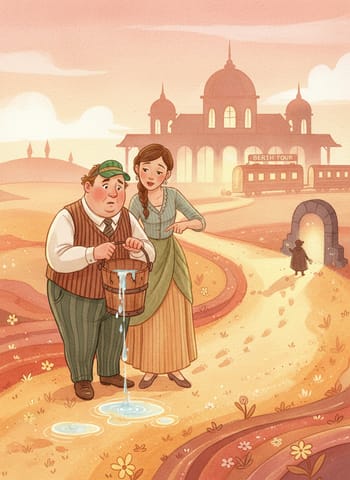
It hangs on a hook beside the back door, an old fire bucket, painted white and stamped with the word SAND. It was retired years ago because the bottom has rusted through. There is a hole in it about the size of a coin. Aksel takes it down and turns it over. A trickle of dust runs out through the hole, as thin and steady as water from a tap.
वह पिछले दरवाज़े के पास एक खूँटी पर टँगी है, आग बुझाने वाली एक पुरानी बाल्टी, सफ़ेद रंगी हुई, जिस पर "रेत" शब्द छपा है। उसे सालों पहले हटा दिया गया था क्योंकि पेंदी में ज़ंग लगकर छेद हो गया है। छेद सिक्के जितना बड़ा है। अक्सेल उसे उतारकर पलटता है। छेद से धूल की एक धार बह निकलती है, नल के पानी जितनी पतली और बराबर।
He stands there for a long time, watching the dust fall onto the floor, and an idea arrives in his head.
वह बहुत देर तक वहीं खड़ा धूल को फ़र्श पर गिरते देखता रहता है, और उसके दिमाग़ में एक ख़याल आता है।
"Marit," he says. "What would happen if we used this?"
"मारित," वह कहता है। "अगर हम इसे इस्तेमाल करें तो?"
"It has a hole in it," she says. "It is rubbish."
"इसमें छेद है," वह कहती है। "यह कबाड़ है।"
"Exactly. It is a hole that leaks slowly and evenly. I fill it and hang it on a string from the ceiling hook, right above the cupboard door. Then anyone who opens that door will knock it, and it will swing. A sand bucket that swings and leaks will draw a line on the floor." He draws an invisible circle in the air with his finger. "Not chalk. Real sand, heavy enough to hold a print. And this time nobody will be allowed to clean up after us."
"बिल्कुल। यह ऐसा छेद है जिससे धीरे-धीरे और बराबर रिसता है। मैं इसे भरकर छत के कुंडे से डोरी के सहारे लटका दूँगा, ठीक अलमारी के दरवाज़े के ऊपर। फिर जो भी वह दरवाज़ा खोलेगा, इससे टकराएगा, और यह झूलने लगेगी। झूलती और रिसती हुई रेत की बाल्टी फ़र्श पर एक लकीर खींच देगी।" वह उँगली से हवा में एक अदृश्य घेरा बनाता है। "चॉक नहीं। असली रेत, इतनी भारी कि निशान पकड़े। और इस बार किसी को हमारे बाद सफ़ाई नहीं करने दी जाएगी।"
"She will mop it at midnight," Marit says.
"वह आधी रात को पोंछा लगा देगी," मारित कहती है।
"Not if we ask her to skip the hut tonight," Aksel says. "We tell her the floor is being treated."
"नहीं लगाएगी, अगर हम आज रात उसे झोंपड़ी छोड़ देने को कहें," अक्सेल कहता है। "हम उससे कह देंगे कि फ़र्श का उपचार हो रहा है।"
Marit thinks about it. Then she smiles slowly.
मारित सोचती है। फिर धीरे से मुस्कुराती है।
"It is a terrible plan," she says. "Let us do it."
"यह बहुत बुरी योजना है," वह कहती है। "चलो करते हैं।"
That evening they fill the bucket to the brim with sand from the old bin on the quay. Aksel climbs onto a chair and ties the handle to the ceiling hook with a length of fishing line. Then he sets the bucket swaying, just enough to test it. Sand spills in a pale curve across the floorboards and stops when the swinging stops. Marit ties the other end of the line to the cupboard door, so that the first person to open it will set the bucket moving.
उस शाम वे घाट के पुराने कूड़ेदान से रेत लेकर बाल्टी को किनारे तक भर देते हैं। अक्सेल कुर्सी पर चढ़कर मछली पकड़ने की डोरी के एक टुकड़े से बाल्टी का हत्था छत के कुंडे से बाँध देता है। फिर वह परखने के लिए बाल्टी को बस इतना झुलाता है। फ़र्श के तख़्तों पर रेत एक फीके मोड़ में बिखरती है और झूलना रुकने पर रुक जाती है। मारित डोरी का दूसरा सिरा अलमारी के दरवाज़े से बाँध देती है, ताकि जो भी उसे पहले खोले, बाल्टी हिलने लगे।
They lock up at ten again, and this time Marit has a word with the night cleaner, who agrees to skip the hut. Then they go home.
वे फिर दस बजे ताला लगाते हैं, और इस बार मारित रात की सफ़ाई वाली से बात कर लेती है, जो झोंपड़ी छोड़ देने को मान जाती है। फिर वे घर चले जाते हैं।
At seven the next morning, Aksel unlocks the door very slowly.
अगली सुबह सात बजे अक्सेल बहुत धीरे से दरवाज़ा खोलता है।
The bucket hangs motionless from the ceiling, almost empty. A broad arc of sand lies on the floor beneath it. In the middle of the arc, as clear as a signature, there is a footprint.
बाल्टी छत से बेहरकत लटकी है, लगभग ख़ाली। उसके नीचे फ़र्श पर रेत का एक चौड़ा चाप बना है। चाप के बीच में, किसी दस्तख़त की तरह साफ़, एक पैर का निशान है।
Marit comes in behind him and kneels down.
मारित उसके पीछे आती है और घुटनों के बल बैठ जाती है।
"It is bare," she says. "A bare foot. And it is wet."
"यह नंगा है," वह कहती है। "नंगा पैर। और गीला।"
There is a second print beside it, and then a third. The line of prints leads across the floorboards, from the window that faces the water, to the cupboard, and back again. Aksel follows them with his eyes to the windowsill. The glass is shut and locked from the inside. Under it, on the wooden ledge, lies a thin trail of seaweed.
उसके बगल में दूसरा निशान है, फिर तीसरा। निशानों की क़तार तख़्तों के आर-पार जाती है, पानी की ओर खुलने वाली खिड़की से अलमारी तक, और फिर वापस। अक्सेल नज़रों से उनका पीछा करता हुआ खिड़की की चौखट तक पहुँचता है। शीशा बंद है और अंदर से चटकनी लगी है। उसके नीचे लकड़ी की पट्टी पर समुद्री घास की एक पतली लकीर पड़ी है।
"That window has not been opened for years," he says.
"वह खिड़की सालों से नहीं खुली," वह कहता है।
"Then they did not need to open it," Marit says quietly.
"तो फिर उन्हें खोलने की ज़रूरत नहीं पड़ी," मारित धीमे से कहती है।
She bends lower over the last print, the one nearest the sill, and she goes quiet. Beside the print of the large foot, half hidden under the edge of the sand, there is another. It is much smaller. It is the print of a child's foot, and it is pointing in the opposite direction, towards the sea.
वह आख़िरी निशान पर, जो चौखट के सबसे पास है, और झुकती है और चुप हो जाती है। बड़े पैर के निशान के बगल में, रेत के किनारे के नीचे आधा छिपा, एक और निशान है। वह बहुत छोटा है। वह किसी बच्चे के पैर का निशान है, और उसका रुख़ उलटी दिशा में है, समुद्र की ओर।