The Sand Trail to Berth Four
Một truyện tiếng Anh miễn phí trình độ B2 cho người học, đọc trực tuyến bằng 7 ngôn ngữ, có thể nghe qua ứng dụng Storyteller miễn phí.
A ticket clerk and his colleague use a leaking bucket to find out who takes one ticket every night.
Hết phần nghe thử! Nghe trọn truyện trong ứng dụng Storyteller miễn phí. Tải app
Hiện chưa thể phát audio.
The ticket office at Harbour Point is a wooden hut with one window facing the quay and one facing the water. Aksel has run it for six years. He knows the timetable by heart, the price of every crossing and the exact sound the cash drawer makes when it is closed properly. That is why the numbers bother him so much.
Phòng bán vé ở Harbour Point là một túp lều gỗ với một cửa sổ nhìn ra cầu cảng và một cửa sổ nhìn ra mặt nước. Aksel đã điều hành nó sáu năm. Ông thuộc lòng bảng giờ tàu, giá của mọi chuyến qua sông và âm thanh chính xác mà ngăn kéo đựng tiền phát ra khi được đóng đúng cách. Chính vì vậy mà những con số làm ông phiền lòng đến thế.
For three weeks, the last ferry of the evening, which leaves from berth four, has gone out with one more passenger than the tickets sold. The count at the gangway says thirty-seven. The till says thirty-six. And every morning, Aksel opens the cupboard where the spare ticket rolls are kept. One single ticket has been torn off the end of a roll, very cleanly, as if with a ruler.
Ba tuần nay, chuyến phà cuối cùng của buổi tối, xuất phát từ bến số bốn, luôn chở nhiều hơn số vé đã bán một hành khách. Số đếm ở lối lên phà là ba mươi bảy. Két tiền ghi ba mươi sáu. Và sáng nào Aksel cũng mở chiếc tủ đựng các cuộn vé dự phòng. Một tờ vé duy nhất bị xé khỏi đầu cuộn, rất gọn, như thể dùng thước kẻ.
"It is not much money," Marit says on Tuesday, as she hangs her coat on the hook. She works the afternoon shift and keeps the books. "Seven pounds a night. Maybe a hundred and fifty so far."
"Số tiền cũng không nhiều," Marit nói vào thứ Ba, khi treo áo khoác lên móc. Cô làm ca chiều và giữ sổ sách. "Bảy bảng mỗi đêm. Đến giờ có lẽ một trăm năm mươi."
"It is not the money," Aksel says. "Only two people have keys to this hut. One of them is me. And I know I have not been selling tickets to myself."
"Không phải chuyện tiền," Aksel nói. "Chỉ có hai người có chìa khóa căn lều này. Một người là tôi. Và tôi biết mình đâu có bán vé cho chính mình."
"Then it is me?" Marit says, with a small laugh.
"Vậy là tôi sao?" Marit nói, với một tiếng cười nhẹ.
"No. Which is exactly what bothers me." He rubs his forehead. "Somebody is getting in, taking one ticket and walking onto the ferry with a smile. And I cannot work out how."
"Không. Đúng là điều đó làm tôi bận tâm." Ông xoa trán. "Có ai đó vào được, lấy một tờ vé rồi mỉm cười bước lên phà. Mà tôi không hiểu bằng cách nào."
Marit puts down her pen. She has a way of going very still when she is thinking, like a cat at a mouse hole.
Marit đặt bút xuống. Cô có thói quen đứng yên hoàn toàn khi suy nghĩ, như một con mèo bên hang chuột.
"Then we stop guessing and we catch the footprints," she says. "We do not need to sit up all night. We need to see who walks in."
"Vậy thì mình thôi đoán mò và đi bắt dấu chân," cô nói. "Mình không cần thức trắng đêm. Mình chỉ cần thấy ai bước vào."
They make their first plan that afternoon, between the departures. It is a simple plan. Marit buys a bag of white chalk dust from the hardware shop across the road. After the last crossing, she will spread a thin layer of it over the floor between the back door and the ticket cupboard. In the morning, whoever has been creeping around will have left a clear print of every step.
Họ vạch kế hoạch đầu tiên ngay chiều hôm đó, giữa các chuyến khởi hành. Đó là một kế hoạch đơn giản. Marit mua một túi bột phấn trắng ở cửa hàng đồ sắt bên kia đường. Sau chuyến cuối, cô sẽ rải một lớp mỏng lên sàn, từ cửa sau đến cái tủ vé. Sáng hôm sau, bất cứ ai đã rón rén đi lại sẽ để lại dấu in rõ ràng của từng bước chân.
At half past nine, with the quay empty and the boats rocking quietly at their ropes, Marit carries out the plan. She sprinkles the dust with a kitchen sieve, in a smooth, even carpet, from the back door to the cupboard and under the window. Aksel watches from the doorway with his arms folded.
Lúc chín giờ rưỡi, khi cầu cảng vắng người và những chiếc thuyền đung đưa khe khẽ bên dây neo, Marit thực hiện kế hoạch. Cô rắc bột bằng một cái rây nhà bếp, thành một tấm thảm mịn và đều, từ cửa sau đến tủ và dưới cửa sổ. Aksel quan sát từ ngưỡng cửa với hai tay khoanh lại.
"It looks like a freshly made bed," he says.
"Trông như một chiếc giường vừa trải xong," ông nói.
"Do not step on it," Marit says. "Not even by accident."
"Đừng giẫm lên," Marit nói. "Dù vô ý cũng không được."
They lock up at ten, and they walk home in opposite directions, pleased with themselves.
Họ khóa cửa lúc mười giờ, và đi bộ về nhà theo hai hướng ngược nhau, hài lòng với bản thân.
The plan collapses at seven the next morning. Aksel unlocks the hut, switches on the lamp and stops in the doorway. The floor is clean. It is not merely clean; it is shining. A faint smell of lemon hangs in the air, and in the corner, a mop is leaning against the wall with a bucket underneath it.
Kế hoạch sụp đổ lúc bảy giờ sáng hôm sau. Aksel mở khóa căn lều, bật đèn và đứng sững ở ngưỡng cửa. Sàn nhà sạch bong. Không chỉ sạch; mà còn sáng bóng. Một mùi chanh thoang thoảng trong không khí, và ở góc phòng, một cây lau nhà dựa vào tường với cái xô đặt bên dưới.
"No," he says out loud.
"Không," ông nói thành tiếng.
Marit arrives at eight. She takes one look at the floor and puts her hand over her eyes.
Marit đến lúc tám giờ. Cô nhìn sàn nhà một cái rồi đưa tay che mắt.
"The night cleaner," she says. "Nobody told her about the chalk. She comes at midnight, and she has done the whole building."
"Người dọn vệ sinh ban đêm," cô nói. "Không ai bảo bà ấy về chuyện phấn. Bà ấy đến lúc nửa đêm, và đã lau cả tòa nhà."
"So every footprint is gone," Aksel says. "And the ticket?"
"Vậy là mọi dấu chân đều mất," Aksel nói. "Còn tờ vé thì sao?"
He opens the cupboard. The roll has been torn again, as neatly as ever. Behind his back, Marit makes a small sound, somewhere between a groan and a laugh.
Ông mở tủ. Cuộn vé lại bị xé, gọn gàng như mọi khi. Sau lưng ông, Marit phát ra một tiếng khẽ, nửa như rên nửa như cười.
"Whoever it is," she says, "they have a better schedule than we do."
"Dù là ai," cô nói, "thì họ có lịch trình tốt hơn mình."
All morning they argue about what to do next. Aksel wants to fix a camera above the door. But the camera would cost more than the stolen tickets and would take a week to arrive. Marit wants to tell the harbour manager. But the manager will certainly say that it is nothing, and he will ask why two adults are losing sleep over a handful of paper.
Cả buổi sáng họ tranh cãi xem nên làm gì tiếp theo. Aksel muốn gắn một chiếc camera phía trên cửa. Nhưng camera sẽ tốn nhiều tiền hơn số vé bị mất và phải một tuần mới đến. Marit muốn báo cho ông quản lý bến cảng. Nhưng ông quản lý chắc chắn sẽ nói đó chẳng là gì, và ông sẽ hỏi tại sao hai người lớn lại mất ngủ vì một nắm giấy.
It is late in the afternoon when Aksel sees the bucket.
Đến cuối buổi chiều, Aksel mới nhìn thấy cái xô.
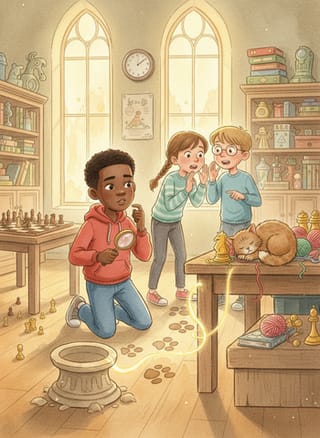
It hangs on a hook beside the back door, an old fire bucket, painted white and stamped with the word SAND. It was retired years ago because the bottom has rusted through. There is a hole in it about the size of a coin. Aksel takes it down and turns it over. A trickle of dust runs out through the hole, as thin and steady as water from a tap.
Nó treo trên một cái móc cạnh cửa sau, một chiếc xô chữa cháy cũ, sơn trắng và đóng dấu chữ SAND. Nó đã bị loại bỏ từ nhiều năm trước vì đáy xô đã gỉ thủng. Có một cái lỗ trên đó cỡ bằng đồng xu. Aksel lấy nó xuống và lật úp lại. Một dòng bụi chảy ra qua cái lỗ, mảnh và đều như nước chảy từ vòi.
He stands there for a long time, watching the dust fall onto the floor, and an idea arrives in his head.
Ông đứng đó rất lâu, nhìn bụi rơi xuống sàn, và một ý tưởng hiện ra trong đầu ông.
"Marit," he says. "What would happen if we used this?"
"Marit," ông nói. "Nếu mình dùng cái này thì sao?"
"It has a hole in it," she says. "It is rubbish."
"Nó thủng mà," cô nói. "Đồ bỏ đi."
"Exactly. It is a hole that leaks slowly and evenly. I fill it and hang it on a string from the ceiling hook, right above the cupboard door. Then anyone who opens that door will knock it, and it will swing. A sand bucket that swings and leaks will draw a line on the floor." He draws an invisible circle in the air with his finger. "Not chalk. Real sand, heavy enough to hold a print. And this time nobody will be allowed to clean up after us."
"Chính xác. Đó là một cái lỗ rò chậm và đều. Tôi đổ đầy nó và treo lên một sợi dây từ cái móc trên trần, ngay trên cửa tủ. Rồi bất cứ ai mở cửa đó sẽ chạm vào, và nó sẽ đung đưa. Một cái xô cát đung đưa và rò rỉ sẽ vẽ một đường lên sàn." Ông vẽ một vòng tròn vô hình trong không khí bằng ngón tay. "Không phải phấn. Cát thật, đủ nặng để giữ được dấu chân. Và lần này sẽ không ai được dọn dẹp sau lưng chúng ta."
"She will mop it at midnight," Marit says.
"Bà ấy sẽ lau sàn lúc nửa đêm," Marit nói.
"Not if we ask her to skip the hut tonight," Aksel says. "We tell her the floor is being treated."
"Không nếu mình nhờ bà ấy bỏ qua căn lều tối nay," Aksel nói. "Mình bảo bà ấy là sàn đang được xử lý."
Marit thinks about it. Then she smiles slowly.
Marit suy nghĩ. Rồi cô mỉm cười chậm rãi.
"It is a terrible plan," she says. "Let us do it."
"Đó là một kế hoạch tồi tệ," cô nói. "Làm thôi."
That evening they fill the bucket to the brim with sand from the old bin on the quay. Aksel climbs onto a chair and ties the handle to the ceiling hook with a length of fishing line. Then he sets the bucket swaying, just enough to test it. Sand spills in a pale curve across the floorboards and stops when the swinging stops. Marit ties the other end of the line to the cupboard door, so that the first person to open it will set the bucket moving.
Tối đó họ đổ đầy cát vào xô từ cái thùng cũ trên cầu cảng. Aksel trèo lên một cái ghế và buộc quai xô vào cái móc trên trần bằng một đoạn dây câu. Rồi ông đẩy cái xô đung đưa, vừa đủ để thử. Cát đổ thành một đường cong nhạt trên các tấm ván sàn và dừng lại khi cái xô ngừng lắc. Marit buộc đầu kia của sợi dây vào cánh cửa tủ, để người đầu tiên mở nó sẽ làm cái xô chuyển động.
They lock up at ten again, and this time Marit has a word with the night cleaner, who agrees to skip the hut. Then they go home.
Họ lại khóa cửa lúc mười giờ, và lần này Marit đã nói chuyện với người dọn vệ sinh ban đêm, bà đồng ý bỏ qua căn lều. Rồi họ về nhà.
At seven the next morning, Aksel unlocks the door very slowly.
Lúc bảy giờ sáng hôm sau, Aksel mở khóa cửa thật chậm.
The bucket hangs motionless from the ceiling, almost empty. A broad arc of sand lies on the floor beneath it. In the middle of the arc, as clear as a signature, there is a footprint.
Cái xô treo bất động trên trần, gần như cạn. Một vòng cung cát rộng nằm trên sàn bên dưới. Ở giữa vòng cung, rõ ràng như một chữ ký, có một dấu chân.
Marit comes in behind him and kneels down.
Marit bước vào sau ông và quỳ xuống.
"It is bare," she says. "A bare foot. And it is wet."
"Chân trần," cô nói. "Một bàn chân trần. Và nó ướt."
There is a second print beside it, and then a third. The line of prints leads across the floorboards, from the window that faces the water, to the cupboard, and back again. Aksel follows them with his eyes to the windowsill. The glass is shut and locked from the inside. Under it, on the wooden ledge, lies a thin trail of seaweed.
Có dấu thứ hai bên cạnh, rồi dấu thứ ba. Hàng dấu chân dẫn qua các tấm ván sàn, từ cửa sổ nhìn ra mặt nước đến cái tủ, rồi quay lại. Aksel dõi theo chúng bằng mắt đến bệ cửa sổ. Tấm kính đóng và khóa từ bên trong. Bên dưới, trên gờ gỗ, có một vệt rong biển mỏng.
"That window has not been opened for years," he says.
"Cửa sổ đó đã nhiều năm không mở," ông nói.
"Then they did not need to open it," Marit says quietly.
"Vậy thì họ đâu cần mở," Marit nói khẽ.
She bends lower over the last print, the one nearest the sill, and she goes quiet. Beside the print of the large foot, half hidden under the edge of the sand, there is another. It is much smaller. It is the print of a child's foot, and it is pointing in the opposite direction, towards the sea.
Cô cúi thấp hơn xuống dấu chân cuối cùng, dấu gần bệ cửa nhất, và cô lặng đi. Bên cạnh dấu chân lớn, nửa khuất dưới mép cát, có một dấu khác. Nó nhỏ hơn nhiều. Đó là dấu của một bàn chân trẻ con, và nó hướng theo chiều ngược lại, về phía biển.