The Cups on the Post Box
भाषा सीखने वालों के लिए स्तर B1 की एक मुफ़्त अंग्रेज़ी कहानी, जिसे 7 भाषाओं में ऑनलाइन पढ़ा जा सकता है और मुफ़्त Storyteller ऐप में सुना भी जा सकता है।
A village postman and a young running-club leader misunderstand each other over a stack of paper cups.
झलक पूरी हुई! पूरी कहानी मुफ़्त Storyteller ऐप में सुनें। ऐप पाएँ
अभी ऑडियो उपलब्ध नहीं है।
Ilan has emptied the village post box every morning for eleven years. He arrives at twenty to seven, when the road is empty and the air smells of cut grass. He opens the little door with his small key and slides the letters into his bag. Then he drives to the next village. It is a quiet job, and he likes it that way.
इलान ग्यारह साल से हर सुबह गाँव का डाक-डिब्बा ख़ाली कर रहा है। वह सात बजने में बीस मिनट पर पहुँचता है, जब सड़क सुनसान होती है और हवा में कटी हुई घास की गंध होती है। वह अपनी छोटी चाबी से छोटा दरवाज़ा खोलता है और चिट्ठियाँ अपने थैले में सरका लेता है। फिर वह अगले गाँव की ओर चल देता है। यह एक शांत काम है, और उसे यह ऐसा ही पसंद है।
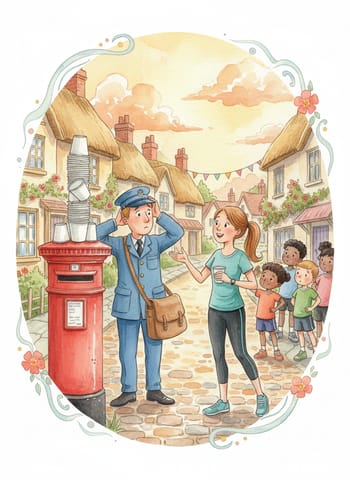
On a Monday in May, something new sits on top of the box. It is a stack of paper cups, about thirty of them, held down by a flat stone.
मई के एक सोमवार को डिब्बे के ऊपर कुछ नया रखा है। वह काग़ज़ के कपों की एक ढेरी है, क़रीब तीस, जिन्हें एक चपटे पत्थर ने दबा रखा है।
Ilan frowns. "Somebody's rubbish," he says to the empty road.
इलान माथे पर बल डालता है। "किसी का कचरा है," वह ख़ाली सड़क से कहता है।
He picks up the cups and carries them to the bin by the school gate. He puts the stone back in the hedge, where he thinks it belongs. Then he collects the post and drives away.
वह कप उठाता है और स्कूल के फाटक के पास वाले कूड़ेदान में डाल आता है। वह पत्थर को झाड़ी में रख देता है, जहाँ उसके हिसाब से उसकी जगह है। फिर वह डाक इकट्ठी करता है और चला जाता है।
On Tuesday, there is another stack and a different stone. Ilan throws them away too. On Wednesday, the stack is taller, and the stone is bigger. He sighs, and he throws them away again.
मंगलवार को एक और ढेरी है और एक दूसरा पत्थर। इलान उन्हें भी फेंक देता है। बुधवार को ढेरी ऊँची है, और पत्थर बड़ा। वह आह भरता है, और उन्हें फिर फेंक देता है।
Kalani, meanwhile, is having a very bad week.
इस बीच कलानी का हफ़्ता बहुत बुरा चल रहा है।
She is nineteen, and she has just come home after her first year at college. She wants to do something useful in the village. So she has started a morning running club for beginners. Twelve people have joined. They meet at seven o'clock by the post box, and they run once round the lake.
वह उन्नीस साल की है, और कॉलेज का पहला साल पूरा करके अभी घर लौटी है। वह गाँव में कुछ काम का करना चाहती है। इसलिए उसने नए धावकों के लिए सुबह की दौड़ का एक क्लब शुरू किया है। बारह लोग जुड़ चुके हैं। वे सात बजे डाक-डिब्बे के पास मिलते हैं, और झील का एक चक्कर दौड़ते हैं।
Kalani is in charge of everything. She plans the route, she counts the runners, and she worries a lot. Every morning at half past six, she leaves a stack of cups on the box. Later, she comes back with a big jug of water for the runners.
कलानी सब कुछ सँभालती है। वह रास्ता तय करती है, धावकों को गिनती है, और बहुत चिंता करती है। हर सुबह साढ़े छह बजे वह डिब्बे पर कपों की एक ढेरी रख जाती है। बाद में वह धावकों के लिए पानी का बड़ा जग लेकर लौटती है।
But every morning, the cups are gone.
पर हर सुबह कप ग़ायब मिलते हैं।
"Someone is stealing them," she tells her friend on the phone. "Or someone doesn't like us. I don't know which is worse."
"कोई उन्हें चुरा रहा है," वह फ़ोन पर अपनी सहेली से कहती है। "या किसी को हम पसंद नहीं। पता नहीं कौन-सा ज़्यादा बुरा है।"
"Just ask around," her friend says.
"बस आस-पास पूछ लो," उसकी सहेली कहती है।
"I can't," Kalani says. "What if I sound silly?"
"नहीं पूछ सकती," कलानी कहती है। "अगर मैं बेवक़ूफ़ लगी तो?"
On Thursday, she writes a note and puts it under the stone. It says, "Please stop taking our cups. They are for the runners."
गुरुवार को वह एक पर्ची लिखती है और उसे पत्थर के नीचे रख देती है। उसमें लिखा है, "कृपया हमारे कप उठाना बंद कीजिए। वे धावकों के लिए हैं।"
When Ilan finds the note, he goes very quiet, as he always does when he is annoyed. He reads it twice. Nobody tells a postman what to do with his own post box, he thinks. He takes a pen from his pocket. Underneath, he writes, "Please stop leaving rubbish on a public post box."
जब इलान को पर्ची मिलती है, वह बहुत चुप हो जाता है, जैसा वह हमेशा चिढ़ने पर होता है। वह उसे दो बार पढ़ता है। एक डाकिए को कोई यह नहीं बताता कि अपने डाक-डिब्बे के साथ क्या करे, वह सोचता है। वह जेब से क़लम निकालता है। नीचे वह लिखता है, "कृपया सार्वजनिक डाक-डिब्बे पर कचरा छोड़ना बंद कीजिए।"
He puts the note back under the stone. Then he feels a little pleased with himself, and a little ashamed.
वह पर्ची फिर पत्थर के नीचे रख देता है। फिर उसे थोड़ा अपने ऊपर संतोष होता है, और थोड़ी शर्म भी।
Later that morning, Kalani reads his answer under the stone. She feels her stomach turn over. Rubbish! Those are good cups, and she paid for them with her own money.
उस सुबह बाद में कलानी पत्थर के नीचे उसका जवाब पढ़ती है। उसका पेट उलट-सा जाता है। कचरा! वे अच्छे कप हैं, और उसने उन्हें अपने पैसों से ख़रीदा था।
She decides that notes are not working. She sets her alarm for five o'clock. At twenty past six, she is sitting on the low wall next to the post box. She has a jug of water and her phone. She is determined to say something to the person who takes her cups, and to say it clearly.
वह तय करती है कि पर्चियों से काम नहीं बन रहा। वह पाँच बजे का अलार्म लगा लेती है। छह बजकर बीस मिनट पर वह डाक-डिब्बे के बग़ल की नीची दीवार पर बैठी है। उसके पास पानी का जग और उसका फ़ोन है। वह ठान चुकी है कि जो उसके कप उठाता है, उससे कुछ कहेगी, और साफ़-साफ़ कहेगी।
At twenty to seven, the white van comes round the corner. Ilan gets out with his small key and his bag. He sees Kalani on the wall, and he stops.
सात बजने में बीस मिनट पर सफ़ेद वैन मोड़ से आती है। इलान अपनी छोटी चाबी और थैला लिए उतरता है। वह दीवार पर कलानी को देखता है, और रुक जाता है।
"Good morning," he says carefully.
"सुप्रभात," वह सावधानी से कहता है।
"Are you the person who throws away my cups?" Kalani asks. Her voice shakes, but she keeps going.
"क्या आप ही वह हैं जो मेरे कप फेंक देते हैं?" कलानी पूछती है। उसकी आवाज़ काँपती है, पर वह कहती जाती है।
"Are you the person who leaves rubbish on my post box?" Ilan says.
"क्या आप ही वह हैं जो मेरे डाक-डिब्बे पर कचरा छोड़ती हैं?" इलान कहता है।
For a moment, they look at each other. Then Ilan looks at the jug and at the sports bag beside her. Last, he looks at the stack of cups on the wall.
एक पल के लिए वे एक-दूसरे को देखते हैं। फिर इलान जग को देखता है और उसके बग़ल में रखे खेल के थैले को। आख़िर में वह दीवार पर रखी कपों की ढेरी को देखता है।
"Rubbish?" Kalani says. "They are for the running club. We meet here every morning at seven."
"कचरा?" कलानी कहती है। "वे दौड़ क्लब के लिए हैं। हम यहाँ हर सुबह सात बजे मिलते हैं।"
"I didn't know about a running club," Ilan says slowly. "I just saw cups. Nobody ever leaves anything on this box. I thought somebody was making a joke."
"मुझे दौड़ क्लब का पता नहीं था," इलान धीरे से कहता है। "मैंने बस कप देखे। इस डिब्बे पर कोई कभी कुछ नहीं छोड़ता। मुझे लगा कोई मज़ाक कर रहा है।"
"I thought you were stealing them," Kalani says.
"मुझे लगा आप उन्हें चुरा रहे हैं," कलानी कहती है।
"I was," Ilan says. "In a way. I put thirty of them in the bin at the school gate."
"मैं चुरा रहा था," इलान कहता है। "एक तरह से। मैंने तीस कप स्कूल के फाटक के कूड़ेदान में डाल दिए।"
Kalani laughs suddenly, and the laugh surprises her. Ilan starts to laugh too. It is a rusty sound, because he does not laugh much before breakfast. They stand there for a minute, two people laughing at a post box.
कलानी अचानक हँस पड़ती है, और यह हँसी उसे ख़ुद चौंका देती है। इलान भी हँसने लगता है। यह ज़ंग लगी-सी आवाज़ है, क्योंकि वह नाश्ते से पहले ज़्यादा हँसता नहीं। वे वहाँ एक मिनट खड़े रहते हैं, दो लोग एक डाक-डिब्बे पर हँसते हुए।
"I should have asked someone," Kalani says, when she can speak again. "I wrote a note instead. A rude note."
"मुझे किसी से पूछना चाहिए था," कलानी कहती है, जब वह फिर बोल पाती है। "मैंने इसके बजाय पर्ची लिखी। एक बदतमीज़ पर्ची।"
"My note was ruder," Ilan says. "I am sorry. If you had put your name on it, I would have understood."
"मेरी पर्ची ज़्यादा बदतमीज़ थी," इलान कहता है। "मुझे माफ़ करना। अगर तुमने उस पर अपना नाम लिखा होता, तो मैं समझ जाता।"
"I was afraid," Kalani says. "I'm not very good at telling people things."
"मुझे डर लगा," कलानी कहती है। "मैं लोगों से बातें कहने में बहुत अच्छी नहीं हूँ।"
Ilan scratches his chin. "At your age, I left my first job because I wouldn't ask one small question," he says. "It took me three years to find another one. Ask early, and ask out loud. That is my only advice."
इलान ठुड्डी खुजलाता है। "तुम्हारी उम्र में मैंने अपनी पहली नौकरी इसलिए छोड़ी थी कि मैं एक छोटा-सा सवाल पूछने को तैयार नहीं था," वह कहता है। "दूसरी नौकरी ढूँढ़ने में मुझे तीन साल लगे। जल्दी पूछो, और ज़ोर से पूछो। बस यही मेरी एक सलाह है।"
Kalani nods slowly. For a long time, nobody has given her advice that did not feel like an order. She thinks about it all the way round the lake that morning, with twelve runners puffing behind her.
कलानी धीरे से सिर हिलाती है। बहुत समय से किसी ने उसे ऐसी सलाह नहीं दी थी जो आदेश जैसी न लगे। वह उस सुबह पूरी झील का चक्कर लगाते हुए इसके बारे में सोचती रहती है, पीछे बारह धावक हाँफते हुए चलते हैं।
On Saturday, Ilan arrives at twenty to seven as usual. This time, he brings something with him. It is a small wooden shelf from his garage. He screws it to the wall beside the post box, a handspan from the ground.
शनिवार को इलान हमेशा की तरह सात बजने में बीस मिनट पर पहुँचता है। इस बार वह अपने साथ कुछ लाया है। वह उसके गैराज से लकड़ी की एक छोटी अलमारी का तख़्ता है। वह उसे डाक-डिब्बे के बग़ल वाली दीवार पर कस देता है, ज़मीन से एक बित्ता ऊपर।
"Cups can go here," he says to nobody in particular. "Out of the way of the letters, and out of the way of my bin."
"कप यहाँ रखे जा सकते हैं," वह किसी से ख़ास नहीं कहता। "चिट्ठियों के रास्ते से हटकर, और मेरे कूड़ेदान के रास्ते से भी।"
When Kalani comes with her jug, she finds the shelf and the cups already lined up on it. She says nothing for a second. Then she pours the first cup of water and holds it out to him.
जब कलानी अपना जग लेकर आती है, उसे तख़्ता मिलता है और उस पर कप पहले से क़रीने से सजे हुए। वह एक पल कुछ नहीं कहती। फिर वह पानी का पहला कप भरती है और उसकी ओर बढ़ाती है।
"For the postman," she says.
"डाकिए के लिए," वह कहती है।
Ilan takes it, drinks it in one go, and gives the cup back. "Better than coffee," he says. "Don't tell anyone."
इलान उसे लेता है, एक घूँट में पी जाता है, और कप लौटा देता है। "कॉफ़ी से बेहतर," वह कहता है। "किसी को मत बताना।"
By Monday, the runners have a new rule. Every morning, someone brings a stack of cups for the shelf. Every morning, Ilan checks that it is neatly done. If the cups are straight, he gives two short beeps on his horn. If they are crooked, he gives one long one.
सोमवार तक धावकों का एक नया नियम बन जाता है। हर सुबह कोई तख़्ते के लिए कपों की ढेरी लाता है। हर सुबह इलान जाँचता है कि वह सलीक़े से रखी गई है। अगर कप सीधे हों, तो वह अपने हॉर्न पर दो छोटी पों-पों बजाता है। अगर टेढ़े हों, तो एक लंबी।
On Friday, Kalani lifts the last stack from the shelf to pour the water. She turns the bottom cup over in her hand and stops. Inside the rim, in thin blue pencil, someone has drawn a tiny bird.
शुक्रवार को कलानी पानी डालने के लिए तख़्ते से आख़िरी ढेरी उठाती है। वह सबसे नीचे का कप हाथ में पलटती है और रुक जाती है। किनारे के भीतर, पतली नीली पेंसिल से, किसी ने एक नन्ही चिड़िया बना दी है।
She did not draw it. She looks at Ilan, who is locking the post box, and he shakes his head.
उसने यह नहीं बनाई। वह इलान को देखती है, जो डाक-डिब्बे पर ताला लगा रहा है, और वह सिर हिलाता है।
"Not mine," he says. "I can't draw a bird to save my life."
"मेरी नहीं," वह कहता है। "मैं जान देकर भी चिड़िया नहीं बना सकता।"
They both look at the empty road. Then, far away, at the other end of the lake, a single runner starts to wave.
दोनों ख़ाली सड़क को देखते हैं। फिर, दूर, झील के दूसरे सिरे पर, एक अकेला धावक हाथ हिलाने लगता है।