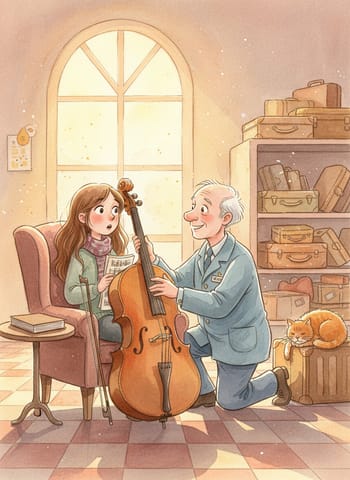
The Cello That Waited All Day
भाषा सीखने वालों के लिए स्तर B2 की एक मुफ़्त अंग्रेज़ी कहानी, जिसे 7 भाषाओं में ऑनलाइन पढ़ा जा सकता है और मुफ़्त Storyteller ऐप में सुना भी जा सकता है।
A baggage clerk finally asks why a music student leaves her cello in the same room every day.
झलक पूरी हुई! पूरी कहानी मुफ़्त Storyteller ऐप में सुनें। ऐप पाएँ
अभी ऑडियो उपलब्ध नहीं है।
The left-luggage room at the back of the bus station had no windows, and Sade liked it that way. The air was cool and still, and the shelves ran in tidy rows to the ceiling. The noise of departing engines reached her only as a distant hum. She had worked there for six years. In that time she had learned that people leave a surprising number of things behind, and that almost none of them ever explain why.
बस स्टेशन के पीछे वाले सामान-घर में कोई खिड़की नहीं थी, और शादे को यही पसंद था। वहाँ की हवा ठंडी और ठहरी हुई थी, और अलमारियाँ सलीक़े से कतार में छत तक जाती थीं। रवाना होते इंजनों का शोर उस तक बस दूर की गुनगुनाहट बनकर पहुँचता था। उसे वहाँ काम करते छह साल हो गए थे। इस दौरान उसने सीखा था कि लोग हैरान कर देने वाली तादाद में चीज़ें पीछे छोड़ जाते हैं, और उनमें से लगभग कोई भी यह नहीं बताता कि क्यों।
There was one piece of furniture in the room that Sade had never managed to improve. It was a small wooden table by the door, where customers signed the ledger and counted their coins. One of its legs was shorter than the others, and the whole table rocked whenever anybody leaned on it. She had slid a folded card under the leg more than once, but the card always worked its way out.
कमरे में फ़र्नीचर का एक टुकड़ा ऐसा था जिसे शादे कभी सुधार नहीं पाई थी। वह दरवाज़े के पास रखी एक छोटी लकड़ी की मेज़ थी, जहाँ ग्राहक बही में दस्तख़त करते और अपने सिक्के गिनते थे। उसका एक पाया बाक़ी पायों से छोटा था, और जब भी कोई उस पर झुकता, पूरी मेज़ हिलने लगती। शादे ने एक से ज़्यादा बार पाए के नीचे तह किया हुआ कार्ड सरकाया था, पर कार्ड हर बार खिसककर बाहर आ जाता।
The cello arrived on a Monday, a little before eight.
सेलो सोमवार को आया, आठ बजने से ज़रा पहले।
It came in a battered black case that was almost as tall as the girl who carried it. She was perhaps twenty, with a thin face and a heavy coat. She stood like someone used to apologising for taking up space. She set the case upright against the counter and pushed a ticket across the wood.
वह एक पिचके हुए काले केस में था, जो उसे लाने वाली लड़की के लगभग बराबर ऊँचा था। लड़की शायद बीस साल की थी, पतले चेहरे और भारी कोट वाली। वह ऐसे खड़ी थी जैसे जगह घेरने के लिए माफ़ी माँगने की आदी हो। उसने केस को काउंटर के सहारे सीधा टिकाया और लकड़ी पर एक पर्ची सरकाई।
"One bag, please," she said. "Until six this evening."
"एक बैग, प्लीज़," उसने कहा। "आज शाम छह बजे तक।"
"Name?" asked Sade.
"नाम?" शादे ने पूछा।
"Safiya."
"सफ़िया।"
Sade wrote it in the ledger and handed her a numbered tag. The table rocked as the girl signed her name. Safiya steadied it with one hand, without comment, as people do with a rocking table they have no hope of fixing.
शादे ने उसे बही में लिखा और उसे नंबर वाला टैग थमा दिया। लड़की के दस्तख़त करते समय मेज़ हिली। सफ़िया ने एक हाथ से उसे थाम लिया, बिना कुछ कहे, जैसे लोग उस हिलती मेज़ को थामते हैं जिसे ठीक होने की कोई उम्मीद नहीं होती।
At six she returned, collected the cello, and left. On Tuesday she came again, and on Wednesday, and on every day after that. She was always polite, always quick, and always on time. She said nothing to Sade that was not strictly necessary.
छह बजे वह लौटी, सेलो ले गई और चली गई। मंगलवार को वह फिर आई, बुधवार को भी, और उसके बाद हर दिन। वह हमेशा विनम्र, हमेशा फुर्तीली और हमेशा समय की पाबंद रही। उसने शादे से ऐसा कुछ नहीं कहा जो बिलकुल ज़रूरी न हो।
For three weeks, Sade said nothing either.
तीन हफ़्ते तक शादे ने भी कुछ नहीं कहा।
She was aware of a question growing in the room, quietly, like a plant in the corner. Who carries a cello to a bus station every morning and leaves it for ten hours? It could not be a commuter's habit, since a musician would want her instrument close. It could not be an accident, because accidents do not arrive on a timetable. Yet each time the girl appeared, Sade found a reason not to ask. It was not her business. People came and went, and the whole purpose of her job was to hold things without wondering about them.
उसे महसूस हो रहा था कि कमरे में एक सवाल चुपचाप बढ़ रहा है, कोने में उगते किसी पौधे की तरह। कौन हर सुबह बस स्टेशन पर सेलो लाकर उसे दस घंटे के लिए छोड़ जाता है? यह किसी रोज़ आने-जाने वाले की आदत नहीं हो सकती थी, क्योंकि कोई संगीतकार अपना वाद्य अपने पास ही रखना चाहेगी। यह इत्तफ़ाक़ भी नहीं हो सकता था, क्योंकि इत्तफ़ाक़ समय-सारणी के हिसाब से नहीं आते। फिर भी जब-जब लड़की आती, शादे को न पूछने की कोई वजह मिल जाती। यह उसका मामला नहीं था। लोग आते-जाते थे, और उसकी नौकरी का पूरा मक़सद चीज़ों को बिना सोचे सँभालकर रखना था।
Her colleague Dario had a theory. "She is a spy," he said, with total seriousness, over lunch one day. "Or she is smuggling something inside it."
उसके साथी दारियो का एक अंदाज़ा था। "वह जासूस है," उसने एक दिन खाने के समय पूरी गंभीरता से कहा। "या उसमें कुछ तस्करी कर रही है।"
"It's a cello," said Sade.
"वह सेलो है," शादे ने कहा।
"That is exactly what a spy would say about a cello."
"सेलो के बारे में जासूस ठीक यही कहेगा।"
She did not laugh, though she wanted to. Instead she watched the clock on the wall, and she realised that she had started to look forward to eight o'clock.
वह हँसी नहीं, हालाँकि उसका मन हुआ। इसके बजाय वह दीवार की घड़ी देखती रही, और उसे अहसास हुआ कि वह आठ बजे का इंतज़ार करने लगी है।
On the fourth Monday the girl was late. She came through the door at ten past eight, out of breath. The case bumped the table so hard that it rocked and almost tipped the ledger onto the floor. Safiya caught it, and for the first time her composure cracked.
चौथे सोमवार को लड़की देर से आई। वह आठ बजकर दस मिनट पर दरवाज़े से अंदर आई, हाँफती हुई। केस मेज़ से इतने ज़ोर से टकराया कि वह हिल गई और बही लगभग फ़र्श पर गिर पड़ी। सफ़िया ने उसे पकड़ लिया, और पहली बार उसका संयम टूट गया।
"I'm sorry," she said. "I'm so sorry. I always make a mess of this."
"माफ़ कीजिए," उसने कहा। "मुझे बहुत अफ़सोस है। मुझसे हमेशा यहाँ गड़बड़ हो जाती है।"
"You didn't," said Sade. "It's the table. It has been rocking for six years."
"तुमसे नहीं हुई," शादे ने कहा। "मेज़ की ग़लती है। यह छह साल से हिल रही है।"
They both looked at it. The short leg tapped twice against the floor, as though it had heard.
दोनों ने उसकी ओर देखा। छोटा पाया फ़र्श पर दो बार खट-खट हुआ, मानो उसने सुन लिया हो।
Something in that small silence made the question impossible to carry any longer. Sade put down her pen.
उस छोटी-सी ख़ामोशी में कुछ ऐसा था कि सवाल को और ढोना नामुमकिन हो गया। शादे ने अपना क़लम नीचे रख दिया।
"Can I ask you something? You don't have to answer."
"मैं तुमसे कुछ पूछ सकती हूँ? जवाब देना ज़रूरी नहीं है।"
The girl's shoulders lifted slightly. "Of course."
लड़की के कंधे ज़रा-से उठे। "ज़रूर।"
"Why do you leave your cello here? Every day, I mean. You obviously play. Wouldn't you want it with you?"
"तुम अपना सेलो यहाँ क्यों छोड़ती हो? रोज़, मेरा मतलब है। ज़ाहिर है कि तुम बजाती हो। क्या तुम उसे अपने साथ नहीं रखना चाहोगी?"
For a moment Safiya said nothing, and Sade wondered whether she had made an enormous mistake. Then the girl let out a long breath, almost a laugh, as if she had been waiting a long time to be asked.
कुछ पल सफ़िया कुछ नहीं बोली, और शादे को लगा कि उससे बहुत बड़ी ग़लती हो गई। फिर लड़की ने एक लंबी साँस छोड़ी, लगभग हँसी जैसी, मानो वह बहुत समय से इसी सवाल का इंतज़ार कर रही थी।
"I live in a shared flat," she said. "Four people, one thin wall. My flatmates work nights, so they sleep through the day, and the neighbours complain if I play in the evening. I study at the music college across the river, but the practice rooms are always booked. I walk from home to this station, and the college is beyond it. The lecture buses are far too crowded for a cello. People stare. They shove. Last year somebody cracked the case." She glanced at the battered black lid. "So I leave it here during the day and collect it after the lectures end. I practise in a park beside the river, if the light is good."
"मैं एक साझे फ़्लैट में रहती हूँ," उसने कहा। "चार लोग, एक पतली दीवार। मेरे फ़्लैटमेट रात की शिफ़्ट में काम करते हैं, इसलिए दिन भर सोते हैं, और शाम को बजाऊँ तो पड़ोसी शिकायत करते हैं। मैं नदी पार संगीत कॉलेज में पढ़ती हूँ, पर रियाज़ के कमरे हमेशा बुक रहते हैं। मैं घर से पैदल इस स्टेशन तक आती हूँ, और कॉलेज इसके आगे है। लेक्चर वाली बसें सेलो के लिए बहुत ज़्यादा भरी होती हैं। लोग घूरते हैं। धक्का देते हैं। पिछले साल किसी ने केस में दरार डाल दी।" उसने पिचके काले ढक्कन पर नज़र डाली। "इसलिए मैं दिन में इसे यहाँ छोड़ती हूँ और लेक्चर ख़त्म होने के बाद ले जाती हूँ। अगर रोशनी अच्छी हो तो मैं नदी किनारे के पार्क में रियाज़ करती हूँ।"
"And if it isn't?"
"और अगर न हो?"
"Then I sit by the bridge and pretend I'm playing in my head." She shrugged, and the shrug did not quite hide how tired she was. "I didn't tell you because it seemed silly. A grown woman who rents a locker for a cello."
"तब मैं पुल के पास बैठकर मन ही मन बजाने का नाटक करती हूँ।" उसने कंधे उचकाए, और उस उचकने से उसकी थकान पूरी तरह छिप नहीं पाई। "मैंने आपको इसलिए नहीं बताया क्योंकि यह मुझे बेवक़ूफ़ी लगी। एक बड़ी उम्र की लड़की, जो सेलो के लिए लॉकर किराए पर लेती है।"
Sade looked at the case. She looked at the cool rows of silent luggage. She looked at the long empty space at the end of the room behind the last rack. Nobody ever used it, because the only socket in the wall had stopped working years ago.
शादे ने केस की ओर देखा। उसने ख़ामोश सामान की ठंडी कतारों को देखा। उसने कमरे के आख़िर में आख़िरी रैक के पीछे की लंबी ख़ाली जगह को देखा। वहाँ कोई कभी नहीं जाता था, क्योंकि दीवार का इकलौता सॉकेट बरसों पहले चलना बंद हो गया था।
"Would the park be better in winter?" she asked.
"क्या सर्दियों में पार्क बेहतर रहेगा?" उसने पूछा।
"No. It's freezing, and all the benches are cold iron." Safiya almost smiled. "Why?"
"नहीं। वहाँ बहुत ठंड होती है, और सारी बेंचें लोहे की हैं, ठंडी।" सफ़िया लगभग मुस्कुरा दी। "क्यों?"
"Because this room is quiet." Sade spoke slowly, and she was surprised to find that her voice was steady. "The walls are thick. Nobody comes in after half past eight in the evening, and I close at ten. If you came after your lectures, and you didn't mind the shelves, you could play in the back."
"क्योंकि यह कमरा शांत है।" शादे धीरे से बोली, और उसे यह देखकर हैरानी हुई कि उसकी आवाज़ स्थिर थी। "दीवारें मोटी हैं। शाम को साढ़े आठ बजे के बाद यहाँ कोई नहीं आता, और मैं दस बजे बंद करती हूँ। अगर तुम लेक्चर के बाद आओ, और तुम्हें अलमारियों से एतराज़ न हो, तो तुम पीछे बजा सकती हो।"
Safiya stared at her. "I couldn't. It isn't allowed."
सफ़िया उसे ताकती रह गई। "मैं नहीं कर सकती। इसकी इजाज़त नहीं है।"
"The ledger doesn't say anything about cellos." Sade lifted a folded sheet of card from the counter, the same one she had tried so many times before, and crouched beside the table. "I'll need a witness, though. Somebody to sit at the table and tell me if the sound is too loud."
"बही में सेलो के बारे में कुछ नहीं लिखा है।" शादे ने काउंटर से तह किया हुआ कार्ड का वही टुकड़ा उठाया जिसे उसने पहले इतनी बार आज़माया था, और मेज़ के पास झुक गई। "पर मुझे एक गवाह चाहिए होगा। कोई जो मेज़ पर बैठकर मुझे बताए कि आवाज़ ज़्यादा तेज़ तो नहीं है।"
Then she pressed the card firmly under the short leg and rose to her feet. The table stood perfectly still.
फिर उसने कार्ड को छोटे पाए के नीचे कसकर दबाया और उठ खड़ी हुई। मेज़ बिलकुल स्थिर खड़ी रही।
"Sit," she said.
"बैठो," उसने कहा।