The Cello That Waited All Day
Uma história gratuita em inglês de nível B2 para estudantes, para ler online em 7 idiomas, com opção de ouvir no app gratuito Storyteller.
A baggage clerk finally asks why a music student leaves her cello in the same room every day.
Essa foi a prévia! Ouça a história completa no app gratuito Storyteller. Baixar o app
O áudio não está disponível no momento.
The left-luggage room at the back of the bus station had no windows, and Sade liked it that way. The air was cool and still, and the shelves ran in tidy rows to the ceiling. The noise of departing engines reached her only as a distant hum. She had worked there for six years. In that time she had learned that people leave a surprising number of things behind, and that almost none of them ever explain why.
O guarda-volumes nos fundos da rodoviária não tinha janelas, e Sade gostava assim. O ar era fresco e parado, e as prateleiras subiam em fileiras arrumadas até o teto. O barulho dos motores partindo chegava a ela só como um zumbido distante. Ela trabalhava ali havia seis anos. Nesse tempo, aprendera que as pessoas deixam para trás uma quantidade surpreendente de coisas, e que quase nenhuma delas jamais explica por quê.
There was one piece of furniture in the room that Sade had never managed to improve. It was a small wooden table by the door, where customers signed the ledger and counted their coins. One of its legs was shorter than the others, and the whole table rocked whenever anybody leaned on it. She had slid a folded card under the leg more than once, but the card always worked its way out.
Havia uma peça de mobília na sala que Sade nunca conseguira melhorar. Era uma mesinha de madeira junto à porta, onde os clientes assinavam o livro de registro e contavam as moedas. Uma das pernas era mais curta que as outras, e a mesa inteira balançava sempre que alguém se apoiava nela. Mais de uma vez ela enfiara um cartão dobrado sob a perna, mas o cartão sempre acabava saindo.
The cello arrived on a Monday, a little before eight.
O violoncelo chegou numa segunda-feira, pouco antes das oito.
It came in a battered black case that was almost as tall as the girl who carried it. She was perhaps twenty, with a thin face and a heavy coat. She stood like someone used to apologising for taking up space. She set the case upright against the counter and pushed a ticket across the wood.
Veio num estojo preto surrado, quase tão alto quanto a moça que o carregava. Ela devia ter uns vinte anos, com rosto magro e um casaco pesado. Ficava em pé como alguém acostumado a pedir desculpas por ocupar espaço. Apoiou o estojo na vertical contra o balcão e empurrou um tíquete pela madeira.
"One bag, please," she said. "Until six this evening."
"Uma bagagem, por favor", disse ela. "Até as seis da tarde."
"Name?" asked Sade.
"Nome?", perguntou Sade.
"Safiya."
"Safiya."
Sade wrote it in the ledger and handed her a numbered tag. The table rocked as the girl signed her name. Safiya steadied it with one hand, without comment, as people do with a rocking table they have no hope of fixing.
Sade escreveu no livro e entregou a ela uma etiqueta numerada. A mesa balançou enquanto a moça assinava. Safiya a firmou com uma das mãos, sem comentar, como se faz com uma mesa bamba que não se tem esperança de consertar.
At six she returned, collected the cello, and left. On Tuesday she came again, and on Wednesday, and on every day after that. She was always polite, always quick, and always on time. She said nothing to Sade that was not strictly necessary.
Às seis ela voltou, pegou o violoncelo e foi embora. Na terça veio de novo, e na quarta, e em todos os dias seguintes. Era sempre educada, sempre rápida e sempre pontual. Não dizia a Sade nada que não fosse estritamente necessário.
For three weeks, Sade said nothing either.
Por três semanas, Sade também não disse nada.
She was aware of a question growing in the room, quietly, like a plant in the corner. Who carries a cello to a bus station every morning and leaves it for ten hours? It could not be a commuter's habit, since a musician would want her instrument close. It could not be an accident, because accidents do not arrive on a timetable. Yet each time the girl appeared, Sade found a reason not to ask. It was not her business. People came and went, and the whole purpose of her job was to hold things without wondering about them.
Ela percebia uma pergunta crescendo na sala, em silêncio, como uma planta no canto. Quem leva um violoncelo a uma rodoviária toda manhã e o deixa por dez horas? Não podia ser um hábito de quem vai trabalhar, já que uma musicista quereria o instrumento por perto. Não podia ser um acaso, porque acasos não chegam com horário marcado. Mesmo assim, cada vez que a moça aparecia, Sade encontrava um motivo para não perguntar. Não era da conta dela. As pessoas iam e vinham, e o propósito inteiro do seu trabalho era guardar coisas sem ficar se perguntando sobre elas.
Her colleague Dario had a theory. "She is a spy," he said, with total seriousness, over lunch one day. "Or she is smuggling something inside it."
Seu colega Dario tinha uma teoria. "Ela é espiã", disse ele, com total seriedade, durante o almoço um dia. "Ou está contrabandeando alguma coisa lá dentro."
"It's a cello," said Sade.
"É um violoncelo", disse Sade.
"That is exactly what a spy would say about a cello."
"É exatamente isso que uma espiã diria sobre um violoncelo."
She did not laugh, though she wanted to. Instead she watched the clock on the wall, and she realised that she had started to look forward to eight o'clock.
Ela não riu, embora quisesse. Em vez disso, ficou olhando o relógio da parede, e percebeu que começara a esperar ansiosamente pelas oito horas.
On the fourth Monday the girl was late. She came through the door at ten past eight, out of breath. The case bumped the table so hard that it rocked and almost tipped the ledger onto the floor. Safiya caught it, and for the first time her composure cracked.
Na quarta segunda-feira, a moça se atrasou. Entrou pela porta às oito e dez, sem fôlego. O estojo bateu na mesa com tanta força que ela balançou e quase derrubou o livro no chão. Safiya o segurou, e pela primeira vez sua compostura rachou.
"I'm sorry," she said. "I'm so sorry. I always make a mess of this."
"Desculpe", disse ela. "Desculpe mesmo. Eu sempre faço uma bagunça nisso."
"You didn't," said Sade. "It's the table. It has been rocking for six years."
"Você não fez", disse Sade. "É a mesa. Ela balança há seis anos."
They both looked at it. The short leg tapped twice against the floor, as though it had heard.
As duas olharam para ela. A perna curta bateu duas vezes no chão, como se tivesse ouvido.
Something in that small silence made the question impossible to carry any longer. Sade put down her pen.
Alguma coisa naquele pequeno silêncio tornou impossível carregar a pergunta por mais tempo. Sade largou a caneta.
"Can I ask you something? You don't have to answer."
"Posso te perguntar uma coisa? Você não precisa responder."
The girl's shoulders lifted slightly. "Of course."
Os ombros da moça se ergueram um pouco. "Claro."
"Why do you leave your cello here? Every day, I mean. You obviously play. Wouldn't you want it with you?"
"Por que você deixa seu violoncelo aqui? Todo dia, quero dizer. Você obviamente toca. Não ia querer ficar com ele?"
For a moment Safiya said nothing, and Sade wondered whether she had made an enormous mistake. Then the girl let out a long breath, almost a laugh, as if she had been waiting a long time to be asked.
Por um instante Safiya não disse nada, e Sade se perguntou se tinha cometido um erro enorme. Então a moça soltou um longo suspiro, quase uma risada, como se esperasse fazia muito tempo que lhe perguntassem.
"I live in a shared flat," she said. "Four people, one thin wall. My flatmates work nights, so they sleep through the day, and the neighbours complain if I play in the evening. I study at the music college across the river, but the practice rooms are always booked. I walk from home to this station, and the college is beyond it. The lecture buses are far too crowded for a cello. People stare. They shove. Last year somebody cracked the case." She glanced at the battered black lid. "So I leave it here during the day and collect it after the lectures end. I practise in a park beside the river, if the light is good."
"Eu moro num apartamento compartilhado", disse ela. "Quatro pessoas, uma parede fina. Meus colegas trabalham à noite, então dormem durante o dia, e os vizinhos reclamam se eu toco à noite. Estudo na faculdade de música do outro lado do rio, mas as salas de estudo estão sempre reservadas. Eu vou a pé de casa até esta estação, e a faculdade fica depois dela. Os ônibus das aulas são cheios demais para um violoncelo. As pessoas ficam olhando. Empurram. No ano passado alguém rachou o estojo." Ela olhou de relance para a tampa preta e surrada. "Então eu deixo aqui durante o dia e pego depois que as aulas terminam. Eu toco num parque ao lado do rio, se a luz estiver boa."
"And if it isn't?"
"E se não estiver?"
"Then I sit by the bridge and pretend I'm playing in my head." She shrugged, and the shrug did not quite hide how tired she was. "I didn't tell you because it seemed silly. A grown woman who rents a locker for a cello."
"Aí eu me sento perto da ponte e finjo que estou tocando de cabeça." Ela deu de ombros, e o gesto não escondeu direito o quanto estava cansada. "Não contei porque parecia bobagem. Uma mulher adulta que aluga um armário para um violoncelo."
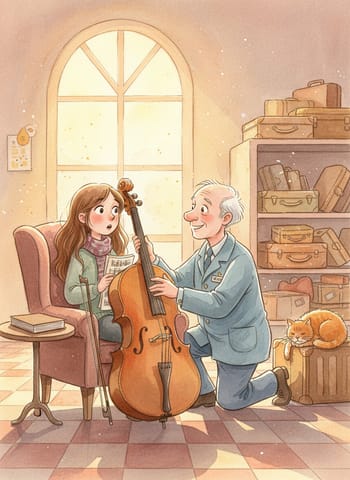
Sade looked at the case. She looked at the cool rows of silent luggage. She looked at the long empty space at the end of the room behind the last rack. Nobody ever used it, because the only socket in the wall had stopped working years ago.
Sade olhou para o estojo. Olhou para as fileiras frescas de bagagens silenciosas. Olhou para o longo espaço vazio no fim da sala, atrás da última estante. Ninguém nunca o usava, porque a única tomada da parede parara de funcionar anos antes.
"Would the park be better in winter?" she asked.
"O parque seria melhor no inverno?", perguntou ela.
"No. It's freezing, and all the benches are cold iron." Safiya almost smiled. "Why?"
"Não. Congela, e todos os bancos são de ferro gelado." Safiya quase sorriu. "Por quê?"
"Because this room is quiet." Sade spoke slowly, and she was surprised to find that her voice was steady. "The walls are thick. Nobody comes in after half past eight in the evening, and I close at ten. If you came after your lectures, and you didn't mind the shelves, you could play in the back."
"Porque esta sala é silenciosa." Sade falou devagar, e se surpreendeu ao descobrir que sua voz estava firme. "As paredes são grossas. Ninguém entra depois das oito e meia da noite, e eu fecho às dez. Se você viesse depois das aulas, e não se importasse com as prateleiras, poderia tocar lá no fundo."
Safiya stared at her. "I couldn't. It isn't allowed."
Safiya olhou para ela, espantada. "Eu não poderia. Não é permitido."
"The ledger doesn't say anything about cellos." Sade lifted a folded sheet of card from the counter, the same one she had tried so many times before, and crouched beside the table. "I'll need a witness, though. Somebody to sit at the table and tell me if the sound is too loud."
"O livro de registro não diz nada sobre violoncelos." Sade pegou do balcão uma folha de cartão dobrada, a mesma que tentara tantas vezes antes, e se agachou ao lado da mesa. "Mas vou precisar de uma testemunha. Alguém para se sentar à mesa e me dizer se o som está alto demais."
Then she pressed the card firmly under the short leg and rose to her feet. The table stood perfectly still.
Então ela apertou o cartão com firmeza sob a perna curta e se levantou. A mesa ficou perfeitamente parada.
"Sit," she said.
"Sente-se", disse ela.