On the last Saturday of June, Fenwick Lane closed to traffic and turned into one long table. The tradition was older than anyone on the street could explain. Every shop carried its tables outside, every doorway wore a paper lantern, and by evening the whole lane smelled of grilled corn and warm sugar.
六月的最后一个星期六,芬威克巷禁止车辆通行,变成了一张长长的餐桌。这个传统比街上任何人能解释的都要古老。每家店都把桌子搬到外面,每道门口都挂着纸灯笼,到了傍晚,整条巷子都飘着烤玉米和暖暖的糖的香味。
Corwin had been in charge of the decorations for fourteen years. He repaired clocks in a narrow shop at number nine. The other shopkeepers had decided long ago that a man who handled a hundred tiny springs could hang a few flags in a line. He did not argue with them. He liked the job.
科尔温负责装饰已经十四年了。他在九号一间狭窄的店铺里修钟表。其他店主很久以前就认定,一个能摆弄上百个小发条的人,挂几面彩旗排成一行总不成问题。他没有跟他们争。他喜欢这份差事。
His routine never changed. At half past six he carried a stepladder and a crate of bunting down the lane. Then he bought a coffee from the kiosk at the corner and sat on the old iron bench outside the printer's to drink it. He always counted the flags on the crate before he started. There were always two hundred and twelve.
他的流程从来不变。六点半,他扛着一架梯子,提着一箱彩旗走下巷子。然后他在街角的小亭子里买一杯咖啡,坐在印刷店门外那张旧铁长椅上喝。开工之前,他总要数一数箱子里的彩旗。每次都是二百一十二面。
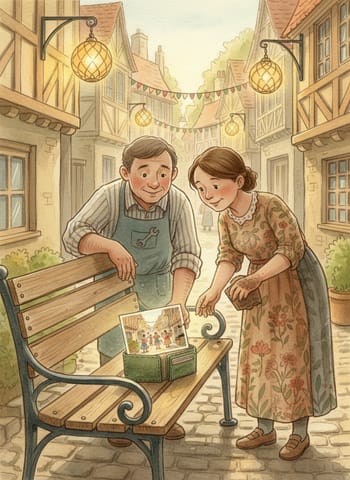
That morning the bench was already occupied. A wallet lay on the seat, exactly where he usually put his cup.
那天早上,长椅上已经有东西了。一个钱包躺在座位上,正好是他平时放杯子的地方。
It was an ordinary object at first glance: dark green leather, worn at the corners, closed with a small brass clasp. Corwin looked up and down the lane. The street was empty except for a man hosing the pavement outside the fish shop, and he was too far away to have noticed anything.
乍一看,那是个普通的东西:深绿色的皮革,边角磨旧了,用一个小小的黄铜搭扣扣着。科尔温朝巷子两头看了看。街上空荡荡的,只有一个男人在鱼店外面用水管冲洗人行道,离得太远,不可能注意到什么。
He picked up the wallet, and it was warm. It was not the warmth of a pocket or of morning sunlight, but the slow, steady heat of something alive. He nearly dropped it.
他拿起钱包,它是温热的。不是口袋里的那种暖,也不是早晨阳光的暖,而是某种活物缓慢而稳定的热度。他差点把它掉在地上。
"Do not be silly," he said aloud, and he opened the clasp.
“别犯傻了,”他大声对自己说,然后打开了搭扣。
There was no money inside, and no cards, and no name. There was a single coin, thick and dull, stamped with the image of a lamp post that he did not recognise. There was a ticket stub printed with the words ADMIT ONE TO THE LANE. And there was a photograph.
里面没有钱,没有卡,也没有名字。有一枚硬币,厚厚的,暗淡无光,上面压着一个他不认识的路灯杆图案。有一张票根,上面印着:凭此票可入巷一次。还有一张照片。
The photograph showed Fenwick Lane at the height of a party. Paper lanterns were glowing in the dusk, tables ran the whole length of the street and hundreds of people were laughing at once. In the front, outside the clock shop, stood Corwin himself, holding a plate of corn and looking surprised. Next to him, with a lantern in her hands, stood Irene from the plant shop.
照片上是正值热闹时的芬威克巷。纸灯笼在暮色里发着光,餐桌沿着整条街一路摆开,几百个人同时在笑。前景里,在钟表店外面,站着科尔温自己,手里端着一盘玉米,一脸惊讶。他旁边站着花店的艾琳,手里捧着一盏灯笼。
Corwin turned the picture over. On the back, in small blue handwriting, someone had written the date. It was today's date.
科尔温把照片翻过来。背面有人用细小的蓝色字迹写着日期。是今天的日期。
"Interesting," he said, in the voice he used when a customer brought in a watch that ran backwards.
“有意思,”他说,语气就像有顾客拿来一块倒着走的手表时那样。
He was still staring at it when Irene arrived, pushing a trolley of potted ferns. She was a tall woman with soil under her fingernails, and she had never been known to walk past an interesting problem.
他还在盯着照片发呆,艾琳到了,推着一辆装满盆栽蕨类的小推车。她身材高挑,指甲缝里有泥土,据说从来没有哪个有趣的难题能让她径直走过。
"You look like you have seen a ghost," she said. "Have you?"
“你看起来像见了鬼,”她说,“是吗?”
"Not yet," Corwin said. He held out the photograph.
“还没有,”科尔温说。他把照片递过去。
Irene studied it for a long time. Then she took a pair of reading glasses from her apron pocket, put them on and studied it again.
艾琳看了很久。然后她从围裙口袋里掏出一副老花镜,戴上,又看了一遍。
"That is my lantern," she said. "I only bought it on Thursday. It has never been outside the shop." She pointed at the edge of the picture. "And what is that?"
“那是我的灯笼,”她说,“我星期四才买的。它从来没出过店门。”她指着照片的边缘。“那是什么?”
Corwin leaned closer. Between his clock shop and the plant shop, in the photograph, there was a third building. It was narrow, with a green door and a round window above it. The lantern light fell across its step as if it had always been there.
科尔温凑近了看。照片里,在他的钟表店和花店之间,有第三栋楼。它很窄,有一扇绿色的门,门上方有一个圆窗。灯笼的光落在它的台阶上,仿佛它一直都在那里。
"There is no building between us," Irene said slowly. "There is only the gap. I keep my bicycle in that gap."
“我们中间没有楼,”艾琳慢慢地说,“只有一条缝。我的自行车就停在那条缝里。”
"I know," Corwin said. "I have walked past it for fourteen years."
“我知道,”科尔温说,“我路过它十四年了。”
They looked at each other. Then, without discussing it, they walked together to the narrow passage between their two shops. It was exactly as they remembered it: a strip of shadow, a drainpipe, a bicycle chained to a hook. The brick wall at the end of it was damp and plain.
两人对视了一眼。然后,没有商量,他们一起走向两家店之间的那条窄通道。它和记忆里完全一样:一条阴影,一根排水管,一辆锁在挂钩上的自行车。尽头的砖墙潮湿而平淡无奇。
"Perhaps the photograph was taken from a different street," Irene said. "Perhaps it is a trick."
“也许这张照片是在别的街上拍的,”艾琳说,“也许是个骗局。”
"Perhaps," Corwin said. "But who would trick two shopkeepers with a warm wallet?"
“也许吧,”科尔温说,“可是谁会用一个温热的钱包去骗两个店主呢?”
They did what any sensible person would do. They carried the wallet down the lane and asked everyone. The fish seller said he had never seen it before. The printer said it was too clean to be lost by one of his customers. The woman who ran the kiosk held it for a moment, went very quiet and handed it straight back without a word.
他们做了任何明智的人都会做的事。他们拿着钱包沿着巷子挨个询问。卖鱼的说他从没见过。印刷匠说它太干净了,不像是他的顾客丢的。经营小亭子的女人拿了一会儿,变得十分安静,一言不发地直接递了回来。
"She knows something," Irene whispered.
“她知道些什么,”艾琳低声说。
"She knows she does not want it," Corwin said.
“她知道自己不想要它,”科尔温说。
By ten o'clock the tables were up, and the bunting hung in perfect lines from the lamp posts. The two hundred and twelfth flag was tied to the last post. For the first time in fourteen years, Corwin did not feel proud of it. He kept thinking about the coin. He had weighed it on the small scale in his shop. It had looked as light as a wedding ring, yet it had made the whole scale tilt as if it weighed a kilo.
到十点钟,桌子都摆好了,彩旗整整齐齐地挂在路灯杆之间。第二百一十二面旗系在最后一根杆子上。十四年来第一次,科尔温对此没有感到自豪。他一直在想那枚硬币。他在店里的小秤上称过它。它看起来像婚戒一样轻,却让整个秤都倾斜了,好像有一公斤重。
At noon, Irene brought him a sandwich and sat beside him on the iron bench.
中午,艾琳给他带来一个三明治,在铁长椅上坐到他旁边。
"If it were my wallet," she said, "I would want someone to try the obvious thing."
“要是这是我的钱包,”她说,“我会希望有人去试试最明显的办法。”
"What is the obvious thing?"
“最明显的办法是什么?”
"Show it the gap," she said.
“让它看看那条缝,”她说。
It sounded ridiculous, and they both knew it. But they walked back to the passage anyway, and Corwin held the wallet out in front of him like a man carrying a candle. The brass clasp began to tick softly, and the coin inside rang against the leather, a small clear note, like a spoon against a glass.
这听起来荒唐,两人都清楚。但他们还是走回了那条通道,科尔温把钱包举在身前,像一个捧着蜡烛的人。黄铜搭扣开始轻轻地滴答作响,里面的硬币在皮革上叮的一响,一个清脆的小音,像勺子碰到玻璃杯。
Nothing else happened. The wall stayed a wall. The bicycle stayed on its hook. Yet for a moment, the shadow at the end of the passage seemed to deepen into the shape of a doorway. Corwin felt a faint cool breath on his face, the kind that comes from a cellar.
别的什么也没发生。墙还是墙。自行车还在它的挂钩上。可是有那么一瞬间,通道尽头的阴影似乎加深,变成了一道门的形状。科尔温感到脸上有一丝微凉的气息,就像从地窖里吹来的那种。
Then the feeling stopped. The clasp fell silent, and the wallet went back to being merely warm.
然后那种感觉停了。搭扣安静下来,钱包又变回只是温热而已。
"Well," Irene said, a little hoarsely. "That was something."
“嗯,”艾琳有点沙哑地说,“这可不寻常。”
"It was," Corwin said. "I think it was a greeting."
“是不寻常,”科尔温说,“我觉得那是一声问候。”
They said nothing more about it for the rest of the afternoon. The party began on time, as it always did. The lanterns were lit at dusk, and the lane filled with people carrying plates of food from table to table. Corwin stood outside his shop with a plate of grilled corn, and Irene stood next to him with her lantern. For a while they were simply two neighbours enjoying a party.
整个下午,他们再没提这件事。聚会照常准时开始。黄昏时灯笼点亮了,巷子里挤满了端着食物在一张张桌子之间走动的人。科尔温端着一盘烤玉米站在店外,艾琳举着她的灯笼站在他旁边。有一阵子,他们只是两个享受聚会的邻居。
It was only when the first song started that Corwin put his hand in his pocket and felt the wallet again, warmer than ever. He drew out the photograph and held it up to the light of the nearest lantern.
直到第一首歌响起,科尔温才把手伸进口袋,再次摸到钱包,比以往任何时候都热。他抽出那张照片,举到最近一盏灯笼的光下。
The picture had changed.
照片变了。
It still showed the lane, the tables and the crowd. But the two figures in front of the clock shop were no longer smiling. They were looking down at something small in their hands. Corwin was holding a photograph, and Irene was leaning over his shoulder to see it. The date on the back had changed too, and now the writing was fresh and wet.
上面仍然是巷子、桌子和人群。但钟表店前的那两个身影不再微笑了。他们低头看着手里的一样小东西。科尔温拿着一张照片,艾琳正从他肩后探身去看。背面的日期也变了,现在字迹是新的,湿漉漉的。
Irene saw it at the same moment. She did not scream, and she did not drop her lantern. She only took a slow breath and spoke very quietly, so that the singers would not hear.
艾琳在同一刻看到了。她没有尖叫,也没有扔掉灯笼。她只是缓缓吸了一口气,说话声音很轻,免得歌手们听见。
"Corwin," she said, "if we are both standing here, then who is taking the picture?"
“科尔温,”她说,“要是我们俩都站在这儿,那是谁在拍这张照片?”