The village of Hollin Ford had one football pitch and one goal. The second goal had been missing for six years, and nobody ever talked about it.
霍林福德村有一块足球场和一个球门。第二个球门已经丢了六年,没有人提起过这件事。
Oded took the job of looking after the pitch in March. He was twenty-seven, and he had never kept anything alive for longer than a houseplant. He was quietly sure that he would fail.
三月,奥德接手了照看球场的工作。他二十七岁,除了一盆室内植物,从来没把任何东西养活过更长时间。他悄悄地认定自己会失败。
The man who had done the job before him had moved to the coast. He left Oded a list of tasks, a flask of oil, and a ring of keys.
之前干这份活的人搬到海边去了。他给奥德留下一张任务清单、一瓶机油和一串钥匙。
The ring held nine keys. Eight of them had paper tags in careful capital letters. They read SHED, GATE, WATER, BOILER, LINES, NETS, CLUBHOUSE and BELL. The ninth key was long and dark. Its tag had fallen off long before Oded arrived. Only a small hole in the metal showed where it had been.
这串钥匙上有九把。其中八把挂着纸标签,上面是工工整整的大写字:棚屋、大门、供水、锅炉房、划线、球网、会所和铃。第九把钥匙又长又黑。它的标签在奥德来之前很久就掉了,只剩金属柄上一个小孔,显示标签曾经挂在哪里。
Oded never asked what the ninth key opened. Asking meant admitting that he did not know. He had worked hard all spring to look like a man who knew everything.
奥德从来没问过第九把钥匙是开什么的。问,就等于承认自己不知道。整个春天,他一直努力装出一副什么都懂的样子。
His days followed a pattern. He walked to the pitch at six, while the grass was still wet with dew. He unlocked the shed and pulled out the chalk machine. Then he drew the lines again, because the children's boots rubbed them away every evening.
他的日子有固定的节奏。每天早上六点,趁草上的露水还没干,他就走到球场。他打开棚屋,拉出画线机。然后他重新画一遍线,因为孩子们的球鞋每天傍晚都会把线蹭掉。
Then he dragged the single goal to the middle of the field. It was heavy and the wheels were crooked. The job took him ten minutes and two bad words. Every child in the village played at that one goal. They took turns to shoot and took turns to stand in front of it.
接着,他把那唯一的球门拖到场地中央。球门很重,轮子是歪的。这活儿要花十分钟,外加两句脏话。村里的每个孩子都在这一个球门上踢球。他们轮流射门,也轮流站在门前守门。
"Why do we only have one?" a girl asked him once. She was about nine, and she had mud on both knees.
“我们为什么只有一个球门?”有一次,一个女孩问他。她大约九岁,两个膝盖上都沾着泥。
"We have always managed with one," Oded said. It was not an answer, and she knew it.
“我们一直都是凑合着只用一个。”奥德说。这根本算不上回答,她也知道。
On the far side of the pitch stood a rusty iron hatch set into the ground. Oded mowed around it every week. He had decided long ago that it was part of the landscape, like a rock or a tree.
球场的另一头,地面上嵌着一扇生锈的铁盖板。奥德每个星期都绕着它割草。很久以前他就认定,它是景观的一部分,就像一块石头或一棵树。
One Tuesday in June, a white van drove through the gate. Oded was kneeling by the touchline with a bucket of chalk, and he stood up too quickly. The man who climbed out was broad and sunburnt, with a pencil behind each ear.
六月的一个星期二,一辆白色货车驶进了大门。奥德正跪在边线旁,提着一桶白灰,猛地站了起来。从车上下来的男人宽肩膀,皮肤晒得黝黑,两只耳朵后面各夹着一支铅笔。
"I am looking for the keeper," the man said. "My name is Ozan. I build goals for the county."
“我找管理员,”男人说,“我叫奥赞,是给郡里做球门的。”
"I am the keeper," Oded said. He tried to say it like someone who had been the keeper for years.
“我就是管理员。”奥德说。他试着像一个已经当了多年管理员的人那样说话。
Ozan opened the back of the van. Inside lay a brand-new steel goal, still wrapped in plastic. It was bigger than the old one and painted a clean, bright white.
奥赞打开货车后门。里面躺着一个崭新的钢制球门,还裹着塑料膜。它比旧的那个大,漆成干净明亮的白色。
"The village council ordered it in the winter," Ozan said. "The children collected the money themselves. They sold jam and washed cars for months. Nobody told you?"
“村委会冬天订的货,”奥赞说,“钱是孩子们自己筹的。他们卖果酱,洗汽车,忙了好几个月。没人告诉过你吗?”
Oded shook his head. He remembered a jar of coins in the clubhouse, but he had never asked who it was for.
奥德摇了摇头。他想起会所里有一个装硬币的罐子,可是从来没问过那是给谁的。
"Well, it is here now," Ozan said cheerfully. "The plan says the ground sockets are under a cover at the far end. The key should be on your ring."
“好了,现在它到了,”奥赞高兴地说,“图纸上说,地面的插座在球场远端的一块盖板下面。钥匙应该在你那串里。”
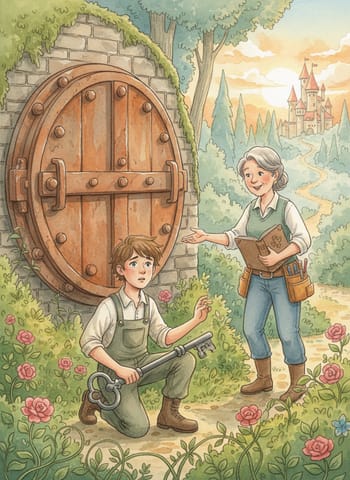
They walked across the field together. The iron hatch looked even more rusty up close. A heavy padlock hung through its handle, and the lock was as old as the hatch.
他们一起穿过球场。走近看,那扇铁盖板更锈了。一把沉重的挂锁穿过它的把手,锁和盖板一样古老。
Oded took out his ring and tried the first key. It was the SHED key, and it did not fit. He tried GATE, then WATER, then BOILER. Ozan watched in polite silence, rocking on his heels.
奥德拿出钥匙串,试了第一把。那是棚屋的钥匙,插不进去。他试了大门,又试了供水、锅炉房。奥赞礼貌地沉默着看,脚跟一晃一晃的。
By the time Oded reached BELL, his hands were sweating. He had run out of labelled keys, and the lock had not moved. Only the ninth key was left, the long dark one with no tag.
等奥德试到“铃”那把时,手已经出汗了。有标签的钥匙都用完了,锁纹丝不动,只剩第九把,那把又长又黑、没有标签的钥匙。
He stood there holding it, and the whole spring came down on him at once. Three months of pretending, of nodding at questions he could not answer. For a moment he almost said that the lock must be broken.
他站在那里,握着它,整个春天的重量一下子压了下来。三个月来一直在假装,对着自己答不上来的问题点头。有一瞬间,他差点说这把锁一定是坏了。
"I have a confession," he said instead. His voice sounded smaller than he wanted. "I do not know what this key opens. I have never known. I was afraid to ask."
“我得坦白一件事,”他却这样说,声音比他想要的小,“我不知道这把钥匙是开什么的。我一直都不知道。我不敢问。”
Ozan did not laugh. He scratched his chin and looked at the key for a while.
奥赞没有笑。他挠了挠下巴,盯着那把钥匙看了一会儿。
"Do you know how many keys I carry?" he said at last. "Thirty-one. Four of them are a mystery to me. I keep them in case one day a door appears."
“你知道我带着多少把钥匙吗?”他最后说,“三十一把。其中四把我也不知道是干什么的。我留着它们,万一哪天出现一扇门呢。”
Oded laughed, and the knot in his chest loosened a little.
奥德笑了,胸口的结松开了一点。
"Then let us find out," Ozan said. "If it fits, we will all know something new."
“那我们来看看吧,”奥赞说,“要是能开,大家就都知道了一件新鲜事。”
Oded pushed the long key into the padlock. It slid in smoothly, as if it had been waiting. He turned it, and the lock gave a dull clunk and fell open.
奥德把那把长钥匙插进挂锁。它顺顺当当地滑了进去,好像一直在等着。他一拧,锁发出一声闷响,弹开了。
Neither of them said anything. The hatch itself was another matter. It had not moved in six years, and it fought them. Ozan poured oil along the hinges, and Oded found a crowbar in the shed. They pulled together, counting aloud, until the iron lid screamed upward and crashed against the grass.
两个人谁也没说话。盖板本身又是另一回事。它六年没动过,不肯就范。奥赞沿着铰链倒上机油,奥德从棚屋里找来一根撬棍。他们一起用力,大声数着数,直到铁盖尖叫着被掀起,哐地砸在草地上。
Underneath lay a neat concrete hole with a steel sleeve at the bottom. Next to it was a second sleeve, and beside that, a small tin box. Oded wiped the dust away with his sleeve. Inside the box he found a folded paper, yellow at the edges.
下面是一个整齐的混凝土坑,坑底有一个钢套筒。旁边还有第二个套筒,再旁边是一只小铁盒。奥德用袖子擦掉灰尘。盒子里有一张折起来的纸,边缘已经发黄。
It was a drawing in pencil, dated six years earlier. It showed two goals, one at each end of the pitch. A tiny stick figure stood in front of each. Under the drawing the old keeper had written: "For whoever comes next. Ask anyone anything. Nobody here minds."
那是一张铅笔画,日期是六年前。上面画着两个球门,球场两端各一个。每个球门前站着一个小小的火柴人。画下面,老管理员写道:“给下一个来的人。有什么都可以问任何人。这里没人会介意。”
Oded read the note twice. Then he handed it to Ozan, who read it once and smiled.
奥德把字条读了两遍,然后递给奥赞,奥赞读了一遍,笑了。
"Your friend knew you were coming," Ozan said.
“你的朋友知道你会来。”奥赞说。
"He knew somebody was coming," Oded said. "I wish he had put a tag on the key."
“他知道会有人来,”奥德说,“我真希望他当初在钥匙上挂个标签。”
They spent the next two hours carrying the new goal across the field. It was lighter than it looked. Ozan lowered the posts into the sleeves, and Oded tightened the bolts one by one. When the last bolt was tight, the goal stood straight and white at the far end.
接下来的两个小时,他们把新球门抬过球场。它比看上去轻。奥赞把门柱放进套筒里,奥德一颗一颗拧紧螺栓。最后一颗螺栓拧紧时,球门笔直而洁白地立在了球场远端。
Just after four, the children arrived from school. They stopped at the gate and stared. Nobody spoke for a long moment.
四点刚过,孩子们放学来了。他们在大门口停住,呆呆地望着。好长一会儿,谁也没说话。
Then the girl with the muddy knees began to run. The others followed, shouting and tripping over their bags. Within five minutes there were two teams and two goalkeepers. There was also a loud argument about who would kick off.
然后,那个膝盖沾泥的女孩开始奔跑。其他孩子跟着跑,喊着,被书包绊得东倒西歪。不到五分钟,就分成了两支队,有了两个守门员,还有一场关于谁开球的大声争吵。
"That is the best noise I have heard all year," Ozan said. He leaned against his van and drank water from a bottle.
“这是我一年来听到的最美的声音。”奥赞说。他靠在货车上,喝着瓶子里的水。
"Thank you for coming," Oded said. "And for not laughing at me."
“谢谢你来,”奥德说,“也谢谢你没有笑话我。”
"Thank you for the key," Ozan said. "Now I have one mystery fewer."
“谢谢你的钥匙,”奥赞说,“现在我少了一个谜。”
When the van had gone, Oded stayed by the shed. The sun was low, and the children's shadows stretched long over the grass. Someone scored at the far end, and a cheer rose from both sides.
货车开走后,奥德留在棚屋旁边。太阳低了,孩子们的影子在草地上拖得长长的。有人在远端进球了,两边都爆发出欢呼。
He took the ring from his pocket. Then he went into the shed and found a pen and a clean paper tag. He wrote on it in careful capital letters: SECOND GOAL. He punched a hole in the tag and threaded it through the long dark key. Then he tied it on with a double knot.
他从口袋里掏出钥匙串。然后他走进棚屋,找到一支笔和一张干净的纸标签。他用工整的大写字在上面写道:第二球门。他在标签上打了个孔,把它穿过那把又长又黑的钥匙,再打了一个双结系牢。