Leona signed the lease on Tuesday. By Friday evening she still had no bed.
莱昂娜星期二签了租约。到星期五傍晚,她还是没有床。
The flat was a bright room on the top floor. It had a tiny kitchen and a window above the street. It had no sofa, no chairs and no curtains. The furniture shop said her bed would arrive in two weeks.
那套公寓是顶楼一间明亮的屋子。有一个很小的厨房,一扇朝向街道的窗。没有沙发,没有椅子,也没有窗帘。家具店说她的床要两个星期后才到。
"Two weeks is a long time to sleep on the floor," Leona said on the phone.
“睡两个星期地板可太久了,”莱昂娜在电话里说。
"So don't sleep on the floor," said Zahra. "Sleep on pillows. I know a man who sells them cheap."
“那就别睡地板,”扎赫拉说,“睡枕头。我认识一个人,卖得很便宜。”
Zahra lived in the flat below. They had met on the stairs the day before, when Leona was carrying a single lamp. Zahra had looked at the lamp, then at Leona, and decided they were friends. At home, Leona's friendships grew slowly, like trees. Zahra simply walked in and sat down.
扎赫拉住在楼下的那套公寓。她们前一天在楼梯上认识,当时莱昂娜正抱着一盏孤零零的台灯。扎赫拉看看台灯,又看看莱昂娜,就断定她们是朋友了。在老家,莱昂娜的友谊像树一样慢慢生长。扎赫拉却干脆直接走进来坐下了。
The man with the pillows had a stall at the night market across the river. He had forty left, all in odd colours. He sold twenty-two of them for the price of a pizza. He packed them into two enormous plastic bags.
卖枕头的男人在河对岸的夜市有个摊位。他还剩四十个,颜色五花八门。他把其中二十二个,按一个披萨的价钱卖给了她们。他把它们装进两个巨大的塑料袋里。
"How do we carry these?" Leona asked.
“我们怎么搬这些?”莱昂娜问。
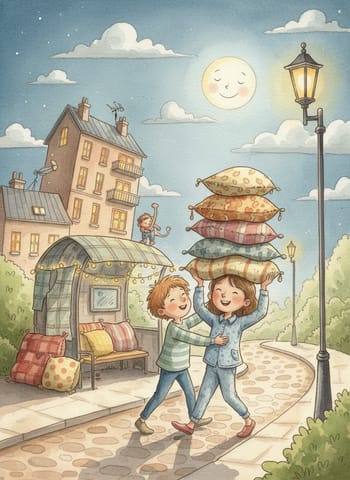
"On our heads," Zahra said. "Like queens."
“顶在头上,”扎赫拉说,“像女王一样。”
They did not carry them on their heads. They dragged the bags down the market street to the tram stop at the end. It was ten o'clock, and the stop was almost empty. A glass shelter stood beside the rails. Inside it were a bench and a big lit map of the whole city.
她们没有顶在头上。她们拖着袋子沿着市场街走到尽头的电车站。那时是十点钟,车站几乎没有人。轨道旁有一间玻璃候车亭。里面有一条长椅,和一张点着灯的全城大地图。
Leona dropped her bag and sat on it. Her arms hurt, and her new shoes hurt more. She had lived in this city for eleven days. She still got lost every time she left the house. She never told anyone that.
莱昂娜丢下袋子,坐了上去。她的手臂很酸,新鞋让脚更疼。她在这座城市住了十一天。每次出门她仍然会迷路。她从没告诉过任何人。
"The next tram is at ten past," Zahra said. She read the board, and then she stopped smiling. "Or it isn't."
“下一班电车十点十分,”扎赫拉说。她读着站牌,随后收起了笑容。“或者没有。”
A paper notice was taped across the timetable. The line was closed for repairs until Monday morning. There was no tram, and there would be no tram all weekend.
一张纸质通知贴在时刻表上。这条线路因维修停运,到星期一早上才恢复。没有电车,整个周末都不会有。
Zahra tried to call a taxi. The market had just closed, and every driver in the area was busy.
扎赫拉想叫出租车。夜市刚刚收摊,附近的每个司机都在忙。
"One hour," she read. "Maybe more."
“一个小时,”她念道,“可能更久。”
"We could walk," Leona said slowly. "It isn't far. It's only two miles."
“我们可以走回去,”莱昂娜慢慢地说,“不远。才两英里。”
"My phone has three percent left," Zahra said. "I used it all on pillow photos."
“我手机只剩百分之三的电了,”扎赫拉说,“全拿去拍枕头照片了。”
Leona pulled out her own phone. It had two percent. She opened the map, watched the little blue dot turn, and then the screen went black.
莱昂娜拿出自己的手机。它剩百分之二。她打开地图,看着那个蓝色的小点转了转,接着屏幕黑了。
For a moment neither of them spoke. Somewhere behind the market, a late stall pulled down its metal shutters with a long rattle.
一时间两人都没说话。市场后面某处,一个晚收的摊位哗啦啦地拉下金属卷帘门。
Then Leona looked at the big lit map on the wall of the shelter.
然后莱昂娜看向候车亭墙上那张点着灯的大地图。
She stood up and walked over to it. She found the river, then the market, then the tram line with its thin blue stripe. She put her finger on the dot that said YOU ARE HERE. Then she followed the streets with her finger, slowly, all the way to her own front door.
她站起来,走过去。她找到河,找到市场,又找到那条画着细蓝线的电车线。她把手指放在写着“你在这里”的那个点上。然后她用手指沿着街道慢慢地走,一直走到她自己家的门口。
"Left at the fountain," she said. "Then along the canal until the iron bridge. Over the bridge, and the second street on the right. Then straight uphill."
“在喷泉那儿左转,”她说,“然后沿着运河走,到铁桥为止。过桥,右边第二条街。然后一直上坡。”
"You know this?" Zahra asked.
“你知道这些?”扎赫拉问。
"I don't know it yet," Leona said. "Give me a minute."
“我现在还不知道,”莱昂娜说,“给我一分钟。”
She said the route aloud four times, first with her eyes open and then with them closed. Zahra waited and did not make a single joke.
她把路线大声说了四遍,先睁着眼,再闭着眼。扎赫拉等着,一个玩笑也没开。
"Okay," Leona said at last. "I think I have it."
“好了,”莱昂娜终于说,“我想我记住了。”
They picked up the bags and set off.
她们拎起袋子出发了。
At the first corner, the bag in Zahra's hand split down one side with a soft, sad sound. Pillows slid out onto the pavement, one after another. A blue one rolled into the road. A yellow one landed face down under a lamp.
在第一个路口,扎赫拉手里的袋子沿着一侧裂开了,发出轻轻的、令人难过的声音。枕头一个接一个滑到人行道上。一个蓝色的滚到了马路上。一个黄色的脸朝下落在路灯下。
"Stop," Zahra said, laughing so hard that she had to hold a wall. "Stop, stop. We have lost the beds."
“停,”扎赫拉说,笑得太厉害,只好扶着墙。“停,停。我们把床弄丢了。”
"We have not lost them," said Leona. "They are everywhere."
“我们没弄丢,”莱昂娜说,“它们到处都是。”
She did not feel like laughing. If they could not carry the pillows, they would have to leave half of them here.
她并不想笑。如果她们搬不动枕头,就只能把一半留在这里。
Then she remembered the scarf around her neck. She pulled it off.
然后她想起了脖子上的围巾。她把它扯下来。
"Give me your scarf," she said. "And your belt."
“把你的围巾给我,”她说,“还有你的腰带。”
"My belt? Why?"
“我的腰带?为什么?”
"Because we are going to wear them."
“因为我们要把它们背在身上。”
It took ten minutes. Leona stacked six pillows into a tall bundle and tied them tightly with her scarf. Then she pushed her arms through two loops of Zahra's belt. The bundle sat on her back like a school bag. Zahra copied her. They stuffed four more pillows inside their coats, until both of them looked like round, soft penguins. They carried the last ones under their arms.
花了十分钟。莱昂娜把六个枕头摞成一个高高的捆,用围巾紧紧系住。然后她把两条胳膊穿进扎赫拉腰带做成的两个环里。那捆枕头像书包一样背在她背上。扎赫拉照着做。她们又往大衣里塞了四个枕头,直到两人都像圆滚滚、软乎乎的企鹅。剩下的几个夹在腋下。
"You look ridiculous," Zahra said happily. "I love it."
“你看上去荒唐透了,”扎赫拉开心地说,“我爱死了。”
Leona led the way. At the fountain she turned left without stopping. She heard Zahra's footsteps behind her, and the whisper of pillows against pillows. The streets were quiet.
莱昂娜带路。到了喷泉,她没有停就向左转。她听到身后扎赫拉的脚步声,和枕头擦着枕头的沙沙声。街上很安静。
The canal came, just as the map had promised. The water was black and still. They walked beside it for a long time, past a boat with a string of tiny lights. Leona's shoulders ached. But her head felt clear and strange, as if someone had opened a window inside it.
运河出现了,正如地图所说。水是黑色的,一动不动。她们沿着它走了很久,经过一条挂着一串小灯的船。莱昂娜的肩膀酸疼。但她的头脑清楚而奇异,仿佛有人在里面打开了一扇窗。
Then she reached the iron bridge, and her stomach dropped. There were two bridges. One was iron, and one was made of grey stone, and they stood side by side.
然后她走到铁桥,心一下沉了。有两座桥。一座是铁的,一座是灰色石头的,它们并排立着。
"Which one?" Zahra asked.
“哪座?”扎赫拉问。
Leona closed her eyes and saw the map again. The mark across the canal had been a straight line. A straight line meant the flat stone one. She had been about to take the pretty one.
莱昂娜闭上眼睛,又看见了那张地图。运河对面的标记是一条直线。直线意味着是平坦的石桥。她差点走了那座漂亮的。
"The stone one," she said. "The iron one goes to the park."
“石桥,”她说,“铁桥通往公园。”
"Are you sure?"
“你确定吗?”
"No," Leona said. "But I think so."
“不确定,”莱昂娜说,“但我想是的。”
They crossed the stone bridge. On the other side, a sign said Mill Road. It was the second street on the right. Leona nearly laughed out loud.
她们过了石桥。对岸有块牌子,写着磨坊路。那正是右边第二条街。莱昂娜差点笑出声来。
Then came the hill. It was steeper than it looked on the map, and the bundles felt heavier with every step. Twice Zahra stopped. Twice Leona said, "Ten more steps," and counted them aloud. By the end, they were counting together.
然后是上坡。它比地图上看起来陡,每走一步,背上的捆子就觉得更重。扎赫拉停了两次。两次莱昂娜都说:“再走十步,”并大声数着。到最后,她们一起数。
At the top of the hill, a familiar yellow door waited under a lamp. It was her own front door.
坡顶,一扇熟悉的黄色门在路灯下等着。那是她自己的前门。
"We did it," Zahra said. "You did it."
“我们做到了,”扎赫拉说,“是你做到的。”
Up in the empty flat, they dropped everything in the middle of the floor. Then Zahra pulled a clean sheet out of a box in the corner. She tied two of its corners to the radiator and the window handle.
到了空荡荡的公寓里,她们把所有东西扔在地板中央。然后扎赫拉从角落的箱子里拽出一条干净的床单。她把它的两个角分别系在暖气片和窗把手上。
"What are you doing?" Leona asked.
“你在干什么?”莱昂娜问。
"A fort," said Zahra. "Every good flat needs one."
“搭一座堡垒,”扎赫拉说,“每个好公寓都需要一座。”
They built it together. The big pillows made walls, the small ones made a floor, and the sheet made a roof. They tucked in the edges until the whole thing looked like a round, lopsided nest. Leona crawled in first. It smelled of dust and market and new cotton.
她们一起搭。大枕头做墙,小枕头做地板,床单做屋顶。她们把边缘塞好,整座东西看上去像一个圆圆的、歪歪扭扭的鸟窝。莱昂娜先爬进去。里面有灰尘、夜市和新棉花的味道。
Zahra crawled in after her and pulled a pillow under her head. "Tomorrow I will bring you a blanket," she said. "And a kettle. And one more lamp."
扎赫拉跟着爬进来,拉过一个枕头垫在头下。“明天我给你带条毯子来,”她说,“还有一只水壶。还有一盏灯。”
"You don't have to," Leona said.
“你不用这样的,”莱昂娜说。
"I know." Zahra yawned. "That is why I am going to."
“我知道,”扎赫拉打了个哈欠。“所以我才要这样。”
Soon her breathing grew slow and even. Leona lay awake a little longer, looking up at the sheet. A line of yellow light from the street came through a gap in the pillows. It lay across her hand. Far away, down the hill, she could hear one bicycle bell, small and clear, ringing in the dark.
不一会儿,她的呼吸变得缓慢均匀。莱昂娜又醒着躺了一会儿,望着床单。一道黄色的街灯光从枕头的缝隙里透进来,落在她的手上。远处,坡下,她听见一声自行车铃,又小又清脆,在黑暗中响着。
She closed her eyes and let it ring.
她闭上眼睛,任它响着。