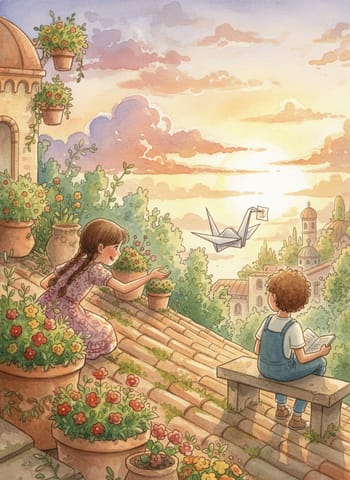
On Saturday mornings, Dalila runs a small plant stall on the roof garden above the shopping centre. The garden club from her school sells seedlings there to raise money for a new greenhouse. Most visitors want basil or sunflowers. Dalila mostly wants to look at the herb beds across the path.
每周六早上,达利拉都在购物中心楼顶花园里经营一个小小的植物摊。她学校的园艺社在那里卖幼苗,为一座新温室筹款。大多数游客想要罗勒或向日葵。达利拉主要想看的是小路对面的香草花坛。
That is where Omar works. He wears a green apron. He carries a dented watering can that is always a little too full. He knows the name of every plant in the garden. He also knows which ones have been watered and which ones are pretending.
奥马尔就在那里工作。他系着一条绿围裙。他提着一只凹了的洒水壶,里面总是装得有点太满。他知道花园里每一种植物的名字。他还知道哪些浇过了水,哪些在假装浇过了。
Dalila has watched him for three weeks. She has never said more than "Hello" and "Thanks." Every time she plans a longer sentence, it falls apart before it reaches her mouth.
达利拉已经观察了他三个星期。她说过的话从来不超过“你好”和“谢谢”。每次她想好一个长一点的句子,它还没到嘴边就散架了。
This morning she sits behind the stall with a page from the seed catalogue. It shows a large photograph of purple lavender. She folds the paper carefully, corner to corner, the way her cousin showed her last summer. Ten minutes later, she is holding a paper crane with long, pointed wings.
这个早上,她坐在摊位后面,手里拿着一页种子目录。上面有一张紫色薰衣草的大照片。她小心地把纸沿对角折起来,用的是她表姐去年夏天教她的方法。十分钟后,她手里拿着一只纸鹤,有着长长的、尖尖的翅膀。
Before she closes the last fold, she writes on the inside in tiny letters. Then she lifts the wing and reads it again. It says: "I think the mint likes you more than it likes me."
在折好最后一折之前,她在里面用很小的字写了一句话。然后她拨起翅膀,又读了一遍。上面写着:“我觉得薄荷喜欢你胜过喜欢我。”
It is not a great sentence. It is probably the bravest one she has ever written.
这不是一个很棒的句子。但它可能是她写过的最勇敢的一句。
"Okay," she whispers. "Now I only need to give it to him."
“好吧,”她低声说,“现在我只需要把它交给他。”
She stands up and sits down again. Omar is twenty steps away, bent over the thyme. Twenty steps feels like the length of a football field.
她站起来,又坐下。奥马尔在二十步之外,俯身对着百里香。二十步感觉像一个足球场那么长。
The woman at the next stall looks over. She sells flowers in paper cones, and she misses nothing. "Is that for someone?" she asks.
旁边摊位的女人看了过来。她卖装在纸锥里的花,什么也逃不过她的眼睛。“这是给谁的吗?”她问。
"Maybe," says Dalila. Her voice comes out smaller than she wants. "Could you give it to the boy with the watering can? Please? I have to watch the till."
“也许吧,”达利拉说。她的声音比她想要的小。“你能把它交给那个提洒水壶的男孩吗?拜托了?我得看着收银盒。”
The woman smiles and takes the crane in her palm. "Of course, love. Leave it with me."
女人笑着把纸鹤托在掌心。“当然,亲爱的。交给我吧。”
Dalila sits very still and tries to look busy. She straightens a row of pots. She counts the coins in the till twice. Out of the corner of her eye, she watches the flower seller walk down the path.
达利拉一动不动地坐着,试图显得很忙。她摆正一排花盆。她把收银盒里的硬币数了两遍。她用眼角余光看着卖花女人沿着小路走去。
Then something goes wrong. A school group arrives. The path fills with children carrying small green watering cans. At least six boys are holding a can. The woman stops, looks around, and chooses the nearest one.
然后出了岔子。一个学校的团队到了。小路上挤满了提着小小绿色洒水壶的孩子。至少有六个男孩拿着壶。女人停下来,环顾四周,选了最近的一个。
"This is for you," she says, and puts the crane in his hands.
“这是给你的,”她说着,把纸鹤放到他手里。
The boy is about nine years old. He looks at the crane for a long time, as if it might be a trick. Then he decides it is a prize. "Cool!" he says. He holds it above his head and runs off down the path.
男孩大约九岁。他盯着纸鹤看了很久,好像那可能是个圈套。然后他认定这是奖品。“酷!”他说。他把它举过头顶,沿着小路跑开了。
Dalila puts her face in her hands. The nine-year-old runs past the herb beds and the fountain. He runs straight into a man in a blue uniform who is checking the lift. The man is a security guard, and he is very serious about his job.
达利拉双手捂住了脸。九岁的男孩跑过香草花坛和喷泉。他一头撞上一个穿蓝色制服的男人,那人正在检查电梯。他是个保安,对自己的工作十分认真。
"Where did you get that?" the guard asks.
“你从哪儿弄来的?”保安问。
"A lady gave it to me," says the boy.
“一位女士给我的,”男孩说。
"Then it belongs to somebody," the guard says. He takes the crane gently and turns it around in his large hands. He finds a single letter on one wing, a small neat D. "Hmm. D," he mutters. "Does anyone here have a name that starts with D?"
“那它就是属于某个人的,”保安说。他轻轻拿过纸鹤,在大手里转了一圈。他在一只翅膀上发现了一个字,一个小巧工整的“达”。“嗯。‘达’,”他嘟囔着,“这里有人的名字以‘达’开头吗?”
Nobody answers. A few people look up and then look away.
没有人回答。有几个人抬头看了看,又移开了目光。
The guard walks the length of the garden, holding the crane out like a lost glove. At the stall, he asks Dalila. Dalila freezes and cannot say a word, but her neighbour answers for her.
保安沿着花园走了一圈,把纸鹤举在手里,像举着一只丢失的手套。到了摊位前,他问达利拉。达利拉僵住了,说不出话,但她的邻居替她答了。
"Her name starts with D," says the flower seller. "But it isn't hers. It is for the boy with the watering can."
“她的名字以‘达’开头,”卖花的女人说,“但这不是她的。它是给那个提洒水壶的男孩的。”
"Which boy?" asks the guard. "There are six of them."
“哪个男孩?”保安问,“有六个呢。”
"The one in the green apron," says the woman.
“系绿围裙的那个,”女人说。
The guard nods slowly. "Ah, the gardener," he says. He gives the crane a little bow, as if it could understand. "That I can do."
保安缓缓点头。“啊,园丁,”他说。他对纸鹤微微鞠了一躬,好像它听得懂似的。“这个我能办到。”
He walks to the herb beds and stops beside the thyme. Omar looks up from his work. His hands are muddy, and there is a leaf in his hair.
他走到香草花坛,在百里香旁边停下。奥马尔从活儿上抬起头。他的手上沾着泥,头发里有一片叶子。
"Excuse me," says the guard. "A young lady sent this. I think it might be yours."
“打扰一下,”保安说,“一位年轻女士让我送来这个。我想它可能是你的。”
Omar wipes his fingers on his apron and takes the crane as if it were made of glass. He looks at the wings and at the folded point of the beak. He turns it over twice, and then he finds the corner that opens.
奥马尔在围裙上擦了擦手指,像接一件玻璃做的东西一样接过纸鹤。他看着翅膀,又看着折起的鸟喙尖。他把它翻了两遍,然后找到了能打开的那个角。
Dalila cannot see his face from the stall. She can only see his back and the green apron. The guard walks away, whistling softly, and she feels both horrified and strangely proud.
达利拉在摊位上看不见他的脸。她只能看见他的背影和那条绿围裙。保安吹着轻轻的口哨走开了,她既惊恐,又莫名地感到骄傲。
Omar unfolds the first fold. Then the second. He reads the line inside, and she sees his shoulders move. It might be a laugh. It might be something else.
奥马尔展开了第一折。然后是第二折。他读着里面那行字,她看见他的肩膀动了动。可能是在笑。也可能是别的什么。
He stands in the middle of the path with the crane open in his hand. He looks across the garden, past the tomato plants and the fountain and the line of waiting customers. He seems to be searching the faces one by one.
他站在小路中央,手里的纸鹤摊开着。他向花园那头望去,越过番茄苗、喷泉和排队等候的顾客。他似乎在一张张脸上搜寻。
Dalila ducks behind a tray of sunflower seedlings. Her heart is pounding so loudly that she is sure the customers can hear it.
达利拉躲到一盘向日葵幼苗后面。她的心跳得那么响,她确信顾客们都能听见。
"Excuse me," says a woman with a cardboard cup. "How much are the basil plants?"
“打扰一下,”一位端着纸杯的女士说,“罗勒怎么卖?”
"Two for three," Dalila says, and she hands over a pot without looking at it.
“两盆三块钱,”达利拉说,看都没看就递过去一盆。
When she dares to glance up again, Omar is no longer standing on the path. She spins around. He is walking toward the stall, one slow step at a time. The crane is still in his hand, but now it has been folded back into shape, almost perfectly.
等她敢再抬头看时,奥马尔已经不在小路上了。她猛地转身。他正朝摊位走来,一步一步,很慢。纸鹤还在他手里,但现在它已经被折回了原样,几乎完美。
He stops in front of her table. Up close, he is taller than she remembered, and there is mud on his cheek.
他在她的桌子前停下。靠近看,他比她记忆中高,脸颊上有泥。
"That is a very good crane," he says.
“这是一只很棒的纸鹤,”他说。
"Thanks," says Dalila. It is the same word she always says. She hates it.
“谢谢,”达利拉说。又是她一直说的那个词。她恨死它了。
Omar looks down at the paper and then up at her. "I have a problem with the mint," he says. "It keeps growing into the oregano. I have never found a way to stop it. Maybe you know one."
奥马尔看看纸,又抬头看她。“我有个关于薄荷的难题,”他说,“它总是长进牛至里。我一直没找到办法阻止。也许你知道。”
"I might," says Dalila. "I would have to see the bed first."
“也许知道,”达利拉说,“我得先看看那块花坛。”
"It is just over there," says Omar. He does not point, though. He is looking at the crane again, and his forehead is slightly wrinkled.
“就在那边,”奥马尔说。不过他没有指。他又在看着纸鹤,额头微微皱起。
"What is it?" she asks.
“怎么了?”她问。
"You wrote something in the corner," he says. "Under the fold. It looks like a phone number, but the last digit is smudged. Is it a three or an eight?"
“你在角落里写了点东西,”他说,“折痕下面。看起来像个电话号码,但最后一位模糊了。是三还是八?”
Dalila opens her mouth and closes it again. She has not written a number. She is sure of it. She takes the crane from his hand, turns it toward the light, and tilts it very slowly.
达利拉张开嘴,又闭上。她没有写过号码。她很确定。她从他手里接过纸鹤,转向光线,非常缓慢地倾斜着看。
The ink is faint and grey, and it is printed, not written. It is the order number from the seed catalogue, under the photograph of the lavender. The last digit has rubbed away in the fold.
墨迹又淡又灰,而且是印出来的,不是写的。那是种子目录的订单编号,印在薰衣草照片下面。最后一位数字在折痕处被磨掉了。
"It is not a phone number," she says. "It is lavender."
“这不是电话号码,”她说,“这是薰衣草。”
Omar laughs, and the mud on his cheek cracks a little. "Then show me how to stop the mint," he says. "After that, you can tell me the whole number."
奥马尔笑了,脸颊上的泥裂开了一点。“那就教我怎么阻止薄荷吧,”他说,“之后,你可以把整个号码告诉我。”
Dalila steps out from behind the stall and follows him to the herb beds. Across the path, six small boys argue about who owns the prize.
达利拉从摊位后走出来,跟着他走向香草花坛。小路对面,六个小男孩正在争论奖品到底是谁的。